T: +86-518-85528012
E: nick@luverrequartz.com
E: nick@luverrequartz.com
1st floor Runlian industrial center No. 116 QuFeng Rd., Haizhou Economic and technological development zone Lianyungang City, Jiangsu Province, China 222062
Views: 0 Author: Site Editor Publish Time: 2026-08-20 Origin: Site


High-purity fused quartz (amorphous silica) can be used at 1600°C, but with important conditions. The softening point of fused quartz is approximately 1600°C to 1670°C. This means 1600°C represents the upper practical limit for long-term structural stability. To ensure reliable long-term service at this temperature, you must consider:
- Material purity: SiO₂ content ≥99.99% minimizes devitrification risks
- Hydroxyl (OH) content: Lower OH content (ultra-low hydroxyl quartz) provides better sag resistance
- Contamination control: Avoid contact with alkali metals and salts above 1100°C
- Proper wall thickness: Thicker walls reduce sag rate significantly

Understanding the Thermal Limits of Quartz Glass
Why 1600°C is the Critical Threshold
Fused silica does not have a sharp melting point like crystalline materials. Instead, it transitions from a solid to a plastic-like state across a temperature range. The softening point—where glass deforms under its own weight—occurs at a viscosity of approximately 10^7.65 Poise, which corresponds to 1600°C–1670°C depending on measurement conditions.
Key temperature thresholds for quartz glass:
- ~1120°C – Strain point: internal stress relieved in 4 hours
- ~1215°C – Annealing point: stress relieved in 15 minutes
- ~1600°C–1670°C – Softening point: upper service limit for dimensional stability
- ~1730°C – Melting point: absolute thermal limit
The Devitrification Risk
Devitrification—the recrystallization of amorphous silica into cristobalite—is a primary failure mechanism at high temperatures. This process occurs primarily at the free surface of the quartz component and is accelerated by contamination from alkali elements, salts, and metal oxides. Devitrification becomes problematic above 1100°C when contaminants are present and can cause spalling and mechanical failure when cycling through the crystallographic inversion temperature (~270°C).
> Buyer Insight: If your process involves temperatures above 1100°C with potential contamination sources, specify high-purity, low-OH quartz materials to minimize devitrification risks.
Thermal Shock Resistance—An Advantage
Despite the softening point limitation, fused quartz offers exceptional thermal shock resistance unmatched by most materials. Thin sections can be heated rapidly to above 1500°C and plunged into water without cracking, thanks to the extremely low thermal expansion coefficient (approximately 5.5×10⁻⁷/°C). This makes quartz glass ideal for applications involving rapid temperature cycling.

Quartz Glass Range Overview
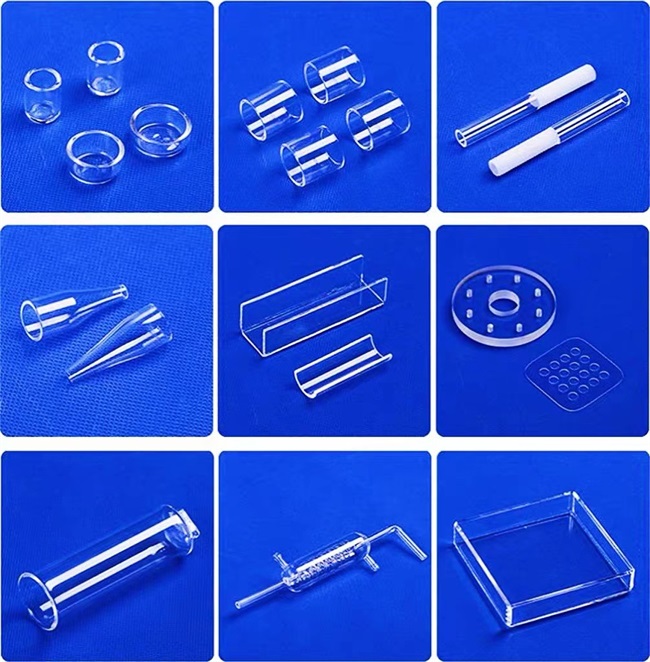
Our manufacturing capabilities cover the full spectrum of quartz glass products for high-temperature applications:
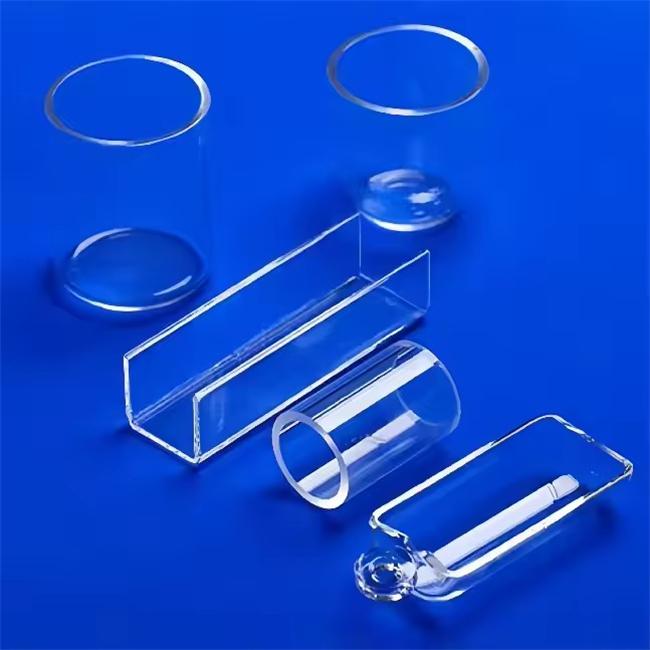
Quartz Tubes – Diffusion furnaces, oxidation furnaces, CVD reactors, thermocouple protection
Quartz Plates and Windows – Furnace viewing ports, optical systems, process observation
Quartz Rods – Push paddles, support structures, electrode insulation
Quartz Crucibles – Single crystal silicon pulling, melting processes
Quartz Flanges and Rings – Sealing systems, insulation rings, electrode spacers
Quartz Boats – Wafer carriers for semiconductor diffusion and oxidation processes
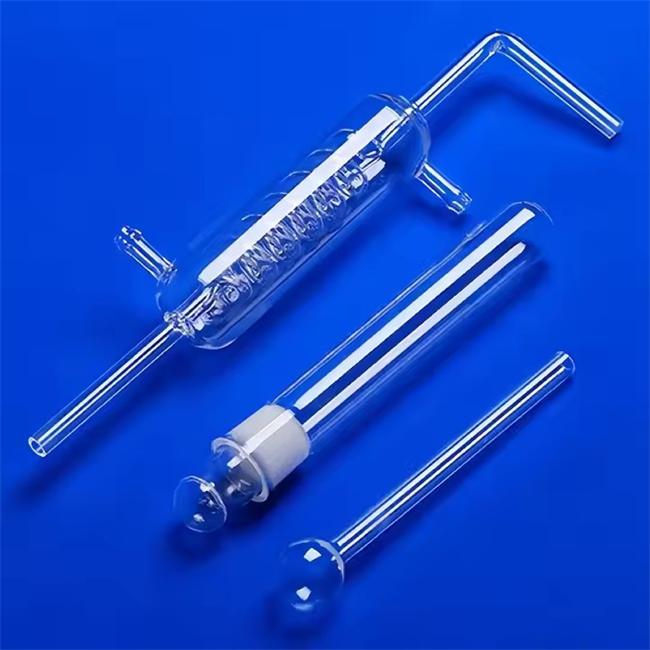
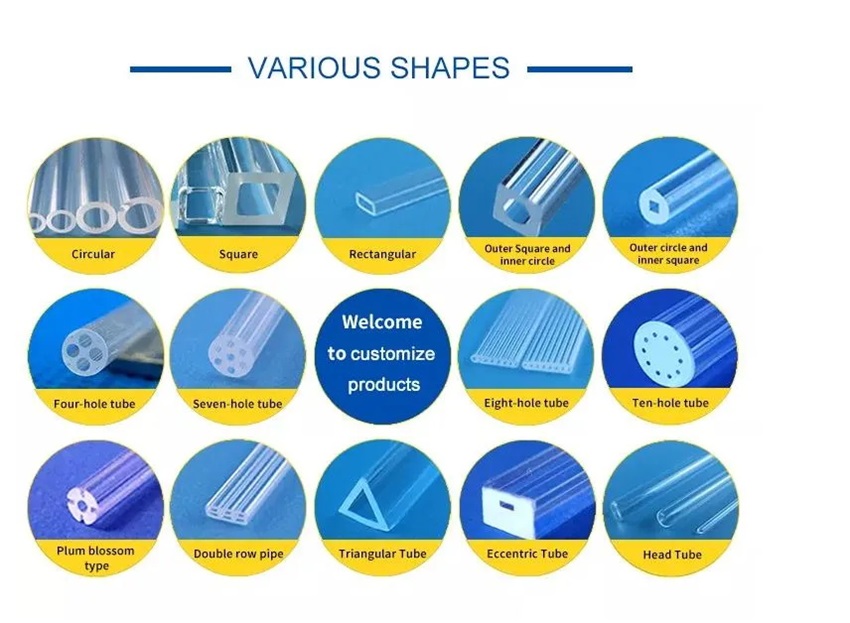
Custom Quartz Parts – Complex assemblies, reactors, chambers, manifolds

Advantages of High-Purity Quartz Glass for 1600°C Service
Thermal Stability
Withstands continuous operation at 1600°C+ with excellent dimensional stability when properly designed. Low thermal expansion (5.5×10⁻⁷/°C) prevents thermal stress cracking.
Chemical Inertness
Resists most acids (except hydrofluoric acid), bases, and corrosive gases even at elevated temperatures. No generation of semiconductor-poisoning gases in processing environments.
Optical Clarity
Transmits UV to IR wavelengths (170nm–2500nm) with >90% transmittance, enabling real-time process monitoring.
Electrical Insulation
Maintains excellent insulation properties even at high operating temperatures.
High Purity
Materials with ≥99.99% SiO₂ (up to 99.995%) minimize contamination risks in sensitive semiconductor and optical applications.
Application Industries for 1600°C-Rated Quartz Glass
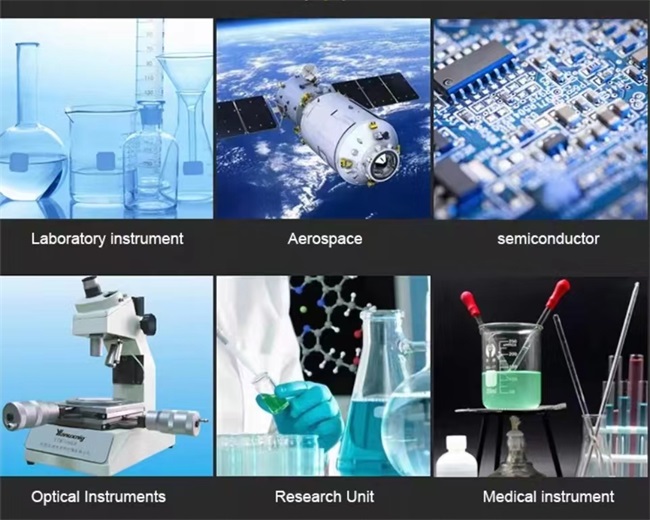
Semiconductor Industry
- Typical components: Diffusion tubes, wafer boats, furnace liners, gas injectors
- Operating conditions: 1000°C–1300°C, corrosive gases
- Critical requirement: Ultra-high purity to prevent wafer contamination
Solar and Photovoltaic
- Typical components: PECVD components, insulation tubes, polysilicon furnace parts
- Operating conditions: Up to 1600°C thermal fields
- Critical requirement: Thermal stability and cost-effectiveness
Optical and Laser Systems
- Typical components: Windows, lenses, prism blanks, cuvettes
- Operating conditions: High-power laser systems, UV transmission
- Critical requirement: Optical clarity and low birefringence
Chemical Processing
- Typical components: Reactor vessels, condensers, sample cells
- Operating conditions: Acid and alkali resistance at high temperatures
- Critical requirement: Chemical inertness and corrosion resistance
Furnace Manufacturing
- Typical components: Observation windows, thermocouple sheaths, heating element supports
- Operating conditions: Thermal cycling, 1200°C–1600°C
- Critical requirement: Thermal shock resistance and dimensional stability
Laboratory and Research
- Typical components: Combustion tubes, reaction chambers, spectroscopic cells
- Operating conditions: High-purity analytical applications
- Critical requirement: Material purity and optical transmission
How to Select the Right Quartz Product for Your 1600°C Application
Step 1: Define Your Operating Parameters
- Continuous vs. intermittent temperature: Will the component be at 1600°C constantly or only during cycles?
- Thermal cycling frequency: How often will the component heat up and cool down?
- Atmosphere conditions: Vacuum, inert gas, oxidizing, or corrosive environment?
Step 2: Choose the Right Material Grade
- Standard fused silica: General industrial applications up to 1300°C
- High-purity fused silica (≥99.99%): Semiconductor and optical applications at 1600°C
- Ultra-low OH content: Better sag resistance and devitrification resistance
- JGS1, JGS2, JGS3 optical grades: UV, visible, or IR wavelength requirements
Step 3: Determine Critical Dimensions
- Wall thickness: Doubling wall thickness reduces sag rate by approximately 3 times
- Diameter: Larger diameters sag faster; consider support structures
- Length: Longer components require additional support or thicker walls
Step 4: Consider Fabrication Requirements
- Complex geometries: Can be achieved through CNC machining and oxy-hydrogen flame welding
- Precision tolerances: ±0.2mm standard; tighter tolerances available
- Surface finish: Polished for optical applications, frosted for reduced glare
Step 5: Assess Contamination Risks
If your process environment contains alkali metals, salts, or metal oxides, specify higher purity SiO₂ (≥99.995%), surface treatments to reduce contamination sites, and regular inspection schedules for devitrification.
Custom Fabrication Capabilities
We provide complete custom quartz fabrication solutions to address non-standard requirements.
Manufacturing Processes
- CNC diamond precision machining: Grinding, milling, drilling, slotting, threading
- Oxy-hydrogen flame thermal forming: Bending, welding, blowing, shaping complex geometries
- Precision grinding and optical polishing: Industrial, precision, and laser grades
- Post-annealing: All machined components are annealed to relieve residual thermal stress and ensure long-term dimensional stability
Customizable Specifications
- Dimensions: Diameters from 1mm to 1000mm; lengths custom to requirement
- Geometries: Tubes with flanges, side ports, stepped profiles; complex reaction vessels; custom assemblies
- Tolerances: ±0.2mm standard; ±0.02mm for precision applications
- Material grades: Standard clear, opaque, UV-grade, optical-grade (JGS1, JGS2, JGS3)
OEM and ODM Support
- Manufacture from your engineering drawings
- Replicate from existing samples
- No MOQ or low MOQ: Small batches for prototyping and R&D welcomed
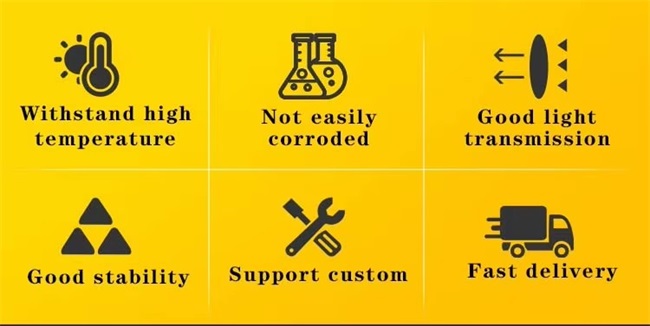
- Fast delivery: Quick turnaround for urgent requirements
Common Problems We Solve for Our Clients
Cannot find standard dimensions for their equipment
We provide full custom sizing—any diameter, wall thickness, or length.
Non-standard product procurement difficulties
We offer OEM and ODM service with comprehensive engineering support.
Components failing at high temperatures due to sagging
We recommend ultra-low OH material selection and optimized wall thickness design.
High precision requirements
We deliver CNC diamond machining with ±0.02mm capability.
Urgent delivery needs
We provide flexible production scheduling and expedited shipping options.
Small batch requirements
We have no MOQ policy—supporting prototyping and small-scale production.
Quality consistency issues
We implement strict QC processes and UV-polarized light inspection for stress.
Global sourcing difficulties
We have extensive international export experience and reliable logistics partners.
Technical Specifications
Material Purity
- Standard grade: ≥99.99% SiO₂
- Premium grade: ≥99.995% SiO₂
Thermal Properties
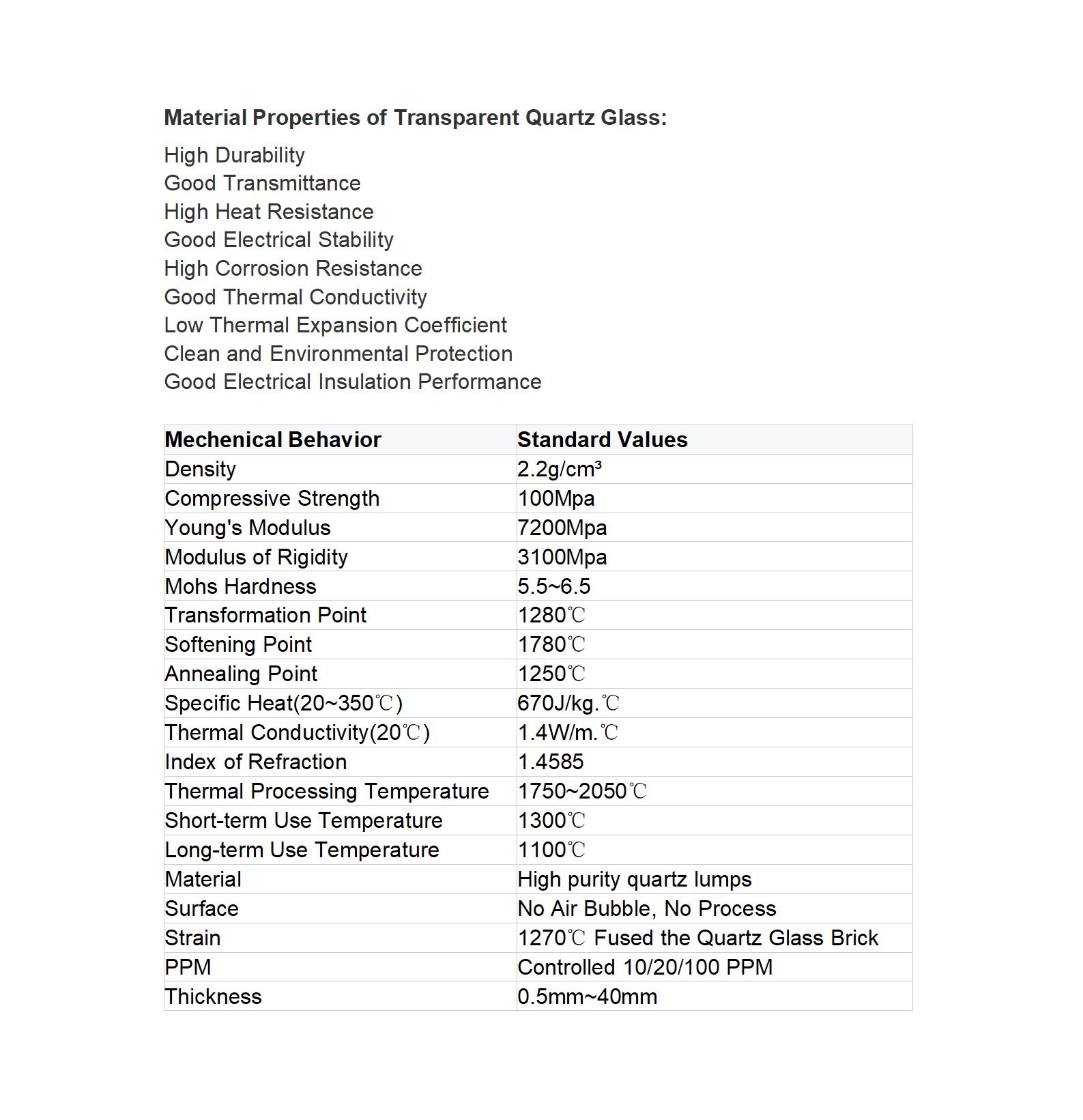
- Maximum continuous operating temperature: 1600°C
- Softening point: 1600°C–1670°C
- Thermal expansion coefficient: 5.5×10⁻⁷/°C
- Thermal shock resistance: Excellent—can withstand rapid temperature changes
Dimensional Capabilities
- Tube outer diameter: 1.5mm to 300mm (custom)
- Tube length: 10mm to 3000mm (custom)
- Plate and window dimensions: Up to 700mm × 700mm
- Dimensional tolerance: ±0.2mm standard; ±0.02mm for precision
Optical Transmission
- Wavelength range: 170nm to 2500nm
- Transmittance: >90% across most of this range
Chemical Resistance
- Resists most acids except hydrofluoric acid
- Resists most bases and alkaline solutions
- Stable against molten salts and fluorinated gases
Frequently Asked Questions (FAQ)
Can quartz glass really work continuously at 1600°C?
Yes, high-purity fused silica (≥99.99% SiO₂) can operate continuously at 1600°C. However, the softening point is approximately 1600°C–1670°C, so this is the upper limit for maintaining dimensional stability. Proper design with adequate wall thickness and low-OH material selection is essential.
What is the difference between quartz glass and ordinary glass at high temperatures?
Quartz glass has a softening point approximately 800°C higher than borosilicate glass. While borosilicate glass fails above ~800°C, quartz glass maintains structural integrity up to 1600°C. Quartz also offers far superior thermal shock resistance and chemical inertness.
What causes quartz glass to fail at high temperatures?
The primary failure mechanisms are sagging at the softening point, devitrification (recrystallization) caused by surface contamination, and thermal stress cracking during rapid cooling through the cristobalite inversion temperature (~270°C).
How does purity affect high-temperature performance?
Higher purity (≥99.99% SiO₂) reduces the nucleation sites for devitrification and minimizes contamination risks in sensitive processes. Impurities like alkali metals can accelerate crystallization at temperatures above 1100°C.
What wall thickness is recommended for a 1600°C application?
There is no single answer—it depends on component diameter and length. As a general rule, doubling wall thickness reduces sag rate by approximately 3 times. Larger diameters require thicker walls to maintain dimensional stability.
Can quartz glass withstand rapid temperature cycling at 1600°C?
Yes—this is one of quartz glass's greatest advantages. Its extremely low thermal expansion coefficient gives it excellent thermal shock resistance. Thin sections can be heated to above 1500°C and quenched in water without cracking.
What is devitrification and how can I prevent it?
Devitrification is the crystallization of amorphous silica into cristobalite, which weakens the material. Prevention measures include using high-purity materials, avoiding surface contamination with alkalis and metals, maintaining clean processing environments, and specifying low-OH quartz for critical applications.
What are JGS1, JGS2, and JGS3 quartz grades?
These are Chinese optical-grade quartz material classifications. JGS1 is far-UV grade with the highest purity. JGS2 is standard clear optical quartz. JGS3 is opaque or IR-grade quartz. Selection depends on the optical transmission wavelength requirements.
How long does quartz glass last at 1600°C?
Service life depends on temperature stability, contamination exposure, and component design. With proper material selection and contamination control, quartz components can last for months to years in continuous high-temperature service. Devitrification is typically the primary limiting factor.
Can quartz glass be welded or joined for complex assemblies?
Yes. Oxy-hydrogen flame welding enables the fabrication of complex structures including side ports, flanges, cross pieces, U-bends, and multi-port reactor vessels. All welded assemblies are annealed after fabrication to relieve thermal stress.
Do you offer custom sizes beyond standard catalog dimensions?
Yes. We specialize in custom dimensions. We can produce tubes from 1mm to 1000mm outer diameter, plates up to 700mm × 700mm, and lengths up to 3000mm or longer. All dimensions are fully customizable to your specifications.
Is there a minimum order quantity (MOQ) for custom quartz parts?
No. We support both small-batch prototyping and large-scale production. We understand that R&D and laboratory customers often need just a few pieces, while industrial clients may require thousands.
Can you manufacture from a sample rather than a drawing?
Yes. We offer sample-based reverse engineering and reproduction services. Provide your existing sample, and we can replicate the geometry and dimensions.
How quickly can you deliver custom quartz components?
We offer flexible lead times. Standard custom orders typically ship within 2 to 4 weeks, while urgent requirements can be expedited. Contact us with your specific timeline.
Do you export quartz products globally?
Yes. We have extensive experience in international shipping to semiconductor manufacturers, optical companies, laboratory suppliers, and industrial furnace manufacturers worldwide. We handle export documentation and logistics.

Why Choose Us
Manufacturing Excellence
- 20+ years of quartz engineering experience
- CNC diamond machining and oxy-hydrogen flame forming capabilities
- Post-annealing for stress-free, dimensionally stable components
- UV-polarized light inspection for stress and crack detection
Quality Assurance
- High-purity materials (≥99.99% to ≥99.995% SiO₂)
- Strict quality control at every production stage
- Material traceability for sensitive applications
- Devitrification-resistant low-OH material options
Customization Flexibility
- Any size, any geometry—we work from your drawings or samples
- No MOQ—support for small R&D projects and large production runs
- Multiple material grades—clear, opaque, UV-grade, optical-grade
- Rapid prototyping—quick turnaround for design validation
Customer Support
- Engineering consultation—help selecting the right material and design
- Global export experience—reliable international shipping
- Competitive pricing—direct manufacturer pricing with no middlemen
- Fast delivery—meeting tight deadlines with expedited options
Industries Served
Semiconductor | Optical | Chemical Processing | Furnace Manufacturing | Laboratory | Solar and PV | Aerospace | Research Institutions
Quartz glass can be used long-term at 1600°C when manufactured from high-purity fused silica (≥99.99% SiO₂) with low hydroxyl content. The softening point of fused quartz ranges from 1600°C to 1670°C, making 1600°C the upper practical service limit for dimensional stability. Key factors for successful long-term operation include proper wall thickness (doubling thickness reduces sag by approximately 3×), contamination control to prevent devitrification above 1100°C, and appropriate material selection based on OH content. With these considerations, quartz glass delivers exceptional thermal stability, chemical inertness, and thermal shock resistance for demanding semiconductor, optical, and industrial furnace applications.
Luverre Quartz manufactures and sells a wide range of high quality quartz glass, including quartz tubes, quartz plates, quartz rods, quartz windows, quartz crucibles, quartz boats, quartz flanges, quartz beakers, quartz glass instruments, and more. We can meet all kinds of customized requirements for quartz glass products.
