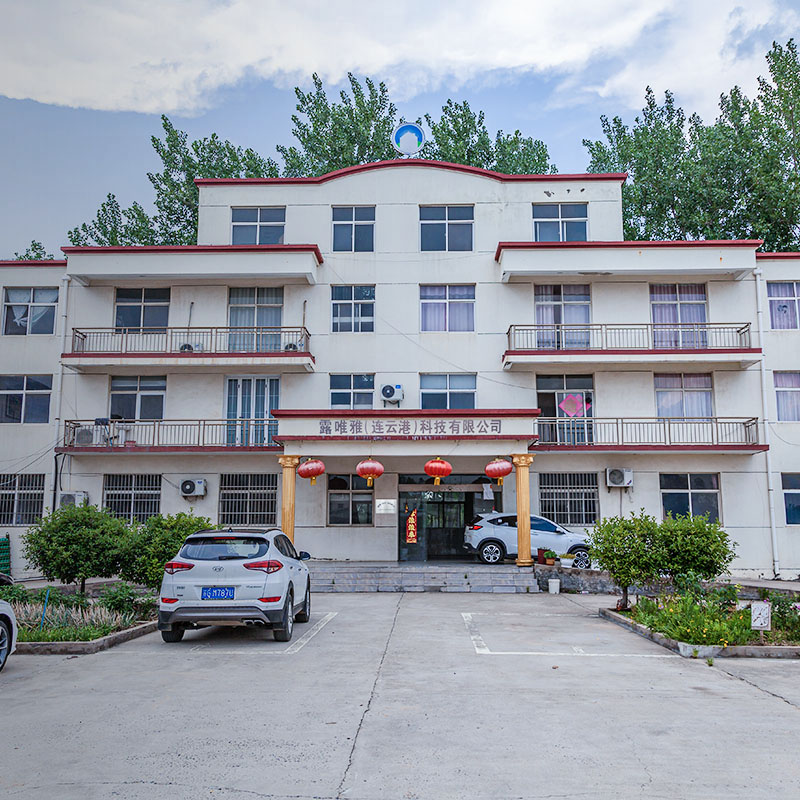
1st floor Runlian industrial center No. 116 QuFeng Rd., Haizhou Economic and technological development zone Lianyungang City, Jiangsu Province, China 222062
HOT SALE QUARTZ PRODUCTS
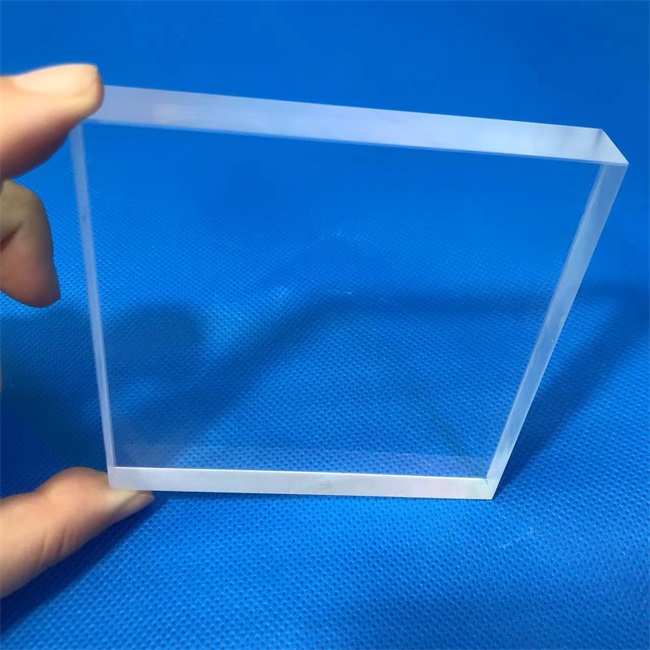
We are committed to producing high-quality quartz glass products, including quartz tube, quartz plate, quartz rod, quartz window, quartz sand, quartz crucible, quartz boat, quartz flange, quartz beaker etc.
A Manufacturer Of Quartz Glass Products--- LUVERRE QUARTZ
Luverre(LYG) Technology Co. Ltd is located in Lianyungang City, a well-known quartz glass production base in China. We produce and sell various kinds of high quality quartz glass including quartz tube, quartz plate, quartz rod, quartz sand, quartz window, quartz crucible, quartz boat, quartz flange, quartz beaker, quartz glass instruments and so on. We can meet our customers all kinds of custom requirements for quartz glass products.
Quartz glass produced with high purity quartz sand has excellent optical properties, it has a wide range of transparency and excellent transmittance, ranging from ultraviolet to infrared region. Additionally, quartz glass is resistant to high temperature, it’s more than 1200 degrees, and melting point reached 1750 degrees, thermal expansion coefficient is small, good thermal stability. Quartz glass for photovoltaic equipment is not easy to be damaged by ultraviolet and high-energy radiation, light can pass through the quartz glass in the functional optical path, and the distortion is small. Quartz glass can be widely used in photovoltaic industry as quartz crucible, high purity reaction chamber, gas/liquid inlet or pipeline.
As a quartz products manufacturer, we have been focusing on product development and production, according to customer's customized needs, we produce various sizes and different shapes of high purity photovoltaic quartz glass products.
High purity quartz products are widely used in the semiconductor industry because of their excellent high temperature resistance, corrosion resistance and thermal stability. They are important consumables in wafer production.
Lighting
Quartz products have a wide range of applications in the field of lighting. We control the content of specific trace elements to make them show different degrees of absorption in ultraviolet, visible and infrared spectroscopy, so as to achieve a wide range of applications in traditional light sources, automotive light sources, special light sources, sterilization and heating.
Quartz glass has excellent optical properties, high optical transmittance and uniformity, which make it an excellent material in the field of optics.
Laboratory
Qartz glass has the characters of high temperature and corrosion resistance, high thermal stability, which make it an excellent material in laboratory.
Selecting the right quartz ring depends on three factors: purity grade (4N for industrial, 5N–6N for semiconductor/optical), dimensional tolerance (standard ±0.1 mm vs. precision ±0.01 mm), and operating temperature (up to 1200°C continuous). For non-standard sizes, tight deadlines, or small-batch r
Quartz disc is a flat, circular component made from high-purity fused quartz, selected primarily by diameter, thickness, tolerance grade, surface finish, and application environment. Getting the specification right the first time prevents rework, reduces lead time risk, and ensures the part performs
Selecting the right quartz window requires balancing optical transmission requirements with mechanical stability under thermal stress. For most industrial applications, the choice depends on whether you need deep UV transmission (requiring high-purity fused silica) or infrared heat resistance, along
Add: 1st floor Runlian industrial center No. 116 QuFeng Rd., Haizhou Economic and technological development zone Lianyungang City, Jiangsu Province, China 222062