T: +86-518-85528012
E: nick@luverrequartz.com
E: nick@luverrequartz.com
1st floor Runlian industrial center No. 116 QuFeng Rd., Haizhou Economic and technological development zone Lianyungang City, Jiangsu Province, China 222062
Views: 0 Author: Site Editor Publish Time: 2026-08-28 Origin: Site


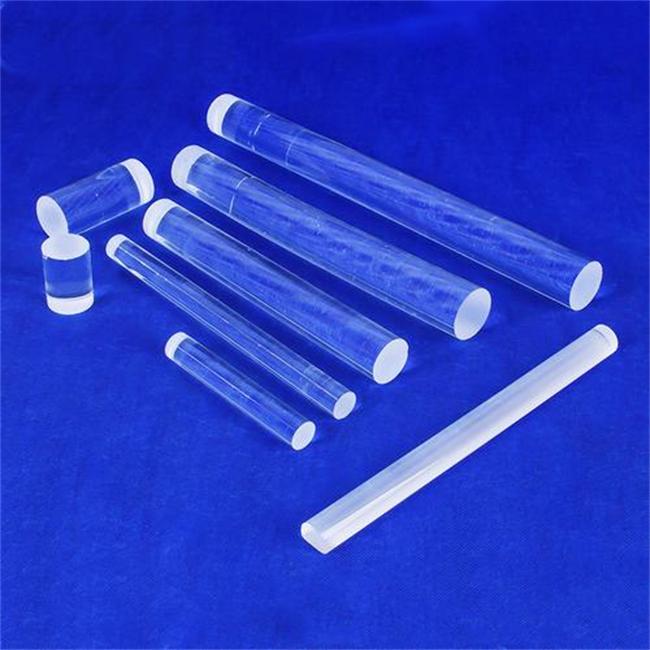
Yes, But Only Low-OH Quartz Glass Rods
Yes, quartz rods can be used in high-pressure mercury lamps, but they require specific low-hydroxyl (low-OH) quartz glass with OH content below 10ppm—preferably under 5ppm for optimal performance. This specialized quartz rod material serves as electrode holders, support structures, and sealing components in high-pressure mercury vapor lamps operating at temperatures exceeding 600°C and pressures up to 200 atmospheres.
Standard quartz glass with high OH content will deform, devitrify, or fail catastrophically in these extreme conditions. Understanding the precise material specifications is critical for procurement success.
Why Low-OH Quartz Is Non-Negotiable for High-Pressure Mercury Lamps
The Problem with Regular Quartz Glass
Standard commercial quartz rods typically contain 120-400ppm hydroxyl groups. When exposed to high-pressure lamp operating temperatures (1100-1250°C continuous), two catastrophic failure mechanisms occur:
- Viscosity reduction: High OH content drastically lowers glass viscosity, causing the quartz rod to deform or sag under its own weight and thermal load.
- Cracking risk: OH groups above 350ppm create stress-strain near the glass surface during repeated heating cycles. This leads to micro-cracking that expands with each thermal cycle until structural failure occurs.
The Low-OH Solution for Lamp Applications
For high-pressure mercury lamps, the quartz rod material must meet these critical benchmarks:
OH Content Requirements
- Below 10ppm is mandatory; below 5ppm is the industry preference for premium lamps.
- This low-OH level is achieved through vacuum dehydration during manufacturing, which drives out moisture and reduces hydroxyl concentrations to safe levels.
Purity and Structural Integrity
- SiO₂ purity must exceed 99.9%, with 99.99% being ideal for semiconductor-grade or ultra-high-reliability lamp applications.
- Bubble density must be strictly controlled: fewer than 2 bubbles (with diameters between 0.1mm and 0.5mm) per 100 grams of material.
- Dimensional tolerances of ±0.1mm are standard, though ±0.05mm is achievable for precision-critical electrode alignment.
Temperature Performance
- Continuous working temperature: 1100°C to 1250°C.
- Short-term resistance: up to 1400°C for temporary excursions.
- Thermal shock resistance: allows for rapid warm-up and cool-down cycles without fracturing.
Real-World Performance Impact
In actual lamp applications, the differences are measurable and significant:
- Lamps using low-OH quartz achieve up to three times longer service life compared to those using standard glass alternatives.
- Proper quartz support rods prevent electrode misalignment, which would otherwise cause arc instability, uneven light output, and premature lamp failure.
- The material's consistent thermal expansion characteristics maintain seal integrity over thousands of operating hours.

Critical Applications of Quartz Rods in High-Pressure Mercury Lamps
Quartz rods serve multiple essential functions in high-pressure mercury lamp construction, each demanding specific material and machining characteristics.
Electrode Holding and Support Structures
In the bulb neck of the discharge vessel, quartz rods function as:
- Carrier parts for electrode assemblies and molybdenum foil current-carrying elements. The rods physically support these components during lamp assembly and operation.
- Support elements that hold rods extending into the discharge space. These maintain electrode positioning despite thermal expansion and vibration.
- Alignment rods ensuring precise electrode positioning within the arc tube. Even minor deviations can affect arc stability and lamp efficiency.
Sealing and Current-Carrying Components
The quartz rod serves as an insulating support for critical electrical interfaces:
- Molybdenum foil strips that carry current into the lamp are sandwiched or supported by quartz components.
- Electrical leads connecting external power to internal electrodes are routed through quartz insulating structures.
- Sealing elements that maintain gas pressure integrity rely on quartz's dimensional stability and chemical inertness.
Custom Machined Components for Advanced Lamp Designs
For sophisticated lamp architectures, quartz rods can be precision-machined into custom configurations:
- Half-cylindrical profiles for specific support geometries where space is constrained.
- Tapered columns for custom mounting arrangements that require graduated diameters.
- Complex shapes with slots, flats, or end configurations designed to fit unique lamp housings.

How to Select the Right Quartz Rod for High-Pressure Mercury Lamps
Material Grade Selection Process
Step One: Verify the OH Specification
- Request OH content test reports from the supplier. For lamp applications, <10ppm is mandatory.
- For critical or high-reliability applications, specify <5ppm and request confirmation through independent third-party testing.
Step Two: Verify Purity and Bubble Density
- Require SiO₂ ≥99.99% for semiconductor-grade lamp applications.
- Require SiO₂ ≥99.9% for standard industrial lamps.
- Establish maximum allowable bubbles: 2 bubbles per 100g, with individual bubbles between 0.1mm and 0.5mm.
Step Three: Confirm Temperature Performance
- Continuous working temperature: verify the material can sustain 1100-1250°C without deformation.
- Softening point: confirm it exceeds 1680°C.
- Annealing point: confirm it exceeds 1180°C.
Diameter and Length Selection
Standard commercially available ranges include the following:
- Diameters from 2mm up to 300mm.
- Lengths from 10mm up to 3000mm.
- Tolerances of ±0.1mm for high-precision work, or standard tolerances for general applications.
For procurement, it is essential to define these parameters clearly and to request confirmation that the supplier can consistently meet your specified tolerances.
Surface Finish Options by Application
The required surface finish depends on the specific function within the lamp:
- Fire-polished surfaces are suitable for general lamp support applications where dimensional precision is less critical and thermal stress is moderate.
- Ground surfaces are used for precision fitting requirements, such as where the rod must mate with other components or maintain exact positioning.
- Custom-machined surfaces are necessary for end shaping, creating slots, machining flats, or other specialized geometries that require CNC processing.

Solving Common Procurement Challenges Through Customization
Challenge 1: Standard Dimensions Don't Fit Your Design
The Problem: Most stock quartz rods are manufactured to standard imperial or metric sizes that rarely align with custom lamp designs.
Our Solution: We offer unlimited custom diameter and length capabilities. Need a 6.35mm rod for a specific bulb neck? A 2500mm length for a custom lamp assembly? Our CNC machining center delivers exactly what your drawing specifies, with tolerances tailored to your application.
Challenge 2: Non-Standard Shapes and Profiles
The Problem: Off-the-shelf rods are round and straight; your lamp design may require half-cylindrical profiles, tapers, or rods with flats.
Our Solution: We machine virtually any configuration. From half-cylindrical rods to tapered profiles to rods with precision-cut slots, we can produce it. Send us your drawing or sample, and we'll reproduce it accurately.
Challenge 3: Tight Dimensional Tolerances
The Problem: Standard production tolerances may be insufficient for precision electrode alignment, leading to arc instability.
Our Solution: We offer ±0.05mm precision grinding for critical applications where standard ±0.1mm is insufficient. This ensures consistent electrode positioning and reliable lamp performance.
Challenge 4: Small Batch Quantities for Prototyping
The Problem: Most manufacturers require large minimum orders, making prototype development expensive and difficult.
Our Solution: We operate with no MOQ for prototyping. Start with 5 pieces for validation, then scale to 10,000+ pieces for full production runs. This flexibility enables iterative design refinement.
Challenge 5: Tight Delivery Deadlines
The Problem: Project timelines often compress unexpectedly, requiring rapid material delivery.
Our Solution: We offer express manufacturing for urgent orders. We've shipped to over 40 countries with lead times as short as 7-10 days for standard custom rods, depending on complexity.
Challenge 6: Quality Inconsistency Between Batches
The Problem: Inconsistent material properties cause lamp performance variations and manufacturing defects.
Our Solution: Our quality system inspects every rod for dimensional accuracy using laser measurement, material purity through spectrographic analysis, bubble density under high-intensity light, and surface quality through both visual and tactile inspection.

Frequently Asked Questions: Quartz Rods for High-Pressure Mercury Lamps
What OH content is required for high-pressure mercury lamp quartz rods?
Low-OH quartz with hydroxyl content below 10ppm—and ideally under 5ppm—is essential for high-pressure mercury lamp applications. This level ensures thermal stability at operating temperatures.
Why can't standard quartz rods be used in high-pressure mercury lamps?
Standard quartz contains 120-400ppm OH, which causes viscosity reduction and cracking at lamp operating temperatures above 600°C, leading to deformation and premature failure.
What temperature can quartz rods withstand in mercury lamps?
High-quality quartz rods withstand 1100-1250°C continuously and up to 1450°C for short periods, with a softening point around 1680°C.
What diameters of quartz rods are available for lamp applications?
Standard diameters range from 2mm to 300mm, with custom sizes available upon request. Lengths can extend to 3000mm or more.
Can quartz rods be custom-machined for specific lamp designs?
Yes. We provide full CNC machining services including end shaping, slotting, drilling, and complex profile generation based on your drawings.
What purity level is required for lamp-grade quartz rods?
SiO₂ purity should be ≥99.9% for standard lamps and ≥99.99% for semiconductor or high-end optical applications where contamination must be minimized.
Do quartz rods need vacuum dehydration for mercury lamp use?
Yes. Vacuum dehydration reduces OH content to 5ppm or less, making the material suitable for high-pressure lamp applications where thermal stability is critical.
What is the thermal expansion coefficient of these quartz rods?
The coefficient is 5.5×10⁻⁷/°C (measured from 20°C to 300°C), which provides excellent thermal shock resistance and dimensional stability.
What is the maximum length available for custom quartz rods?
Standard production lengths extend to 3000mm, with longer lengths available for special orders requiring extended components.
Do you offer low-MOQ for prototype lamp development?
Yes. We welcome small-batch orders with no minimum quantity requirements for prototyping, allowing you to validate your design before scaling production.
What surface finishes are available for lamp support rods?
Fire-polished (general applications), ground (precision fitting), or custom-polished surfaces are available depending on your requirements.
How do I specify a custom quartz rod for my lamp design?
Send us your drawings in PDF, DXF, or DWG format—or provide detailed written specifications including diameter, length, tolerance, OH content, and any special features required.
What is the lead time for custom quartz rods?
Standard custom orders ship in 10-15 days; express orders can ship in 7-10 days when urgency requires.
Can you produce quartz rods with molybdenum foil integration?
Yes. We can supply quartz rods with precision slots and channels designed to accommodate molybdenum foil current-carrying elements for lamp seal assemblies.
How do you test OH content before shipping?
We provide spectrographic analysis certification with every batch, confirming OH content levels and providing full material traceability documentation.

Technical Specifications for High-Pressure Mercury Lamp Quartz Rods
Material Properties – Typical Values
Material Composition and Structure
- High-purity fused quartz with SiO₂ content ≥99.99% for premium grades.
- Density of 2.203 g/cm³, providing structural integrity with moderate weight.
- Amorphous structure ensuring isotropic properties.
Thermal Performance Characteristics
- Softening Point: approximately 1680°C.
- Annealing Point: approximately 1180°C.
- Continuous Working Temperature Range: 1100°C to 1250°C.
- Short-Term Working Temperature: 1400°C to 1500°C for temporary excursions.
- Coefficient of Thermal Expansion (measured from 20°C to 300°C): 5.5×10⁻⁷/°C.
Mechanical Strength
- Compressive Strength: exceeding 1100 MPa.
- Bending Strength: 67 MPa, providing adequate structural support for lamp components.
- Elastic modulus: ensuring dimensional stability under thermal and mechanical loads.
Optical and Electrical Properties
- Refractive Index: 1.45845 (at standard wavelengths).
- Resistivity at 20°C: 7×10⁷ Ω·cm, providing excellent electrical insulation.
Chemical and Purity Specifications
- OH Content: <10ppm (standard grade), <5ppm (premium lamp grade).
- Total metallic impurity content below 20ppm for standard grades.
- Bubble density: fewer than 2 bubbles per 100g, with bubble sizes between 0.1mm and 0.5mm.
Dimensional Capabilities
Size Range
- Diameters available from 1mm to 300mm.
- Lengths available from 5mm to 3000mm.
- Custom lengths and diameters available for special applications.
Tolerances
- Diameter Tolerance: ±0.05mm to ±0.1mm depending on size and grinding method.
- Length Tolerance: ±0.5mm to ±1.0mm depending on length and cutting method.
- Straightness: within acceptable limits for lamp support applications.
End Finishes
- Cut ends for general applications.
- Fire-polished ends for thermal stress reduction.
- Ground ends for precision fitting and assembly.
- Custom end configurations including tapers, chamfers, and slots.
Quality Assurance Protocol
Every shipment is accompanied by:
- Spectrographic analysis certification confirming SiO₂ purity and trace metallic impurity levels.
- Laser measurement reports for dimensional accuracy.
- Visual inspection records documenting bubble density and surface quality.
- Full batch traceability documentation linking the product to its manufacturing history.
Why We're Your Ideal Quartz Rod Partner for Lamp Manufacturing
20+ Years of Technical Expertise
With more than two decades in the quartz glass industry, our engineering team understands the exacting requirements of high-pressure mercury lamp manufacturing. We don't simply supply products—we solve technical problems. When you send us a drawing, we understand the functional requirements behind each dimension. When you specify an OH content limit, we understand the thermal implications. This experience translates to better recommendations and fewer errors in production.
Full Customization Capabilities
We offer complete OEM and ODM services that differentiate us from standard stock suppliers:
- CNC precision machining performed on our in-house equipment per your drawings.
- Sample reproduction from existing parts when drawings are unavailable.
- Custom OH content control achieved through tailored dehydration processing.
- Multiple surface finish options ranging from fire-polished to precision-ground.
- Any quantity from a single prototype piece to 100,000+ pieces for production runs.
Global Export Experience
We've successfully served lamp manufacturers, semiconductor facilities, and industrial OEMs across a wide range of international markets:
- United States and Canada (including FDA-compliant and non-DICD-regulated applications).
- European Union nations (compliant with REACH and RoHS standards).
- Japan, Korea, and Southeast Asian technology hubs.
- Middle Eastern markets with specific temperature and certification requirements.
- Australia and New Zealand for specialized lamp applications.
Quality You Can Depend On
Every order is backed by a comprehensive quality system:
- In-process quality inspection at each manufacturing stage.
- Final certification documentation included with every shipment.
- Consistent material properties across batches, ensuring repeatable lamp performance.
- Fast replacement for any quality issues, with customer service available across time zones.
Flexible Commercial Terms
We understand that procurement requirements vary widely:
- No MOQ for prototype and development orders.
- Volume discounts for production quantities.
- Flexible payment terms for established partners.
- DDP, CIF, FOB, and EXW shipping options available.

The Core Requirement: Low-OH quartz rods with hydroxyl content below 10ppm—ideally under 5ppm—are essential for high-pressure mercury lamp applications. This specialized material withstands 1100-1250°C operating temperatures, resists devitrification, and provides the structural support needed for electrode assemblies and current-carrying elements. Standard quartz with 120-400ppm OH content will fail through deformation or cracking within hours of operation.
Critical Applications: These rods serve as electrode supports, carrier parts for molybdenum foil, sealing components, and custom structural elements within the lamp arc tube and neck assembly.
Selection Priorities: When specifying quartz rods, prioritize OH content testing, purity verification, temperature rating confirmation, and dimensional tolerance requirements. Request third-party certification to validate supplier claims.
Procurement Considerations: Non-standard sizes and shapes are common in lamp manufacturing. Suppliers with full CNC machining capability and no minimum order requirements enable efficient prototyping and production scaling. Quality documentation and fast delivery are essential for maintaining manufacturing schedules.
Our Advantage: With two decades of quartz glass engineering experience, in-house precision machining, global shipping infrastructure, and no MOQ requirements, we are positioned to support lamp manufacturers from prototype to full production. Our quality system ensures consistent material properties, and our technical team provides application-specific guidance for your unique lamp designs.

Luverre Quartz manufactures and sells a wide range of high quality quartz glass, including quartz tubes, quartz plates, quartz rods, quartz windows, quartz crucibles, quartz boats, quartz flanges, quartz beakers, quartz glass instruments, and more. We can meet all kinds of customized requirements for quartz glass products.
