T: +86-518-85528012
E: nick@luverrequartz.com
E: nick@luverrequartz.com
1st floor Runlian industrial center No. 116 QuFeng Rd., Haizhou Economic and technological development zone Lianyungang City, Jiangsu Province, China 222062
Views: 0 Author: Site Editor Publish Time: 2026-06-03 Origin: Site


In precision experiments such as chemical synthesis, catalytic reactions, and high-temperature analysis, quartz tubes serve as reaction vessels or protective sleeves, and their purity, temperature resistance, and dimensional tolerances directly affect the reliability of experimental data. In response to the strict requirements of "pollution-free, corrosion-resistant, and high thermal stability" in chemical experiments, high-purity quartz tubes (SiO ₂ ≥ 99.9%) have become standard laboratory equipment due to their extremely low metal impurity content and excellent spectral transmittance. This article will systematically analyze how to choose high-quality quartz tubes suitable for chemical experiments from the perspectives of technical parameters, application scenarios, and customized solutions.
FAQ: The Most Concerned Questions for Chemical Experiment Users
Q: What is the difference between quartz tubes used in chemical experiments and ordinary quartz tubes?
Answer: Ordinary quartz tubes have a high impurity content (such as Fe, Al, Na, etc., which can reach tens of ppm), and metal ions may precipitate in strong acids, high temperatures, or long-term experiments, contaminating the reaction system. The chemical experimental grade high-purity quartz tube uses high-purity quartz sand raw material, with a total metal impurity content of less than 20ppm, and some specifications can be controlled below 10ppm to ensure that it does not interfere with catalytic reactions or trace analysis results.
Q: How high can high-purity quartz tubes withstand temperatures?
Answer: The recommended temperature for long-term use is 1100 ℃ -1200 ℃, and it can withstand 1300 ℃ for a short period of time (within a few hours). Its softening point is about 1730 ℃, and its coefficient of thermal expansion is only 5.5 × 10 ⁻⁷/℃, so it has excellent thermal shock resistance - it will not explode when directly placed in room temperature water from 1000 ℃. However, it should be noted that the actual temperature resistance may vary among different manufacturers due to differences in raw material purity and melting process. It is recommended to verify the specific batch test reports.
Q: Will common corrosive gases (such as Cl ₂, HCl, HF) in chemical experiments cause damage to quartz tubes?
Answer: The main component of quartz tubes is SiO ₂, which has good corrosion resistance to most acids (except hydrofluoric acid and hot phosphoric acid), alkaline solutions, and organic solvents. However, special attention should be paid to the fact that hydrofluoric acid (HF) can rapidly corrode quartz even at low concentrations; High concentration hot phosphoric acid (>200 ℃) can also cause surface loss of transparency. For highly corrosive atmospheres containing chlorine or sulfur, high-purity quartz tubes perform better than ordinary glass or ceramic tubes due to their dense structure and low surface hydroxyl content. However, regular inspections are still needed to check for corrosion spots on the inner wall.
Q: Can the diameter, wall thickness, and length be customized according to the experimental setup?
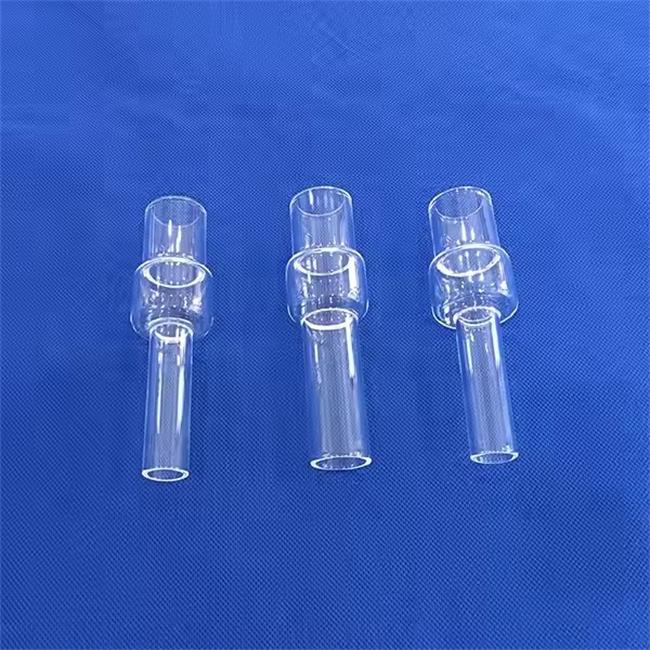
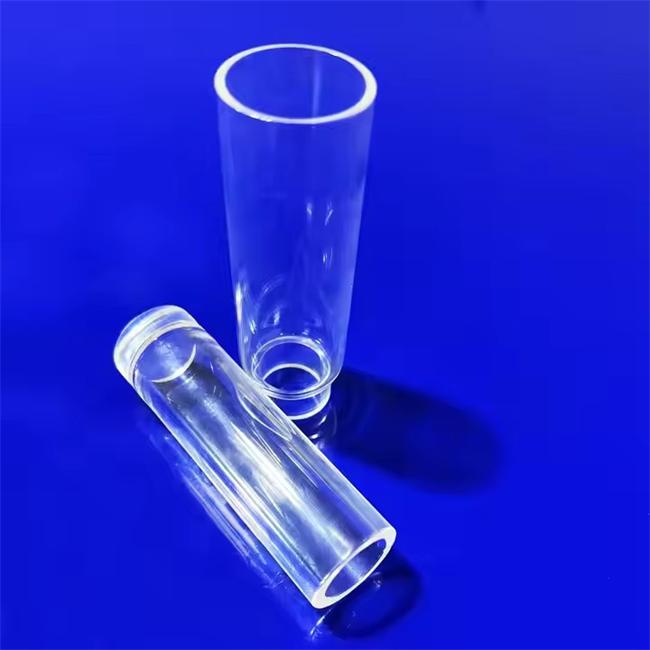
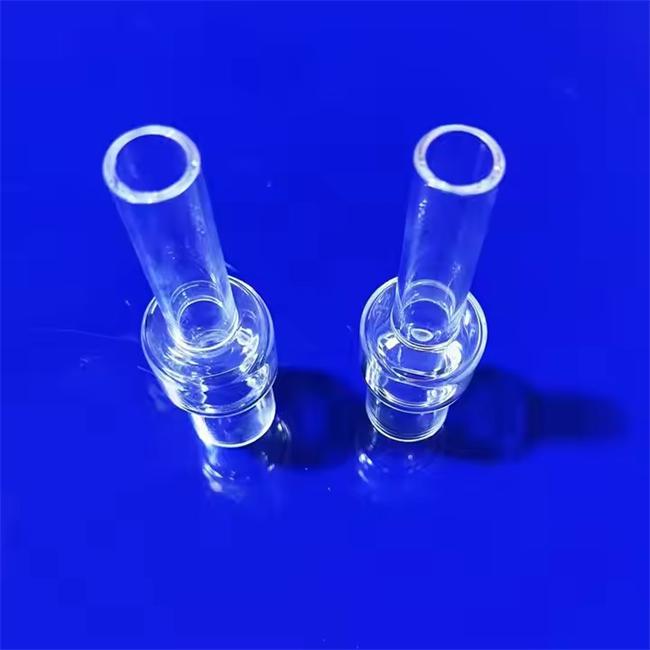
Answer: Sure. We offer customized sizes within the range of 3mm-300mm outer diameter, 1mm-8mm wall thickness, and 50mm-2000mm length, with tolerances controlled within ± 0.1mm. Simultaneously supporting irregular processing: such as one end shrinking, two end opening, outer wall sanding, inner wall polishing, drilling or welding of branch tubes, etc., suitable for different equipment interfaces such as tube furnaces, vacuum systems, gas reaction devices, etc.
What core challenges can you solve?
Experimental pollution issue: High purity raw materials ensure no metal ion precipitation during the experimental process, ensuring the reproducibility of catalytic, synthetic, and analytical results.
High temperature explosion risk: The extremely low thermal expansion coefficient and precision annealing process keep the quartz tube intact during rapid cooling and heating, avoiding experimental interruption or equipment damage.
Worries about size mismatch: We provide non-standard customization services, from micro capillary tubes to large reaction tubes, all can be molded in one go, reducing the need for adapters and leakage points.
Contradiction between corrosion and light transmission: Maintain chemical inertness in common chemical environments such as hydrochloric acid, sulfuric acid, nitric acid, etc., while the transmittance in the ultraviolet to infrared band is greater than 92%, suitable for online spectral detection.
Advantages and Application Value
1. Material grade: High purity (≥ 99.9%) and low hydroxyl (<150ppm)
We use high-purity quartz sand as raw material, which undergoes multiple steps of acid washing purification and arc melting to ensure that the total amount of impurities is ≤ 20ppm. Low hydroxyl models (used for UV catalysis or infrared temperature measurement) can be customized with hydroxyl content below 10ppm to avoid water from participating in side reactions at high temperatures.
2. Key performance parameters
Thermal expansion coefficient: 5.5 × 10 ⁻⁷/℃ (from room temperature to 1000 ℃)
Compressive strength: 50-80 MPa (when the wall thickness is 1mm)
Transmittance: 200nm-2500nm>90%, ≥ 85% at 265nm
Electrical resistivity:>5 × 10 Ω· cm (room temperature), suitable for plasma environment
3. Examples of application scenarios
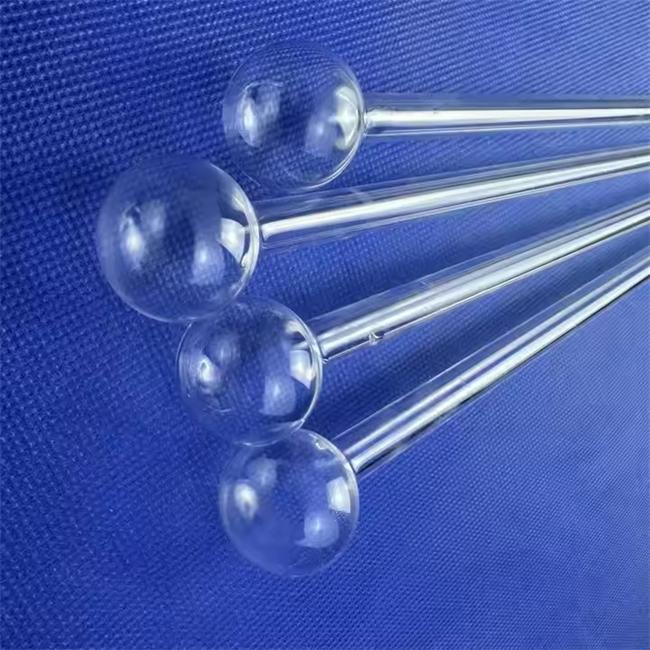
Tube furnace atmosphere reaction (CVD, PECVD, high-temperature pyrolysis)
Chemical catalytic evaluation device (fixed bed, fluidized bed reactor liner)
High purity gas purification and transportation tubeline
Online Spectral Analysis Pool (UV/IR Window or Flow Cell)
Distillation or condensation sleeve for highly corrosive materials
Customer Application Case (Anonymous)
Case 1: Renovation of Fixed Bed Catalytic Evaluation Device at a Chemical Research Institute
Challenge: When testing a new vanadium based catalyst, the original ordinary quartz tube wall showed significant loss of transparency and peeling after 200 hours of operation, causing downstream tubeline blockage. ICP detection also found abnormal amounts of sodium and iron ions (from quartz tube impurities) in the reaction product, affecting the evaluation conclusion of catalytic activity.
Solution: We provide high-purity quartz tubes with an outer diameter of 30mm, a wall thickness of 2.5mm, and a length of 600mm (SiO ₂ 99.9%, Na content<0.5ppm, Fe<0.8ppm), and customize the flanged ends according to the customer's reactor flange interface.
Result: After 800 hours of continuous operation, the inner wall of the tube remained smooth and transparent, and no metal ion migration was detected. The reproducibility of catalyst life evaluation data increased from ± 12% to ± 3%. The customer has purchased multiple sets of parallel reactors in bulk.
Case 2: A New Materials Company - Preparation of Graphene by High Temperature Chemical Vapor Deposition (CVD)
Challenge: The CVD process requires quartz tubes to be in a methane/hydrogen mixed atmosphere at 1000 ℃, and the tube body must not release oxygen-containing impurities, otherwise it will oxidize the copper foil substrate. Previously, using a quartz tube, oxidation spots appeared on the surface of the copper foil after deposition, and Raman spectroscopy showed a clear D peak, indicating that the quality of graphene did not meet the standard.
Solution: We customize low hydroxyl quartz tubes with an outer diameter of 100mm, a wall thickness of 4mm, and a length of 1200mm (hydroxyl content ≤ 8ppm), and perform high-temperature vacuum dehydroxylation treatment after molding. The surface roughness Ra of the tube body is less than 0.8 μ m, reducing contamination of nucleation sites.
Result: The oxidation spots disappeared, the coverage of single-layer graphene was greater than 95%, and the ID/IG ratio was less than 0.05. The customer has included quartz tubes in their CVD equipment standard accessory list, with an annual purchase volume of over 200 pieces.
Case 3: Corrosive Liquid Distillation System in a Chemical Laboratory of a Certain University
Challenge: Distillation of a mixed solution containing 30% hydrochloric acid and a small amount of hydrofluoric acid is required. Ordinary glass and conventional quartz tubes may experience whitening of the inner wall and a decrease in strength when exposed to low concentrations of HF, posing a risk of explosion.
Solution: We are not simply replacing the quartz tube, but suggest that the customer adjust the system design - replace the direct contact HF part with PTFE lining, retain the quartz tube only in the high temperature zone (>150 ℃), and customize an integrated four port distillation head (made of high-purity quartz, with a grinding standard of 24/40).
Result: The system has been running stably for 6 months without any leaks, and no impurities such as silicon and boron were detected in the distillation products. Customer review states that it solves the corrosion problem without excessively increasing costs.
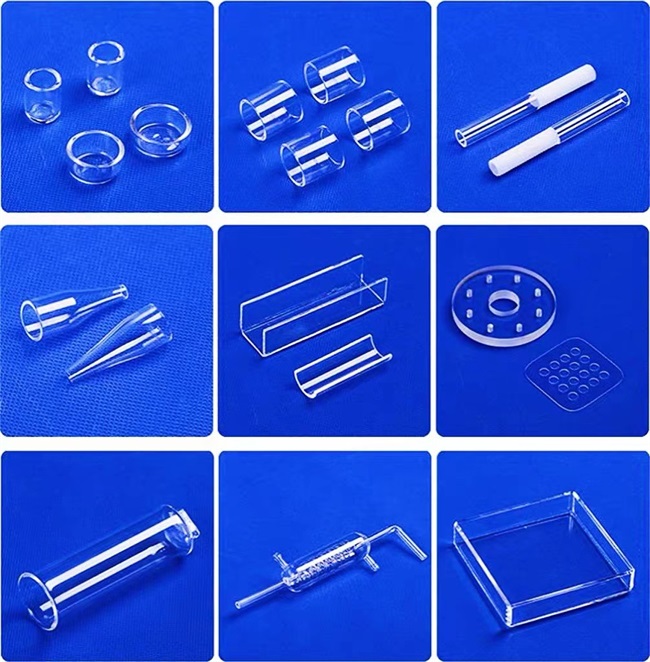
Whether it's straight tubes for standard tube furnaces or reactor liners with complex interfaces, we can process and quickly quote according to the drawings. Provide free technical consultation to assist you in matching the most suitable materials (high-purity/low hydroxyl/UV transparent type) and dimensional tolerance levels. Welcome to send drawings or usage requirements to our official platform. Our engineers will reply with customized solutions and quotations within 4 hours. Click or leave a message on "Quartz Tube Customization+Specifications" to obtain a selection guide and sample testing service.
Luverre Quartz is a manufacturer specializing in quartz tubes and other quartz items.We have over 20 years experience with the production of quartz tubes, we will be your reliable partner on quartz tubes and other quartz items.
Luverre Quartz can manufacture customized quartz tubes in various shapes, such as spiral, square, round, with processing including cutting, bending, welding, etc., and available in different colors, such as transparent quartz tubes, opaque quartz tubes, milky white quartz tubes, red quartz tubes, and so on.
