T: +86-518-85528012
E: nick@luverrequartz.com
E: nick@luverrequartz.com
1st floor Runlian industrial center No. 116 QuFeng Rd., Haizhou Economic and technological development zone Lianyungang City, Jiangsu Province, China 222062
Views: 0 Author: Site Editor Publish Time: 2026-11-04 Origin: Site


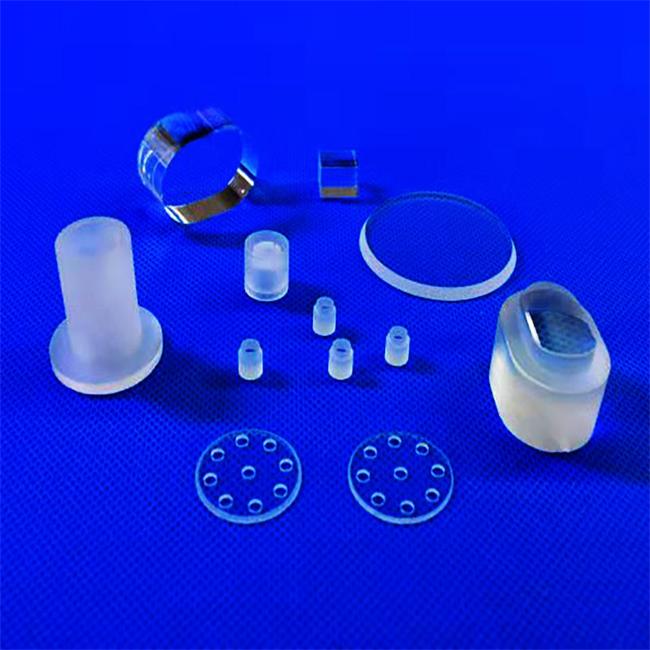
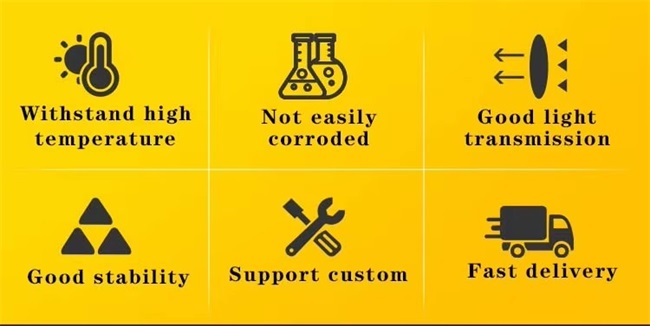
Quartz glass handles thermal shock exceptionally well because its coefficient of thermal expansion is extremely low—roughly 0.5 to 0.55 × 10⁻⁶/°C, which is about one-seventeenth that of borosilicate glass. This means when quartz is heated or cooled rapidly, it expands and contracts very little, generating minimal internal stress. In practical terms, thin-walled quartz components can be heated to over 1,500°C and plunged into cold water without cracking. For procurement managers and engineers sourcing quartz tubes, plates, rods, and custom parts for high-temperature processes, this property is often the deciding factor between reliable production and costly downtime.

What Makes Quartz Resistant to Thermal Shock?
Quartz resists thermal shock because its amorphous silica structure expands almost negligibly when heated. The material's thermal expansion coefficient is so low that rapid temperature swings produce only tiny dimensional changes, avoiding the stress gradients that shatter ordinary glass.
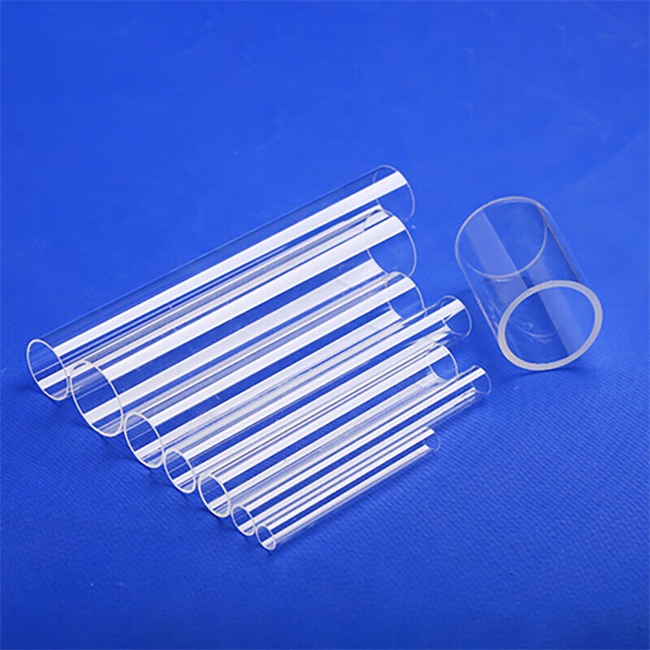
Most materials crack under thermal shock because different parts of the component heat or cool at different rates. The hotter surface expands while the cooler interior does not, creating tensile stress. Quartz sidesteps this problem because its expansion is so small to begin with. A fused quartz tube heated from room temperature to 1,100°C expands by a fraction of a millimeter per meter—well within the material's elastic tolerance. This is why quartz is the default choice for furnace tubes, semiconductor diffusion tubes, and viewport windows in vacuum systems where rapid cycling is routine.
What Temperature Limits Should Buyers Know Before Ordering?
The key limits are approximately 1,100°C for continuous service, 1,500–1,670°C for the softening point, and a practical short-term ceiling that can exceed 1,400°C depending on grade and wall thickness. Exceeding the continuous limit does not cause immediate melting, but it triggers a slower failure mode: devitrification.
Quartz glass remains amorphous and transparent up to about 1,100°C in sustained use. Above that threshold—especially beyond 1,200°C—the glassy structure begins converting to cristobalite, a crystalline phase that is opaque, brittle, and has a much higher expansion coefficient. Once devitrified, the material loses its thermal shock resistance and becomes prone to cracking. Contaminants accelerate this process dramatically. Alkaline salts, metal oxides, and even fingerprint oils can catalyze devitrification at temperatures as low as 1,000°C.
For buyers specifying quartz for a furnace or reactor, the practical rule is: stay below 1,100°C for continuous operation unless you have verified the atmosphere is clean and the part is handled with gloves. Short excursions to 1,200–1,400°C are acceptable in many cases, but they consume the part's service life faster.

How Does Wall Thickness and Geometry Affect Thermal Shock Performance?
Thicker walls and complex geometries reduce thermal shock tolerance because they create larger temperature gradients across the part. A thin-walled quartz tube can survive a water quench from 1,500°C; a thick quartz flange with sharp internal corners may crack under the same conditions.
The physics is straightforward: thermal stress scales with the temperature difference across the material and the part's thickness. Thin sections heat and cool uniformly, keeping internal stress low. Thick sections develop a hot skin and a cold core, and the resulting stress can exceed the material's strength. Sharp corners and sudden changes in cross-section concentrate stress further.
For custom quartz parts destined for rapid cycling, specify uniform wall thickness, generous radii, and avoid unnecessary mass. If your design requires a thick flange or a complex shape, discuss the thermal profile with your supplier—sometimes a minor geometry change or a slower ramp rate is all that separates a reliable part from a cracked one.

When Does Quartz Fail Under Thermal Shock?
Quartz fails under thermal shock when devitrification has already weakened the surface, when mechanical damage or contamination creates stress concentrators, or when the part is constrained by a rigid fixture that prevents expansion. Under clean conditions and with proper design, catastrophic thermal shock failure is rare.
The most common field failures we see in customer returns follow a predictable pattern. A quartz tube runs for months at 1,150°C. The surface slowly devitrifies, especially where dust or handling oils accumulated. One day the furnace is opened for maintenance, the tube cools rapidly, and a crack propagates through the crystallized zone. The quartz did not fail because thermal shock resistance is poor—it failed because the material was no longer pure quartz at the surface.
For applications involving repeated cycling, specify low-hydroxyl electrically fused quartz where possible. Lower hydroxyl content increases viscosity and slows devitrification, extending service life in high-temperature cycling.
How to Select the Right Quartz Grade for Rapid Temperature Changes
Choose fused quartz with low hydroxyl content and high purity for any application involving rapid heating, cooling, or repeated thermal cycling. For less demanding environments, standard fused quartz is adequate, but the cost difference rarely justifies compromising on thermal performance.
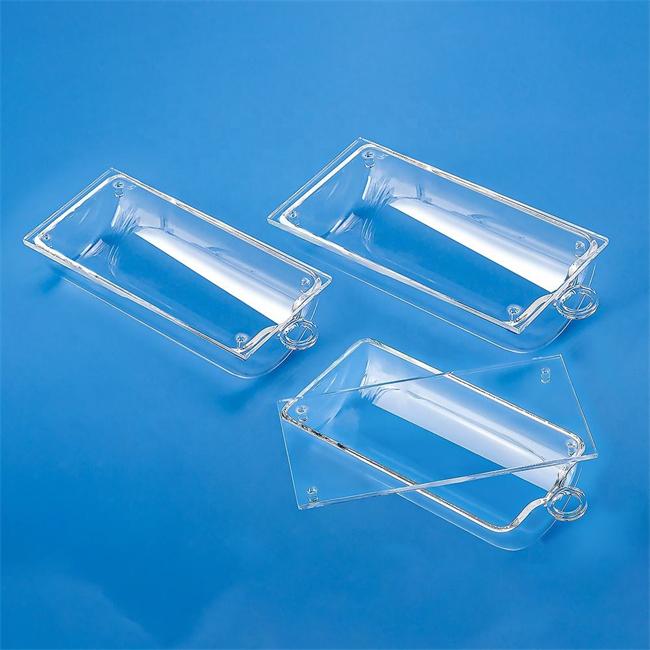
Here is the practical selection logic. For repeated cycling above 1,000°C, specify low-hydroxyl electrically fused quartz—it devitrifies more slowly and maintains higher viscosity at temperature. For semiconductor diffusion and furnace tubes, choose high-purity fused quartz with controlled metallic impurity levels to prevent contamination-driven devitrification. For optical viewports that see thermal cycling, use fused silica with high transmission homogeneity so optical clarity survives the cycling. For chemical processing with rapid quench, thick-wall quartz with smooth surfaces avoids stress concentrators while resisting chemical attack. For general laboratory or lower-temperature use, standard fused quartz is cost-effective, and its thermal shock resistance is still excellent.
For buyers unsure which grade fits their process, the most useful information you can provide your supplier is the maximum temperature, the cycle frequency, the atmosphere, and whether the part is mechanically constrained. Those four data points determine the grade and geometry recommendations.

Why Custom Quartz Sourcing Becomes a Thermal Shock Problem
Most thermal shock failures in the field trace back to a mismatch between the part's actual operating conditions and the specifications used at procurement. A standard catalog quartz tube may have excellent thermal shock resistance in theory, but if the wall thickness is wrong for your furnace, or the flange geometry creates a stress riser, or the material grade devitrifies faster than expected because of trace contaminants—the result is a cracked part and a production interruption.
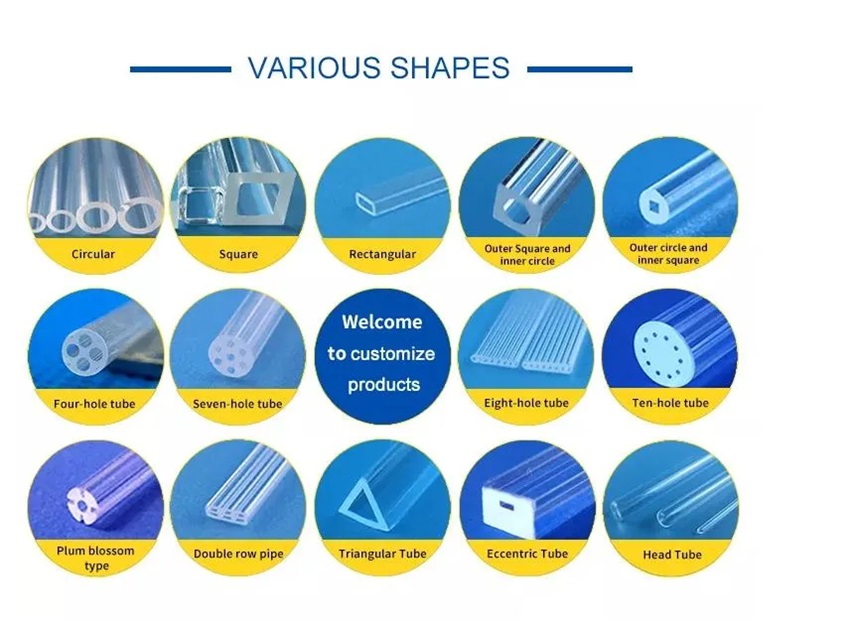
This is where a manufacturing partner with application engineering capability matters. We routinely work with customers who have struggled with non-standard dimensions—a furnace retrofit requires a quartz tube with an unusual diameter or wall thickness that no catalog supplier stocks, and we machine to drawing without minimum order penalties. We support small-batch custom parts, such as a lab needing five quartz rings for a prototype thermal cycling rig, where many suppliers quote MOQs of hundreds but we accept low-MOQ and prototype runs. We hold tight tolerances on thermal-critical features, such as a viewport flange that must mate with a metal housing without introducing point loads that crack the quartz during cycling—our flatness and concentricity tolerances prevent installation-induced stress. And we handle urgent replacement: when a diffusion tube fails mid-run and the line is down, our production scheduling accommodates expedited quartz parts without sacrificing the annealing and inspection steps that ensure thermal reliability.
Frequently Asked Questions
Can quartz glass withstand rapid cooling from 1,200°C to room temperature?
Thin-walled quartz components can survive this under clean conditions, but repeated cycling from 1,200°C accelerates devitrification and shortens service life. For repeated quench cycles, specify low-hydroxyl fused quartz and inspect for surface crystallization periodically.
What is the maximum temperature for continuous use of quartz tubing?
Approximately 1,100°C in clean atmospheres. Above this temperature, devitrification risk rises significantly, especially if the tube surface is contaminated or the atmosphere contains alkaline species.
Does quartz crack if heated unevenly?
Quartz is far more tolerant of uneven heating than other glasses, but severe localized heating—such as a flame impinging on one spot while the rest of the part remains cold—can still create enough stress to crack thick sections or parts with sharp geometry.
How does borosilicate glass compare to quartz for thermal shock?
Borosilicate has a much higher expansion coefficient and a maximum continuous service temperature around 500°C. Quartz is the clear choice for any application above 500°C or involving rapid temperature changes.
Will a quartz crucible survive repeated melting and cooling cycles?
Yes, if the crucible is handled cleanly and the melt does not contain aggressive alkaline or metallic contaminants. Quartz crucibles for semiconductor and metallurgical use are designed for repeated cycles, but surface devitrification eventually limits life.
Can quartz be repaired after a thermal crack?
No. Once cracked, a quartz part cannot be welded or repaired reliably for high-temperature service. Replacement is the only safe option.
What contaminants cause quartz to fail prematurely under thermal cycling?
Alkali salts, metal oxides, and even handling oils from bare fingers. These lower the devitrification threshold and create localized weak points that crack during temperature changes.
Does hydroxyl content affect thermal shock resistance?
Indirectly, yes. Lower hydroxyl content increases viscosity and slows devitrification, which preserves thermal shock resistance over a longer service life.
What wall thickness is best for a quartz furnace tube?
Thinner walls improve thermal shock tolerance but reduce structural rigidity and sag resistance. For most furnace tubes, 2–4 mm walls balance thermal performance with mechanical stability. Discuss your specific furnace dimensions with a supplier.
Can quartz windows be used in high-temperature viewports with rapid cycling?
Yes, provided the window is mounted without rigid constraints and the flange design does not concentrate stress. We manufacture quartz windows with polished faces and annealed edges specifically for thermal cycling viewport applications.
How do I know if my quartz part has devitrified?
The surface turns from transparent to milky or opaque, sometimes with a visible white haze. Devitrified areas are brittle and should be considered near end-of-life.
Do you provide material certificates for thermal-critical quartz parts?
Yes. We provide certificates of compliance with hydroxyl content and impurity specifications on request, along with dimensional inspection reports for custom parts.
What is the lead time for custom quartz parts with thermal-critical tolerances?
Standard custom parts typically ship in 2–4 weeks. Expedited service is available for urgent replacement needs. Low-MOQ prototype orders can often be accommodated within the standard schedule.
Why Choose Us for Thermal-Critical Quartz Components
We are a source manufacturer of custom quartz products, not a trading company. That means when you specify a quartz tube for a 1,100°C cycling furnace, the engineering team that reviews your drawing also controls the raw material selection, the machining parameters, and the final inspection.
Our capabilities directly address the failure modes discussed above. We provide grade selection support, helping you choose between electrically fused and flame fused quartz based on your temperature profile, atmosphere, and cycling frequency. Our machining team designs fixtures and tool paths for custom geometry without stress risers, avoiding edge chipping and subsurface damage that are common initiation sites for thermal cracks. We accept low-MOQ and prototype runs—send a drawing or a sample, and we will produce five pieces or five hundred with the same process controls. We use high-purity materials sourced from suppliers with verified low metallic impurity levels and provide material documentation when required. And we bring global export experience: we ship quartz parts worldwide with appropriate packaging for fragile, high-value components, and we understand the documentation requirements for semiconductor and laboratory supply chains.
If you are designing a high-temperature process or replacing a supplier whose parts keep cracking, send us your drawing, your operating temperature, and your cycle profile. We will tell you what grade and geometry will hold up—and what it will cost.
Quartz glass handles thermal shock through an extremely low coefficient of thermal expansion (about 0.5 × 10⁻⁶/°C), allowing thin sections to survive rapid heating to 1,500°C and water quenching without cracking. Practical continuous use is limited to about 1,100°C, above which devitrification gradually destroys thermal shock resistance. For reliable performance under rapid temperature changes, specify low-hydroxyl fused quartz, avoid thick sections and sharp corners, and protect surfaces from alkaline contamination. Custom geometry, grade selection, and low-MOQ sourcing are available from quartz manufacturers with application engineering support.

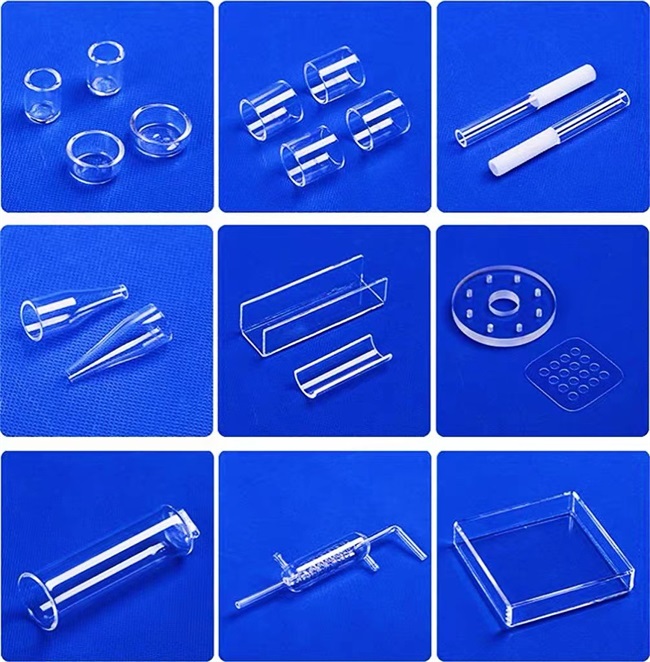
Luverre Quartz manufactures and sells a wide range of high quality quartz glass, including quartz tubes, quartz plates, quartz rods, quartz windows, quartz crucibles, quartz boats, quartz flanges, quartz beakers, quartz glass instruments, and more. We can meet all kinds of customized requirements for quartz glass products.
