T: +86-518-85528012
E: nick@luverrequartz.com
E: nick@luverrequartz.com
1st floor Runlian industrial center No. 116 QuFeng Rd., Haizhou Economic and technological development zone Lianyungang City, Jiangsu Province, China 222062
Views: 0 Author: Site Editor Publish Time: 2026-09-09 Origin: Site


Quartz tubes can withstand up to 1100°C for continuous operation and up to 1200°C for short-term use (typically less than 3 hours). The softening point — where deformation begins — is approximately 1650°C, but this is a failure limit, not a working temperature. The true performance limit is determined by devitrification, a crystallization process accelerated by contaminants (fingerprints, alkali metals), temperature, and atmosphere. Under vacuum conditions, the safe operating temperature drops to 1000°C to prevent collapse. For long service life, operate below 1050°C and always handle tubes with clean gloves.
The Critical Question for Quartz Tube Users
When specifying a quartz tube for any high-temperature application — whether in a semiconductor furnace, laboratory tube furnace, or optical processing system — the single most important question is: How hot can this tube actually get?
The answer is not a single number. It depends on whether you need continuous operation or short-term exposure, the purity of your quartz, your operating atmosphere, and how long you expect the tube to last. Understanding these nuances separates professionals who experience unexpected tube failures from those who achieve reliable, repeatable results.
The Direct Answer: What Is the Maximum Temperature for a Quartz Tube?
Key Temperature Parameters
- Maximum Continuous Operating Temperature: 1100°C — This is the safe upper limit for long-term, stable use. Operating above this accelerates devitrification and shortens tube life.
- Short-Term Maximum Temperature: 1200°C — Can be used for brief periods, typically less than 3 hours. Each cycle at this temperature reduces lifespan significantly.
- Softening Point: ~1650°C — The temperature at which quartz begins to deform under its own weight. This is a failure point, not an operating temperature.
- Annealing Point: ~1140°C — Internal stresses are relieved quickly. Approaching this temperature for long periods can cause dimensional instability.
- Strain Point: ~1075°C — Above this temperature, internal stresses can form but are relieved slowly. Below this point, quartz behaves as a rigid solid.
What This Means in Practice
If your process requires continuous operation at 1100°C or below, a standard high-purity quartz tube is an excellent choice. For processes that occasionally spike to 1200°C, the tube can handle it — but expect a shorter lifespan.
Critical distinction: Some manufacturers advertise "operating temperatures" up to 1250°C or 1300°C. This typically refers to short-term exposure limits, not continuous use. Always clarify which specification applies to your application.
Why Quartz Tubes Fail: Understanding Devitrification
The primary failure mode for quartz tubes at high temperatures is not melting — it's devitrification.
What Is Devitrification?
Devitrification is the process by which the amorphous (glassy) structure of quartz (SiO₂) converts into a crystalline structure (cristobalite). In simple terms, the glass begins to turn back into sand. This starts on the surface and appears as a hazy, opaque, or frosted layer.
Why Devitrification Is a Problem
Once devitrification occurs:
- The crystalline structure has a different coefficient of thermal expansion than the surrounding glass.
- This mismatch creates immense internal stress during heating and cooling cycles.
- The quartz becomes brittle and highly susceptible to cracking from thermal shock.
What Accelerates Devitrification?
Devitrification is not simply a function of temperature. Several factors dramatically accelerate the process:
- Temperature above 1100°C: The rate of crystallization increases significantly above this threshold.
- Contaminants: Even fingerprints contain alkali metals (sodium, potassium) that act as powerful catalysts for crystallization.
- Water vapor and oxygen: Certain atmospheres accelerate the degradation process.
- Time: Longer exposure at elevated temperatures means more devitrification.
The Solution: Purity and Clean Handling
High-purity quartz with SiO₂ content above 99.99% minimizes impurities that catalyze devitrification. Always handle quartz tubes with clean, powder-free gloves. For critical semiconductor applications, controlled atmospheres (like inert argon) are recommended.
Critical Factors That Modify the Temperature Limit
The "maximum temperature" of a quartz tube is not a fixed number. It changes based on your specific operating conditions.
Operating Atmosphere: Vacuum vs. Atmospheric Pressure
When operating a quartz tube under vacuum, the maximum temperature must be reduced to 1000°C.
Why? The external atmospheric pressure can cause a softened tube to collapse inward. At high temperatures, quartz becomes more pliable, and the pressure differential from a vacuum can be enough to deform or crush the tube.
Practical guideline:
- Atmospheric pressure or positive pressure: Continuous operation up to 1100°C
- Vacuum conditions: Maximum 1000°C for safe operation
Exposure Time
A process running at 1150°C for 30 minutes is far less risky than one running at that temperature for 5 hours. As a general rule, short-term exposure above 1100°C should be limited to 3 hours or less.
The longer the exposure to high temperatures, the more you should lower your operating setpoint to maintain a safety margin.
Thermal Cycling
Quartz has excellent thermal shock resistance — it can be heated to 1000°C and cooled to room temperature very quickly without cracking. However, repeated thermal cycling at temperatures near the annealing point (1140°C) creates cumulative stress that accelerates degradation.
Material Purity and Quality
Not all quartz tubes are created equal. High-purity quartz with >99.99% SiO₂ content provides superior high-temperature resistance compared to lower-grade materials. Impurities act as nucleation sites for crystallization, accelerating devitrification.
Quartz Tube Applications and Temperature Requirements
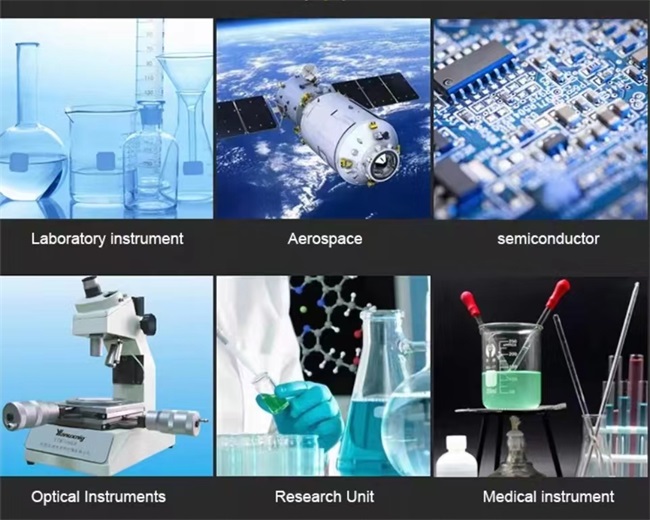
Different industries require different temperature profiles. Here is how quartz tubes are used across key sectors:
- Semiconductor Industry: 1000°C – 1200°C — Diffusion furnaces, oxidation processes, annealing
- Laboratory & Research: Up to 1100°C — Tube furnaces, material synthesis, chemical reactions
- Optics: Up to 1000°C — UV transmission, optical windows, laser components
- Photovoltaic (Solar): 1000°C – 1250°C — Solar cell diffusion and oxidation processes
- Chemical Processing: Up to 1100°C — Corrosive environment reactors, high-temperature vessels
- Lighting & Lamps: Up to 1200°C — High-intensity discharge lamps, UV curing systems
What This Means for Procurement
If you are sourcing quartz tubes for a semiconductor diffusion furnace operating continuously at 1100°C, you need high-purity quartz with a proven track record. If your application is a laboratory tube furnace that occasionally reaches 1200°C, a standard high-purity tube may suffice — but plan for periodic replacement.
How to Choose the Right Quartz Tube for Your Application
Assess Your True Temperature Requirements
Ask yourself:
- What is the maximum temperature my process requires?
- Is this a continuous process or short-term exposure?
- Will the tube be under vacuum, atmospheric pressure, or positive pressure?
- How many thermal cycles will the tube experience?
Actionable guidelines:
- For continuous operation above 1050°C, specify high-purity quartz (>99.99% SiO₂).
- For processes above 1100°C, plan for a shorter tube lifespan or consider coatings.
- For vacuum applications, never exceed 1000°C.
Determine the Right Material Grade
Standard quartz tubes are available in different grades:
- Standard Quartz (99.9% purity): Max continuous temperature 1100°C. Suitable for general industrial use and heating elements.
- High-Purity Quartz (>99.99% purity): Max continuous temperature 1100°C – 1200°C. Ideal for semiconductor, laboratory, and optical applications.
- Custom-Doped Quartz: Purity and temperature limits vary. Used for specialized optical or thermal properties.
Consider Customization Options
Many buyers struggle to find quartz tubes that match their exact specifications. Common challenges include:
- Non-standard diameters or lengths — Standard tube suppliers often only offer fixed sizes.
- Special end configurations — Flanged ends, stepped diameters, or closed ends.
- Tight tolerances — ±0.02mm precision may be required for critical applications.
- Small batch quantities — Many manufacturers impose high MOQs.
When these challenges arise, working with a custom quartz fabrication shop becomes essential (see Section 8).
Don't Overlook Quality Control and Consistency
Inconsistent quality leads to unpredictable performance and unexpected downtime. When sourcing quartz tubes, look for suppliers with:
- ISO-certified quality management systems.
- Traceable material certifications (purity analysis, thermal properties).
- In-process and final inspections (dimensional verification, visual inspection for bubbles and impurities).
Technical Specifications: Custom Quartz Tube Capabilities
When procuring custom quartz tubes, these specifications typically apply:
Dimensional Capabilities:
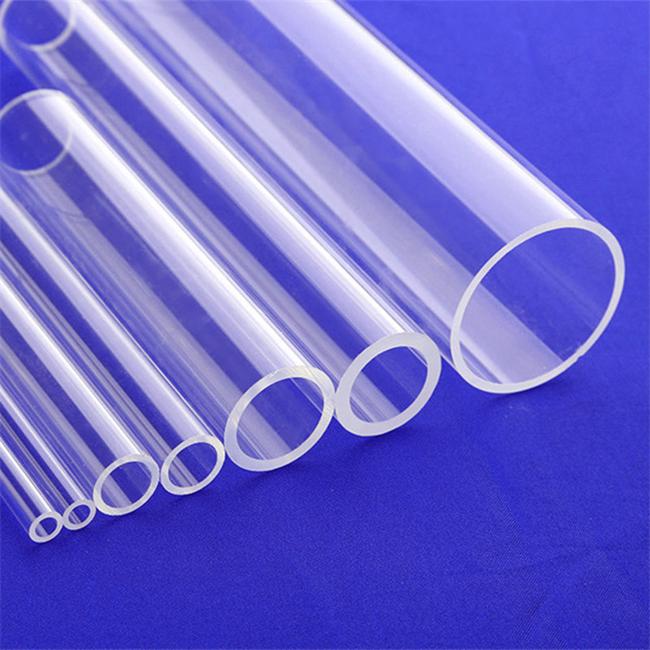
- Outer Diameter (OD): 1mm – 600mm, with custom sizes available
- Wall Thickness: 0.2mm – 10mm, variable combinations possible
- Length: Up to 4500mm standard, longer lengths by special order
Material and Performance:
- Purity: ≥99.99% SiO₂ standard, with <30ppm total impurities available
- Maximum Operating Temperature: 1100°C continuous; 1200°C – 1250°C short-term
- Softening Point: ~1650°C – 1730°C, varying by grade
Precision:
- Dimensional Tolerance (OD): ±1% standard; as tight as ±0.02mm on capillary tubes
Common Custom Features:
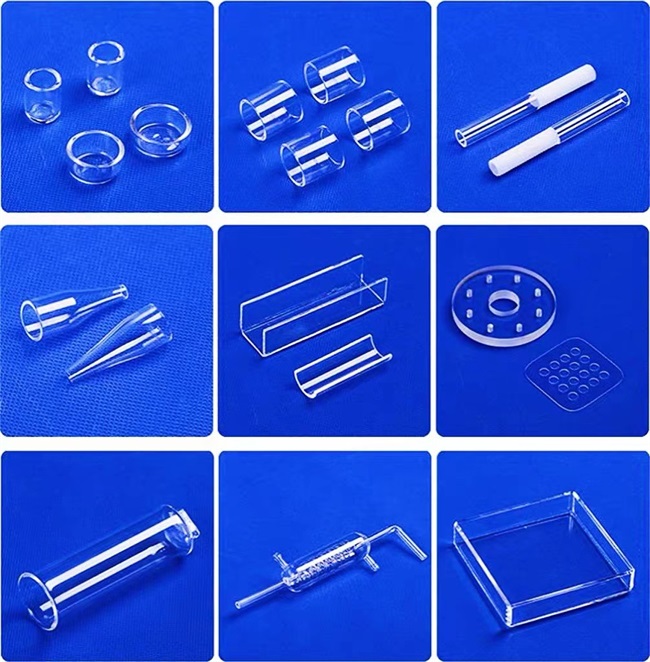
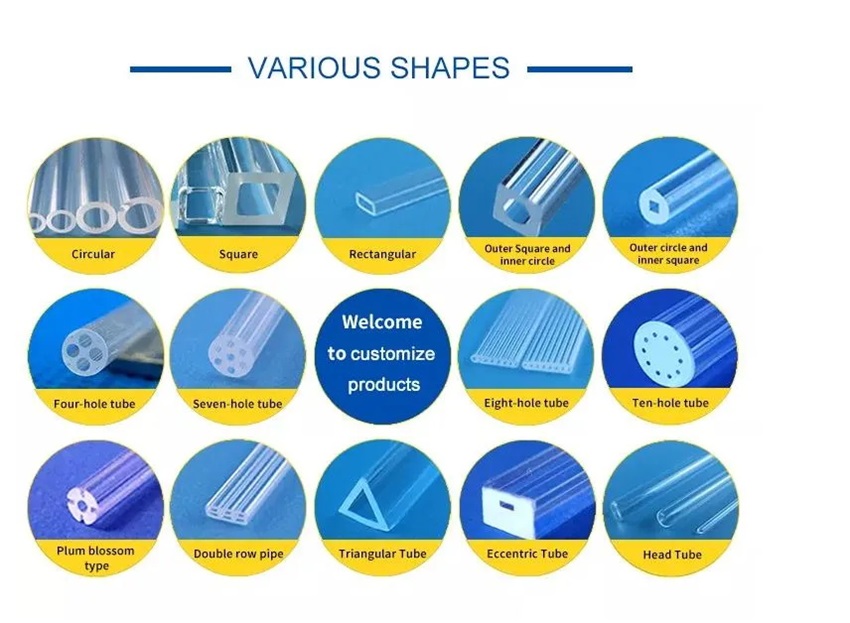
- End Configurations: Flanged, threaded, closed-end, stepped, conical
- Shapes: Straight, U-shaped, bent, helical/coiled
- Secondary Operations: Drilling, slotting, grinding, polishing, welding
- Coatings: Anti-reflective, UV-blocking, protective layers
How a Custom Quartz Manufacturer Solves Your Sourcing Problems
The Challenges Buyers Face
"I can't find the right size."
Standard stock tubes only cover common dimensions. If you need OD 142mm with a 4.5mm wall and 3200mm length, most stockists simply don't have it — and won't make it.
"My requirements are non-standard."
Engineering drawings often call for stepped tubes, closed ends, specific flange designs, or ultra-tight tolerances. General suppliers lack the tooling and expertise.
"My batch size is too small."
Many quartz tube suppliers impose MOQs of 50, 100, or even 500 pieces. For R&D projects or specialized industrial applications, this is prohibitive.
"The quality isn't consistent."
When you receive a batch of tubes that vary in dimension, opacity, or bubble content, your process suffers. You need a supplier with rigorous quality control.
"I need fast delivery."
When a tube breaks mid-run, you cannot wait 6–8 weeks for a replacement. Responsive suppliers with flexible production schedules are essential.
How We Help
As a specialized quartz glass manufacturer with decades of experience, we address each of these challenges directly:
- Non-standard size required: Complete custom fabrication to your exact dimensions — no size limitations.
- Need precision parts: CNC grinding, polishing, and machining to tight tolerances (±0.02mm).
- Low MOQ: No minimum order quantity — we support R&D, pilot runs, and small-batch production.
- Engineering drawing or sample: OEM/ODM service — we fabricate from your drawings or replicate your samples.
- Quality concerns: High-purity materials (>99.99% SiO₂), ISO-compliant quality systems, full traceability.
- Delivery urgency: Rapid production and global shipping — expedited options available.
- Global procurement: Experience exporting to semiconductor, optical, and industrial customers worldwide.
We help you solve "hard to find" quartz glass problems — so you can focus on your core process, not on sourcing struggles.
Why Choose Us as Your Quartz Tube Partner
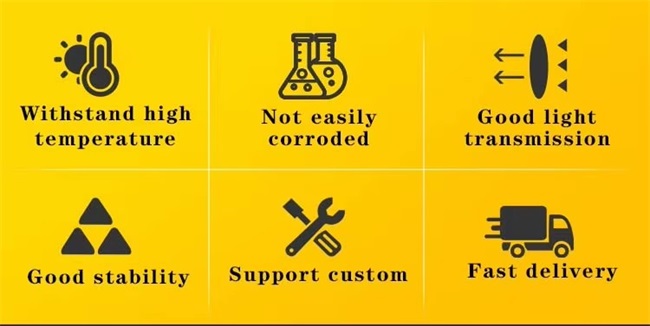
- 20+ Years of Quartz Glass Expertise: Our engineering team understands material science, thermal behavior, and fabrication techniques at depth.
- Full Customization: Diameter, length, wall thickness, end configurations, secondary operations — we make it to your specs.
- OEM/ODM Capability: We work from engineering drawings, CAD files, or physical samples.
- Low or No MOQ: Support for R&D, pilot production, and small-batch requirements.
- High-Purity Materials: Standard ≥99.99% SiO₂ with purity certifications.
- Precision Manufacturing: Advanced machining, grinding, and polishing for tight tolerances.
- Stable Quality Control: In-process inspection, final dimensional verification, and visual inspection.
- Fast Delivery: Flexible production scheduling and expedited shipping options.
- Global Export Experience: We understand international logistics, customs, and documentation.
- Competitive Pricing: Direct manufacturer pricing with no middleman markup.
Frequently Asked Questions (FAQ)
What is the maximum continuous operating temperature for a quartz tube?
1100°C. This is the industry-standard upper limit for long-term, stable operation. Exceeding this accelerates devitrification and shortens tube life.
Can a quartz tube withstand 1200°C?
Yes, for short-term use — typically less than 3 hours. However, repeated or extended exposure at 1200°C significantly reduces the tube's lifespan and increases the risk of deformation.
What is the softening point of quartz glass?
The softening point is approximately 1650°C (some grades up to 1730°C). At this temperature, quartz begins to deform under its own weight. This is an absolute physical limit, not a working temperature.
What is devitrification and why does it matter?
Devitrification is the process where amorphous quartz glass converts to crystalline cristobalite. It makes the quartz brittle and susceptible to cracking. It is the primary cause of tube failure at high temperatures.
How does vacuum affect the temperature limit of a quartz tube?
Under vacuum conditions, the maximum safe temperature drops to 1000°C. The external atmospheric pressure can cause a softened tube to collapse inward.
How long can a quartz tube be used at 1200°C?
As a general rule, no more than 3 hours. Each cycle at this temperature accelerates degradation and reduces overall lifespan.
What causes devitrification?
Temperature above 1100°C, contaminants (like fingerprints, alkali metals, salts), and certain atmospheres (water vapor, oxygen) all accelerate devitrification.
Why do some manufacturers claim 1250°C or 1300°C operating temperatures?
These typically refer to short-term exposure limits, not continuous use. Always clarify the specification when evaluating claims.
What purity should I choose for high-temperature applications?
For processes above 1050°C, choose high-purity quartz with >99.99% SiO₂ content. Higher purity minimizes impurities that catalyze devitrification.
Can I get custom sizes for quartz tubes?
Yes. Reputable manufacturers can produce custom diameters, wall thicknesses, lengths, and end configurations to your specifications, often with no MOQ.
What is thermal shock resistance in quartz?
Quartz has excellent thermal shock resistance — it can be heated to 1000°C and cooled rapidly without cracking. This is due to its very low coefficient of thermal expansion.
Does quartz tube temperature limit differ under positive pressure?
Positive pressure does not lower the temperature limit (unlike vacuum). However, the tube still has the same continuous maximum of 1100°C for long-term use.
How should quartz tubes be handled to prevent contamination?
Always handle with clean, powder-free gloves. Fingerprints contain alkali metals that catalyze devitrification at high temperatures.
What is the annealing point of quartz glass?
Approximately 1140°C. At this temperature, internal stresses are relieved quickly. This is considered the practical upper limit for long-term use.
Can I operate a quartz tube at 1200°C continuously if I replace it frequently?
Yes, but this is not cost-effective for most operations. Continuous use at 1200°C will rapidly degrade the tube through devitrification and deformation. It is almost always more economical to adjust the process to operate below 1100°C or use a different material.
What is the strain point of quartz glass?
Approximately 1075°C. Below this temperature, quartz behaves as a rigid solid. Above this point, internal stresses can form.
Does the temperature limit vary by quartz grade?
Yes. High-purity quartz offers better resistance to devitrification than lower-grade material. However, the fundamental material limits (softening point, continuous operating temperature) remain broadly similar.
How can I tell if my quartz tube is devitrifying?
Devitrification appears as a hazy, opaque, or frosted surface on the tube. It typically starts on the surface and spreads inward.
Can devitrified quartz tubes be repaired?
No. Once devitrification occurs, the material structure is permanently changed. The tube must be replaced.
Do you offer custom quartz tube manufacturing with no MOQ?
Yes. We support R&D projects, pilot production, and small-batch requirements with no minimum order quantity.

Making the Right Choice
The temperature a quartz tube can withstand is not a single number — it is a function of time, atmosphere, purity, and process conditions. For most applications, 1100°C continuous operation is the safe, reliable limit. Brief excursions to 1200°C are possible but come with a cost to tube longevity.
When standard stock tubes do not meet your dimensional, tolerance, or quantity requirements, working with a custom quartz manufacturer is the solution. We combine material expertise, fabrication capability, and flexible commercial terms to solve your quartz sourcing challenges — no matter how complex.

Need a custom quartz tube for your application? Contact us with your specifications or engineering drawing. We respond within 24 hours with a quotation and feasibility assessment.
Luverre Quartz manufactures and sells a wide range of high quality quartz glass, including quartz tubes, quartz plates, quartz rods, quartz windows, quartz crucibles, quartz boats, quartz flanges, quartz beakers, quartz glass instruments, and more. We can meet all kinds of customized requirements for quartz glass products.
