
T: +86-518-85528012
E: nick@luverrequartz.com
E: nick@luverrequartz.com
1st floor Runlian industrial center No. 116 QuFeng Rd., Haizhou Economic and technological development zone Lianyungang City, Jiangsu Province, China 222062
Views: 0 Author: Site Editor Publish Time: 2026-09-17 Origin: Site


Choosing the right quartz plate comes down to four decisions: matching the thickness to your thermal and mechanical load, selecting the correct size and tolerance class, specifying the machining operations your application requires, and confirming whether a standard stock size works or a custom-cut plate is needed.
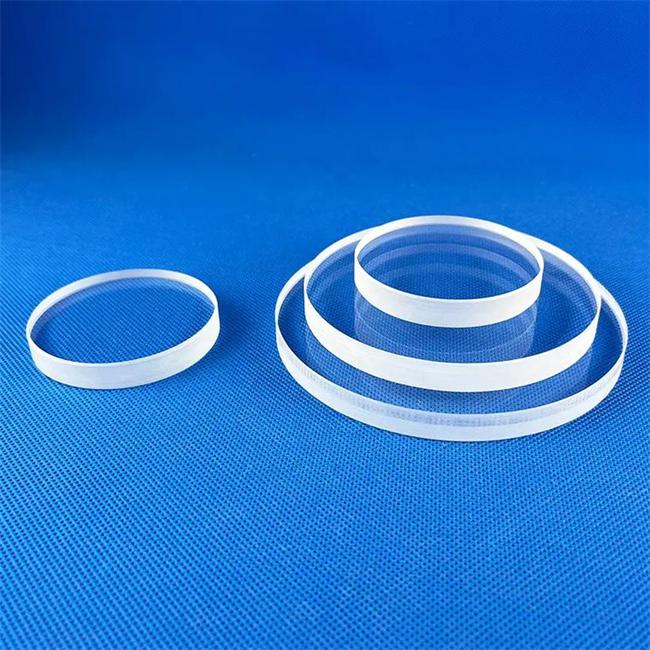
What Is a Quartz Plate and Why Does It Matter?
A quartz plate is a flat piece of fused silica (SiO₂) manufactured to precise thickness, dimensional, and surface-finish requirements. Unlike ordinary glass, quartz plate offers exceptional thermal shock resistance, high-temperature stability, excellent UV-to-IR optical transmission, and very low thermal expansion.
These properties make quartz plates critical in environments where ordinary materials fail:
Semiconductor processing — wafer carriers, chamber windows, and diffusion barriers
Optical systems — UV windows, laser substrates, and precision optics
Furnace and thermal equipment — observation ports, baffles, and support plates
Chemical processing — corrosion-resistant covers, liners, and containment plates
Laboratory instruments — sample holders, optical benches, and test fixtures
The material itself is typically fused quartz or fused silica, with purity levels ranging from 99.9% to 99.999% SiO₂ depending on the application. Higher purity means fewer metallic impurities, which is essential for semiconductor and high-temperature applications where contamination must be minimized.
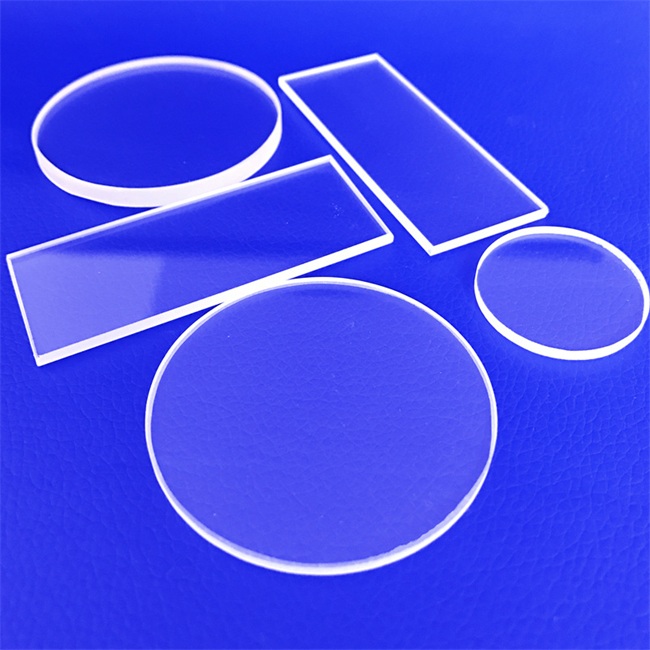
What Are the Key Advantages of Quartz Plates?
Quartz plates outperform most alternative materials in high-temperature, high-precision, and optically demanding applications. The core advantages include:
Thermal shock resistance — quartz can withstand rapid temperature changes without cracking, making it ideal for furnace viewports and thermal cycling environments
High continuous use temperature — fused quartz plates can operate continuously at temperatures above 1000°C, with short-term tolerance well beyond that
Low coefficient of thermal expansion (CTE) — approximately 5.5 × 10⁻⁷ /°C, meaning the plate maintains dimensional stability even under extreme heat
Broad optical transmission — from deep UV (~180 nm) through visible light to near-infrared (~3500 nm), depending on the grade
Chemical inertness — resistant to most acids and chemicals, with the exception of hydrofluoric acid (HF)
Electrical insulation — excellent dielectric properties at high temperatures
High purity — minimal outgassing and metallic contamination, critical for cleanroom and semiconductor use
These advantages are not just theoretical. In real-world sourcing, buyers choose quartz plates over borosilicate glass, sapphire, or ceramic alternatives when the combination of thermal stability, optical clarity, and chemical resistance cannot be compromised.
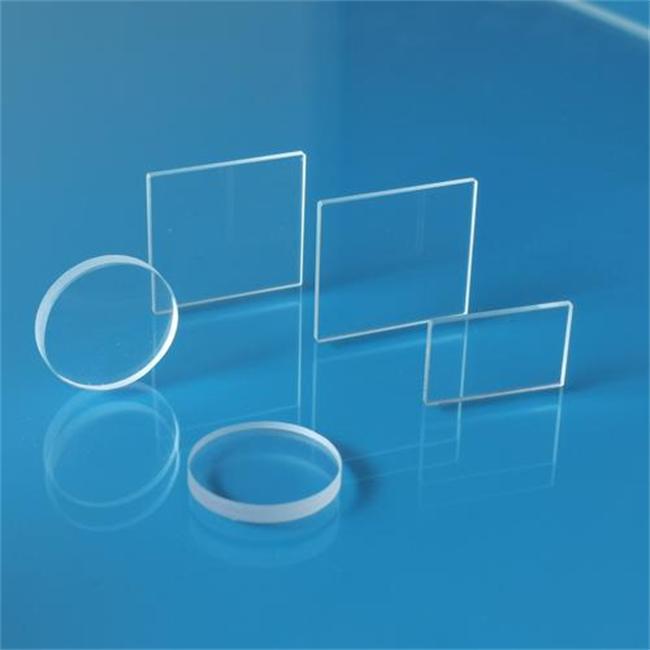
How to Choose the Right Thickness
The correct thickness for your quartz plate depends on three factors: operating temperature, mechanical load, and the plate's unsupported span.
General guidance by application:
Thin plates (0.5 mm – 2 mm): Suitable for optical windows, UV transmission applications, lightweight covers, and laboratory slides where thermal mass needs to be minimized
Medium plates (2 mm – 6 mm): The most common range for furnace observation windows, semiconductor chamber components, general-purpose covers, and optical substrates requiring moderate rigidity
Thick plates (6 mm – 20 mm): Used where structural rigidity is critical — furnace baffles, heavy-duty support plates, high-pressure chamber windows, and industrial processing fixtures
Extra-thick plates (20 mm+): Specialized applications including high-pressure seals, precision optical blanks, and custom structural components
Key considerations when selecting thickness:
A thicker plate resists deflection under its own weight and external pressure, but it also increases thermal mass, meaning slower heating and cooling
For large-diameter plates with no center support, thickness must be increased to prevent sagging at high temperatures
If your application involves rapid thermal cycling, thinner plates generally handle thermal shock better due to lower thermal gradients across the material
For optical applications, thickness uniformity (parallelism) becomes critical — typically specified as ±0.05 mm or tighter
If you are unsure about the right thickness, provide your operating temperature, plate dimensions, and mounting method to your supplier. A qualified quartz manufacturer can calculate the minimum safe thickness based on these parameters.
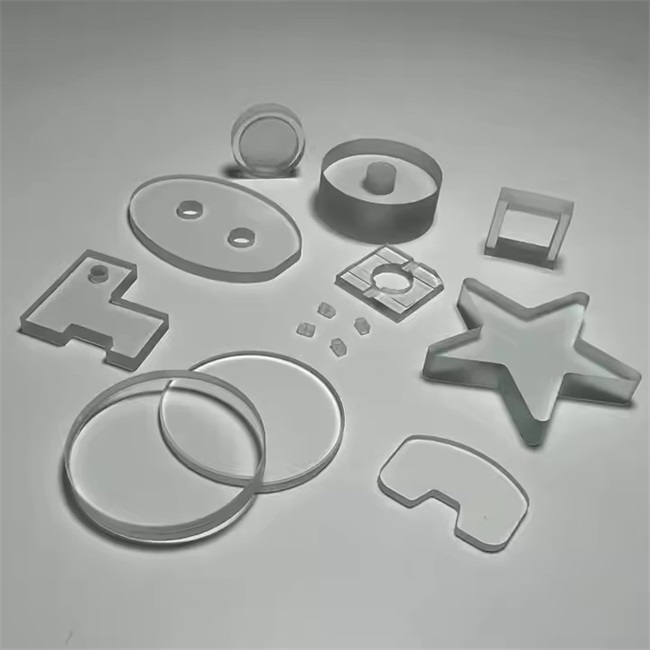
How to Select the Right Size and Dimensions
Quartz plates are available in standard sheet sizes from most manufacturers, but many applications require custom-cut dimensions.
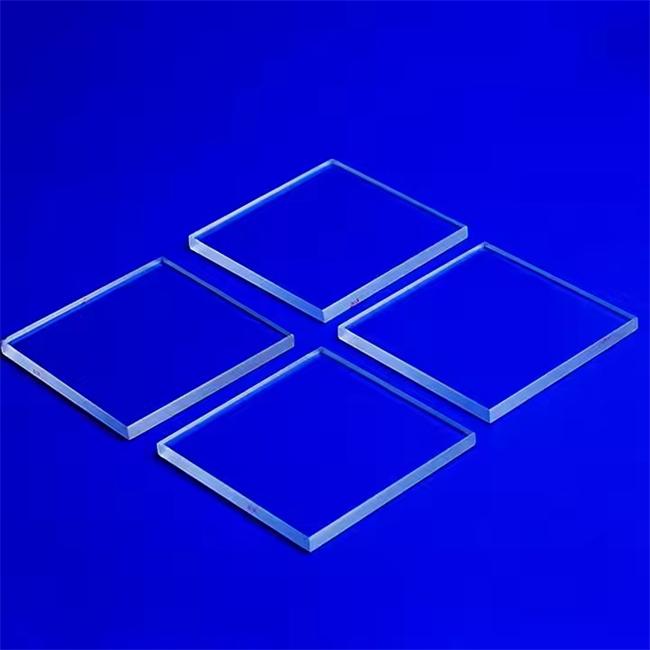
Standard stock sizes typically range from small formats (e.g., 50 mm × 50 mm) up to large sheets (e.g., 300 mm × 300 mm or larger), with thickness options across the ranges described above. However, standard sizes vary by manufacturer, and availability depends on the original ingot or block dimensions.
When choosing your size, consider:
Cutting tolerance — standard machining tolerance is typically ±0.1 mm to ±0.5 mm depending on the dimension and the manufacturer's capability. For precision applications, tolerances of ±0.05 mm or tighter are achievable
Edge condition — raw-cut edges are suitable for structural applications, while seamed (smoothed) edges reduce chipping risk, and polished edges are necessary for optical or sealing applications
Flatness and parallelism — for optical and precision sealing applications, specify flatness requirements (e.g., < 0.05 mm across the surface)
Chamfering — slightly beveled edges prevent chipping during handling and installation, especially important for thin plates
Pro tip: If your application involves a circular quartz plate, specify the diameter tolerance clearly. Circular plates are often cut from larger sheets, and the diameter tolerance directly affects fit in O-ring grooves or flange seats.
What Machining and Custom Options Are Available?
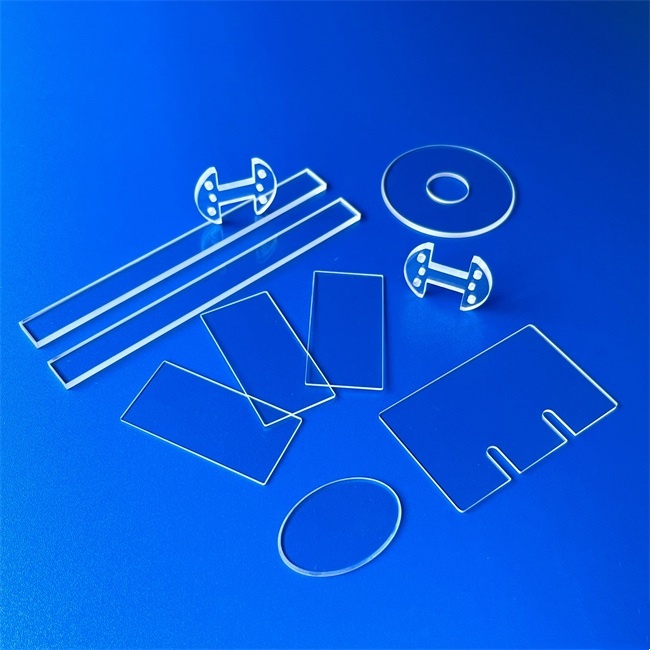
One of the most common challenges buyers face is finding a supplier who can go beyond simple cutting. Quartz is an extremely hard and brittle material, and precision machining requires specialized equipment and expertise.
Here are the machining and customization options you should look for:
Cutting and shaping:
Straight-line cutting to custom rectangular dimensions
Circular and annular (ring) cutting
Complex contour cutting for non-standard shapes
Waterjet cutting for intricate geometries
Drilling and boring:
Single or multiple hole drilling at specified positions
Counterboring and countersinking
Slot cutting and keyway machining
Surface finishing:
Ground and polished surfaces for optical clarity
Matte or frosted finishes for light diffusion
Fire-polished edges for smooth, stress-free surfaces
Edge treatment:
Seamed edges (basic smoothing)
Pencil edges (rounded)
Flat polished edges
Chamfered edges at specified angles
Dimensional precision:
Thickness tolerance as tight as ±0.02 mm for lapped plates
Length/width tolerance as tight as ±0.05 mm
Surface flatness down to λ/4 or better for optical-grade plates
Parallelism control for double-side polished plates
Custom fabrication:
OEM and ODM manufacturing from customer drawings (DXF, DWG, STEP, PDF)
Production from physical samples (reverse engineering)
Small-batch prototyping with fast turnaround
High-volume production with consistent quality control
Custom packaging for export and cleanroom delivery
If you have a non-standard requirement — an unusual shape, a tight tolerance, or a small production run — a capable quartz manufacturer should be able to accommodate it. The key is finding a supplier with in-house machining capability rather than one that only resells standard stock.
What Are the Typical Specifications for Custom Quartz Plates?
When requesting a quote or placing an order, providing clear specifications will speed up the process and reduce the risk of errors. Here are the key parameters to define:
Material grade: Standard fused quartz (99.9% SiO₂), high-purity fused silica (99.99%+ SiO₂), or synthetic fused silica for UV-grade optical applications
Dimensions: Length × Width × Thickness in millimeters, with explicit tolerances for each
Shape: Rectangular, circular, annular, or custom contour (provide drawing if custom)
Surface finish: Ground, polished (one side or both sides), matte, or as-cast
Edge condition: Raw cut, seamed, polished, chamfered, or fire-polished
Flatness requirement: Specify if flatness is critical (e.g., < 0.05 mm over the full surface)
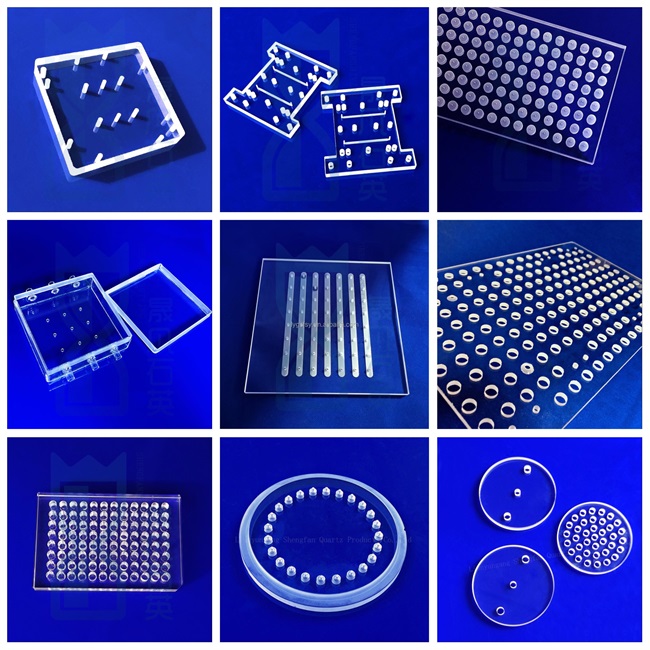
Hole pattern: Diameter, position, depth, and tolerance for any drilled holes
Quantity: Prototype quantities, small batches, or mass production volumes
Application environment: Operating temperature, pressure, chemical exposure, and whether optical transmission is required
Certification needs: Material test reports, dimensional inspection reports, or cleanroom packaging requirements
Providing a technical drawing (even a simple sketch with dimensions) is the single most effective way to ensure your custom quartz plate is manufactured correctly.
What Are the Common Applications of Quartz Plates?
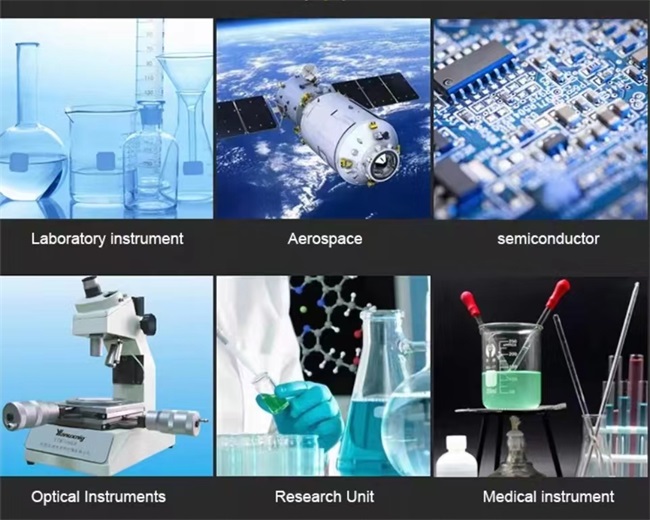
Quartz plates serve diverse industries, each with distinct requirements:
Semiconductor industry:
Quartz plates are used as wafer carriers, diffusion furnace components, chamber windows, and process gas distribution plates. The critical requirements are high purity (low metallic contamination), precise dimensions, and excellent thermal stability.
Optical industry:
UV windows, laser optics, spectrometer components, and precision optical substrates rely on quartz plates for their broad transmission range and dimensional stability. Surface quality and flatness are paramount.
Furnace and thermal equipment:
Observation windows, baffles, insulation supports, and heating element mounts in high-temperature furnaces demand the thermal shock resistance and high-temperature stability that only quartz can provide.
Chemical processing:
Corrosion-resistant covers, reaction vessel liners, and containment plates benefit from quartz's chemical inertness. The exception is hydrofluoric acid environments, where quartz is not suitable.
Laboratory and analytical instruments:
Sample holders, optical benches, calibration standards, and test fixtures use quartz plates for their dimensional precision and optical clarity.
Lighting industry:
Lamp envelopes, reflector substrates, and UV curing windows utilize quartz plates for their UV transparency and thermal endurance.
Frequently Asked Questions (FAQ)
What is the maximum size of quartz plate you can manufacture?
Maximum size depends on the manufacturer's furnace and machining capacity. Many manufacturers can produce plates up to 300 mm × 300 mm or larger from standard ingots. For oversized plates, discuss your requirements directly with the supplier, as custom ingot casting may be needed.
Can quartz plates be used in hydrofluoric acid (HF) environments?
No. Quartz (SiO₂) reacts with hydrofluoric acid. If your application involves HF exposure, alternative materials such as PTFE or PFA should be considered.
What is the difference between fused quartz and fused silica?
Both are forms of SiO₂, but fused silica typically refers to higher-purity material (99.99%+ SiO₂) with lower hydroxyl (OH) content and better UV transmission. Fused quartz is the more general term and may include material with slightly higher impurity levels. The distinction matters for optical and semiconductor applications.
What thickness tolerance can be achieved?
Standard cutting tolerance is typically ±0.1 mm. For lapped or precision-ground plates, thickness tolerance can be held to ±0.02 mm or tighter. Specify your tolerance requirement when ordering.
Can you produce quartz plates from my drawing or sample?
Yes. Custom quartz plates can be manufactured from technical drawings (DXF, DWG, STEP, PDF) or from physical samples. If you provide a sample, the manufacturer can reverse-engineer the dimensions and specifications.
Is there a minimum order quantity (MOQ)?
Many specialized quartz manufacturers support low MOQ or even single-piece prototyping, especially for custom orders. This is important for R&D projects, pilot runs, and small-batch production.
How long does production take?
Standard stock-size plates can ship within days. Custom-machined plates typically require 7–20 working days depending on complexity, quantity, and the manufacturer's production schedule. Rush orders may be available for urgent requirements.
Can quartz plates be polished on both sides?
Yes, double-side polished (DSP) quartz plates are available for optical applications. Surface quality can be specified to scratch-dig standards (e.g., 40-20, 20-10, or 10-5 per MIL-PRF-13830).
What is the maximum continuous operating temperature?
Fused quartz plates can operate continuously at approximately 1100°C–1200°C depending on the grade and atmosphere. Short-term exposure to higher temperatures is possible, but prolonged use near the softening point (~1650°C) is not recommended.
Do you provide material certificates?
Reputable manufacturers provide material test reports (MTR) or certificates of conformance (CoC) upon request, confirming material purity, dimensions, and any applicable quality standards.
Can quartz plates be used as vacuum windows?
Yes, quartz plates are commonly used as vacuum chamber viewports. The plate thickness must be calculated based on the pressure differential and window diameter to ensure structural safety.
What surface finishes are available?
Options include ground (matte), polished (optical clarity), fire-polished (smooth, slightly rounded edges), and frosted (for light diffusion). The choice depends on your optical and mechanical requirements.
How should quartz plates be handled and stored?
Quartz is brittle. Handle plates with clean gloves, avoid point impacts, and store them flat with protective interleaving material between plates. Avoid stacking heavy items on quartz plates.
Can you supply quartz plates with anti-reflective (AR) coatings?
Some manufacturers offer AR coatings or can coordinate with coating specialists. If your application requires AR coatings, specify the wavelength range and reflectance requirements.
What is the lead time for small-batch custom orders?
Small-batch custom orders (1–50 pieces) typically have lead times of 7–15 working days, depending on complexity. Prototype orders with simple geometries may be completed even faster.
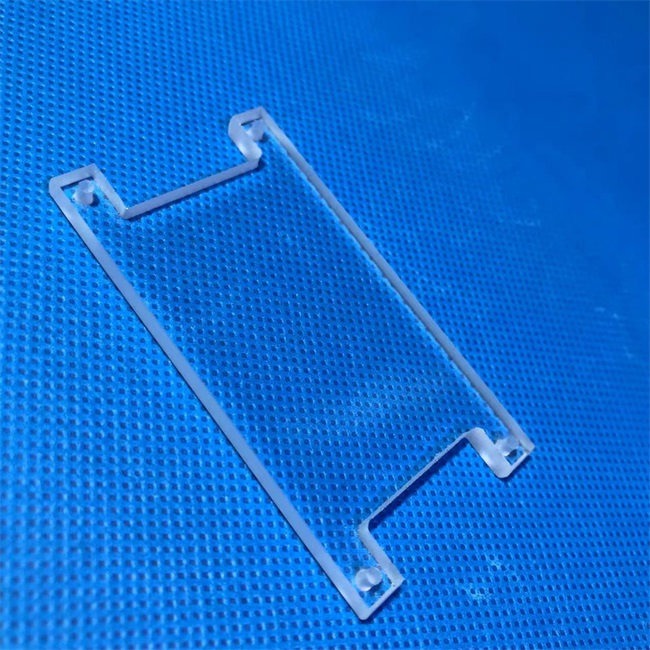
Why Choose Us as Your Quartz Plate Manufacturer?
If you are sourcing quartz plates — whether standard stock or fully custom — here is what sets a reliable manufacturing partner apart:
Full customization capability: We manufacture quartz plates to your exact specifications — any size, any thickness, any shape. Send us a drawing or a sample, and we handle the rest.
OEM/ODM support: Whether you need branded packaging, custom labeling, or complete product development from concept to production, our OEM/ODM services cover the full process.
No MOQ barriers: We understand that R&D teams, startups, and project-based buyers need small quantities. We support single-piece prototypes and small batches without imposing high minimum order requirements.
High-purity materials: We source and process high-purity fused quartz and fused silica, ensuring low metallic contamination for semiconductor, optical, and high-temperature applications.
Precision machining: Our in-house machining capabilities include cutting, drilling, grinding, lapping, polishing, and edge finishing — all performed under strict quality control.
Stable quality control: Every batch undergoes dimensional inspection, surface quality checks, and material verification before shipment. Consistency is not optional — it is built into our process.
Fast turnaround: Standard orders ship quickly, and custom orders are prioritized based on your project timeline. We understand that production delays on your end often trace back to material lead times.
Global export experience: We ship quartz products worldwide with proper packaging, export documentation, and logistics coordination. Whether you need CIF, FOB, or door-to-door delivery, we manage the process.
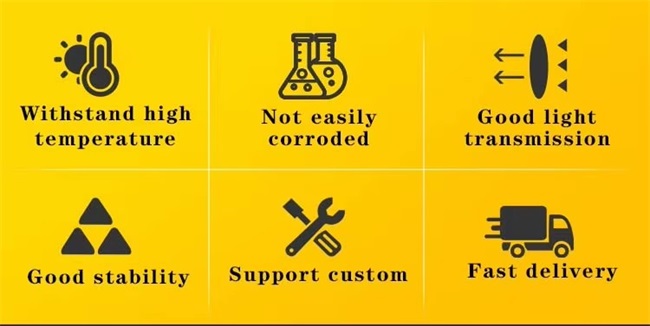
A quartz plate is a precision flat component made from fused quartz or fused silica, valued for its thermal shock resistance, high-temperature stability, optical transparency, and chemical inertness. Choosing the right quartz plate requires evaluating four factors: thickness (matched to thermal load and mechanical span), size and dimensional tolerance (standard or custom-cut), machining requirements (drilling, polishing, edge treatment, contouring), and material grade (standard vs. high-purity). Custom quartz plates can be manufactured from technical drawings or physical samples, with OEM/ODM support, low or no MOQ, precision machining, and global export capability. Common applications include semiconductor processing, optical systems, furnace equipment, chemical processing, and laboratory instruments.
Luverre Quartz manufactures and sells a wide range of high quality quartz glass, including quartz tubes, quartz plates, quartz rods, quartz windows, quartz crucibles, quartz boats, quartz flanges, quartz beakers, quartz glass instruments, and more. We can meet all kinds of customized requirements for quartz glass products.
