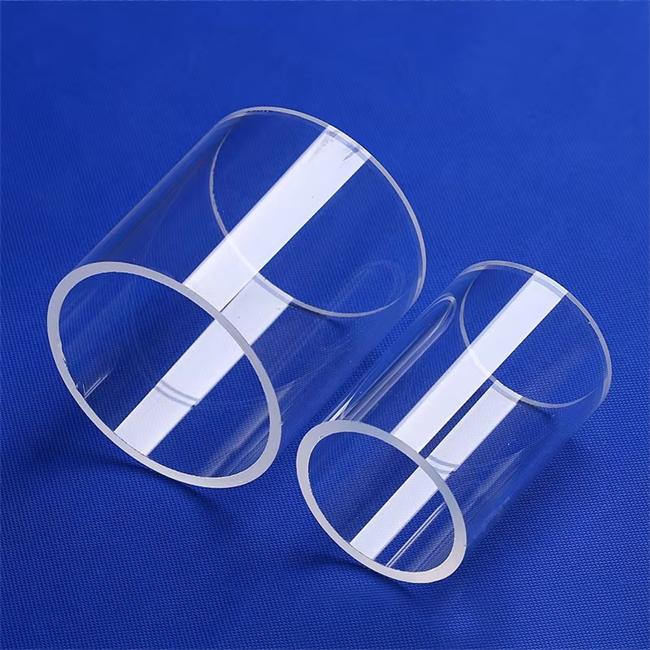
Choosing the right quartz tube comes down to four factors: operating temperature, chemical environment, optical requirements, and dimensional precision.
If your application runs above 1000°C continuously, requires UV transparency, or demands high chemical purity, quartz is the only viable option. For most furnace applications below 1100°C with rapid heating cycles, fused quartz offers the best balance of thermal shock resistance and optical clarity. Always verify that the tube’s SiO₂ purity exceeds 99.9% and that dimensions match your system’s requirements with appropriate tolerances.
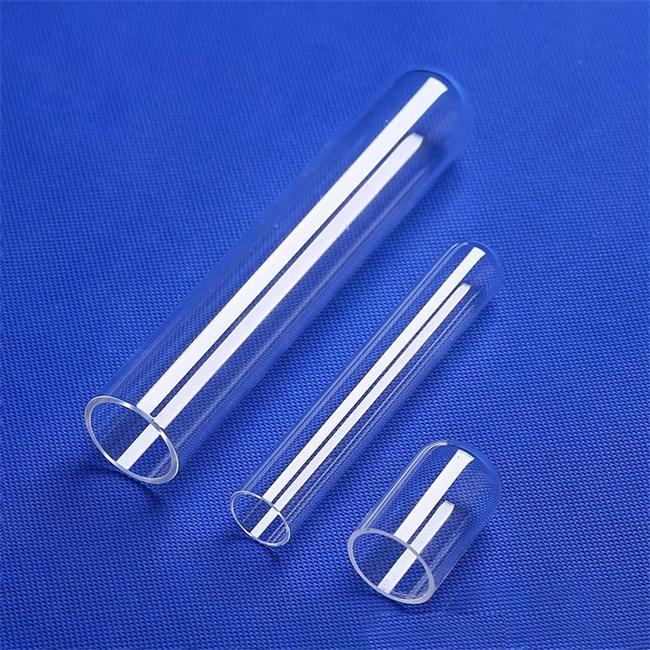
What Is a Quartz Tube?
Quartz tube is a hollow cylindrical component made from fused silica (SiO₂) with a purity level typically exceeding 99.9%. Unlike ordinary glass tubes that contain additives like boron trioxide, quartz tubes are composed almost entirely of pure silicon dioxide.
Key characteristics:
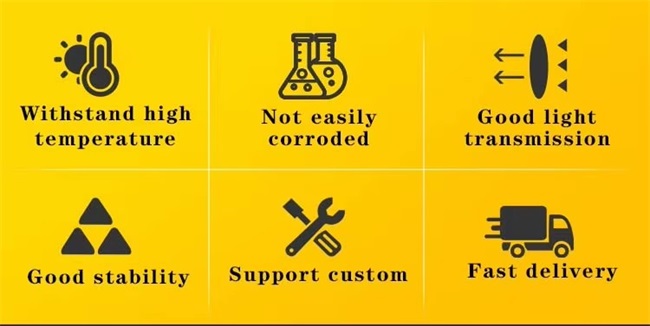
- Can withstand continuous operating temperatures up to 1100–1200°C
- Withstands thermal shock from 1100°C to room temperature without cracking
- Transmits light from UV through infrared (180–2500nm)
- Chemically inert to most acids except hydrofluoric acid
- Excellent electrical insulator at high temperatures
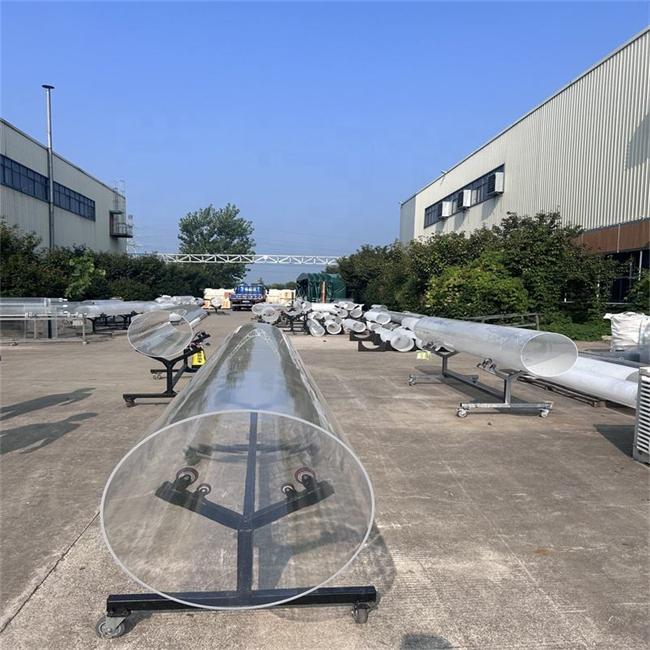
Key Advantages of Quartz Tubes
Thermal Resistance
Quartz has an extremely low coefficient of thermal expansion (0.54 × 10⁻⁶/K), which means it can endure rapid temperature changes that would shatter ordinary glass. It can be heated red-hot and plunged into cold water without cracking.
Chemical Purity
Because quartz is almost pure SiO₂, it will not leach impurities into sensitive processes. This makes it essential for semiconductor manufacturing, trace-element analysis, and high-purity chemical reactions.
Optical Clarity
Quartz transmits over 93% of visible light and up to 80–90% of UV radiation, making it ideal for spectroscopic, photochemical, and UV sterilization applications.
Acid Resistance
Quartz is 30 times more acid-resistant than ceramic and 150 times more resistant than stainless steel.
Common Applications by Industry
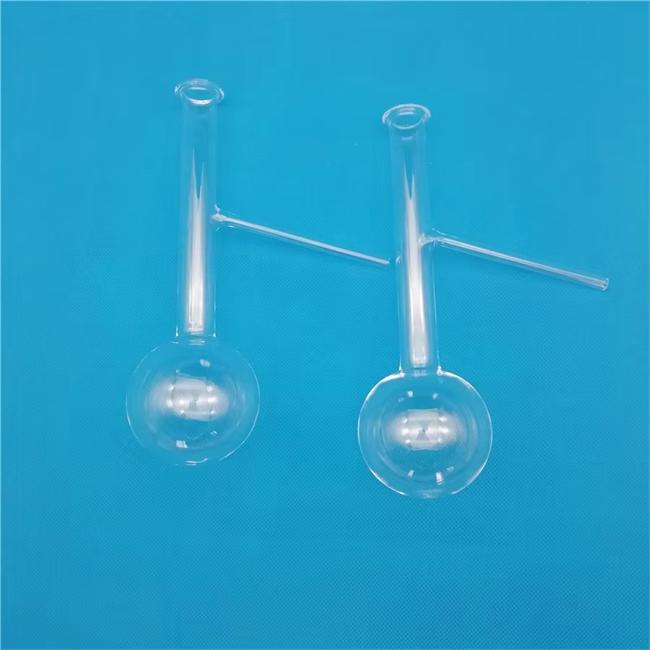
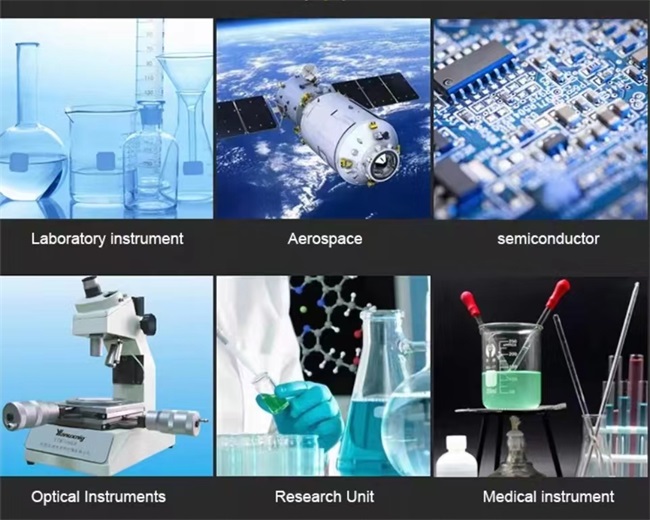
- Semiconductor industry – Diffusion tubes, CVD chambers, wafer carriers
- Laboratory and research – Reaction vessels, furnace liners, sample holders
- Optical and photonics – Lenses, UV transmission components, sight glasses
- Chemical processing – Corrosive environment piping, heat exchangers
- Lighting and UV equipment – High-temperature lamps, UV sterilization systems
- Solar/PV manufacturing – Diffusion and oxidation process tubes
How to Choose a Quartz Tube: Step-by-Step Selection Guide
Step 1: Define Your Maximum Operating Temperature
- Below 1100°C continuous operation → Fused quartz works well.
- Above 1200°C continuous → Consider alumina ceramics instead.
- Short-term exposure up to 1450°C → Acceptable for some quartz grades.
Step 2: Identify Your Chemical Exposure
Quartz is compatible with most acids and solvents, but hydrofluoric acid and strong alkalis will attack the material. If your process involves these chemicals, you may need protective coatings or alternative materials.
Step 3: Determine Your Purity Requirement
For most industrial applications, 99.9% (3N) purity is sufficient. For semiconductor and analytical applications, 99.99% (4N) or higher may be required.
Step 4: Specify Optical Transmission Needs
- UV applications → Choose synthetic quartz or high-UV-transmission grades.
- Visible light observation → Clear fused quartz.
- No optical requirement → Opaque quartz can be used for thermal insulation.
Step 5: Define Dimensional Requirements
Provide the following specifications to your supplier:
- Outside diameter (OD) and inside diameter (ID) or wall thickness
- Overall length
- Tolerances (standard industrial: ±1% of OD; precision capillary: ±0.02mm)
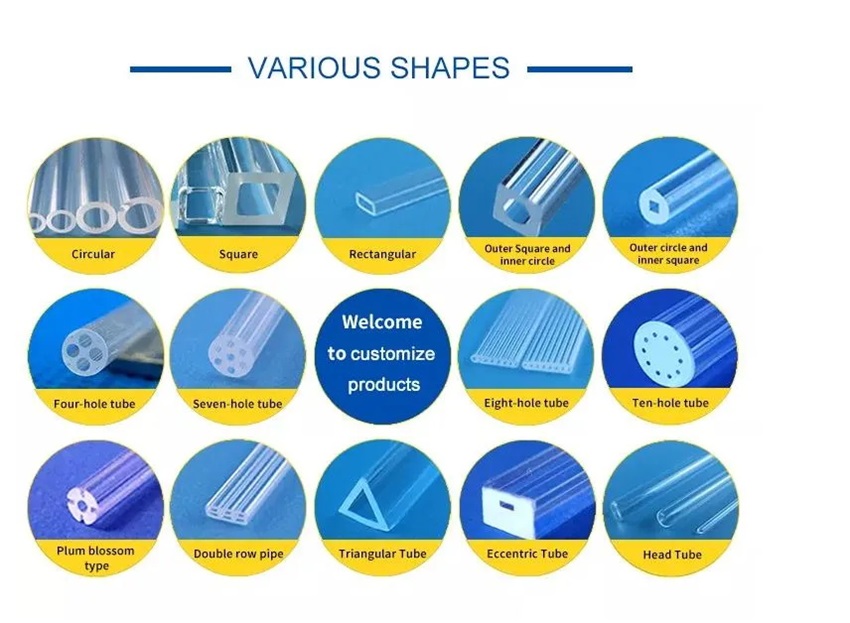
- End configurations (straight, flanged, flared, closed-end, U-shaped, etc.)
Step 6: Evaluate Thermal Shock Conditions
If your process involves rapid heating and cooling cycles, quartz is significantly safer than alumina ceramics, which require slow, even temperature changes to prevent fracture.
Custom Specifications: What We Offer
We specialize in custom quartz tube manufacturing for customers who cannot find standard sizes or require non-standard configurations.
Available dimensional range:
- Outside diameter: from 1mm up to 800mm or larger
- Wall thickness: from 0.2mm to 15mm
- Length: up to 5000mm
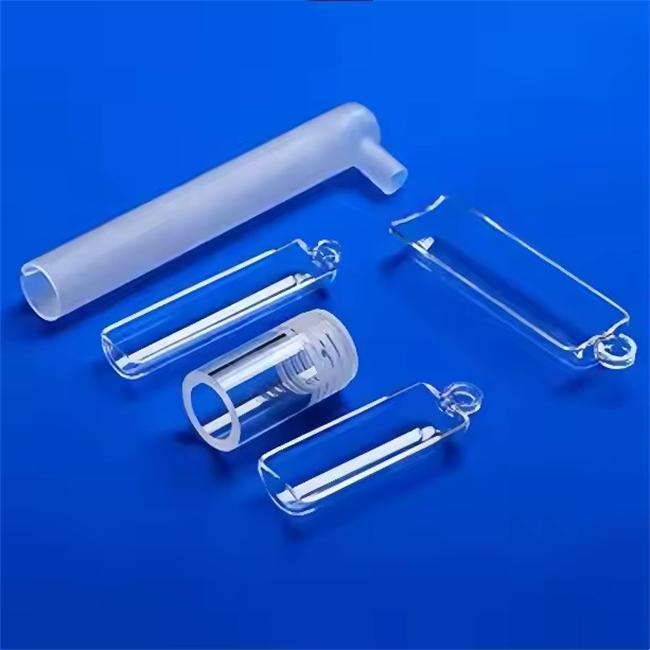
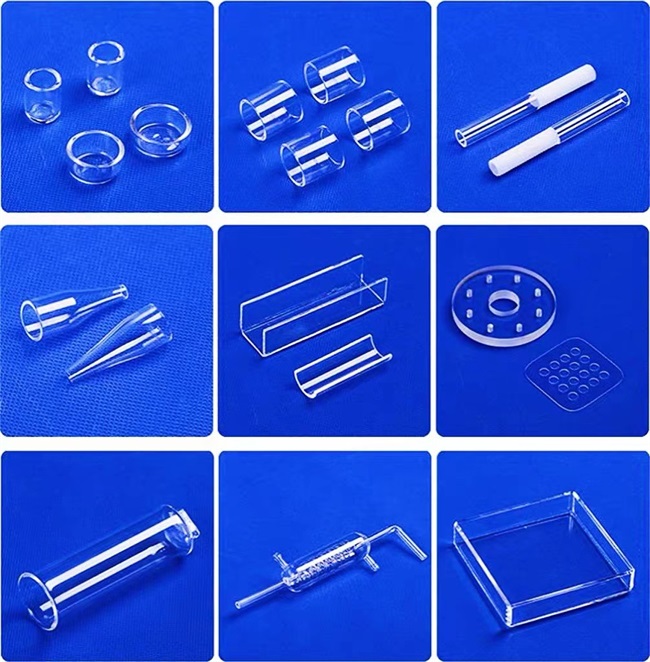
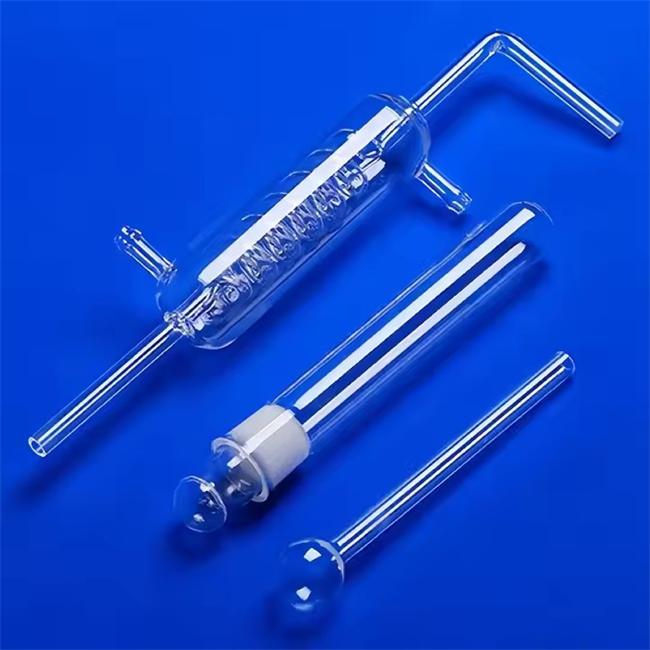
- Shapes available: straight, U-shaped, spiral, twin tubes, tapered, and flanged configurations
- End finishing: open, closed, flared, ground, or polished ends
- Additional features: slots, holes, notches, grinding, and surface polishing
Typical tolerances:
- Standard industrial tolerance: ±1% of OD
- Precision capillary tubes (OD ≤6mm): ±0.05mm standard, ±0.02mm on request
- Length tolerance for lengths ≥100mm: +5% / -1%
Material grades offered:
- Standard transparent quartz (SiO₂ ≥99.9%) – for general industrial use
- High-purity quartz (SiO₂ ≥99.99%) – for semiconductor and analytical applications
- UV-grade synthetic quartz – for maximum UV transmission
- Opaque quartz – for thermal insulation and refractory uses
Quartz vs. Ordinary Glass Tubes – A Comparison
Material composition is the fundamental difference. Quartz contains ≥99.5% SiO₂, while borosilicate glass contains only about 80% SiO₂ with various additives like boron and alkali oxides.
Maximum continuous operating temperature sets them far apart: quartz handles 1100–1200°C, whereas borosilicate glass is limited to approximately 500°C.
Thermal shock resistance is quartz’s standout advantage. Its ultra-low expansion coefficient allows rapid temperature cycling that would instantly shatter ordinary glass tubes.
Optical transmission also differs significantly. Quartz transmits UV light down to 180nm, while borosilicate glass blocks most wavelengths below 350nm.
Chemical stability favors quartz as well. It leaches virtually no ions or contaminants into processes, while glass tubes can release boron, sodium, and other impurities.
Cost is the only area where glass wins – quartz typically costs 5 to 10 times more, justified by its performance advantages in demanding applications.
Why Choose Us as Your Quartz Tube Supplier
We solve the problems that procurement managers and engineers face every day:
Problem: You cannot find the right size anywhere.
Solution: We manufacture custom diameters, lengths, wall thicknesses, and shapes to your exact specifications.
Problem: Your application requires ultra-high purity.
Solution: We supply materials from 99.9% up to 99.99% SiO₂, with verified purity documentation.
Problem: Standard tolerances are too loose for your equipment.
Solution: Our precision machining achieves tolerances as tight as ±0.02mm on capillary tubes.
Problem: Your project has an urgent deadline.
Solution: Expedited production options are available; typical lead time is 7–20 days.
Problem: You only need a small quantity or even a single piece.
Solution: We accept low MOQ and one-off custom orders without penalty pricing.
Problem: You need complex shapes – U-tubes, spirals, flanges, or twin bores.
Solution: Our skilled technicians perform flame working, welding, and precision forming for almost any geometry.
Problem: You are an OEM and need manufacturing to your drawings or samples.
Solution: Full OEM/ODM service – we work from your prints, samples, or conceptual sketches.
Problem: You require global shipping with reliable export documentation.
Solution: We have export experience to over 20 countries and handle all shipping logistics.
Our manufacturing capabilities include:
- CNC precision machining for tight dimensional control
- Flame working and welding for complex assemblies and joints
- Surface treatment – polishing, sanding, and flame polishing
- Thermal forming – bending, flanging, tapering, and flaring
- In-house quality control with full dimensional inspection
Quality assurance is built into every step:
- Dimensional accuracy verified against your specifications
- Surface quality inspection – no cracks, bubbles, or scratches
- Purity verification on each batch
- Optical transmission testing where required
Typical lead time: 7 to 20 days, depending on complexity and quantity.
Frequently Asked Questions (FAQ)
What is the maximum temperature a quartz tube can withstand?
Quartz tubes can be used continuously at 1100–1200°C and withstand short-term exposure up to 1450°C. The softening point is approximately 1730°C.
What is the difference between quartz and glass tubes?
Quartz is made of >99.5% pure SiO₂, while borosilicate glass contains only ~80% SiO₂ with additives. Quartz offers superior thermal shock resistance, higher temperature limits, UV transparency, and chemical purity – but costs 5–10 times more.
How do I choose the right wall thickness?
Wall thickness affects both mechanical strength and thermal shock resistance. Thicker walls provide more strength but reduce thermal shock resistance. For most furnace applications, 1–3mm wall thickness is common. Consult your supplier for your specific application.
Can quartz tubes be customized to non-standard sizes?
Yes. We manufacture custom quartz tubes to your exact specifications, including non-standard diameters, lengths, wall thicknesses, and end configurations.
What is the minimum order quantity (MOQ)?
We accept low MOQ and even single-piece orders for custom quartz tubes.
How long does custom quartz tube production take?
Typical lead time is 7–20 days depending on complexity, quantity, and current production schedule.
Is quartz resistant to acids?
Quartz is resistant to most acids except hydrofluoric acid (HF) and hot phosphoric acid. It is 30 times more acid-resistant than ceramic and 150 times more resistant than stainless steel.
What purity level do I need for semiconductor applications?
Semiconductor applications typically require 99.99% (4N) purity or higher to prevent metal contamination.
How do I measure quartz tube dimensions accurately?
Use calibrated calipers or micrometers for OD and ID measurements. For lengths over 100mm, tolerances of +5%/-1% are typical.
Can quartz tubes transmit UV light?
Yes. Clear quartz transmits over 80% of UV light, making it ideal for UV sterilization and photochemical applications.
What causes quartz tubes to devitrify?
Devitrification (crystallization) occurs at high temperatures, especially when surface contamination is present. Clean handling with gloves and proper temperature management extend tube life.
Can quartz tubes be bent or shaped?
Yes. Quartz can be flame-worked into U-shapes, spiral configurations, and other custom geometries.
How do I know if I need quartz or ceramic for my furnace?
If your operating temperature is below 1100°C and you need optical observation or rapid thermal cycling, choose quartz. For temperatures above 1200°C, alumina ceramics are required.
Do you offer OEM/ODM services?
Yes. We manufacture quartz tubes according to customer drawings, samples, or specifications – full OEM/ODM capability.
What is the typical tolerance for custom quartz tubes?
Standard tolerance is ±1% of OD for industrial tubes. Precision capillary tubes can achieve ±0.02mm on request.
> How to choose a quartz tube: Select based on maximum operating temperature (1100–1200°C for quartz), chemical environment (resists most acids except HF), optical needs (UV transmission available), and dimensional specifications. Look for SiO₂ purity ≥99.9% and appropriate wall thickness. For custom sizes, precision machining, low MOQ, and rapid delivery, contact a manufacturer with OEM/ODM capabilities. Quartz outperforms ordinary glass tubes in thermal shock resistance, temperature limits, UV transparency, and chemical purity – while costing 5–10 times more, justified by its performance in demanding applications.
- Quartz Tube Products – View our standard and custom quartz tube range
- Custom Quartz Fabrication – Learn about our OEM/ODM capabilities
- Industries Served – Semiconductor, laboratory, optical, and chemical applications
- Contact Us – Get a quote for your custom quartz tube requirements
Luverre Quartz manufactures and sells a wide range of high quality quartz glass, including quartz tubes, quartz plates, quartz rods, quartz windows, quartz crucibles, quartz boats, quartz flanges, quartz beakers, quartz glass instruments, and more. We can meet all kinds of customized requirements for quartz glass products.