
T: +86-518-85528012
E: nick@luverrequartz.com
E: nick@luverrequartz.com
1st floor Runlian industrial center No. 116 QuFeng Rd., Haizhou Economic and technological development zone Lianyungang City, Jiangsu Province, China 222062
Views: 0 Author: Site Editor Publish Time: 2026-11-16 Origin: Site



To order custom quartz products successfully, send the manufacturer a controlled drawing (PDF/DWG) with critical dimensions and tolerances, specify the quartz grade and purity level, state your operating conditions (temperature, chemicals, vacuum), and clarify surface finish and inspection requirements. A complete RFQ package reduces back-and-forth and ensures the quoted part matches your application.

Off-the-shelf quartz components rarely fit complex equipment. Procurement managers and engineers often face a familiar set of problems: standard tube sizes don‘t match the flange interface, the required purity exceeds what local distributors stock, the tolerance on a quartz window is too loose for optical alignment, or the order quantity is too small for large fabricators to bother with.
What Custom Quartz Products Can Be Manufactured?
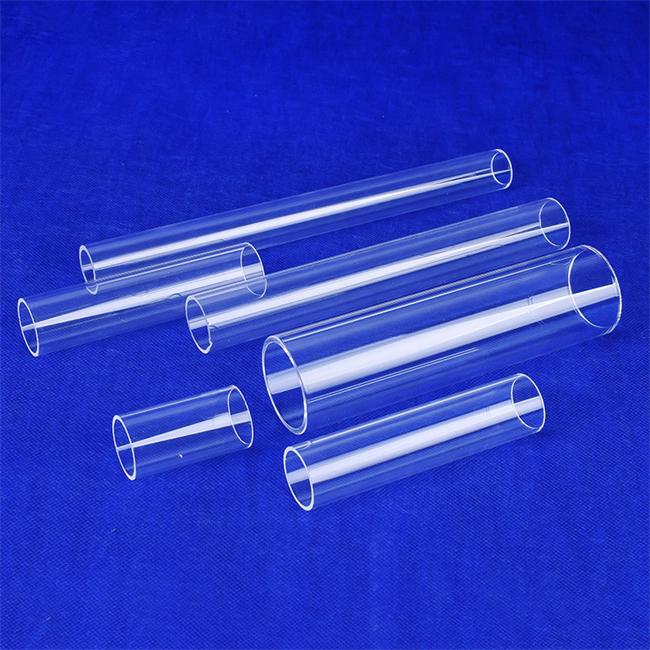
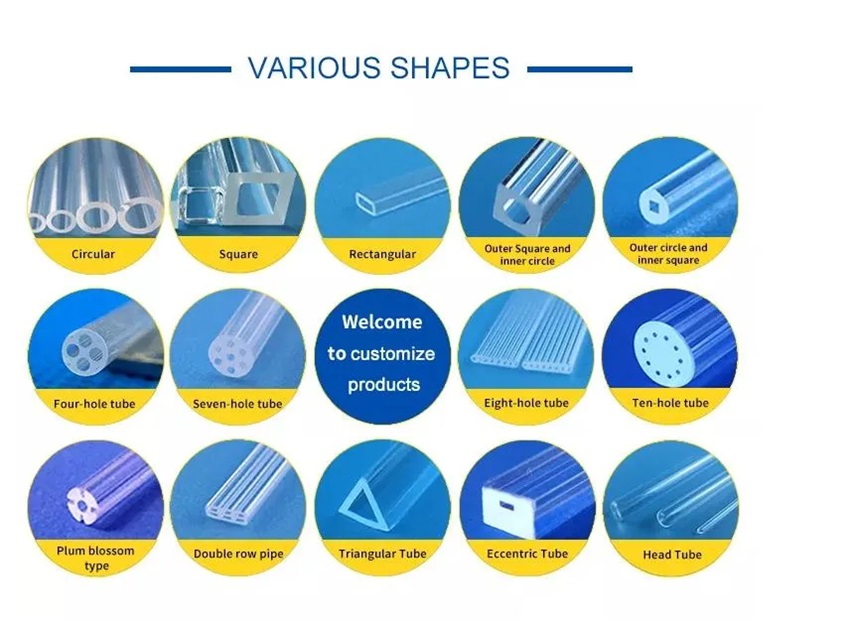
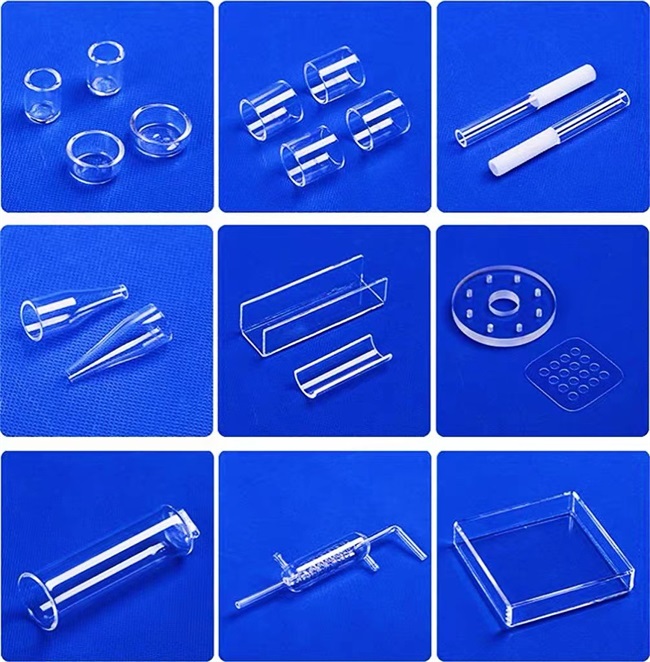
Almost any quartz component geometry can be custom-fabricated, including tubes, plates, rods, crucibles, flanges, rings, windows, discs, boats, and complex welded assemblies. The key constraint is not the product type but the drawing clarity and the manufacturer’s machining and welding capabilities.
Custom quartz manufacturing covers a wide spectrum:
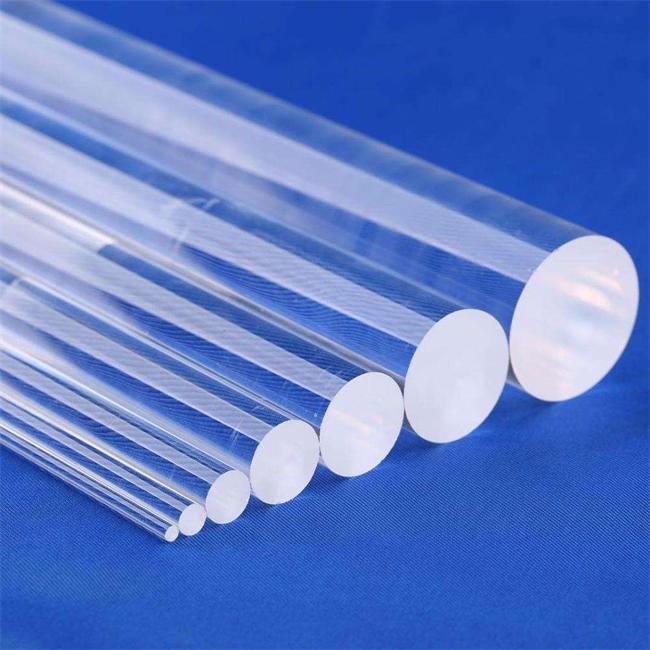
- Tubing and rod components: Cut-to-length, flared, bent, threaded, or ground to specific OD/ID tolerances
- Flat components: Plates, discs, and windows with polished, ground, or fire-polished surfaces
- Joined assemblies: Flanges welded to tubes, multi-port chambers, and quartz boats with welded supports
- Complex machined parts: Rings with stepped features, slotted boats, and drilled holes with position tolerances
- Crucibles and high-temperature ware: Transparent or opaque quartz in various capacities
For each category, the ordering process follows the same logic: define geometry, define material, define acceptance criteria. The difference lies in which specifications carry the most weight. A quartz window lives or dies by its optical flatness and transmission. A quartz boat for semiconductor diffusion is judged by metal contamination and dimensional stability at 1200°C.
What Problems Does Custom Quartz Manufacturing Solve?
Custom quartz manufacturing solves five recurring procurement problems: non-standard dimensions, high-purity requirements that standard stock cannot meet, tight tolerances for sealing or optical interfaces, urgent delivery timelines, and low-volume orders that standard distributors reject.
Problem 1: No standard size matches the equipment. A furnace tube with a non-standard diameter, a viewport with an unusual aspect ratio, or a flange pattern that doesn‘t correspond to any catalog item. Custom fabrication eliminates the need for adapters or compromises.
Problem 2: Purity requirements exceed standard stock. Semiconductor diffusion processes and high-temperature lab work often demand metal impurity levels below what general-purpose quartz suppliers can document. Custom manufacturers who control raw material sourcing can provide traceable purity data.
Problem 3: Tolerance is too loose for the function. A quartz disc used as an optical window needs flatness measured in fractions of a wavelength. A quartz ring that seals against an O-ring needs a precise surface finish and flatness. Standard ±1 mm tolerances are not acceptable.
Problem 4: Production line is down, and lead time is weeks. Off-the-shelf suppliers may quote 6–8 weeks. A custom fabricator with in-house machining and flexible scheduling can often compress this significantly for urgent replacement parts.
Problem 5: The order is too small for the factory. Many quartz factories set MOQs that make prototyping or small-batch production impractical. A supplier that accepts low-MOQ or prototype orders removes this barrier.

How to Prepare a Drawing for Custom Quartz Parts
A good quartz drawing contains four layers of information: (1) overall geometry and critical functional dimensions, (2) tolerances assigned by function, not by habit, (3) surface finish and edge treatment, and (4) material grade and any optical or cleanliness notes. Send a controlled PDF or DWG, and add a STEP file for complex 3D geometry.
What to Put on the Drawing
Dimensions and tolerances. Distinguish between critical dimensions (those that affect fit, function, or sealing) and reference dimensions. A common mistake is applying tight tolerances uniformly across the drawing, which drives up cost without improving function. Mark critical features clearly and allow general tolerances elsewhere .
For quartz specifically, these tolerances usually matter most:
- Wall thickness uniformity for tubes and crucibles (affects thermal shock resistance)
- Flatness and parallelism for windows, discs, and sealing flanges
- Concentricity for tubes and rings that assemble with other components
- Hole position for multi-port plates and flanges
- Surface finish (ground, polished, or fire-polished) and allowable chip size on edges
Edge and surface requirements. Quartz is brittle. Sharp edges become crack initiation sites. Specify chamfers or radii on all edges, and state the maximum allowable chip size. For optical parts, specify scratch-dig per MIL-PRF-13830B or an equivalent standard.
Material grade. State whether you need fused quartz (natural raw material) or synthetic fused silica (higher purity, better UV transmission, higher cost). If you don’t know which grade fits your application, describe the operating conditions and ask the manufacturer to recommend.
Additional notes. Include any requirements for cleaning (DI water rinse, cleanroom packaging), inspection reports (dimensional, material certification, visual), and marking/traceability.
What File Formats to Send
- PDF drawing for dimensions and tolerances (the controlling document)
- DWG or DXF if the manufacturer needs to edit or extract geometry
- STEP or IGES for complex 3D contours, as a reference model
- Photos of the existing part if no drawing exists—a good fabricator can reverse-engineer from a sample or clear photographs with scale references

How to Specify Quartz Material and Purity
Specify the quartz grade by application, not just by the word “high purity.” For semiconductor and high-temperature processes, require documented metal impurity levels (typically Fe, Al, Na, K, Ca, Li in the low ppm or ppb range). For optical use, specify transmission requirements at your wavelength of interest. For general high-temperature use, standard fused quartz with SiO₂ ≥ 99.9% is usually sufficient.
Quartz Grades and When to Use Them
Fused quartz (natural). Made from fused natural quartz sand. Good general-purpose material for tubes, plates, boats, and crucibles. SiO₂ content typically 99.9%+ but metal impurities are higher than synthetic. Suitable for most furnace, chemical, and lighting applications.
Synthetic fused silica. Made from silicon-containing precursors (e.g., SiCl₄). Lower metal impurities, better UV transmission, and higher cost. Used for semiconductor-critical components, deep-UV optics, and applications where trace metal contamination must be minimized.
Opaque quartz. Contains micro-bubbles that scatter light. Used for thermal insulation and where light transmission is not required.
Purity Verification
Ask for a certificate of analysis (CoA) or a material test report that lists actual measured values, not just a claim of “high purity.” The report should reference the analytical method (e.g., ICP-MS) and the detection limits. For semiconductor applications, confirm that the report covers the specific elements your process is sensitive to .
If the application involves direct contact with silicon wafers or critical optical surfaces, also ask about cleaning and packaging: cleanroom bagging, particle counts, and handling procedures.

Which Tolerances Are Realistic for Custom Quartz Machining?
Standard machined quartz tolerances are typically ±0.25 mm for general dimensions and ±0.13 mm or tighter for critical features. Optical flatness can reach fractions of a wavelength. However, achievable tolerance depends on part size, geometry, and whether the feature is machined or formed. Discuss tolerance-capability trade-offs with the manufacturer before finalizing the drawing.
Typical Tolerance Ranges
For general machined quartz (cut, ground, drilled), a tolerance block of ±0.25 mm for two-decimal dimensions and ±0.13 mm for three-decimal dimensions is a reasonable starting point . Tighter tolerances are achievable on smaller parts and simple geometries.
For optical surfaces, flatness is specified separately from dimensional tolerance. A window might be ±0.1 mm on diameter but λ/4 flatness over the clear aperture. State the clear aperture and the optical requirement independently.
For welded quartz assemblies, tolerances are looser than for machined parts because welding introduces distortion. A flange-to-tube concentricity of ±0.5 mm may be realistic on a welded assembly where a machined ring would hold ±0.1 mm. Don‘t apply machining tolerances to welded features without confirming feasibility.
The Cost of Tightening Tolerance
Tolerance directly affects machining time, scrap rate, and inspection cost. A feature held to ±0.05 mm may require multiple setups and additional metrology. Before specifying a tight tolerance, ask: does this dimension actually affect fit or function? If not, relax it. The manufacturer can often identify which tolerances are driving cost .
How to Specify Surface Finish and Optical Requirements
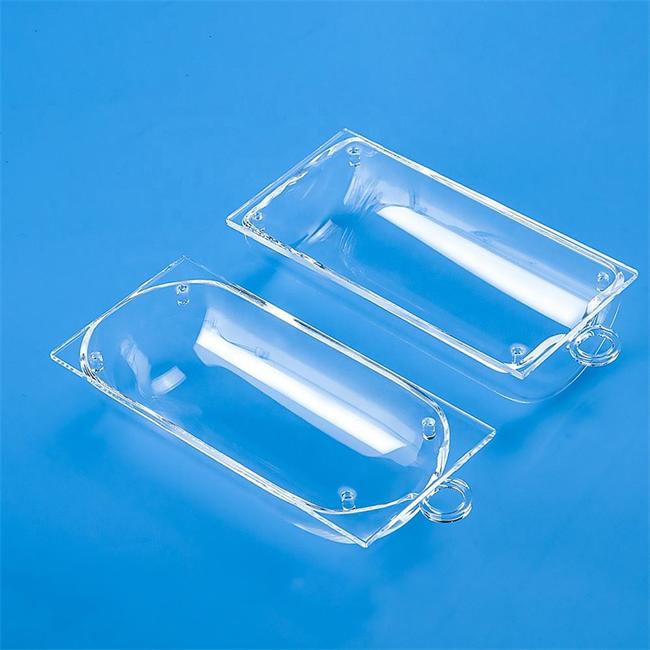
Surface finish for quartz falls into three practical categories: fire-polished (glossy, transparent, no material removal), ground (matte, controlled dimension), and polished (smooth, for optical or sealing surfaces). Specify the finish by function: sealing surfaces need flatness and a smooth finish; optical windows need transmission and scratch-dig; structural parts may only need edge chamfers.
Surface Finish Categories
Fire-polished. The surface is melted briefly to produce a smooth, transparent finish. No dimensional correction is possible after fire polishing, so the part must be machined to near-final size first. Fire polishing is common on tubes and rods where transparency is desired but optical precision is not required.
Ground. Abrasive machining produces a matte or frosted surface. Ground surfaces are dimensionally controlled and suitable for sealing against gaskets or O-rings, provided flatness is adequate. Surface roughness depends on grit size; finer grits produce smoother surfaces at higher cost.
Polished. Mechanical polishing produces a smooth, transparent surface. For optical windows, specify surface roughness (Ra) and scratch-dig. For sealing flanges, specify flatness and surface finish across the sealing land.
Optical Specifications for Windows and Discs
For quartz windows, include these on a separate optical note:
- Clear aperture: the area over which optical performance is required
- Transmission: minimum transmission at specified wavelengths (e.g., ≥90% at 250 nm for a UV window)
- Flatness: often specified in waves (λ) at a reference wavelength, or in micrometers
- Parallelism: for windows where beam deviation matters
- Scratch-dig: per MIL-PRF-13830B or equivalent
- Coating: if required, specify the coating type (AR, reflective, conductive) and wavelength range

What Operating Conditions Should You Disclose?
Disclose maximum temperature, thermal cycling, chemical exposure, vacuum or pressure, and any gas atmosphere. These conditions determine material grade, wall thickness, joint design, and whether annealing is required. Omitting them is the most common cause of premature part failure.
Why Each Condition Matters
Maximum temperature and thermal cycling. Quartz softens around 1670°C and has excellent thermal shock resistance, but repeated cycling from high temperature to room temperature can initiate cracks at edges or weld joints. If your process involves rapid thermal cycling, tell the manufacturer so they can specify edge treatment and annealing.
Chemical exposure. Quartz resists most acids but is attacked by hydrofluoric acid and hot phosphoric acid. If your process uses HF, even in trace amounts, the quartz surface will etch. Disclose the chemistry so the manufacturer can advise on material selection or protective measures.
Vacuum or pressure. Quartz vacuum chambers and viewports experience stress from pressure differentials. Wall thickness and flange design must account for the load. A viewport designed for atmospheric pressure on one side and vacuum on the other is not the same as a free-standing window.
Gas atmosphere. Reducing atmospheres at high temperature can cause quartz to devitrify (crystallize) and lose strength. If your furnace runs hydrogen or forming gas, disclose it.
What to Include in a Custom Quartz RFQ
A complete RFQ includes the drawing, material grade, quantity, delivery date, inspection requirements, and any special packaging or documentation needs. Sending all of this upfront eliminates the most common cause of quotation delays: missing information.
Use this checklist before sending your inquiry:
- Drawing: Controlled PDF with revision number; STEP file for complex geometry
- Material: Quartz grade (fused, synthetic, opaque) and purity requirement
- Quantity: Prototype, pilot batch, and annual volume if applicable
- Tolerances: Critical dimensions marked; general tolerance block referenced
- Surface and optical: Finish type, flatness, transmission, scratch-dig
- Operating conditions: Temperature, chemicals, pressure, atmosphere
- Inspection: Dimensional report, material certificate, visual criteria
- Cleanliness and packaging: Cleaning method, cleanroom bagging, labeling
- Delivery: Required date and shipping destination
- Documentation: Any required certificates of conformance or test reports
A manufacturer who receives this package can quote accurately and flag feasibility issues before production begins .

Applications Across Industries
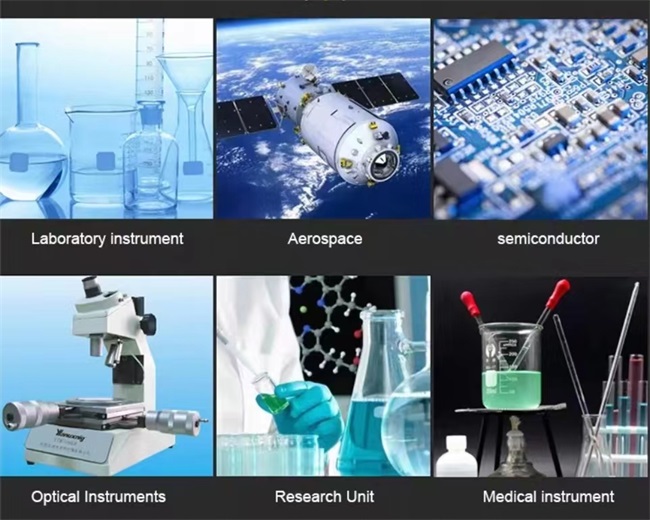
Custom quartz parts serve semiconductor fabrication, optical systems, chemical processing, high-temperature furnaces, laboratory research, and lighting. Each industry emphasizes different specifications: semiconductor prioritizes purity, optics prioritizes transmission and flatness, chemical processing prioritizes corrosion resistance, and furnace applications prioritize thermal shock resistance.
Semiconductor. Quartz tubes, boats, and bell jars for diffusion, oxidation, and CVD processes. Critical specifications: low metal contamination, dimensional stability at high temperature, and minimal particle generation.
Optics and photonics. Windows, lenses, and prisms for UV-IR transmission. Critical specifications: transmission at target wavelengths, flatness, parallelism, and scratch-dig.
Chemical processing. Reactor vessels, heat exchanger tubes, and sight glasses. Critical specifications: resistance to specific acids, pressure rating, and sealing surface finish.
High-temperature furnaces. Observation windows, thermocouple protection tubes, and furnace liners. Critical specifications: thermal shock resistance, maximum use temperature, and devitrification resistance.
Laboratory and analytical. Cuvettes, sample cells, and vacuum components. Critical specifications: optical clarity, chemical inertness, and precise dimensions for instrument compatibility.
Lighting. Envelopes for UV, halogen, and specialty lamps. Critical specifications: UV transmission, thermal endurance, and hermetic sealing capability.
Why Choose a Manufacturer with Custom Capabilities
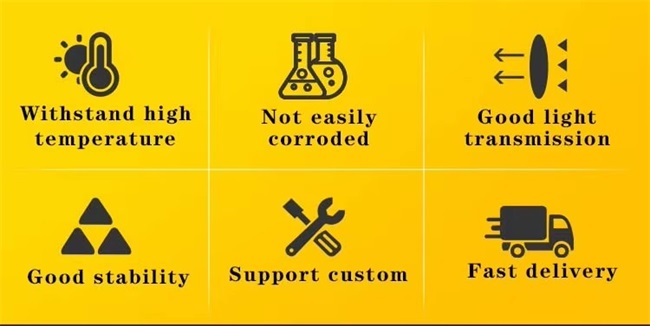
A manufacturer built around custom fabrication solves problems that distributors and standard-product factories cannot: no minimum order quantity barriers, engineering support during drawing review, in-house machining and welding, and direct communication with the people who make the part.
Low MOQ and prototype support. Standard quartz factories often set MOQs in the hundreds or thousands. A custom-focused manufacturer accepts single-piece prototypes and small batches, so you can validate a design before committing to production volume.
Drawing review and engineering feedback. Before quoting, a capable manufacturer reviews your drawing for manufacturability: tolerances that are unnecessarily tight, features that are difficult to machine, or material choices that don‘t match the operating conditions. This feedback prevents expensive mistakes.
In-house machining and welding. When cutting, grinding, drilling, polishing, and welding are all done under one roof, tolerances across operations are controlled, and lead times are shorter. Outsourced processing adds time and variability.
Material traceability. A manufacturer who sources quartz raw material directly can provide batch-level material certificates and maintain traceability from raw material to finished part.
Global export experience. Custom quartz parts are fragile and often require cleanroom packaging. Export-experienced manufacturers know how to pack for international shipment, prepare customs documentation, and coordinate with freight forwarders.
Frequently Asked Questions
Can you manufacture from a sample if I don’t have a drawing?
Yes. Send the sample part, or clear photographs with a scale reference and key dimensions. The manufacturer can reverse-engineer the drawing, confirm critical features, and produce a quotation. For simple parts, photos plus dimensions are often sufficient .
What is the minimum order quantity for custom quartz parts?
Low-MOQ and prototype-friendly manufacturing means you can order as few as one piece for validation. Production quantities are quoted separately. The MOQ depends on part complexity and material availability.
How long does custom quartz fabrication take?
Prototype lead times are typically 1–3 weeks depending on complexity and material availability. Production quantities may require 3–6 weeks. Urgent replacement parts can sometimes be expedited; discuss your timeline before ordering.
Can you match the optical transmission of my existing quartz window?
Yes, if you provide the transmission curve or the specification. The manufacturer selects the appropriate grade (fused vs. synthetic) and confirms transmission at your wavelengths. For coated windows, provide the coating specification.
What is the maximum operating temperature of custom quartz parts?
Fused quartz can be used continuously up to approximately 1100–1200°C, depending on the grade and the presence of thermal cycling. Above this range, devitrification and softening become concerns. Disclose your actual operating temperature and cycling profile.
Can you weld quartz flanges to tubes?
Yes. Quartz welding is used to join flanges, side ports, and support structures to tubes. Welded assemblies require different tolerance expectations than machined parts, because welding introduces localized stress and minor distortion.
How do I specify purity for semiconductor applications?
Provide the maximum allowable concentration for each critical metal (Fe, Al, Na, K, Li, Ca) in ppm or ppb. The manufacturer provides a material certificate with measured values from a qualified analytical method.
Do you provide inspection reports with the shipment?
Yes. Dimensional inspection reports, material certificates, and visual inspection records are available. Specify the report requirements in the RFQ so they are included in the quotation.
What surface finish should I specify for a sealing surface?
For O-ring sealing, specify flatness (e.g., 0.05 mm over the sealing land) and a ground or polished finish. For gasket sealing, a ground finish is usually sufficient. For optical contact or diffusion bonding, specify polished with controlled flatness and roughness.
Can you produce opaque quartz parts?
Yes. Opaque quartz (white, micro-bubble structure) is available for thermal insulation, diffusion furnace components, and applications where light transmission is not required.
What file formats do you accept for drawings?
PDF is preferred for the controlling drawing. DWG/DXF and STEP/IGES are accepted for reference geometry. For simple parts, a fully dimensioned sketch with clear notes is often sufficient.
How are custom quartz parts packaged for export?
Parts are cleaned, individually wrapped or bagged (cleanroom bagging available), cushioned, and packed in export-grade crates or cartons. Fragile and optical parts receive additional protection.
Can you support OEM/ODM requirements?
Yes. OEM manufacturing includes private labeling, custom packaging, and documentation under the customer’s brand. ODM support includes design assistance for new parts where the customer provides performance requirements rather than a finished drawing.
What should I do if my drawing has tight tolerances that may not be achievable?
Send the drawing and the functional requirements. The manufacturer reviews the tolerances and identifies any that are difficult or costly to achieve, then proposes alternatives that still meet the function. This conversation before quoting saves time and cost.
Do you ship internationally?
Yes, with experience in export documentation, freight coordination, and packaging for international transport. Shipping terms (FOB, CIF, DDP) are quoted based on destination.
To order custom quartz products, send a controlled drawing with critical dimensions, specify the quartz grade and purity by application, disclose operating conditions (temperature, chemicals, pressure), and include surface finish and inspection requirements in the RFQ. Choose a manufacturer that offers low-MOQ prototyping, engineering drawing review, in-house machining and welding, and export experience. Complete upfront information reduces quotation delays and ensures the finished part meets the application.
Luverre Quartz manufactures and sells a wide range of high quality quartz glass, including quartz tubes, quartz plates, quartz rods, quartz windows, quartz crucibles, quartz boats, quartz flanges, quartz beakers, quartz glass instruments, and more. We can meet all kinds of customized requirements for quartz glass products.
