T: +86-518-85528012
E: nick@luverrequartz.com
E: nick@luverrequartz.com
1st floor Runlian industrial center No. 116 QuFeng Rd., Haizhou Economic and technological development zone Lianyungang City, Jiangsu Province, China 222062
Views: 0 Author: Site Editor Publish Time: 2026-11-06 Origin: Site


Is Quartz Resistant to Chemicals
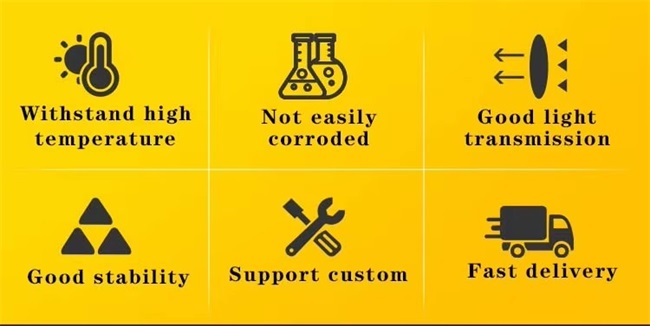
Yes, quartz is highly resistant to most chemicals—but not all of them. Fused quartz glass withstands attack from virtually all acids (except hydrofluoric acid and hot phosphoric acid above 300°C), is largely inert to water and salt solutions, and outperforms most metals and ceramics in acidic environments at elevated temperatures. However, it is vulnerable to hydrofluoric acid (HF), hot concentrated alkalis (such as sodium hydroxide), and certain metal oxides at high temperatures.
For procurement managers and engineers, the practical takeaway is this: quartz is an excellent choice for chemical containment, sight windows, and semiconductor wet benches—provided you verify the specific chemical exposure, temperature, and concentration before finalizing specifications. Misunderstanding quartz's chemical boundaries is one of the most common causes of premature part failure in high-purity processes.
What Makes Quartz Glass Chemically Resistant?
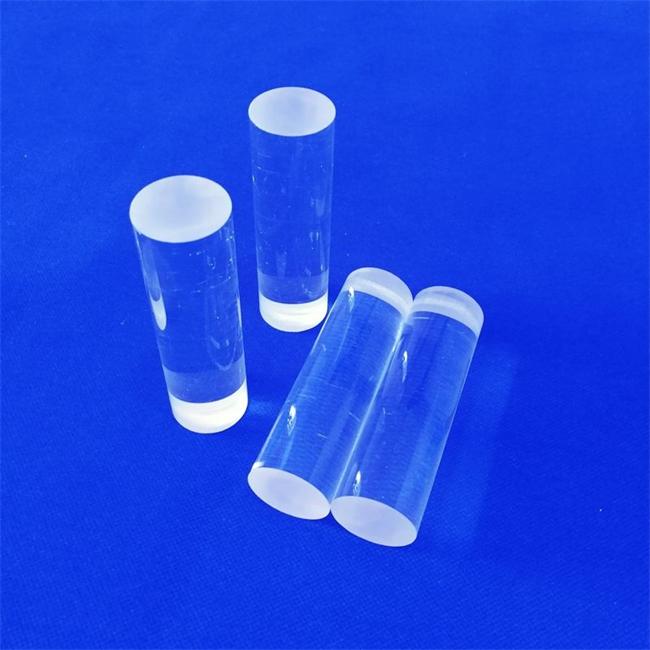
Quartz glass is composed of high-purity silicon dioxide (SiO₂) in an amorphous structure. The Si–O bonds are exceptionally strong and tightly networked, creating a material with very low reactivity toward most substances. Unlike borosilicate glass, which contains additives like boron oxide and sodium oxide that can leach into process fluids, fused quartz's single-component composition minimizes contamination risk.
This high purity—often exceeding 99.99% SiO₂—is precisely why quartz is specified in semiconductor manufacturing, trace-element laboratory analysis, and high-temperature chemical processing where even parts-per-million contamination is unacceptable.
Which Chemicals Attack Quartz? The Critical Exceptions
Hydrofluoric acid (HF) is quartz's primary chemical enemy. Research confirms that quartz glass undergoes significant dissolution when exposed to HF, with the attack occurring preferentially at surface defects and impurity-rich regions. Even anhydrous HF gas at elevated temperatures can corrode fused quartz, though flame-polished surfaces show improved resistance by reducing surface defects. If your process involves HF in any form—wet etching, cleaning, or vapor-phase reactions—quartz is generally not the right material unless specifically engineered and validated.
Hot, concentrated alkalis are the second major concern. Sodium hydroxide (NaOH) and potassium hydroxide (KOH) solutions attack quartz, with the dissolution rate increasing sharply with temperature and concentration. At room temperature and dilute concentrations, the effect is negligible for most applications. But boiling NaOH or concentrated alkaline baths will degrade quartz components over time.
Phosphoric acid above 300°C begins to attack quartz, though the reaction is slow and manageable for many short-term applications. For processes below that threshold, quartz remains a safe choice.
Metal oxides and certain metals at red heat can reduce quartz and cause corrosion. Calcium, magnesium, aluminum, nickel, and sodium—particularly in oxide form—can react with silica at high temperatures. This matters for furnace furniture and wafer carriers where quartz may contact metal impurities.
How Does Quartz Compare to Borosilicate Glass for Chemical Service?
For most common acids—HCl, H₂SO₄, HNO₃—both fused quartz and borosilicate glass perform well. Neither material is suitable for hydrofluoric acid. The real differences emerge in three areas.
First, high-temperature service: fused quartz maintains its chemical resistance and mechanical integrity up to 1100°C and beyond, while borosilicate glass is limited to roughly 500°C. For a chemical reactor operating at 900°C with HCl vapor, quartz is the clear specification; for a room-temperature mixing vessel, borosilicate may suffice at lower cost.
Second, contamination risk: borosilicate glass contains boron oxide and sodium oxide additives that can leach into process fluids over time. Fused quartz, being essentially pure SiO₂, leaches far less—critical for trace analysis and semiconductor applications.
Third, thermal shock resistance: quartz's near-zero thermal expansion coefficient gives it superior resistance to rapid temperature changes, which matters in processes with heating and cooling cycles.
Against hot concentrated alkalis, both materials show limited resistance, though quartz generally performs somewhat better. Against HF, both fail.

Where Quartz's Chemical Resistance Delivers Real Value
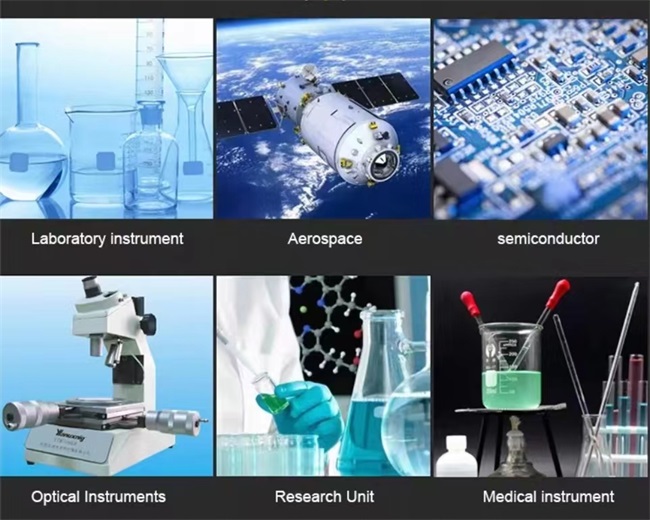
Semiconductor wet processing. Quartz tanks, carriers, and immersion components handle aggressive acids like sulfuric acid and hydrochloric acid at elevated temperatures—areas where HF is absent. The low metallic impurity content prevents wafer contamination.
Laboratory analysis. Quartz crucibles, beakers, and digestion vessels are preferred for trace-element work because they do not leach boron or sodium into samples, unlike borosilicate glass. Acid digestions with HNO₃/HCl mixtures are well within quartz's comfort zone.
Chemical equipment and sight windows. Quartz flanges, rings, and windows allow visual process monitoring in corrosive environments. For reactors handling acid vapors at high temperatures, quartz windows survive where metal or polymer windows degrade.
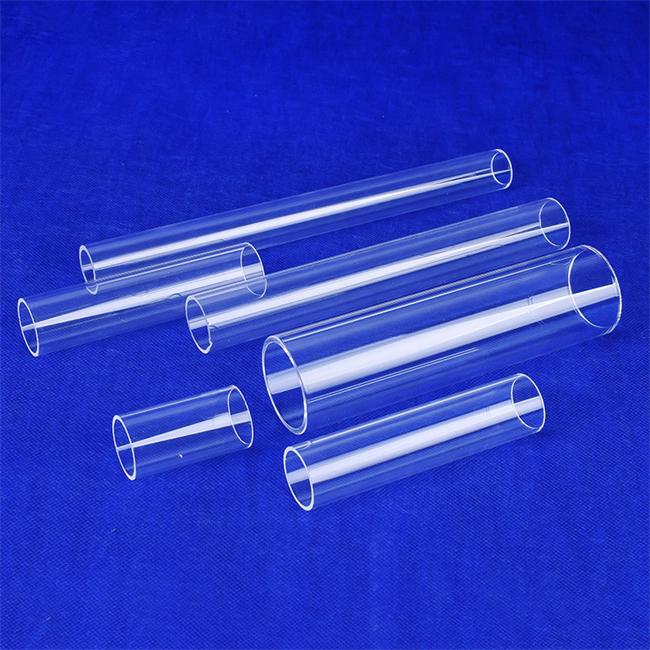
High-temperature furnace components. Quartz tubes and boats used in diffusion furnaces tolerate process gases and thermal cycling that would destroy most alternatives—provided the gas chemistry is compatible (no HF, no concentrated alkali vapor).
How to Specify Quartz Parts for Chemical Service: A Buyer's Checklist
Before issuing a purchase order, confirm these five points with your engineering team and your quartz supplier:
1. List every chemical the part will contact—including cleaning agents. A quartz part that handles HCl perfectly may fail in three weeks if the weekly cleaning protocol uses dilute HF. Don't overlook process excursions, maintenance chemicals, and unexpected byproducts.
2. Define maximum temperature and concentration. Dilute NaOH at 25°C may be acceptable; 20% NaOH at 80°C is a different situation entirely. Quartz's chemical resistance is not a binary property—it degrades with temperature and concentration.
3. Specify surface finish requirements. Flame-polished surfaces exhibit better corrosion resistance than mechanically machined surfaces because the melting process reduces surface defects and hydroxyl groups that initiate attack. If chemical durability is critical, request flame polishing or fire polishing on wetted surfaces.
4. Confirm grade and purity. Semiconductor-grade quartz with low hydroxyl content (below 5 ppm) and tightly controlled metallic impurities performs differently than general-purpose fused quartz. For trace analysis or semiconductor applications, specify the grade explicitly.
5. Address thermal cycling and mechanical stress. Chemical resistance is only half the equation. Thermal gradients, clamping forces, and support configurations affect service life. A quartz tube that is chemically compatible but mechanically over-constrained will crack before it corrodes.
Custom Quartz Fabrication for Chemical Applications: What We Solve
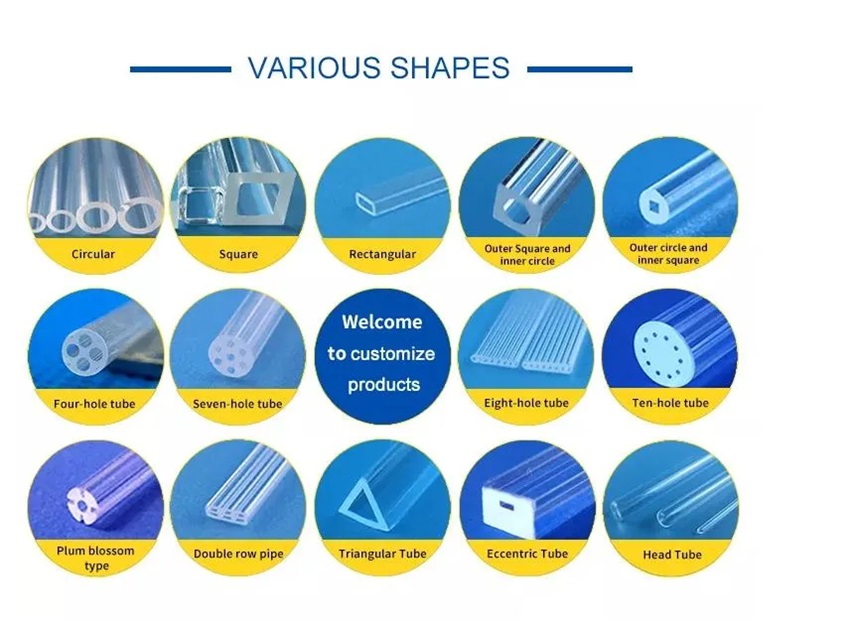
Off-the-shelf quartz products rarely match the exact dimensional and purity requirements of chemical process equipment. Our customers come to us with specific problems:
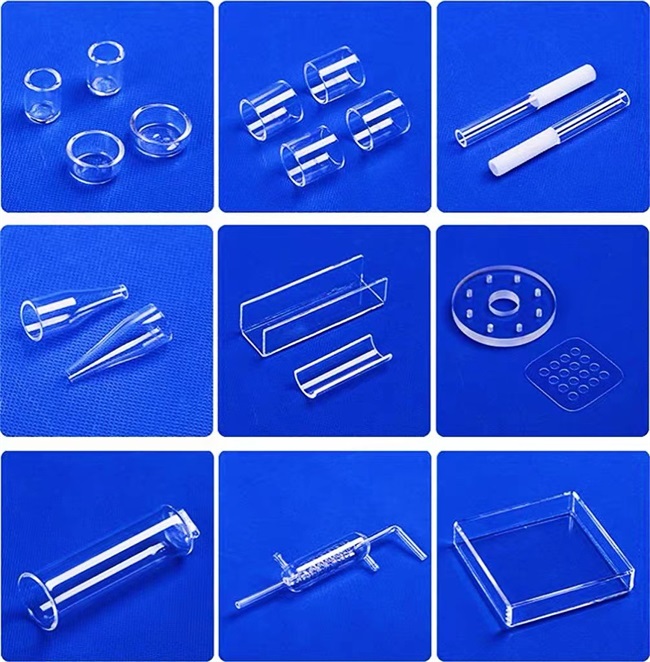
"We need a non-standard flange to mate with our existing reactor port." We machine quartz flanges to your drawing, including non-standard bolt patterns, O-ring grooves, and sealing surfaces, with tolerances suitable for vacuum or pressure service.
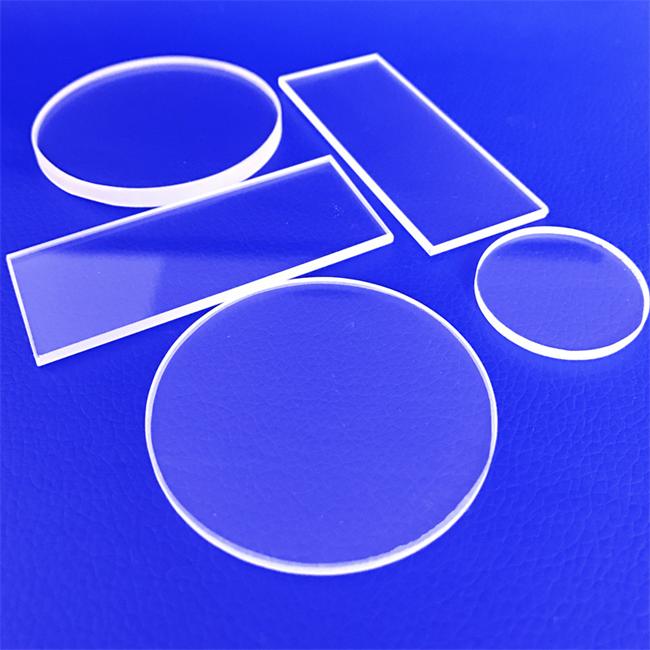
"Our sight glass supplier can't meet our temperature and chemical requirements." We fabricate quartz windows in diameters from small observation ports to large rectangular viewing panels, with polished surfaces and optional flange integration.
"We need 50 custom quartz boats for a pilot line—not 5,000." We support low-MOQ production and prototype runs, so you can validate performance before committing to full-scale manufacturing.
"The last supplier's parts had inconsistent purity and failed incoming inspection." We provide material certifications and dimensional inspection reports with every shipment, and we maintain batch traceability for high-purity applications.
"We need parts in three weeks, not three months." For standard geometries and straightforward custom designs, we offer expedited production without compromising on machining quality or material integrity.
Applications by Industry: Where Chemical Resistance Matters Most
Semiconductor fabrication. Quartz tubes, boats, and windows in diffusion, oxidation, and wet clean processes. Critical requirements: low metallic contamination, controlled hydroxyl content, and compatibility with process gases (excluding HF).
Chemical processing. Quartz columns, reactor liners, and sight glasses for acid handling at elevated temperatures. Critical requirements: wall thickness consistency, pressure rating verification, and surface finish.
Laboratory and analytical. Quartz crucibles, digestion vessels, and cuvettes. Critical requirements: high purity (no leachable contaminants), thermal shock resistance for rapid heating and cooling cycles.
Optical and photonics. Quartz windows and lenses for UV and IR transmission in chemically aggressive environments. Critical requirements: transmission uniformity, surface flatness, and coating compatibility if applicable.
Furnace and thermal processing. Quartz tubes, liners, and wafer carriers. Critical requirements: high-temperature creep resistance, chemical compatibility with process atmosphere, and dimensional stability over thermal cycles.

Frequently Asked Questions (FAQ)
Is quartz resistant to hydrochloric acid?
Yes. HCl, along with sulfuric acid, nitric acid, and aqua regia, has essentially no effect on fused quartz at normal or elevated temperatures. Quartz is widely used for HCl containment and handling.
Can quartz glass hold hydrofluoric acid?
No. HF dissolves quartz glass. Even dilute HF solutions will etch quartz surfaces over time, and the rate increases with temperature and concentration. Use PTFE or other HF-compatible materials instead.
Is quartz resistant to sodium hydroxide?
Quartz has limited resistance to NaOH. Dilute, room-temperature solutions cause minimal attack, but hot or concentrated NaOH dissolves quartz measurably. For alkaline service, verify the specific temperature and concentration with your supplier.
What is the maximum temperature for quartz in chemical service?
Quartz can be used continuously up to approximately 1100°C and short-term up to 1450°C, depending on grade and geometry. However, chemical resistance may degrade at elevated temperatures—for example, phosphoric acid begins attacking above 300°C.
Does quartz leach contaminants into process fluids?
High-purity fused quartz has extremely low leachable content compared to borosilicate glass. For trace analysis and semiconductor applications, specify low-alkali quartz grades with certified impurity profiles.
Is flame-polished quartz more chemically resistant?
Yes, for HF service specifically. Flame polishing reduces surface defects and hydroxyl groups that initiate HF attack, improving corrosion resistance in both HF solutions and anhydrous HF gas. For other chemicals, the benefit is less pronounced but generally positive.
Can quartz be used with chlorine gas at high temperature?
Quartz is generally resistant to dry chlorine and bromine at ordinary temperatures. At elevated temperatures, verify compatibility with your specific process conditions—moist chlorine or chlorine mixed with other reactive species may behave differently.
What's the difference between quartz and fused silica for chemical service?
The terms are often used interchangeably in industry. Both refer to high-purity amorphous SiO₂. "Fused quartz" typically derives from natural quartz crystal, while "fused silica" may be synthetic. Chemical performance is similar, but impurity profiles and hydroxyl content vary by manufacturing route.
Will quartz survive thermal shock in a chemical process?
Yes, quartz's near-zero thermal expansion coefficient gives it excellent thermal shock resistance. It can survive rapid temperature changes that would crack other materials. However, mechanical constraints and part geometry can still cause failure—design support carefully.
Can I use quartz for a chemical reactor sight window?
Yes, quartz windows are excellent for chemical reactors because they combine broad optical transmission (UV to IR) with chemical inertness to most process fluids. Specify flange mounting, sealing method, and pressure rating clearly.
How do I clean quartz parts without damaging them?
Avoid HF-based cleaning agents. Dilute acid rinses (HCl or HNO₃), high-purity water, and gentle mechanical action are generally safe. For high-temperature service, pre-clean parts to remove organic residues before first use.
Does quartz resist attack from plating solutions?
Most plating solutions—including acidic copper, nickel, and chrome baths—are compatible with quartz. Alkaline plating baths (such as electroless nickel) require evaluation based on temperature and pH. HF-containing stripping solutions must be avoided.
What documentation should I request from a quartz supplier for chemical service?
Request material certification (SiO₂ purity, hydroxyl content, metallic impurities), surface finish specification (polished vs. as-machined), and dimensional inspection reports. For critical applications, request corrosion test data or references for similar chemical exposures.
Can quartz be repaired if it corrodes?
Corroded or etched quartz cannot be restored to original condition. Surface damage from HF or alkali attack is permanent. In some non-critical applications, lightly etched surfaces may remain functional, but performance is degraded. Prevention through proper material selection is the only reliable strategy.
Do you provide custom quartz parts for chemical applications with low minimum order quantities?
Yes. We support prototype and low-volume production runs for custom quartz components, including flanges, windows, tubes, and machined parts per drawing or sample. This allows you to validate chemical compatibility and performance before scaling up.

Why Choose Us for Chemical-Grade Quartz Components
We understand the chemistry, not just the catalog. Our engineering team works with your process conditions—chemical list, temperatures, concentrations, and cleaning protocols—to recommend the right quartz grade and surface finish. We will tell you when quartz is the wrong choice.
Custom fabrication is our standard, not an exception. Non-standard flanges, modified tube geometries, custom boat configurations, and one-off prototype windows are routine work. Send a drawing or a sample; we will quote with realistic lead times.
Low MOQ for validation, scalable for production. Start with the quantities you need to prove performance. When you are ready to scale, we maintain the same material traceability and inspection standards.
Purity and documentation for regulated industries. Material certifications, dimensional reports, and batch traceability are available for semiconductor, pharmaceutical, and analytical applications where documentation is not optional.
Global shipping with export experience. We routinely ship quartz components to customers in North America, Europe, and Asia, with packaging designed for fragile technical glass and customs documentation that clears without delays.
Fast turnaround on urgent requirements. When a failed component is holding up your line, we prioritize expedited fabrication for standard and straightforward custom geometries. Tell us the deadline; we will tell you honestly what is achievable.
Ready to discuss your chemical application? Send us your drawing, your chemical exposure list, and your required delivery date. We will respond with a technical recommendation and a quotation—not a generic sales pitch.

Quartz glass is highly resistant to most acids (HCl, H₂SO₄, HNO₃, aqua regia) and is widely used in semiconductor, laboratory, and chemical processing applications. However, it is not resistant to hydrofluoric acid (HF), which dissolves quartz, or to hot concentrated alkalis such as NaOH and KOH. Phosphoric acid above 300°C and certain metal oxides at red heat can also attack quartz. For chemical service, specify flame-polished surfaces where possible, verify temperature and concentration limits, and avoid HF-containing cleaning agents. Custom quartz fabrication with low MOQ and material certification is available for non-standard geometries and purity requirements.
Luverre Quartz manufactures and sells a wide range of high quality quartz glass, including quartz tubes, quartz plates, quartz rods, quartz windows, quartz crucibles, quartz boats, quartz flanges, quartz beakers, quartz glass instruments, and more. We can meet all kinds of customized requirements for quartz glass products.
