
T: +86-518-85528012
E: nick@luverrequartz.com
E: nick@luverrequartz.com
1st floor Runlian industrial center No. 116 QuFeng Rd., Haizhou Economic and technological development zone Lianyungang City, Jiangsu Province, China 222062
Views: 0 Author: Site Editor Publish Time: 2026-11-10 Origin: Site


Is Quartz Transparent to UV Light? UV Transmission and Applications
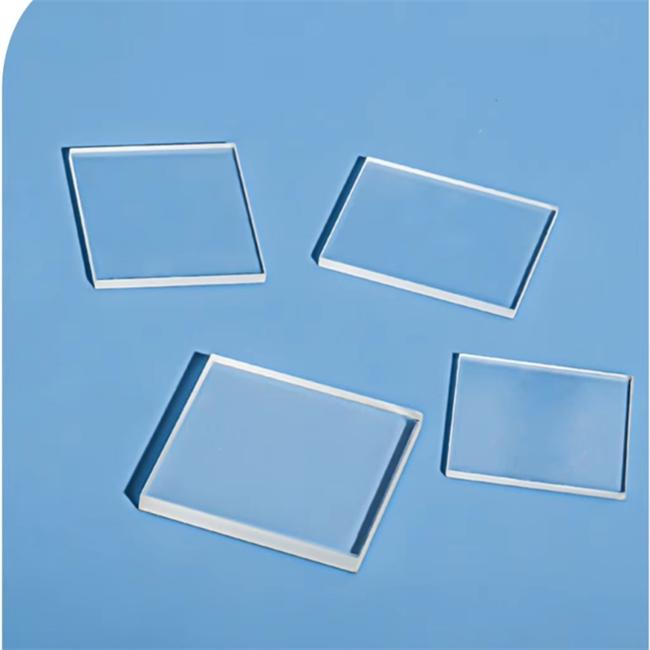
Yes, quartz glass is highly transparent to ultraviolet (UV) light—but the degree of transparency depends heavily on the grade of quartz you choose. Standard fused quartz transmits well across most of the UV spectrum, while UV-grade synthetic fused silica can reach transmission levels exceeding 90% down to 185 nm, making it the material of choice for deep-UV lithography, excimer lasers, and precision spectroscopy. However, not all "quartz" performs equally: natural fused quartz typically cuts off around 220–260 nm due to trace metal impurities, whereas synthetic UV-grade silica extends usable transmission into the deep UV. For procurement managers and engineers, the critical decision is matching the quartz grade to your wavelength, thickness, and fluorescence requirements—not simply asking whether quartz is UV-transparent.
What Does "UV Transparent" Actually Mean for Quartz?
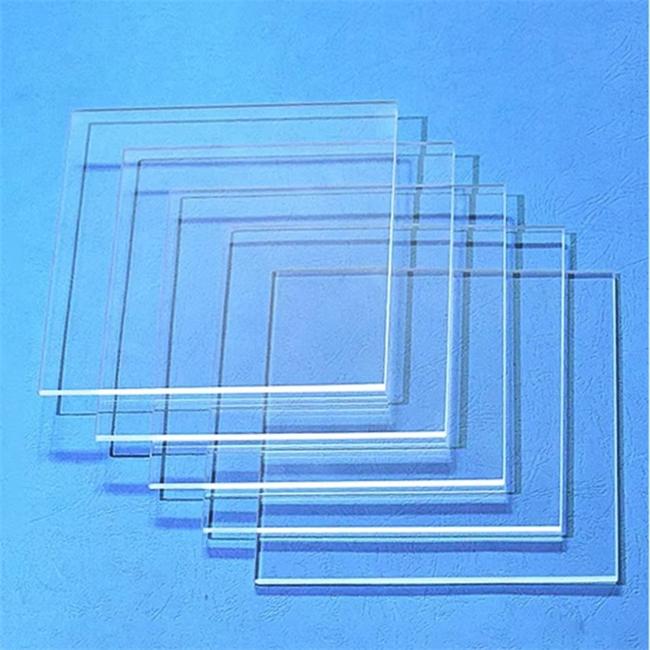
Quartz is transparent to UV light because its amorphous SiO₂ structure has an intrinsic absorption edge near 160 nm, far below the UV range. In practical terms, this means high-purity quartz can transmit wavelengths from the near-UV (400 nm) down into the vacuum-UV region, provided impurity levels are controlled. At 300 nm, quartz glass achieves approximately 92% transmission, compared to roughly 50% for borosilicate glass and nearly 0% for soda-lime glass. For deep-UV applications at 248 nm, premium synthetic fused silica viewports can reach up to 99.8% transmission.
The catch is that "quartz" is a family of materials, not a single specification. The three common optical grades—JGS1, JGS2, and JGS3—differ dramatically in UV performance:
- JGS1 (UV-grade synthetic fused silica): High OH content (~2000 ppm), usable from ~185 nm, lowest fluorescence, ideal for deep-UV optics and excimer laser components.
- JGS2 (natural fused quartz): Lower OH (100–200 ppm), usable from ~220–260 nm, suitable for general UV/visible windows and high-temperature industrial sight glasses.
- JGS3 (IR-grade fused quartz): Minimal OH, optimized for infrared transmission, not recommended for deep-UV work.
For a procurement engineer specifying a quartz window for a 254 nm UV sterilization system, JGS2 may be adequate and cost-effective. For a 193 nm lithography tool or a deep-UV spectrometer, JGS1 is non-negotiable.
How Does Quartz Compare to Other UV-Transparent Materials?
Quartz offers the best balance of UV transmission, thermal stability, and cost for most industrial UV applications—but sapphire outperforms it at the shortest wavelengths, and borosilicate falls short below 300 nm.
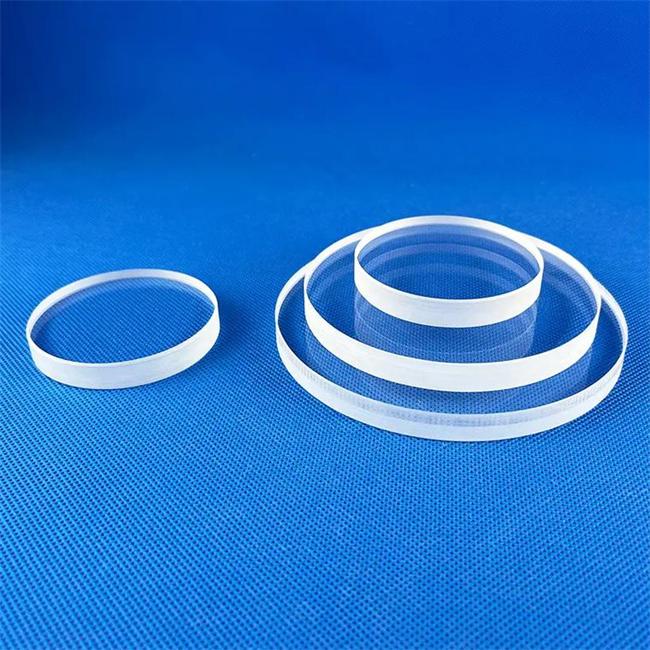
Soda-lime glass absorbs almost all UV-B and UV-C and is unusable below roughly 350 nm. Borosilicate glass transmits only about 50% at 300 nm and absorbs strongly below that wavelength. Fused quartz (JGS2) delivers approximately 92% transmission at 300 nm and remains usable down to about 220 nm, limited by impurity absorption. Synthetic fused silica (JGS1) extends that range to 185 nm with similar or higher transmission, at a higher material cost. Sapphire reaches even deeper into the UV—usable from about 140 nm—but costs more, is birefringent, and presents greater challenges for sealing and mounting.
For vacuum viewports and UV reactor windows, quartz is the mainstream choice because it seals readily to stainless steel flanges via low-temperature brazing and withstands bakeout temperatures up to 200°C. Sapphire offers deeper UV reach but costs more and presents sealing challenges. Borosilicate is cheaper but unsuitable for wavelengths shorter than roughly 320 nm.
Which Industries Actually Use UV-Transparent Quartz?
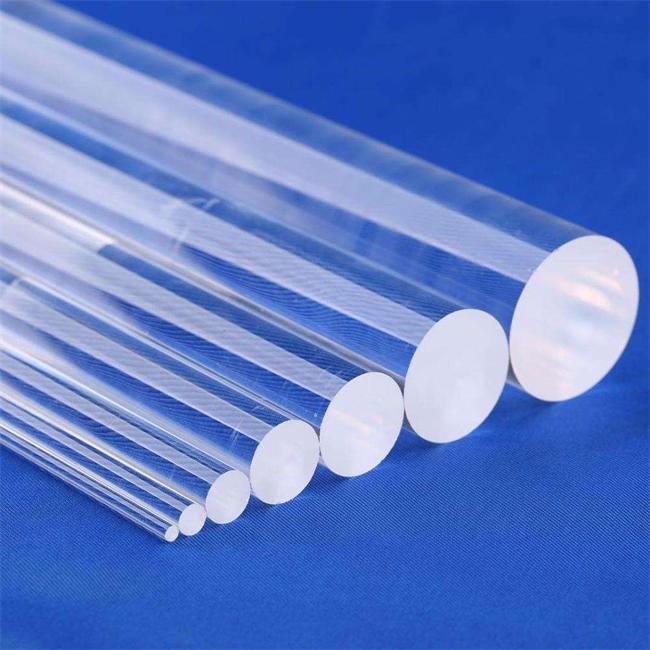
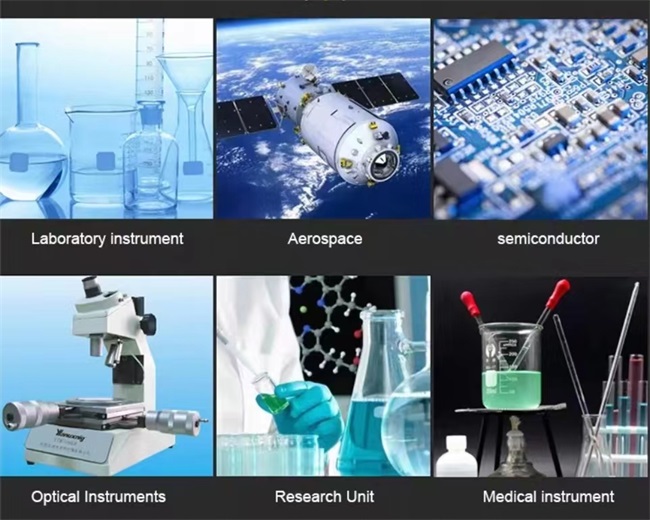
UV-transparent quartz is mission-critical in semiconductor manufacturing, UV curing, water treatment, spectroscopy, and laser systems. Each application imposes distinct requirements on grade, surface quality, and geometry.
Semiconductor and lithography. Deep-UV photolithography systems use synthetic fused silica lenses and windows because they must transmit 248 nm or 193 nm light without solarization or fluorescence. Quartz plates also serve as wafer carriers, chamber viewports, and insulating components in diffusion and etch tools.
UV curing and sterilization. High-pressure mercury lamps operating at 365 nm use fused quartz envelopes because the material transmits UV efficiently while withstanding the lamp's thermal load. UV water treatment reactors rely on quartz sleeves to isolate the lamp from the water while allowing germicidal 254 nm radiation to pass.
Analytical instrumentation. Spectrophotometers, HPLC detectors, and fluorescence instruments require windows that transmit UV light without adding background fluorescence. UV-grade synthetic silica is preferred because its fluorescence is roughly 0.1% that of natural fused quartz when excited at 254 nm.
Laser systems. Excimer lasers (193 nm, 248 nm) and UV solid-state lasers use synthetic fused silica optics because the material combines high transmission with laser-damage resistance and low birefringence.
High-temperature furnace viewing. Quartz viewports in diffusion furnaces and CVD chambers allow process monitoring while withstanding temperatures exceeding 1000°C and resisting thermal shock.
How Should You Select the Right Quartz Grade for Your UV Application?
Start with your wavelength, then work backward through thickness, fluorescence tolerance, and cost. The selection process that experienced buyers use follows four steps:
Step 1: Define the shortest wavelength you need to transmit. If your system operates at 365 nm or 300 nm, JGS2 natural fused quartz may deliver adequate performance at lower cost. If you need 254 nm for germicidal UV or 248 nm for DUV lithography, specify JGS1 synthetic silica. Below 200 nm, only synthetic UV-grade material will transmit usefully.
Step 2: Account for thickness. Transmittance data in material datasheets typically refers to 10 mm internal transmission and excludes surface reflection losses. Uncoated quartz reflects roughly 3.5–4% per surface, totaling 7–8% loss for a two-surface window—higher in the deep UV. A thin window (2 mm) may meet your throughput target with a lower grade, while a thick lens demands premium material.
Step 3: Check fluorescence requirements. For fluorescence detection, Raman spectroscopy, or UV imaging, natural fused quartz can emit blue-violet luminescence under UV excitation that raises background noise. Synthetic fused silica is the safe choice when signal-to-noise ratio matters.
Step 4: Confirm geometry and surface quality. UV windows often require tight flatness, parallelism, and scratch-dig specifications. Machined quartz tolerances typically reach ±0.25 mm for standard dimensions and ±0.13 mm for precision features, with surface finishes ranging from ground to polished optical quality. Specify whether you need optical polish or a ground finish for your application.
What Custom Specifications Can a Quartz Manufacturer Support?
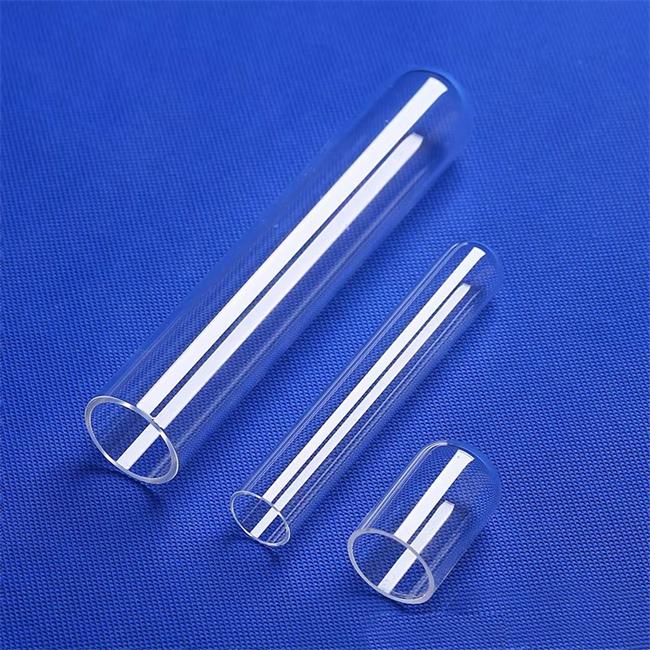
A capable quartz fabricator should support custom dimensions, geometries, and material grades without requiring large minimum order quantities. For UV-grade quartz components, typical customization parameters include material grade selection (JGS1, JGS2, JGS3, or equivalent brands, with transmission curves available on request) and outer diameters from 5 mm up to 500 mm or larger. Thicknesses generally range from 0.5 mm to 50 mm, though thin windows require careful handling. Optical surfaces can be specified to flatness of λ/2 to λ/10 per inch, with commercial-grade flatness around 0.001 inch per inch. Surface finish options span ground, lapped, and optical polish, with scratch-dig specifications from 80/50 down to 40/20. Parallelism is typically held to 5 arc minutes or better on request, and edges can be ground, beveled, or fire-polished to reduce chipping. Holes and slots are produced by CNC drilling or laser machining, with minimum features around 0.5 mm typical. Flanges can be quartz-to-quartz or quartz-to-metal, with metal brazing available.
For non-standard UV window sizes—a 127 mm diameter disc with a 3 mm thickness and 40/20 scratch-dig, for example—the practical sourcing question is not whether quartz can be machined to that specification, but whether your supplier can do it without excessive lead time or minimum order friction.
Why Do UV Quartz Buyers Struggle to Find Reliable Suppliers?
The most common procurement failures in UV quartz sourcing are grade substitution, inconsistent transmission between lots, and inflexible minimum order quantities. These problems surface in predictable patterns:
Problem 1: "Quartz" means different things to different suppliers. A supplier quoting "UV quartz" may ship JGS2 natural fused quartz when the application requires JGS1 synthetic silica. The visual difference is imperceptible; the transmission difference at 200 nm is the gap between working and failing. Buyers who specify only "UV grade" without naming the grade standard invite this risk.
Problem 2: Small-batch custom windows are difficult to source. A laboratory needs ten 25 mm × 3 mm UV windows with a specific chamfer. Large optics houses may not quote below 100 pieces; local glass shops may not have UV-grade material in stock. The result is either paying a large-company premium or accepting uncertain quality from a general machine shop.
Problem 3: Transmission consistency varies between lots. Natural quartz sources differ in impurity content. A window that passes incoming inspection at 254 nm may show lower transmission in the next shipment if the supplier changed raw material sources. This is especially damaging in production environments where process validation depends on optical consistency.
Problem 4: Tight tolerances meet slow lead times. A custom quartz flange with a 0.05 mm bore and optical-quality faces requires both precision machining and optical finishing—capabilities that often reside in different shops. Coordinating two vendors doubles the lead time and splits quality responsibility.
Problem 5: Thermal application demands are underestimated. A quartz window for a 1200°C furnace must survive thermal cycling without cracking or devitrification. Not every quartz fabricator has experience with high-temperature sealing, annealing, or the grade selection that prevents failure in cyclic thermal environments.
How Does a Specialized Quartz Manufacturer Solve These Problems?
A quartz source that combines material grade control, in-house precision machining, and flexible order quantities eliminates the gaps that generic suppliers create. Here is what to look for—and what we provide:
Grade-certified material with transmission data. We supply JGS1, JGS2, and JGS3 materials and can provide transmission curves or certificates of analysis for critical UV applications. When you specify 185 nm transmission, you receive material that meets that specification—not a generic "UV quartz" substitute.
Low-MOQ custom fabrication. We support prototype and small-batch production from one piece upward. A research lab ordering five custom UV windows and an OEM ordering five hundred receive the same engineering attention and material traceability. There is no "sample charge" disguised as a minimum order.
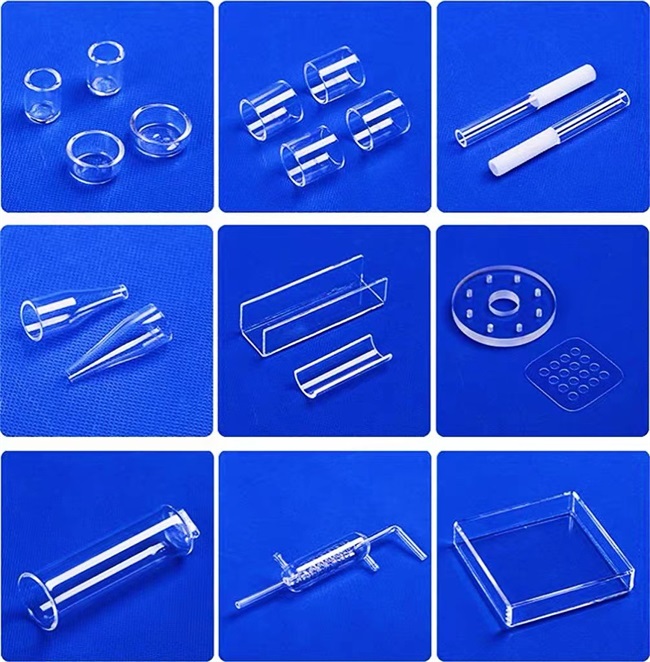
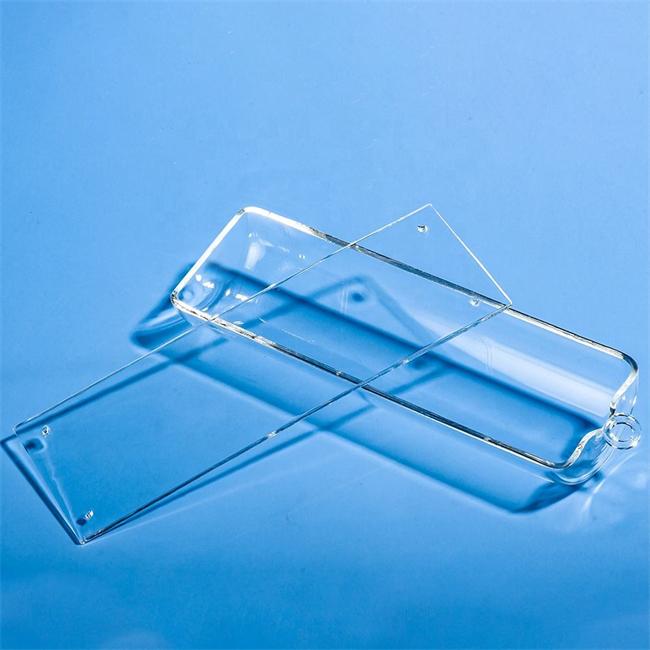
Drawing-to-part and sample-to-part capability. Send a 2D drawing, a 3D model, or a physical sample. Our CNC machining and optical finishing processes produce quartz windows, discs, plates, flanges, and rings to your specified dimensions, tolerances, and surface quality—with first-article inspection reports on request.
Precision machining with optical finishing in one workflow. We machine features as small as 0.5 mm and maintain flatness and parallelism through finishing operations. For UV windows, this means you receive a part that meets both mechanical and optical specifications from a single supplier, with a single quality record.
High-temperature and thermal-shock expertise. Our experience with furnace sight glasses, diffusion tube flanges, and high-temperature quartz fixtures means we understand how grade selection, annealing, and edge finishing affect survival in cyclic thermal environments—and we specify accordingly.
Export documentation and packaging for global delivery. UV quartz components are fragile and surface-critical. We package with interleaved protection, edge protection, and customized foam configurations, and supply material certificates, dimensional reports, and inspection documentation for customs and incoming quality control.
Frequently Asked Questions (FAQ)
Is quartz glass 100% transparent to UV light?
No material is 100% transparent. Quartz glass transmits up to ~92–93% at many UV wavelengths (excluding surface reflection losses), with performance dropping toward the deep-UV cutoff determined by grade. At 185 nm, only synthetic UV-grade silica maintains useful transmission; natural fused quartz absorbs strongly below ~220 nm.
What is the difference between UV quartz and regular quartz?
"UV quartz" typically refers to synthetic fused silica (JGS1) with high OH content and low metallic impurities, enabling transmission down to 185 nm. "Regular" fused quartz (JGS2) is made from natural crystal and transmits adequately above ~220–250 nm but absorbs shorter wavelengths. The price difference is significant; specifying the grade is essential.
Can quartz glass block UV light?
Standard soda-lime glass blocks most UV-B and UV-C. Quartz does not inherently block UV—it transmits it—but low-grade or impure quartz can absorb shorter wavelengths. If you need to block UV while transmitting visible light, quartz is the wrong material; consider a UV-blocking filter glass instead.
Which quartz grade is best for 254 nm UV sterilization?
JGS2 natural fused quartz is commonly used for 254 nm germicidal lamp sleeves and reactor windows because transmission at 254 nm is adequate and cost is lower than synthetic silica. For high-power density or long service life where solarization resistance matters, JGS1 may be justified.
Does quartz fluorescence under UV light?
Natural fused quartz can exhibit blue-violet fluorescence under 254 nm or 365 nm excitation due to trace impurities. Synthetic UV-grade silica has fluorescence roughly 0.1% of natural quartz at 254 nm excitation and does not fluoresce above 290 nm, making it preferred for spectroscopy and fluorescence detection.
What is the maximum thickness for UV-transparent quartz?
There is no hard maximum, but transmission decreases with thickness due to internal absorption, especially at shorter wavelengths. For deep-UV applications, windows are typically kept under 10 mm; for near-UV and visible, thicker sections are practical. Always request transmission data at your specific wavelength and thickness.
Can you custom-make a quartz window to my drawing?
Yes. We machine UV quartz windows, discs, plates, and flanges to customer drawings with specified dimensions, tolerances, surface finish, and edge treatment. Provide a 2D drawing with tolerances or a 3D step file, and specify the quartz grade and wavelength requirement.
What is the minimum order quantity for custom UV quartz?
We support low-MOQ and prototype orders starting from one piece. There is no fixed minimum for most custom geometries; pricing reflects the material grade, machining complexity, and finishing requirements rather than order volume thresholds.
How do I specify surface quality for a UV window?
Use scratch-dig specification (e.g., 80/50, 60/40, 40/20) for optical surfaces, and specify flatness (e.g., λ/4 per inch) and parallelism if imaging or beam transmission is critical. For non-imaging applications like light transmission, 80/50 scratch-dig and commercial flatness are often sufficient.
Can quartz windows be sealed to metal flanges for vacuum use?
Yes. Quartz viewports are brazed to stainless steel flanges with low-temperature alloys, rated for bakeout up to ~200°C. If your system requires higher bakeout temperatures, discuss the mounting design with us before ordering.
Does quartz transmit UV-C (200–280 nm)?
Synthetic UV-grade silica (JGS1) transmits UV-C down to ~185 nm. Natural fused quartz (JGS2) transmits UV-C poorly below ~250 nm. For UV-C germicidal applications at 254 nm, JGS2 is often acceptable; for 222 nm excimer lamps or 207 nm applications, JGS1 is required.
What causes a quartz window to "solarize" or discolor under UV?
Solarization is caused by UV-induced defect formation in the silica network, often exacerbated by impurities. High-OH synthetic silica is more resistant to solarization than low-OH natural quartz. If your application involves prolonged high-intensity UV exposure, specify UV-grade synthetic material.
Can you provide transmission curves for the material you supply?
Yes. For critical UV applications, we can supply transmission data or certificates of analysis for the specific material lot. Specify the wavelength range and thickness when requesting data.
What is the lead time for custom UV quartz parts?
Lead time depends on material grade availability, machining complexity, and finishing requirements. Standard-grade custom windows typically ship in 2–4 weeks; precision optical parts or large flanges may require 4–6 weeks. Rush options are available for urgent requirements—contact us with your deadline.
Do you export quartz parts internationally?
Yes. We regularly ship to North America, Europe, and Asia with appropriate export documentation, protective packaging, and shipping terms (FOB, CIF, DDP). Material certificates and dimensional reports are included with shipments for customs and quality records.
Why Choose Us for UV Quartz Components
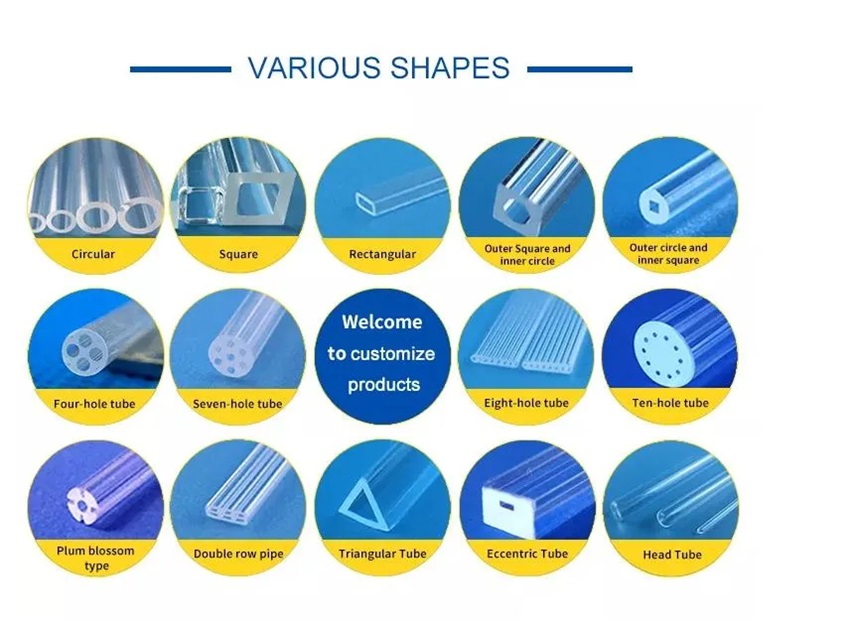
We are a source manufacturer of custom quartz products serving semiconductor, optical, chemical, and furnace equipment customers worldwide. Our capabilities align directly with the procurement problems UV quartz buyers face:
- Grade-certified materials: JGS1, JGS2, JGS3 and equivalent grades, with transmission verification available.
- Low-MOQ customization: From one prototype to production volumes, without minimum-order penalties.
- Drawing-to-part and sample-to-part: Send your drawing, 3D model, or physical sample; we return a quoted part with material and tolerance confirmation.
- Precision machining and optical finishing: Tight tolerances, controlled flatness, and specified surface quality in one workflow.
- High-temperature expertise: Furnace windows, diffusion flanges, and thermal-shock-resistant geometries built from application knowledge.
- Fast turnaround and global export: Documented quality, protective packaging, and shipping experience to North America, Europe, and Asia.
If you are sourcing a UV quartz window, disc, plate, flange, or custom machined component and need a supplier who will confirm the grade, hold the tolerance, and ship without a minimum-order obstacle, send your specification for a quote.

Luverre Quartz manufactures and sells a wide range of high quality quartz glass, including quartz tubes, quartz plates, quartz rods, quartz windows, quartz crucibles, quartz boats, quartz flanges, quartz beakers, quartz glass instruments, and more. We can meet all kinds of customized requirements for quartz glass products.
