T: +86-518-85528012
E: nick@luverrequartz.com
E: nick@luverrequartz.com
1st floor Runlian industrial center No. 116 QuFeng Rd., Haizhou Economic and technological development zone Lianyungang City, Jiangsu Province, China 222062
Views: 0 Author: Site Editor Publish Time: 2026-07-29 Origin: Site


Metallurgical quartz crucibles are specialized containers made from fused silica (SiO₂), engineered to withstand the extreme temperatures and corrosive environments of metal melting and alloying processes. These crucibles offer unparalleled purity and thermal shock resistance for gold, silver, copper, platinum, and specialty alloys, solving contamination risks and ensuring consistent melt quality.
Unlike conventional graphite or clay crucibles, quartz crucibles deliver exceptional performance in demanding applications—including induction furnaces, vacuum melting systems, and laboratory research—while maintaining dimensional stability through thousands of thermal cycles.

Why Quartz Crucibles for Metallurgy?
Quartz crucibles are the premier choice for metallurgy because they combine ultralow thermal expansion, outstanding thermal shock resistance, and high chemical purity, enabling them to withstand molten metals without introducing contaminants.
Key Advantages
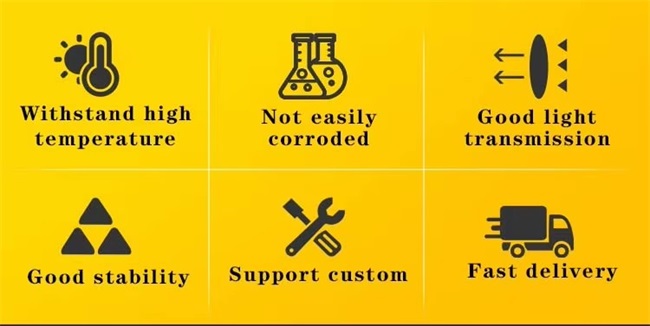
High temperature resistance: Withstands continuous use up to 1200-1600°C; short bursts higher
Thermal shock resistance: Withstands rapid heating/cooling without cracking—critical for batch melting
Chemical inertness: Resists acids, alkalis, and molten metals—prevents contamination
Low thermal expansion: Maintains structural integrity during thermal cycling
Non-conductive: Essential for induction melting applications
Material Purity and Performance
High-purity fused silica (>99% SiO₂) is the key to quartz crucible performance. Impurities in the crucible material can diffuse into the melt, potentially causing product rejection in critical applications where contamination limits are as low as 1 part per million. Quartz crucibles made from virgin fused silica minimize this risk, maintaining the integrity of precious metals, semiconductor-grade silicon, and specialty alloys.
Applications in the Metallurgical Industry
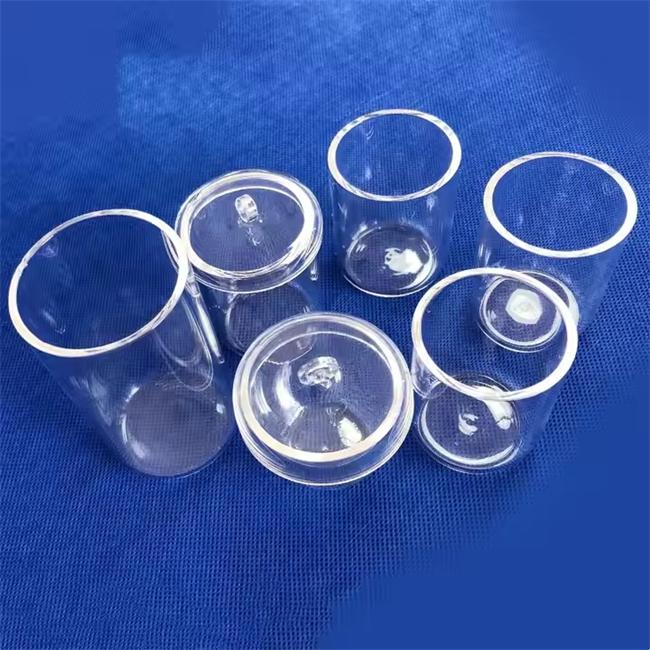
Quartz crucibles serve critical roles across diverse metallurgical processes, from melting precious metals to preparing semiconductor-grade silicon and specialty alloys, where purity and thermal stability are paramount.
Primary Applications
Precious Metals Refining – Gold, silver, platinum, and other precious metals require containers that won’t react with or contaminate the melt. Fused quartz crucibles deliver the purity required for jewelry, investment casting, and bullion production.
Special Alloys Manufacturing – High-performance alloys for aerospace, automotive, and medical industries demand precise chemistry control. Quartz crucibles minimize contamination during melting and alloying.
Semiconductor Silicon Production – The Czochralski (CZ) process for growing single-crystal silicon ingots requires crucibles that maintain 1425°C while preventing oxygen and other impurities from degrading crystal quality.
Induction Furnace Melting – Quartz crucibles are compatible with induction heating systems from manufacturers like Bego, Linn, Heraeus, and Manfredi, delivering reliable performance through fast heating/cooling cycles.
Laboratory Research – Thermal analysis, materials testing, and small-scale alloy development depend on crucibles that provide consistent, contaminant-free results.

How to Choose the Right Quartz Crucible
Selecting the optimal crucible requires matching material purity, design dimensions, and application-specific features to your melting process—consider metal type, operating temperature, furnace compatibility, and required lifespan.
Selection Criteria
1. Metal Type & Reactivity
- Gold, silver, copper: Standard high-purity fused silica works well
- Platinum, specialty alloys: Premium purity (≥99.9%) recommended
- Silicon: High-purity crucibles with barium coating for semiconductor applications
2. Operating Temperature
- Continuous use: Up to 1200-1350°C
- Maximum use: Up to 1600°C+ with proper design
3. Crucible Structure
- Transparent layer (bubble-free): Contact surface with melt—minimizes bubble-related defects
- Opaque layer (bubble-containing): Outer layer—provides insulation and crack resistance
4. Customization Needs
- Standard sizes: Available off-the-shelf
- Non-standard dimensions: Custom manufacturing required for unique furnace geometries
5. Coating Requirements
- Barium coatings: Essential for semiconductor applications
- Zirconia/yttria coatings: Extend life in aggressive environments

Customization & Specifications
Whether you need a standard 25ml laboratory crucible or a custom 5kg gold melting dish, we support full customization—from material purity to dimensional tolerances—with no MOQ and fast turnaround.
Our Customization Capabilities
Material Purity: Standard (≥99%), High (≥99.9%), Ultra-High (≥99.99%)
Dimensions: Any size, shape, wall thickness, capacity
Drafting: OEM, ODM, by drawing, by sample
Surface Finish: Smooth, matte, coated (BaO, ZrO₂, Y₂O₃)
Quantity: Prototype (1 unit), small batch (2-100), mass production
Lead Time: Standard: 7-15 days; Rush orders available
Standard Specifications Reference
SiO₂ Content: ≥99% – 99.99%
Density (g/cm³): ≥1.67 – 1.85
Porosity: ≤12.5%
Max Working Temperature: 1200-1600°C
Thermal Expansion (×10⁻⁶/K): ≤0.9 (20-800°C)

Why Choose Us as Your Quartz Crucible Supplier
We solve critical sourcing problems—non-standard sizes, urgent deliveries, small-batch requirements, and inconsistent quality—through 20+ years of manufacturing expertise, global export experience, and a commitment to precision and purity.
We Solve Your Problems
- Can't find the right size? We custom-make to your exact drawing
- Non-standard product procurement is difficult? We specialize in custom fabrication
- High-temperature failures? Our high-purity materials ensure reliable performance
- Tight tolerances required? Precision machining capabilities meet demanding specs
- Urgent deadline? Fast delivery available for rush orders
- Small quantity, high quality? No MOQ—we support prototype and lab quantities
- Inconsistent quality? Rigorous QC ensures batch-to-batch reliability
Our Advantages
- 20+ years of quartz glass engineering experience
- Full customization: OEM/ODM, by drawing, by sample
- Material purity: Up to 99.99% SiO₂
- Precision processing: Tight dimensional tolerances
- Flexible MOQ: From 1 piece to mass production
- Global export experience: Reliable shipping worldwide
- Competitive pricing: Factory-direct savings
Frequently Asked Questions (FAQ)
1. What temperature can quartz crucibles withstand?
Continuous use up to 1200-1350°C; maximum 1600°C for short durations.
2. Are quartz crucibles suitable for melting gold and silver?
Yes, they are ideal for precious metals refining, preventing contamination and extending service life.
3. How do quartz crucibles compare to graphite crucibles?
Quartz offers higher purity and thermal shock resistance; graphite has better thermal conductivity for certain non-ferrous applications.
4. Can you manufacture custom-sized crucibles?
Yes—any size, shape, or capacity per drawing or sample, with no MOQ.
5. What causes quartz crucibles to fail?
Devitrification (cristobalite formation), thermal shock from rapid temperature changes, chemical attack (e.g., HF), or mechanical damage.
6. How do I prevent contamination from the crucible?
Use high-purity (≥99.9%) material; consider coated crucibles for sensitive melts.
7. What is the typical delivery time?
Standard 7-15 days; rush orders available upon request.
8. Do you offer OEM/ODM services?
Yes, full OEM/ODM support—by drawing, specification, or sample.
9. What purity levels are available?
Standard (≥99%), high (≥99.9%), and ultra-high purity (≥99.99%) grades.
10. Can quartz crucibles be used in induction furnaces?
Yes—they are non-conductive and widely used in induction heating systems.
11. What is devitrification and how does it affect performance?
Conversion of amorphous quartz to cristobalite at high temperatures; can cause cracking upon cooling due to phase change at 270°C.
12. Do you provide samples for testing?
Yes—prototype and sample orders are welcome.
13. Are your crucibles suitable for vacuum melting?
Yes, high-purity quartz crucibles are designed for vacuum and inert atmosphere processes.
14. What industries do you serve?
Semiconductor, optics, metallurgy, chemical processing, furnace manufacturing, laboratory research, and OEM equipment.
15. How do I determine the right crucible size for my furnace?
Send us your drawing or specifications—we'll match precisely.
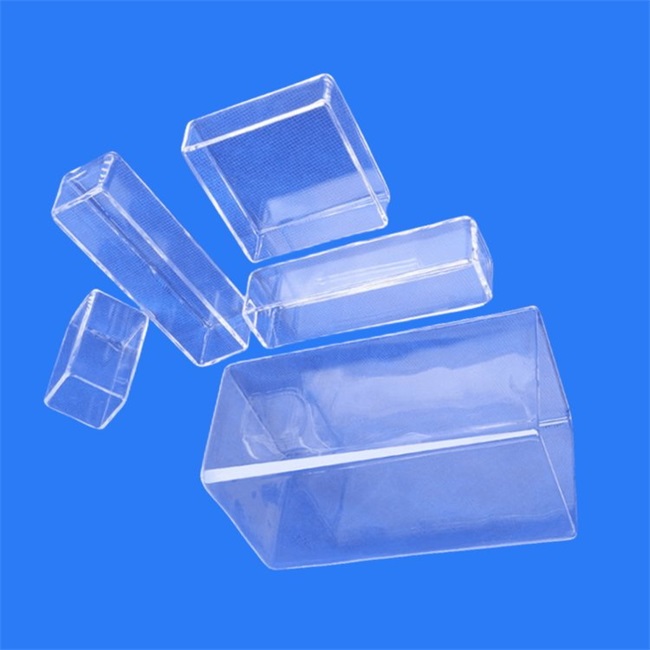
Metallurgical quartz crucibles are high-purity fused silica containers designed for melting precious metals (gold, silver, platinum), special alloys, and semiconductor silicon at temperatures up to 1600°C. They offer exceptional thermal shock resistance, chemical inertness, and minimal contamination risk compared to graphite or clay crucibles. Key selection factors include metal type, operating temperature, furnace compatibility, and purity requirements (≥99% to ≥99.99%). Custom sizes, coatings (barium, zirconia), and configurations are available. A reliable supplier with customization capabilities, low MOQ, and fast global delivery solves common procurement challenges. When choosing, consider the crucible's bubble-free inner layer (contact surface) and bubble-containing outer layer (thermal insulation and crack prevention) for optimal performance.
Luverre Quartz manufactures and sells a wide range of high quality quartz glass, including quartz tubes, quartz plates, quartz rods, quartz windows, quartz crucibles, quartz boats, quartz flanges, quartz beakers, quartz glass instruments, and more. We can meet all kinds of customized requirements for quartz glass products.
