T: +86-518-85528012
E: nick@luverrequartz.com
E: nick@luverrequartz.com
1st floor Runlian industrial center No. 116 QuFeng Rd., Haizhou Economic and technological development zone Lianyungang City, Jiangsu Province, China 222062
Views: 0 Author: Site Editor Publish Time: 2026-08-10 Origin: Site


Solving the Chemical Industry‘s Quartz Component Challenge
What is the biggest challenge procurement managers face when sourcing quartz glass components for chemical reaction equipment?
The answer is finding a supplier who can deliver custom-specified, high-purity quartz components with the thermal and chemical resistance required for aggressive chemical processes, while meeting tight deadlines and accommodating low-volume orders. This guide addresses that challenge directly.
Quartz glass (fused silica) has become indispensable in the chemical industry due to its exceptional chemical inertness and thermal stability. From combustion reactors to distillation vessels, quartz glass components enable processes that standard glass or metal simply cannot handle. This article walks you through everything you need to know about selecting, specifying, and sourcing quartz components for chemical reaction equipment.

Understanding Quartz Glass Components for Chemical Reactors
What types of quartz glass components are typically used in chemical reaction equipment?
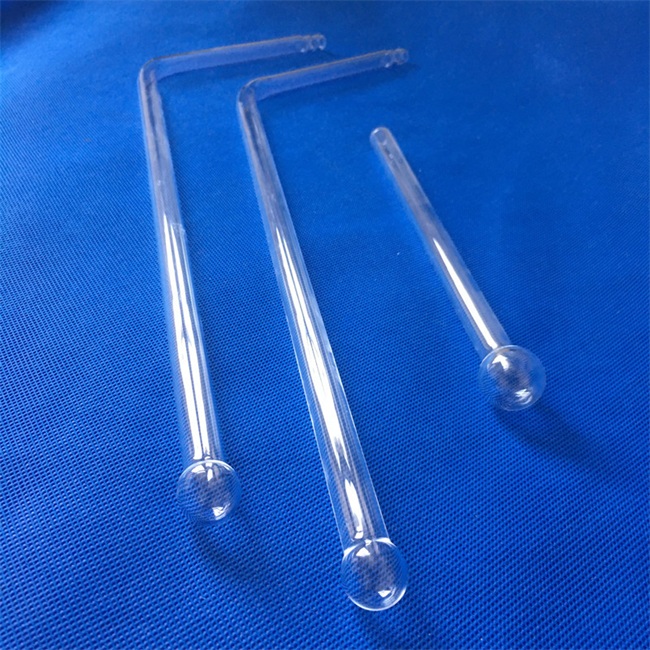
Chemical reaction equipment commonly utilizes Quartz Tubes, Reactors, Flanges, Rods, and custom-fabricated apparatus assemblies. These components serve as the primary containment and processing vessels for high-temperature, corrosive chemical reactions.
Quartz glass offers a unique combination of properties critical for chemical processing:
- High-Temperature Resistance: Maintains structural integrity at operating temperatures up to 1200°C continuously.
- Chemical Inertness: Resists attack from most acids, alkalis, and corrosive gases.
- Optical Transparency: Allows real-time visual monitoring of reaction dynamics.
- Thermal Shock Resistance: Withstands rapid temperature changes without cracking.
These properties make quartz glass the preferred material for aggressive chemical environments where metal reactors would corrode or contaminate products. The material‘s low thermal expansion coefficient ensures dimensional stability and seal integrity under fluctuating thermal loads.

Advantages of Quartz Glass in Chemical Applications
Why choose quartz glass over other materials for chemical reaction equipment?
Quartz glass provides three critical advantages: unmatched chemical resistance, superior thermal performance, and real-time process visibility—benefits no other single material offers in combination.
Let’s examine these advantages in detail:
Chemical Resistance
Quartz glass is chemically inert and does not react with aggressive liquids and gases. In processes involving hydrochloric acid steam, hydrofluoric acid (with caution), and other corrosive compounds, quartz glass prevents product contamination and equipment degradation. The high purity level (SiO₂ > 99.99%) ensures no metallic ions or trace elements leach into critical chemical samples during high-temperature reactions.
Thermal Performance
Quartz glass maintains structural stability at continuous operating temperatures up to 1200°C, with the ability to withstand brief exposures up to approximately 1680°C. The low coefficient of thermal expansion minimizes the risk of structural failure or cracking due to thermal shock when moving components between extreme heat and ambient temperatures.
Process Optimization Through Transparency
Unlike metal reactors, quartz glass reactors allow operators to observe the active zone directly—a critical advantage for optimizing processes such as fluidization, distillation, and chemical vapor deposition. Real-time visibility enables operators to verify particle movement, adjust fluidization velocity, and monitor crystallization or reaction kinetics without interrupting the process.
Devitrification Consideration
A key operational advantage is that surface contaminants burn off opaque quartz vessel floors faster compared to transparent quartz, lowering the potential for devitrification. If devitrification does occur, it is masked by the white appearance of opaque quartz floors while the remainder of the vessel remains transparent.
Where Quartz Components Excel in Chemical Processing
Which chemical processes require quartz glass components?
Quartz glass components are essential in chemical vapor deposition (CVD), combustion reactors, distillation vessels, jacketed vessels, and high-temperature acid digestion processes, serving the semiconductor, pharmaceutical, and specialty chemical industries.
Typical Applications Include:
- Chemical Vapor Deposition (CVD) Systems: Reaction tubes and substrate carriers require high purity, thermal stability, and dimensional accuracy.
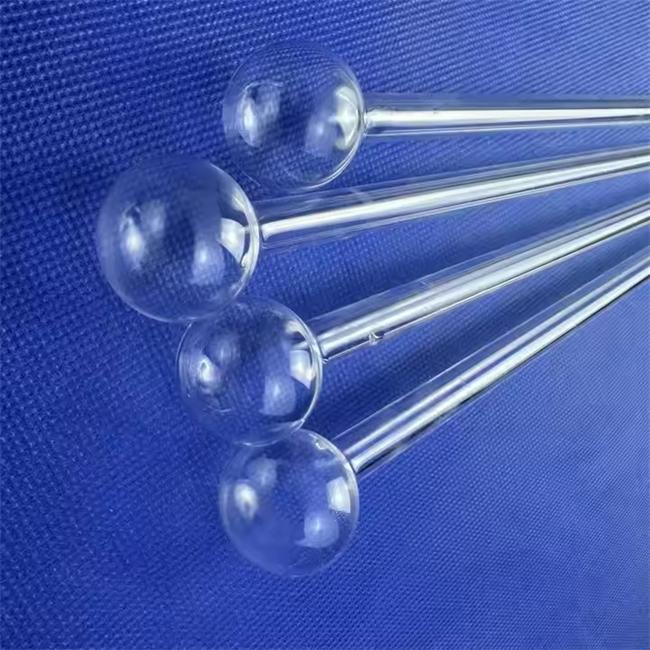
- Combustion Reactors: Custom glass-blown apparatus demand high-temperature resistance and chemical inertness.
- Distillation Systems: Vessels and condensers need thermal shock resistance and transparency for monitoring separation processes.
- Acid Digestion & Evaporation Equipment: Vessels and boiling flasks require exceptional acid resistance and high material purity.
- Fluidized Bed Reactors: Reaction tubes must maintain thermal stability around 400°C while allowing visual monitoring of particle behavior.
- High-Temperature Sintering Processes: Square boats and crucibles need uniform thermal distribution and structural integrity.
Industries Served:
- Semiconductor manufacturing (diffusion tubes, MOCVD equipment)
- Pharmaceutical and biotechnology
- Chemical processing and specialty chemicals
- Environmental monitoring and water treatment
- Medical technology

How to Select the Right Quartz Components: A Decision Framework
What factors should procurement managers consider when selecting quartz glass components?
Selecting the right quartz components requires evaluating four key parameters: material purity, operating temperature requirements, dimensional tolerances, and specific application conditions such as chemical environment and pressure.
Step-by-Step Selection Guide:
Step 1: Assess Operating Conditions
- Define the continuous and peak operating temperatures.
- Identify all chemicals, acids, alkalis, or gases the component will contact.
- Determine vacuum or positive pressure requirements.
- Assess the frequency and speed of thermal cycling.
Step 2: Define Purity Requirements
- Standard quartz glass: SiO₂ ≥ 99.99%.
- Semiconductor-grade: Hydroxyl (OH) content below 5ppm.
- High-purity applications: Total metal impurities below 20 ppm.
Step 3: Determine Dimensional Specifications
- For tubes: outer diameter, inner diameter, wall thickness.
- For plates: length, width, height.
- For boats: overall dimensions and slot configurations.
- Tolerance requirements: typically ±0.1mm for precision components.
Step 4: Consider Visual and Quality Requirements
- Transparent vs. opaque quartz selection.
- Surface finish: polished, frosted, or as-fired.
- Tolerances for bubbles, inclusions, and surface defects.
Step 5: Evaluate Supplier Capabilities
- Customization flexibility: OEM/ODM, drawing-based, or sample-based.
- Minimum order quantities.
- Production lead times.

Customization Capabilities: Meeting Your Specific Requirements
What customization options are available for quartz glass components?
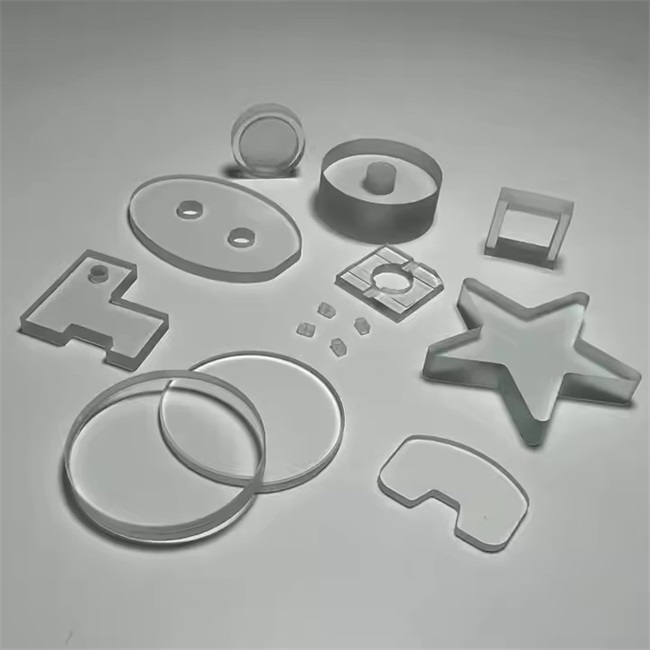
Quartz glass components can be custom-manufactured to virtually any specification, with capabilities including custom dimensions, complex geometries, precision machining, and assembly integration, based on technical drawings or samples.
Available Customization Options:
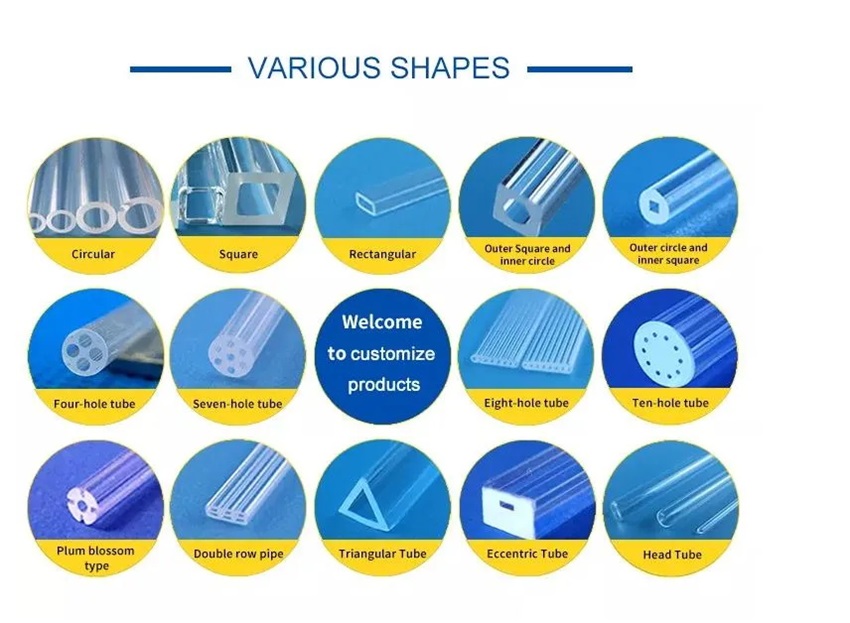
- Dimensional Customization: Diameters from 5mm to 500mm for tubes; thicknesses from 1mm to 50mm for plates; rods up to 300mm diameter; lengths as required.
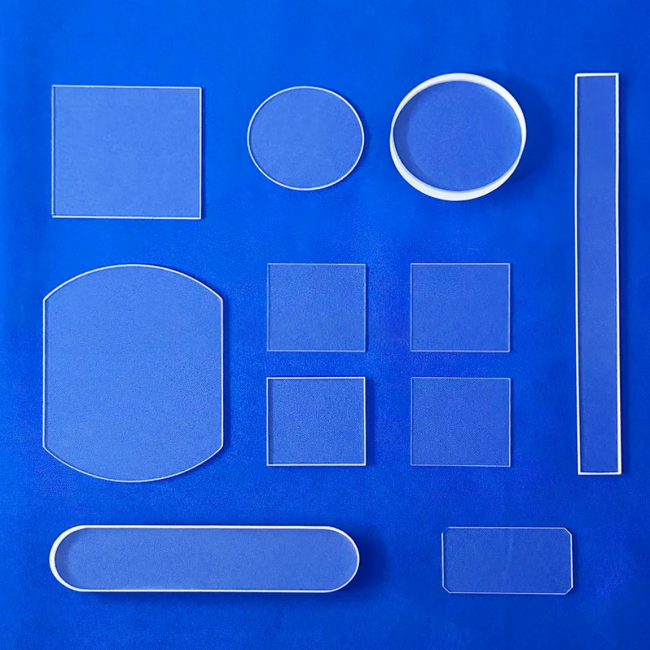
- Forming Capabilities: Tubes, rods, plates, discs, domes, flanges, boats, crucibles, and intricate apparatus assemblies.
- Precision Machining: Drilling, grinding, polishing, lapping, wire or slice sawing, laser or water jet cutting, threading.
- Surface Treatments: Polished ends for optical clarity; frosted surfaces for diffusion; drilled holes for gas/liquid ports; ground joints for sealed connections.
- Assembly Integration: Integration of ground joints, liquid/gas supply tubes, outlet tubes, and other accessory features.
Why Customization Matters:
Standard off-the-shelf quartz components rarely meet the exact specifications of chemical reaction equipment. Non-standard dimensions, complex geometries, and specific purity requirements are common challenges. Our customization services address:
- “We can‘t find the right size tube for our reactor”
- “Our non-standard flange configuration requires custom machining”
- “We need tight tolerances that off-the-shelf suppliers can’t meet”
- “Our process requires a specific purity level not available in standard inventory”
- “We need a small batch for a pilot project, but standard suppliers require large MOQs”
Specifications & Parameters: What to Define for Your Order
What technical specifications should I provide when ordering quartz components?
To ensure accurate custom manufacturing, you should specify the product type, dimensions, material purity, tolerance requirements, and provide a detailed technical drawing or sample for reference.
Essential Specifications Checklist:
For Quartz Tubes:
- Outer diameter (OD): available from 5mm up to 500mm.
- Inner diameter (ID): determined by wall thickness requirements.
- Wall thickness: typically ranges from 1mm to 10mm, depending on application.
- Length: manufactured to customer specifications.
- Tolerance: typically ±0.1mm or as specified.
For Quartz Plates:
- Thickness: from 1mm to 50mm.
- Maximum dimensions: up to 1000mm × 1000mm.
- Flatness: optical grade can achieve λ/4 @ 632.8nm.
- Surface finish: polished surfaces can achieve Ra < 0.4μm.
For Quartz Rods:
- Diameter: from 3mm up to 300mm.
- Length: manufactured to customer specifications.
- Tolerance: typically ±0.1mm.
- Surface finish: available polished or as-fired.
Material Specifications:
- Purity: SiO₂ ≥ 99.99%.
- OH Content: < 10 ppm for standard grade; < 5 ppm for high-end semiconductor grade.
- Metal Impurities: < 20 ppm total.
- Maximum Continuous Operating Temperature: 1200°C.
Application-Specific Requirements to Communicate:
- For CVD reactors: high purity, uniform wall thickness, and optical clarity.
- For acid digestion: chemical resistance and thermal shock resistance.
- For fluidized beds: thermal stability at 400°C+ and transparency for monitoring.
- For semiconductor processing: low hydroxyl content and minimal bubbles.

Quality Control: Ensuring Consistency and Performance
How is the quality of quartz components controlled during manufacturing?
Quality is ensured through rigorous raw material verification, in-process dimensional inspection, purity analysis, and final optical or mechanical testing to meet standards and customer specifications.
Our Quality Control Process:
1. Raw Material Verification: We source premium fused silica with verified purity levels, analyzing each batch for SiO₂ content and trace impurities.
2. In-Process Dimensional Inspection: Critical dimensions are monitored throughout the manufacturing process to ensure they stay within specified tolerances.
3. Purity Testing: Each production batch undergoes analysis for SiO₂ content, OH content, and total metal impurities.
4. Dimensional Validation: Finished components are measured using precision instruments to validate all critical dimensions.
5. Stress and Defect Inspection: Every component is inspected for internal stresses, bubbles, inclusions, and surface defects that could compromise performance.
6. Thermal Integrity Verification: We test representative samples to verify resistance to thermal shock and performance at specified operating temperatures.
7. Final 100% Inspection: No component ships without passing a complete final inspection covering all dimensional and quality criteria.
Quality Guarantee:
We stand behind our workmanship and quality with rigorous testing and certification documentation available for every order.

Supply Chain Capabilities: Scale, Speed, and Global Reach
What manufacturing and logistics capabilities should I look for in a quartz components supplier?
Look for suppliers with in-house precision manufacturing equipment, ISO 9001:2015 certification, flexible order quantities (low MOQ or no MOQ), rapid prototyping capabilities, and proven experience in global export logistics.
Our Capabilities:
- Manufacturing Scale: We operate a state-of-the-art facility with advanced fusion, forming, and precision machining equipment, capable of handling both small-batch prototyping and large-scale production runs.
- Production Flexibility: We support both small-batch R&D orders and large-scale production volumes, adapting our production schedule to match your delivery requirements.
- Low MOQ: We offer flexible order quantities with no minimum requirements, making us an ideal partner for pilot projects, process development, and specialty applications.
- Rapid Delivery: Our streamlined production process enables fast prototyping and responsive lead times, with expedited delivery options available for urgent requirements.
- Global Export Experience: We have extensive experience in international shipping, customs clearance, and logistics coordination, ensuring your components arrive safely and on time.
- Worldwide Reach: We serve customers across semiconductor, optical, chemical, and industrial sectors globally, with a track record of reliable international deliveries.
Common Procurement Challenges and Solutions
What are the most common challenges when sourcing quartz components for chemical equipment, and how can they be solved?
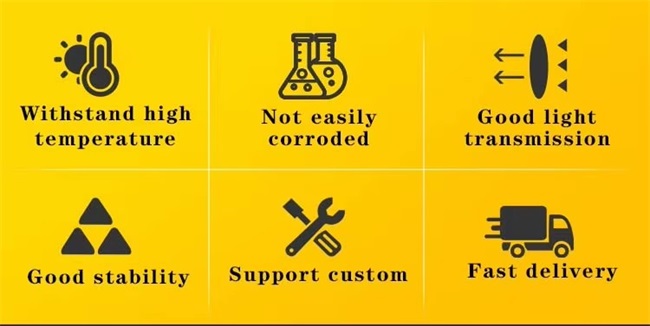
Common challenges include finding the right size, sourcing non-standard products, meeting high-temperature requirements, achieving tight tolerances, managing urgent deadlines, ordering small quantities, and ensuring consistent quality.
Challenge: “We can‘t find the right size”
Standard quartz components are produced in limited size ranges. Our solution: custom manufacturing to your exact dimensional specifications—tubes, rods, plates, or complex shapes.
Challenge: “Non-standard products are difficult to source”
Many chemical reactors require custom flange configurations, unusual diameters, or unique geometries. Our solution: we specialize in custom components based on technical drawings or samples, with no tooling restrictions.
Challenge: “High-temperature requirements are difficult to meet”
Processes exceeding 1000°C can cause failure in standard glass or metal. Our solution: quartz glass maintains structural stability up to 1200°C continuously, with brief tolerance up to 1680°C.
Challenge: “Tolerances are too tight for standard suppliers”
Reaction seals, optical windows, and precision assemblies demand tight dimensional control. Our solution: precision machining ensures tolerances as tight as ±0.1mm, with quality verification on every component.
Challenge: “We need delivery urgently”
Equipment downtime and project deadlines create pressure for fast delivery. Our solution: fast prototyping, responsive production scheduling, and expedited logistics support.
Challenge: “We only need a small batch”
Many suppliers require large MOQs for custom production. Our solution: no minimum order quantity—we support R&D pilot runs, process optimization, and small-quantity specialty orders.
Challenge: “Previous suppliers had inconsistent quality”
Variability in raw materials or process control leads to unreliable component performance. Our solution: ISO 9001:2015 certified quality management, 100% inspection, and guaranteed consistency.
Challenge: “We need a specific purity level”
Trace contamination can ruin sensitive chemical processes or semiconductor applications. Our solution: high-purity material (SiO₂ ≥ 99.99%) with low OH content and controlled metal impurities.
Contact us to discuss your specific requirements. Our engineering team provides technical support and customized quotations tailored to your application.
Frequently Asked Questions (FAQ)
Material & Properties
Q1: What is the maximum operating temperature for quartz glass components?
A: Quartz glass maintains structural integrity up to 1200°C continuous operation, with short-term tolerance up to approximately 1680°C.
Q2: What purity levels are available?
A: Our quartz glass achieves SiO₂ purity ≥ 99.99%, with OH content typically below 10 ppm and total metal impurities below 20 ppm.
Q3: Is quartz glass suitable for acidic environments?
A: Yes. Quartz glass provides exceptional resistance to most acids, including hydrochloric acid, sulfuric acid, and nitric acid. It is widely used in acid digestion and evaporation applications.
Q4: What is devitrification, and how can it be prevented?
A: Devitrification is crystallization of the quartz surface at high temperatures, often triggered by contamination. Prevent it by wearing clean gloves during handling, cleaning surfaces with dilute nitric acid before heating, and avoiding contact with alkali metals.
Customization
Q5: Do you customize quartz components based on technical drawings?
A: Yes. We specialize in custom manufacturing based on technical drawings, customer samples, or dimensional specifications. OEM and ODM services are supported.
Q6: What shapes can you produce?
A: We manufacture tubes, rods, plates, discs, flanges, rings, boats, crucibles, windows, and complex custom geometries including domes, reactors, and apparatus assemblies.
Q7: Is there a minimum order quantity (MOQ)?
A: No. We support both small-batch R&D quantities and large-scale production orders.
Q8: What is the typical lead time?
A: Lead times vary by complexity, but we offer fast prototyping with expedited delivery options available. Contact us for a quote based on your specific requirements.
Manufacturing & Quality
Q9: What manufacturing tolerances can you achieve?
A: Precision machining ensures tolerance as tight as ±0.1mm.
Q10: Are your products quality certified?
A: Yes. We maintain ISO 9001:2015 certification and conduct 100% inspection before shipment.
Q11: How do you ensure purity?
A: We use high-purity raw materials, maintain strict process control, and verify purity through detailed analysis on every batch.
Q12: Can you combine quartz components with other materials?
A: Yes. We can integrate quartz components with gas/liquid supply lines, ground joints, and other accessory features as required for your assembly.
Procurement & Logistics
Q13: Do you ship internationally?
A: Yes. We have extensive experience exporting quartz components globally, handling customs clearance and international logistics.
Q14: What information do I need to provide for a quote?
A: Provide product type, dimensions (OD, ID, wall thickness, length), material purity requirements, tolerance expectations, quantity, and any technical drawings or samples.
Q15: Can you replicate an existing quartz component?
A: Yes. We offer sample-based reproduction—simply provide the existing component or detailed measurements.

Why Choose Us: Your Partner in Quartz Solutions
Why should procurement managers and engineers choose us as their quartz components supplier?
We combine deep technical expertise in quartz glass manufacturing, comprehensive customization capabilities, rigorous quality control, flexible production volumes, and proven global export experience—all focused on solving our customers‘ specific procurement challenges.
Our Commitment:
- Technical Expertise: 20+ years of experience in quartz glass manufacturing and fabrication, providing knowledgeable engineering support for complex applications.
- Comprehensive Customization: OEM/ODM services, drawing-based and sample-based production, with unlimited dimensional flexibility.
- Flexible MOQ: Low or no minimum order quantities—we serve R&D, pilot, and production-scale needs equally.
- High Purity Materials: SiO₂ ≥ 99.99% purity, low OH content, and controlled metal impurities for sensitive applications.
- Precision Manufacturing: Tight tolerances (up to ±0.1mm), precision machining, and complex geometry capabilities.
- Fast Delivery: Rapid prototyping, responsive production, and reliable international logistics.
- Global Reach: Proven experience in international shipping, customs clearance, and worldwide export.
We solve your problems:
- Can‘t find the right size → We customize to your exact specifications.
- Non-standard parts are difficult to source → Custom manufacturing is our specialty.
- High-temperature requirements are challenging → Quartz withstands up to 1200°C.
- Tight tolerances needed → Precision machining ensures ±0.1mm accuracy.
- Urgent deadlines to meet → Fast prototyping and expedited production.
- Small-batch sourcing is difficult → No MOQ—we support all order sizes.
Summary
What are the key considerations when sourcing quartz glass components for chemical reaction equipment?
Chemical reaction equipment requires quartz glass components with exceptional chemical resistance, thermal stability up to 1200°C, and high purity (SiO₂ ≥ 99.99%). Common applications include CVD reactors, combustion vessels, and distillation equipment. Procurement managers must evaluate operating conditions (temperature, chemical environment, pressure), define precise dimensional specifications, and verify supplier capabilities including customization flexibility, quality control, and global logistics. The most effective approach is to partner with a manufacturer offering comprehensive customization (OEM/ODM, drawing-based, sample-based), flexible order quantities, ISO 9001:2015 quality certification, and proven export experience. This ensures components meet exact application requirements while maintaining process reliability and product quality.
Contact us today to discuss your quartz glass component requirements. Our engineering and sales teams are ready to provide technical support, customized quotations, and timely delivery solutions for your chemical reaction equipment needs.
Luverre Quartz manufactures and sells a wide range of high quality quartz glass, including quartz tubes, quartz plates, quartz rods, quartz windows, quartz crucibles, quartz boats, quartz flanges, quartz beakers, quartz glass instruments, and more. We can meet all kinds of customized requirements for quartz glass products.
