T: +86-518-85528012
E: nick@luverrequartz.com
E: nick@luverrequartz.com
1st floor Runlian industrial center No. 116 QuFeng Rd., Haizhou Economic and technological development zone Lianyungang City, Jiangsu Province, China 222062
Views: 0 Author: Site Editor Publish Time: 2026-08-18 Origin: Site


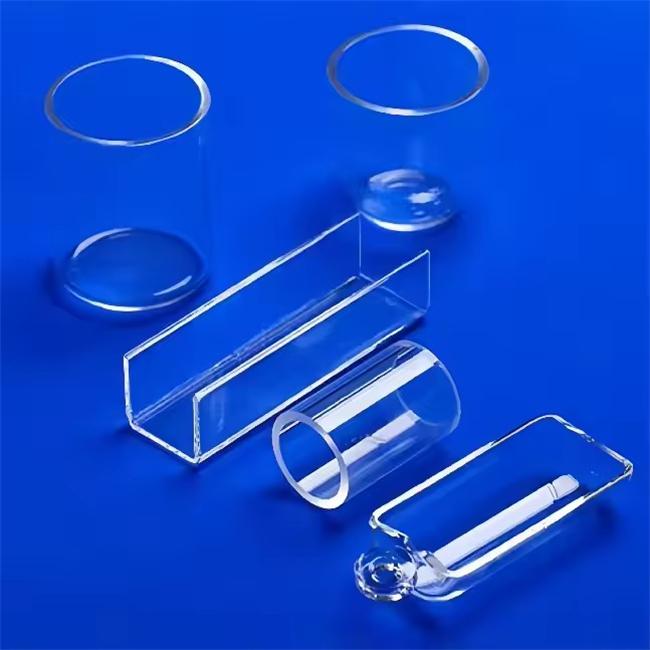
Quartz glass (fused silica) demonstrates exceptional resistance to most acids, with hydrofluoric acid (HF) being the primary exception. In acidic environments, high-purity quartz products typically maintain structural integrity for extended service periods, often exceeding 1,000 operating hours depending on temperature and acid concentration. However, in alkaline (basic) conditions, quartz degrades significantly faster due to the dissolution of the SiO₂ network. At elevated temperatures above 300°C, even mild alkalis such as sodium hydroxide (NaOH) and potassium hydroxide (KOH) can cause rapid surface etching and mechanical weakening. For applications involving prolonged alkali exposure, manufacturers recommend either using high-purity synthetic fused silica with enhanced chemical durability, applying protective coatings, or scheduling more frequent replacement cycles. The actual service life of quartz in any chemical environment is governed by four key variables: acid/alkali type and concentration, operating temperature, exposure duration, and the purity grade of the quartz material itself.
How Long Do Quartz Products Last in Acid and Alkali Environments?
The service life of quartz glass products in acidic environments is generally long, often lasting thousands of hours with minimal degradation. In alkaline environments, however, quartz deteriorates significantly faster, and service life can be reduced to hundreds of hours or less depending on temperature and concentration.
This fundamental difference exists because quartz glass (SiO₂) is inherently acid-resistant but alkali-vulnerable at the molecular level. Understanding this distinction is critical for procurement managers, engineers, and equipment designers who rely on quartz components in corrosive process environments.
This guide explains exactly how acid and alkali exposure affects quartz products, what factors accelerate degradation, and how to select the right material and specifications to maximize service life in your specific application.
Why Quartz Glass Resists Acids but Not Alkalis
Quartz glass resists most acids because the silicon-oxygen bonds in its amorphous structure are highly stable in acidic conditions. Alkalis, on the other hand, attack and break these bonds through a process called hydrolysis, dissolving the SiO₂ network from the surface inward.
Acid Resistance Mechanism
In acidic solutions, the hydrogen ions (H⁺) present in the environment do not have sufficient chemical energy to disrupt the strong Si–O–Si bonds that form the backbone of fused silica. This is why quartz products are widely used in:
Acid digestion vessels
Semiconductor wet etching chambers
Chemical vapor deposition (CVD) reactor tubes
Acid storage and transfer systems
Laboratory acid baths
The only common acid that aggressively attacks quartz is hydrofluoric acid (HF). HF reacts with SiO₂ to form silicon tetrafluoride (SiF₄) and water, which is why HF-compatible equipment requires alternative materials or specialized quartz with protective linings.
Alkali Attack Mechanism
Alkaline solutions contain hydroxide ions (OH⁻) that actively break the Si–O–Si bonds. The reaction can be simplified as:
SiO₂ + 2NaOH → Na₂SiO₃ + H₂O
This produces soluble sodium silicate, which dissolves into the solution and exposes fresh quartz surface to further attack. The result is progressive surface etching, loss of dimensional accuracy, and eventual structural failure.
Common alkalis that degrade quartz include:
Sodium hydroxide (NaOH)
Potassium hydroxide (KOH)
Ammonium hydroxide (NH₄OH) — milder but still reactive at high temperatures
Sodium carbonate (Na₂CO₃) at elevated temperatures
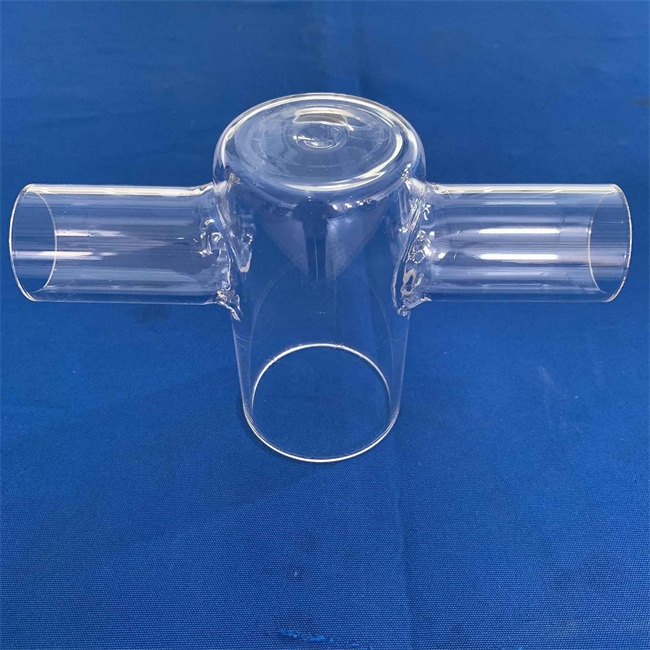
Key Factors That Determine Quartz Lifespan in Corrosive Environments
Four primary variables determine how long a quartz product will survive in an acid or alkali environment: the chemical type and concentration, the operating temperature, the duration of exposure, and the purity grade of the quartz material.
Chemical Type and Concentration
Not all acids or alkalis are equally aggressive. Concentrated sulfuric acid at room temperature will barely affect quartz, while a 10% NaOH solution at 200°C can cause measurable material loss within hours. Always match the chemical aggressiveness to the expected service interval.
Operating Temperature
Temperature is the single most important accelerator of chemical attack on quartz. The rate of alkali dissolution roughly doubles for every 10–15°C increase in temperature. A quartz tube that lasts 2,000 hours in a 5% KOH solution at 150°C may fail in under 200 hours at 350°C.
Exposure Duration and Cycle Frequency
Continuous immersion causes steady degradation. Intermittent exposure with drying cycles can sometimes accelerate damage because concentrated residues form on the quartz surface during evaporation, creating localized hot spots of chemical attack.
Quartz Purity Grade
Higher purity quartz contains fewer metallic impurities and bubble inclusions, both of which can act as initiation points for chemical attack. Synthetic fused silica (Type I) offers superior chemical durability compared to natural fused quartz (Type II/III), particularly in aggressive alkali environments.
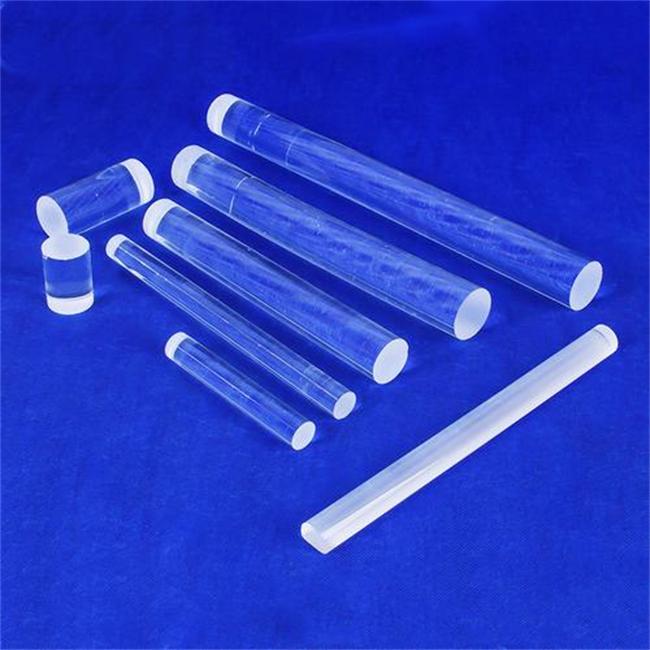
How to Choose the Right Quartz Product for Acid or Alkali Applications
Selecting the correct quartz product for a corrosive environment requires matching the material grade, wall thickness, surface finish, and geometry to your specific chemical and thermal conditions.
For Acid-Dominant Environments
If your process primarily involves acids (excluding HF), standard high-purity natural quartz is usually sufficient. Key selection criteria include:
Purity: 99.9%+ SiO₂ minimum for most industrial acid applications
Wall thickness: Standard thickness is adequate unless mechanical stress is also a factor
Surface finish: Fire-polished surfaces resist acid penetration better than ground or frosted surfaces
Product form: Quartz tubes, quartz crucibles, and quartz boats are common choices for acid processes
For Alkali-Dominant Environments
Alkali applications demand more careful material selection:
Purity: Use synthetic fused silica (99.99%+ SiO₂) whenever budget allows
Wall thickness: Increase wall thickness by 20–30% compared to acid-only applications to account for surface material loss over time
Surface finish: Smooth, fire-polished surfaces minimize the surface area available for alkali attack
Replacement planning: Build scheduled replacement into your maintenance cycle rather than waiting for failure
Protective measures: Consider applying boron nitride (BN) coatings or using sacrificial quartz liners in extreme alkali conditions
For Mixed Acid-Alkali Environments
Some processes alternate between acidic and alkaline steps, such as semiconductor wafer cleaning (RCA clean). In these cases:
Design for the worst-case scenario (alkali exposure)
Use the highest purity quartz available
Monitor dimensional changes during preventive maintenance inspections
Consider custom quartz parts with reinforced geometry in high-wear zones
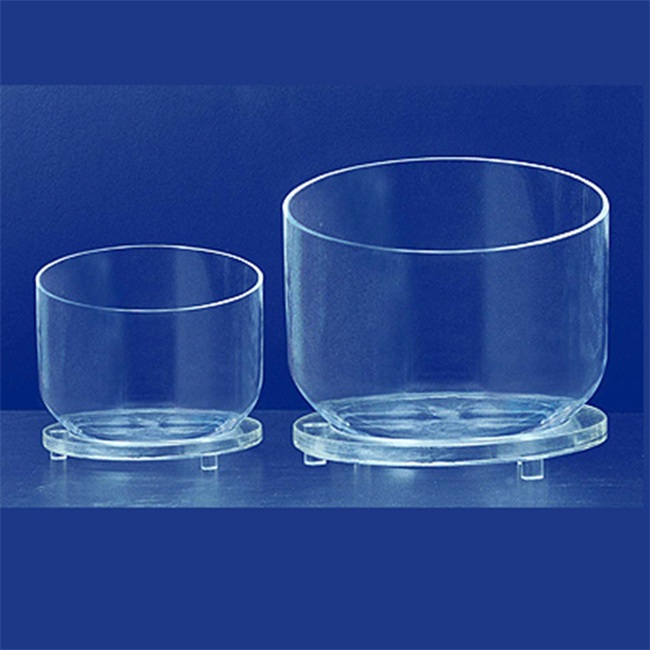
Custom Quartz Specifications for Corrosive Environment Applications
When standard catalog products do not meet the demands of your chemical process, custom manufacturing becomes essential. Our facility supports full OEM/ODM production with the following capabilities:
Material Options: Natural fused quartz (99.9% SiO₂), high-purity fused quartz (99.99% SiO₂), and synthetic fused silica (99.999% SiO₂) are all available depending on your chemical exposure requirements.
Dimensional Tolerances: We hold tolerances as tight as ±0.05 mm on critical dimensions for precision components such as quartz flanges, quartz windows, and reactor liners used in corrosive environments.
Surface Finishes: Fire-polished, ground and polished, or frosted finishes can be specified based on your chemical resistance needs and optical requirements.
Wall Thickness: Custom wall thicknesses from 0.5 mm to 50 mm are available. For alkali environments, we recommend specifying thicker walls to extend service intervals.
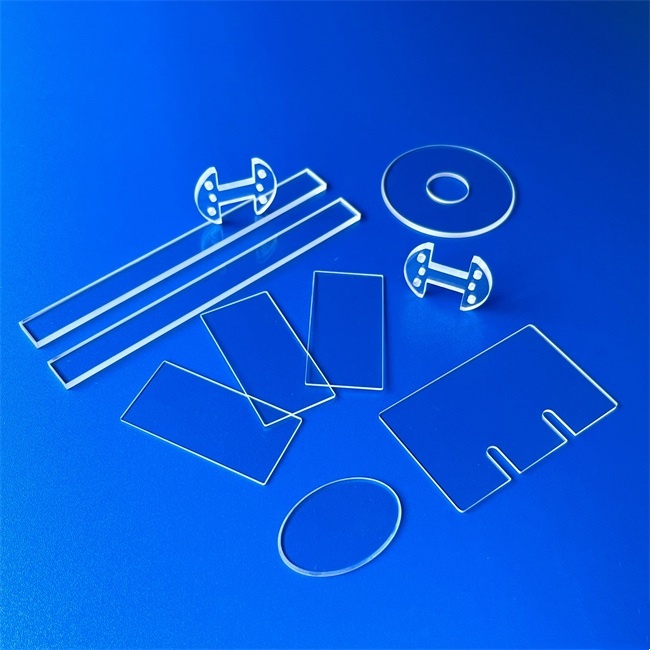
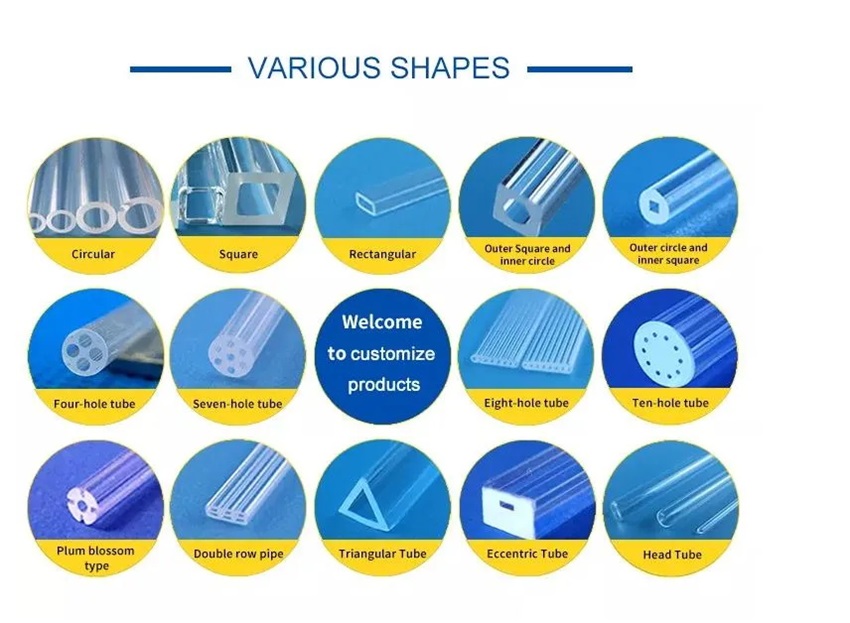
Product Forms: We manufacture quartz tubes, quartz plates, quartz rods, quartz crucibles, quartz flanges, quartz rings, quartz windows, quartz discs, quartz boats, and fully custom quartz parts — all engineered to your exact specifications.
Production Flexibility: We support drawing-based manufacturing, sample-based replication, low-volume prototyping, and high-volume production runs with no restrictive minimum order quantities.
Quality Control: Every batch undergoes purity verification, dimensional inspection, and visual quality checks before shipment.
Applications Across Corrosive Industries
Quartz products engineered for chemical resistance serve a wide range of industries where acid and alkali exposure is part of daily operations.
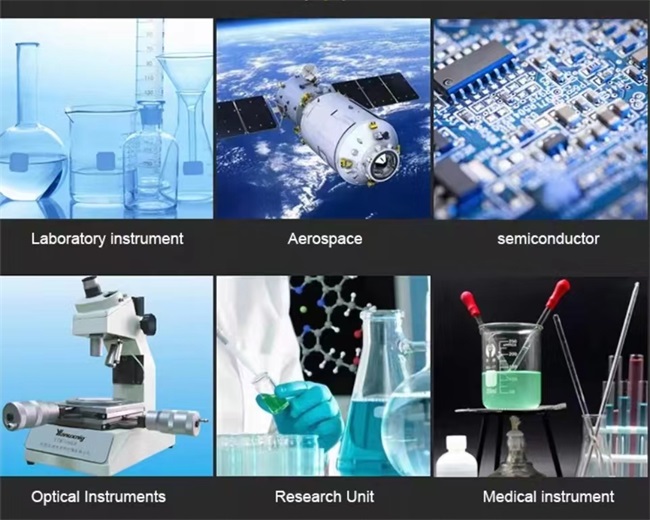
Semiconductor Manufacturing: Wet etching stations, diffusion furnaces, CVD chambers, and wafer cleaning systems all rely on high-purity quartz components that must withstand repeated acid and alkaline cleaning cycles.
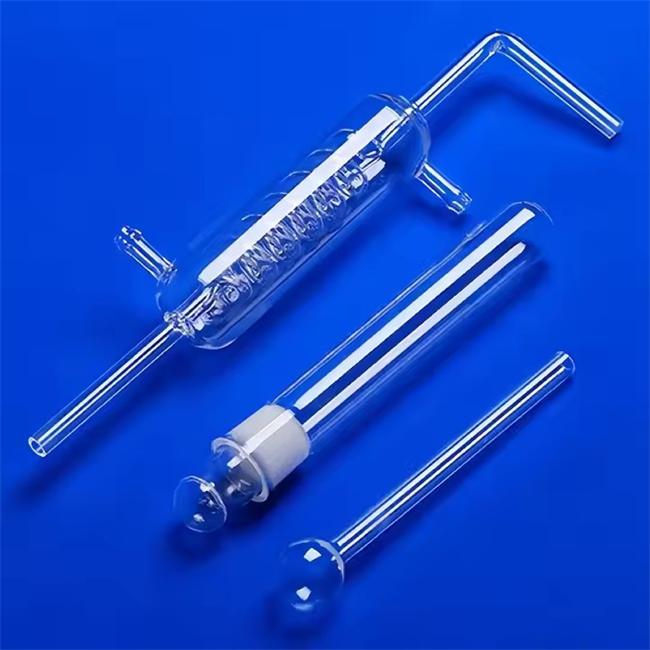
Chemical Processing: Acid digestion vessels, reactor liners, distillation columns, and custom quartz fittings are used in chemical plants where corrosion resistance is non-negotiable.
Photovoltaic (Solar) Industry: Quartz boats, quartz tubes, and quartz crucibles operate in high-temperature diffusion furnaces where residual dopant chemicals create mildly corrosive atmospheres.
Laboratory and Analytical: Quartz crucibles, beakers, tubes, and custom labware are used for acid digestion, ashing, and high-temperature chemical analysis.
Optical and Laser Systems: Quartz windows and lenses in laser systems may be exposed to cleaning chemicals that require careful material compatibility assessment.
Furnace and Thermal Processing: Quartz muffle tubes, retorts, and radiant tubes operate in environments where process gases and residue can create acidic or alkaline conditions at high temperatures.
Frequently Asked Questions (FAQ)
Does quartz glass dissolve in acid?
No, quartz glass is highly resistant to nearly all acids. The only common exception is hydrofluoric acid (HF), which reacts aggressively with SiO₂. Sulfuric acid, nitric acid, hydrochloric acid, and phosphoric acid have negligible effects on quartz at normal concentrations and temperatures.
Why does alkali damage quartz glass?
Alkali solutions contain hydroxide ions (OH⁻) that break the silicon-oxygen bonds in the quartz structure, dissolving the SiO₂ network into soluble silicates. This causes progressive surface erosion and eventual structural failure.
How long does quartz last in NaOH solution?
Service life varies dramatically with temperature and concentration. At room temperature in dilute NaOH, quartz may last thousands of hours. At 200°C in concentrated NaOH, measurable degradation can occur within hours. Always test under your specific conditions.
Can quartz be used with hydrofluoric acid (HF)?
Standard quartz is not suitable for HF service. If your process involves HF, alternative materials such as PTFE, PFA, or specialized lined components should be considered.
Does higher purity quartz last longer in corrosive environments?
Yes. Higher purity quartz (99.99%+ SiO₂) contains fewer metallic impurities and inclusions that can serve as initiation points for chemical attack. Synthetic fused silica offers the best chemical durability.
Can you increase quartz lifespan by applying coatings?
In some cases, yes. Boron nitride (BN) coatings and other protective layers can provide a temporary barrier against alkali attack, though they are not permanent solutions and require reapplication.
What is the maximum temperature for quartz in alkaline environments?
There is no single maximum temperature, but the rate of alkali attack increases exponentially with temperature. Above 300°C, even mild alkalis cause rapid degradation. Below 100°C, the attack rate is significantly slower.
How do I know when to replace a quartz component in an acid or alkali process?
Monitor for surface cloudiness, dimensional changes, micro-cracking, or weight loss during scheduled maintenance. For critical applications, establish a preventive replacement schedule based on your operating conditions.
Can you manufacture custom quartz parts for corrosive environments?
Yes. We support full OEM/ODM manufacturing, including custom quartz tubes, crucibles, flanges, windows, boats, and specialty parts. We work from drawings, samples, or specifications to produce components tailored to your chemical process requirements.
Is there a minimum order quantity for custom quartz products?
We offer flexible production with no restrictive MOQ, making it practical to order prototypes, small batches, or large production runs.
Does surface finish affect chemical resistance?
Yes. Fire-polished (smooth) surfaces have less exposed surface area and fewer micro-defects, making them more resistant to chemical attack than ground, frosted, or machined surfaces.
What is the difference between natural quartz and synthetic fused silica for chemical applications?
Natural fused quartz (99.9% SiO₂) is suitable for most acid applications. Synthetic fused silica (99.999% SiO₂) offers superior chemical durability, lower impurity content, and better performance in aggressive alkali environments.
Can quartz withstand alternating acid and base cleaning cycles?
Yes, but the alkali cycles are the limiting factor. Design your quartz components based on the alkali exposure parameters, as acid exposure will have minimal impact on service life.
What industries benefit most from high-chemical-resistance quartz products?
Semiconductor manufacturing, chemical processing, photovoltaic production, laboratory analytics, optical systems, and high-temperature furnace applications all rely heavily on chemically resistant quartz components.

Why Choose Us as Your Quartz Manufacturing Partner
When your process involves aggressive acids, alkalis, or alternating chemical cycles, the quality and precision of your quartz components directly impact equipment uptime, product yield, and maintenance costs. Here is why leading manufacturers and laboratories trust us:
Engineered for Your Environment: We do not simply sell catalog products. Our engineering team works with you to select the optimal quartz grade, wall thickness, surface finish, and geometry for your specific chemical and thermal conditions.
Full Customization Capability: From quartz tubes and crucibles to complex custom quartz parts, we manufacture to your drawings or samples with tight tolerances and consistent quality.
No MOQ Barriers: Whether you need a single prototype or thousands of production units, we accommodate orders of all sizes without restrictive minimums.
High-Purity Materials: We stock natural fused quartz, high-purity fused quartz, and synthetic fused silica to match your chemical resistance requirements and budget.
Precision Manufacturing: Our CNC machining, laser cutting, flame polishing, and annealing capabilities ensure that every component meets exact dimensional specifications.
Stable Quality Control: Every product undergoes rigorous inspection for purity, dimensions, surface quality, and structural integrity before shipment.
Fast Turnaround: We understand that equipment downtime is costly. Our streamlined production process delivers custom quartz components quickly without compromising quality.
Global Export Experience: We ship to customers worldwide with proper packaging, documentation, and logistics support for international delivery.
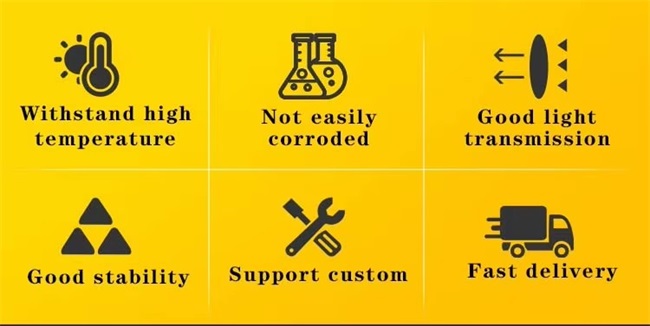
If you are facing challenges with quartz component lifespan, non-standard sizing, tight tolerances, unreliable suppliers, or difficult delivery timelines, we are ready to help. Contact us with your specifications and let our team provide a solution tailored to your corrosive environment application.
Luverre Quartz manufactures and sells a wide range of high quality quartz glass, including quartz tubes, quartz plates, quartz rods, quartz windows, quartz crucibles, quartz boats, quartz flanges, quartz beakers, quartz glass instruments, and more. We can meet all kinds of customized requirements for quartz glass products.
