T: +86-518-85528012
E: nick@luverrequartz.com
E: nick@luverrequartz.com
1st floor Runlian industrial center No. 116 QuFeng Rd., Haizhou Economic and technological development zone Lianyungang City, Jiangsu Province, China 222062


For high-temperature, high-purity, and precision optical or semiconductor applications, Quartz Plate (Fused Silica) is the superior choice due to its near-zero thermal expansion, extreme heat resistance (up to 1100°C+), and high UV transmission. Standard glass (like Soda-Lime or Borosilicate) is only suitable for low-cost, low-temperature, or general-purpose visual applications.
If your project involves furnace viewports, semiconductor fixtures, or precision optical lenses, quartz is mandatory. If you need a simple cover for a picture frame or a low-heat window, standard glass is sufficient.

What is Quartz Plate?
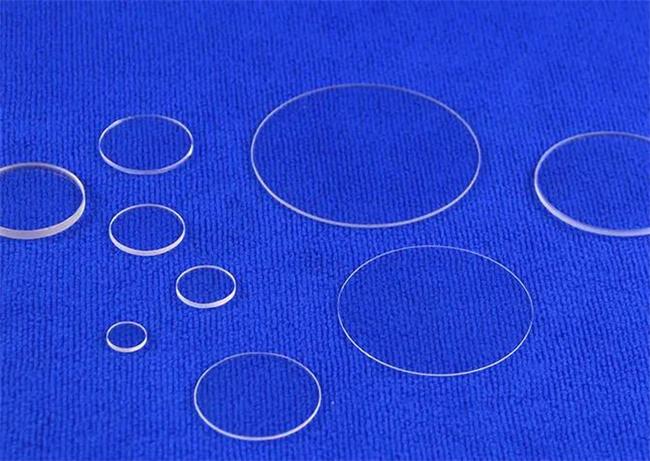
Quartz Plate (also known as a Fused Silica Plate) is a flat optical component manufactured from high-purity silicon dioxide (SiO₂). Unlike standard glass, which contains various additives like sodium and calcium to lower melting points, quartz plates are made from pure silica sand or synthetic silica.
This purity gives quartz plates unique physical properties:
Extreme Thermal Stability: Can withstand continuous operation at 1100°C and short-term exposure up to 1450°C.
Optical Clarity: High transmission from Ultraviolet (UV) to Infrared (IR).
Chemical Inertness: Highly resistant to acids and corrosive chemicals.
Quartz Plate vs. Glass: Key Differences
The main difference lies in thermal expansion and purity. Quartz expands almost negligibly when heated, whereas glass expands significantly, leading to cracking under thermal shock.
Here is a detailed comparison to help you decide:
Feature Quartz Plate (Fused Silica) Standard Glass (Soda-Lime) Borosilicate Glass (e.g., Pyrex)
Max Temp 1100°C - 1450°C ~250°C (Softens) ~500°C
Thermal Shock Excellent (Won't crack) Poor Good
Purity (SiO₂) >99.9% ~70-74% ~80%
UV Transmission High (Deep UV to IR) Blocks UV Blocks UV
Hardness Very High (Mohs ~6.6) Moderate Moderate
Cost Higher Low Moderate
Why this matters for Engineers:
If you are designing a viewport for a vacuum furnace or a semiconductor diffusion process, standard glass will shatter. Quartz is the only viable option.
Application Industries
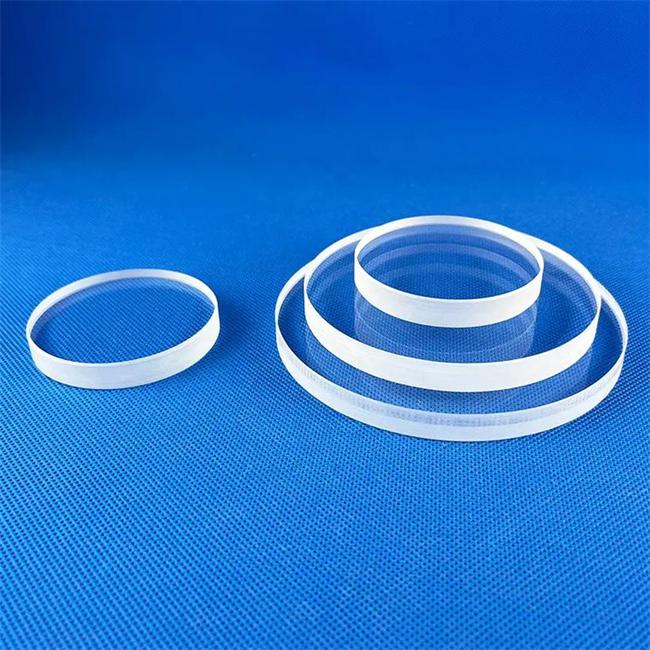
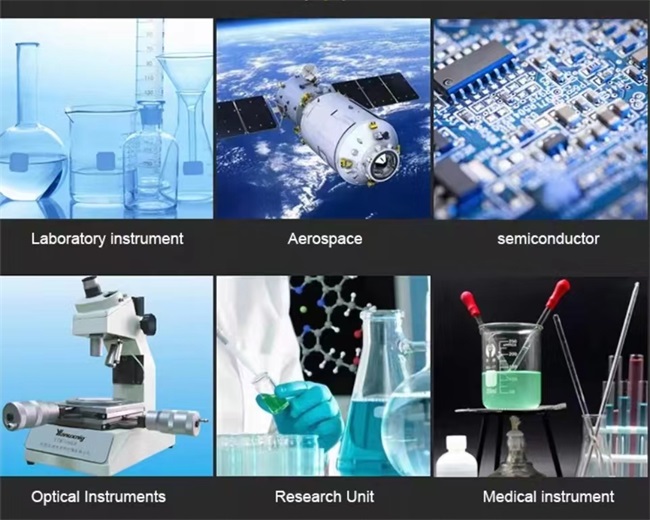
Quartz plates are critical in industries requiring extreme environments or high-precision optics.
Semiconductor Industry: Used for photomask substrates, wafer carriers, and diffusion furnace windows due to low thermal expansion and high purity.
Optical Industry: Lenses, mirrors, and windows for UV lithography and laser systems.
Industrial Furnaces: Viewports and sight glasses for high-temperature kilns and vacuum furnaces.
Laboratory Equipment: Windows for spectroscopy and harsh chemical environments.
Lighting & Aerospace: High-intensity lamp envelopes and aerospace sensor windows.
How to Choose the Right Material
Choose Quartz if your application involves temperatures above 500°C, requires UV light transmission, or demands high chemical purity. Choose Glass only for room-temperature, non-critical visual applications where cost is the primary driver.
Decision Checklist:
Temperature: Will it exceed 400°C? -> Choose Quartz.
Light Source: Do you need UV transmission? -> Choose Quartz.
Precision: Do you need tight tolerances (±0.01mm)? -> Choose Quartz.
Environment: Is it highly corrosive (Acids)? -> Choose Quartz.
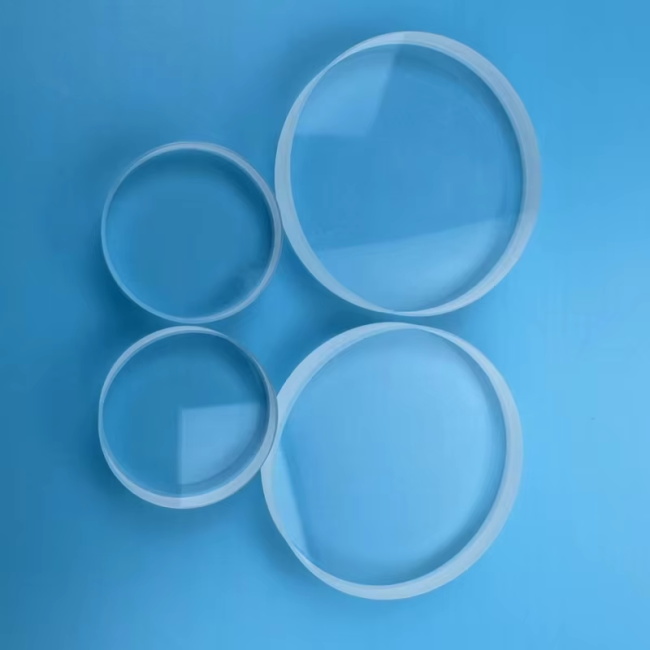
Customization Specifications & Parameters
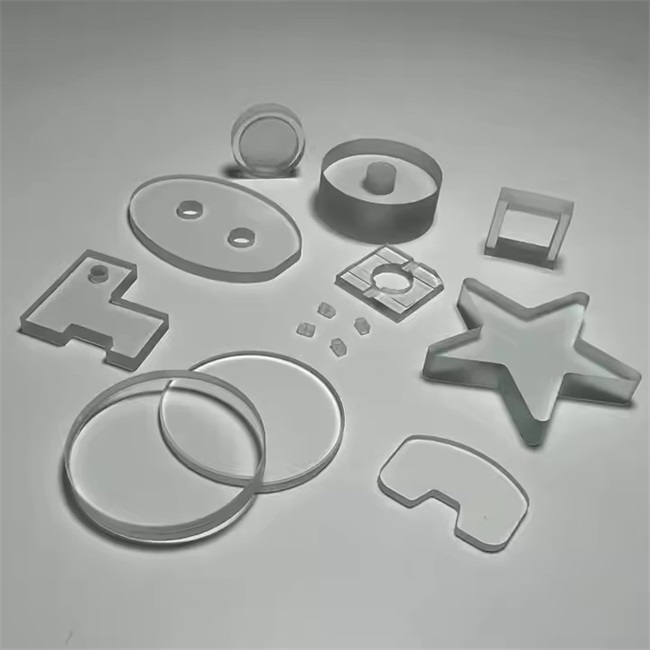
We support full OEM/ODM customization. Whether you need a standard square plate or a complex shape with specific holes and slots, we can manufacture it to your exact drawings.
Standard & Custom Capabilities:
Material Grade: JGS1 (UV Grade), JGS2 (Optical Grade), JGS3 (IR Grade).
Dimensions:
Max Size: Up to 300mm x 300mm (Standard), larger sizes available upon request.
Thickness: From 0.5mm to 50mm.
Tolerance:
Dimension Tolerance: ±0.05mm to ±0.1mm (Standard); Precision up to ±0.01mm available.
Flatness: λ/4 @ 633nm (Optical polishing).
Surface Quality:
Optical Polish: Scratch-Dig 60-40, 40-20, or better.
Grinding/Fire Polished: For non-optical furnace use.
Processing:
Drilling, slotting, chamfering, and notching are supported.
Metallization (coating) services available upon request.
Note on Customization: We accept drawings (CAD/PDF) and physical samples. If you have no drawing, send us a sample, and our engineering team will reverse-engineer it for production.
Why Choose Us?
We solve the common pain points of sourcing quartz: long lead times, high MOQs, and inconsistent quality. As a source manufacturer, we offer flexibility and speed.
No/Low MOQ: We understand R&D and pilot projects. We support small-batch orders (even 1 piece) alongside mass production.
Rapid Prototyping: Urgent delivery available. We can ship standard samples in 3-5 days and custom parts in 7-10 days.
Precision Machining: Our facility is equipped with CNC grinding, polishing, and laser processing to meet tight engineering tolerances.
Global Export Experience: We have exported to 50+ countries, handling packaging and logistics for fragile quartz products securely.
Quality Assurance: Every plate undergoes visual and dimensional inspection before shipment. We provide material certificates.
FAQ: Quartz Plate vs. Glass
Is quartz plate stronger than glass?
Yes. Quartz is harder and has much higher compressive strength. However, like all glass-like materials, it is brittle and can break if dropped or impacted sharply.
Can I drill holes in quartz plate?
Yes, we offer custom drilling services. We can drill holes as small as 0.5mm depending on the thickness of the plate.
What is the maximum temperature a quartz plate can withstand?
Fused silica quartz plates can operate continuously at 1100°C and withstand short-term temperatures up to 1450°C without softening or deforming.
Do you offer OEM/ODM services?
Yes, we specialize in OEM/ODM. We can manufacture quartz plates based on your specific drawings, samples, or performance requirements.
What is the lead time for custom quartz plates?
For standard sizes, we often have stock. For custom parts, the typical lead time is 7-15 working days, depending on complexity. Urgent orders can be expedited.
Is there a Minimum Order Quantity (MOQ)?
We have no strict MOQ. We support small batches for prototyping and large volumes for mass production.
Can quartz plates transmit UV light?
Yes, specifically JGS1 grade fused silica offers high transmission in the UV spectrum (down to 185nm), unlike standard glass which blocks UV.
How do you package quartz plates for export?
We use vacuum blister packaging, foam inserts, and sturdy wooden crates to ensure the plates arrive safely without breakage during international shipping.
Can you polish both sides of the quartz plate?
Yes, we offer single-side or double-side optical polishing to meet specific surface roughness and flatness requirements.
What is the difference between fused silica and crystalline quartz?
Fused silica (amorphous) is isotropic and has better thermal shock resistance, making it ideal for plates and windows. Crystalline quartz is used for piezoelectric applications. We primarily supply fused silica plates.
Can you cut quartz plates into irregular shapes?
Yes, we can cut complex shapes, including notches, steps, and curves, using precision CNC and laser cutting technologies.
Is quartz resistant to hydrofluoric acid?
No. Like all silica-based materials, quartz is attacked by hydrofluoric acid and strong alkalis at high temperatures. It is resistant to almost all other acids.
How do I clean quartz plate?
Use standard laboratory cleaning procedures: Acetone, Alcohol, or Deionized water. Avoid touching the optical surface with bare hands to prevent oil contamination.
Can I get a sample before placing a bulk order?
Absolutely. We encourage customers to test our quality. Samples are available for a nominal fee, which is often refundable upon bulk order.
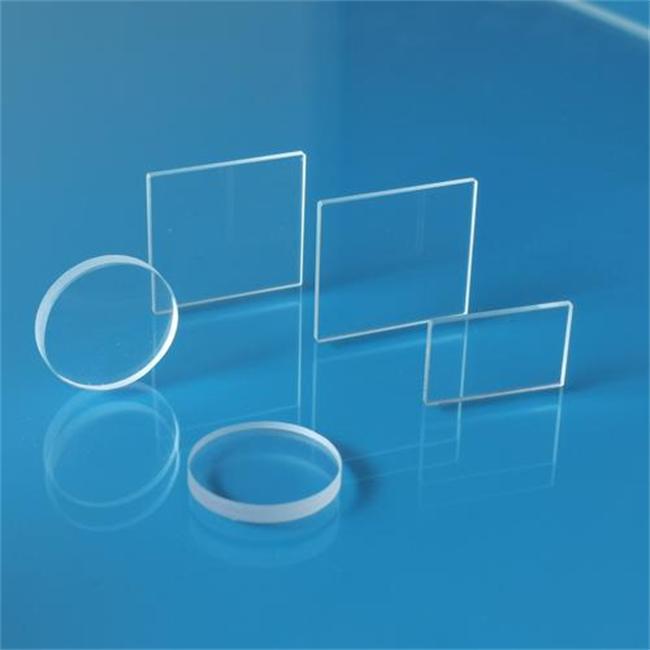
Quartz Plate vs. Glass: Quartz plates (fused silica) are superior to standard glass for high-temperature (>500°C), UV-transmissive, and high-precision applications due to their near-zero thermal expansion and high purity (SiO₂ >99.9%). Standard glass is cheaper but lacks thermal shock resistance and UV transparency. For semiconductor, optical, and furnace applications, quartz is the required material. Custom quartz plates support OEM/ODM, tight tolerances (±0.01mm), and various surface finishes (polished/ground).
Luverre Quartz manufactures and sells a wide range of high quality quartz glass, including quartz tubes, quartz plates, quartz rods, quartz windows, quartz crucibles, quartz boats, quartz flanges, quartz beakers, quartz glass instruments, and more. We can meet all kinds of customized requirements for quartz glass products.
