T: +86-518-85528012
E: nick@luverrequartz.com
E: nick@luverrequartz.com
1st floor Runlian industrial center No. 116 QuFeng Rd., Haizhou Economic and technological development zone Lianyungang City, Jiangsu Province, China 222062
Views: 0 Author: Site Editor Publish Time: 2026-10-27 Origin: Site


Selecting the right quartz ring depends on three factors: purity grade (4N for industrial, 5N–6N for semiconductor/optical), dimensional tolerance (standard ±0.1 mm vs. precision ±0.01 mm), and operating temperature (up to 1200°C continuous). For non-standard sizes, tight deadlines, or small-batch requirements, a custom quartz manufacturer with CNC machining and low-MOQ capability is the most practical sourcing route.

What Is a Quartz Ring and Why Does Material Grade Matter?
Quartz ring is a high-purity fused silica component used for thermal insulation, plasma containment, sealing, and structural support in high-temperature or corrosive environments. Its performance depends almost entirely on the silica purity level and manufacturing method.
Quartz rings are made from either fused quartz (derived from natural quartz crystal) or synthetic fused silica (produced from silicon gas). Fused quartz typically achieves 99.99% (4N) purity and suits most industrial furnace and chemical applications. Synthetic silica reaches 99.999% to 99.9999% (5N–6N) purity with extremely low metal contamination, making it mandatory for semiconductor wafer processing and precision optics .
The difference is not academic. In plasma etching, trace metallic impurities (Fe, Cu, Na, K) in a low-grade ring can migrate to the wafer and cause device failure. In high-temperature diffusion furnaces, a ring with inconsistent thermal expansion can crack under rapid thermal cycling, releasing particles that contaminate the process chamber .
Key takeaway for buyers: Always specify the purity grade based on your process environment, not on price alone. A 4N ring works for a sintering furnace; it will fail in a plasma etcher.

Standard Quartz Ring Sizes and What They Fit
There is no universal “standard” quartz ring size. Unlike pipe fittings, quartz rings are application-specific. However, certain dimensional ranges appear repeatedly across industries.
For semiconductor plasma chambers, rings typically fall in the 300–450 mm outer diameter range, with wall thicknesses of 3–10 mm. Wafer-focused rings for 300 mm processes often have OD around 350–400 mm with tight concentricity requirements . For laboratory and small furnace applications, rings range from 50 mm to 200 mm OD. Optical and laser equipment uses smaller, thinner rings, often under 100 mm OD, where surface finish and transmittance matter more than bulk thermal mass .
Important: If your equipment OEM does not publish ring dimensions, measure the mating quartz tube or flange OD and subtract for thermal expansion clearance. A ring that fits too tightly will crack during heat-up; too loose, and it will shift and cause plasma arcing or seal failure.

How to Choose the Right Quartz Ring for Your Application
Step 1: Define Your Temperature Profile
Continuous operating temperature determines whether you need standard fused quartz or a high-purity grade with tighter thermal expansion control. Standard fused quartz handles 1050–1100°C continuously. Semiconductor-grade fused quartz pushes to 1150–1200°C, with softening points around 1670–1730°C . If your process involves rapid thermal cycling—heating and cooling within minutes—the coefficient of thermal expansion (CTE) becomes critical. Fused quartz sits around 5.5 × 10⁻⁷ /°C, meaning a 400 mm ring expands only about 0.11 mm over a 500°C swing. This low expansion is why quartz survives thermal shock that would destroy ceramic or metal components .
Step 2: Match Purity to Process Sensitivity
Use this rule of thumb:
- 4N (99.99%): General industrial furnaces, chemical equipment, non-critical sealing. Acceptable metal impurity levels in the low ppm range.
- 5N (99.999%): Semiconductor diffusion, oxidation, LPCVD. Metal impurities controlled to sub-ppm, critical for preventing wafer contamination .
- 6N synthetic (99.9999%): Plasma etching focus rings, UV lithography, high-power laser optics. Synthetic silica has virtually no metallic impurities and extremely low OH content, which prevents bubble formation and transmission loss .
Step 3: Specify Tolerance Realistically
Quartz ring for a furnace door seal might need ±0.5 mm. A plasma focus ring in a 300 mm etcher might need ±0.05 mm or better, with surface roughness below Ra 0.2 µm . Do not over-specify. Precision costs money and lead time. Tell your supplier the functional requirement—what the ring must seal against or align with—and let them propose the tolerance.
Step 4: Decide Between Standard and Custom
Standard rings exist mainly for common tube diameters and flange sizes. If your equipment is older, modified, or from a smaller OEM, standard inventory will not fit. Custom manufacturing is the practical route for: non-standard OD/ID, slots or holes for mounting, stepped profiles, or chamfers for sealing .

Quartz Ring Applications by Industry
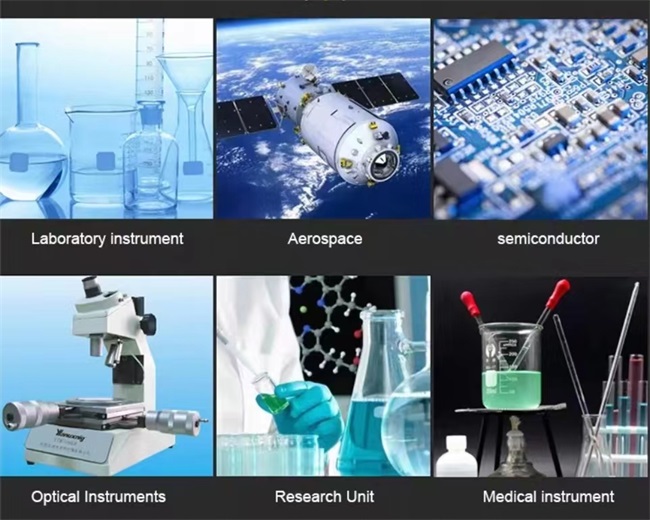
Semiconductor: Focus rings, edge rings, clamp rings, and chamber shield rings. These control plasma distribution at the wafer edge and protect chamber walls from ion bombardment. Purity ≥5N is standard; synthetic silica is preferred for advanced nodes .
Photovoltaic: Insulation rings in diffusion furnaces and PECVD systems. These must withstand repeated thermal cycling without cracking or outgassing. 4N–5N fused quartz is typical .
Optical & Laser: Lens retainers, optical path spacers, and window sealing rings. High transmittance from UV to IR (200–9000 nm) is the primary requirement, along with low bubble content .
Chemical & Laboratory: Corrosion-resistant seals and spacers in reactors and high-temperature furnaces. Quartz resists most acids except hydrofluoric acid, making it suitable for aggressive chemical environments .
Furnace & Thermal Equipment: Insulation rings, tube support rings, and sight glass retainers. The low thermal conductivity of quartz (around 2.28 W/m·K at 1000°C) provides thermal isolation without the bulk of ceramic insulators .
Custom Quartz Ring Specifications: What to Prepare Before Requesting a Quote
To get an accurate quote and avoid back-and-forth, prepare a drawing or a sample with the following information.
Dimensions: OD, ID, thickness. If the ring has a step, groove, or chamfer, include a cross-section view. For rings that mate with existing quartz tubes, provide the tube OD and the required clearance.
Tolerance: Call out critical dimensions only. Concentricity and flatness matter for sealing faces; less critical for simple insulation spacers.
Material Grade: Specify SiO2 purity (4N, 5N, or 6N synthetic). If unsure, describe the process—temperature, chemicals, vacuum vs. atmosphere—and ask for a recommendation.
Surface Finish: Fire-polished (transparent, smooth), ground (matte, Ra 0.8–1.6 µm), or optical polish (Ra <0.2 µm). Fire polishing is standard for most furnace applications; optical polishing is reserved for laser and UV paths .
Quantity: One prototype or a thousand-piece production run. Many manufacturers set a minimum order quantity (MOQ) per size, but low-MOQ suppliers exist for R&D and emergency replacement .
Delivery Target: Standard lead time for custom quartz rings runs 2–4 weeks after drawing approval. If you need faster, say so upfront—some suppliers expedite small orders .

Common Mistakes When Buying Quartz Rings (And How to Avoid Them)
Mistake 1: Assuming all “quartz” is the same. Natural fused quartz and synthetic silica behave differently under plasma and UV. A 4N ring in a 5N process will contaminate wafers. Always request a material certificate or ICP-MS data.
Mistake 2: Over-specifying tolerance on non-critical surfaces. A ±0.02 mm tolerance on a furnace spacer ring adds cost and lead time for no functional benefit. Define tolerance by function.
Mistake 3: Ignoring thermal expansion clearance. A ring that fits perfectly at room temperature may crack when heated if there is no expansion gap against a metal or ceramic mating part. Quartz expands roughly 0.55 µm per meter per °C. For a 400 mm ring at 1000°C, that is about 0.22 mm of growth—enough to cause binding if clearance is zero.
Mistake 4: Ordering from a trader without machining capability. Many “suppliers” outsource cutting and grinding. If your drawing has tight tolerances or unusual features, work directly with a manufacturer that controls the machining process .

Frequently Asked Questions (FAQ)
What is the difference between a quartz ring and a quartz flange?
Quartz ring is a simple annular shape with flat faces. A quartz flange typically has a raised sealing face, bolt holes, or a stepped profile for mating to another component. Flanges are more complex to machine and usually require a drawing.
Can I order just one quartz ring for testing?
Yes. Many custom manufacturers support prototype and single-piece orders, though the per-unit price will be higher than production quantities. Ask specifically about “no-MOQ” or “low-MOQ” sampling.
What purity do I need for semiconductor plasma etching?
Minimum 5N (99.999%) fused quartz, preferably synthetic silica (6N) for critical dimensions. Metal impurities, especially Fe, Cu, and Na, must be controlled to sub-ppm levels to prevent wafer contamination .
How tight can you machine a quartz ring?
Precision CNC grinding can achieve ±0.01 mm on critical dimensions, with surface roughness down to Ra 0.05 µm on sealing faces. However, tighter tolerance increases cost and lead time significantly .
What is the maximum operating temperature of a quartz ring?
Continuous use: 1100–1200°C depending on grade. Short-term/intermittent: up to 1450°C. Softening point is approximately 1670–1730°C .
Do quartz rings resist hydrofluoric acid?
No. Quartz (SiO2) is attacked by HF and hot phosphoric acid. It resists most other acids, water, and neutral solutions. For HF service, use PTFE or other fluoropolymer components .
Can you manufacture a ring from my sample?
Yes. Reverse engineering from a sample is standard practice. Provide the sample with critical dimensions marked, and the manufacturer will measure and produce a drawing for approval before machining.
What is the typical lead time for custom quartz rings?
2–4 weeks for most custom sizes after drawing approval. Simple cuts from stock tube may ship faster; complex features or high-purity synthetic material may require additional time.
Are quartz rings transparent or opaque?
Both exist. Transparent fused quartz is standard for most applications. Opaque quartz (OP grade) contains controlled bubbles and is used where thermal blocking or light diffusion is desired .
How do I clean a quartz ring before installation?
Standard clean: ultrasonic bath in deionized water with mild detergent, rinse with DI water, dry with filtered nitrogen. For semiconductor use, follow your fab’s protocol—typically an acid clean (excluding HF) followed by DI rinse and bake.
What is the difference between fused quartz and synthetic silica?
Fused quartz is melted from natural quartz crystal; purity reaches 4N–5N. Synthetic silica is made from silicon gas; purity reaches 6N with virtually no metal impurities. Synthetic is required for advanced semiconductor and UV applications .
Can quartz rings have holes, slots, or threads?
Holes and slots are machined with diamond tooling and are common for mounting. Threads are not recommended in quartz—they are brittle and prone to chipping. Use clamping or through-holes with fasteners instead.
What is the minimum order quantity for custom sizes?
This varies by supplier. Some manufacturers accept single-piece orders for prototypes; others set MOQ at 5–10 pieces per size. Ask explicitly before sending a drawing.
How do I verify the purity of incoming quartz rings?
Request a certificate of analysis (COA) with ICP-MS trace metal data. For critical applications, send a sample to a third-party lab for independent verification.
Can you match the dimensions of a competitor’s ring?
Yes, provided you send the sample or a complete dimensional drawing. Reverse engineering is routine, but verify that the competitor’s dimensions are actually correct for your process—sometimes a “matching” part replicates an existing design flaw.

Why Choose Us for Custom Quartz Rings
We solve the problems that standard catalog suppliers cannot.
No drawing? No problem. Send a sample, a photo with dimensions, or even a sketch on paper. Our engineering team will produce a formal drawing for your approval before machining.
Low MOQ, including single pieces. We support R&D prototyping and emergency replacement orders. You do not need to commit to 100 pieces to get a custom size.
Tight tolerances without the drama. Our CNC grinding and ultrasonic-assisted machining capabilities hold ±0.01 mm on critical features and Ra 0.2 µm on sealing surfaces. We inspect before shipping, not after you complain.
High-purity material, documented. We source 4N, 5N, and 6N synthetic quartz from qualified suppliers and provide material certificates with every order. If your process requires semiconductor-grade low-metal quartz, we will show you the ICP-MS data.
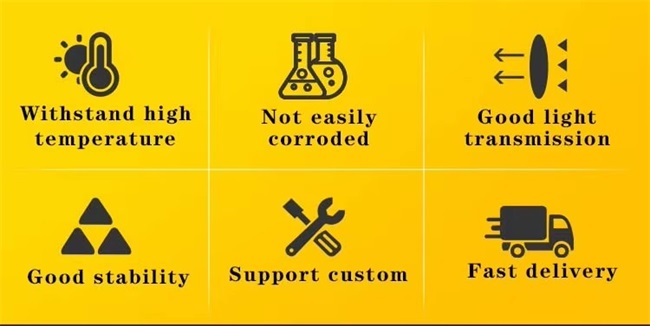
Fast turnaround for urgent needs. Standard custom rings ship in 2–3 weeks. If your furnace is down or your line is waiting, tell us the deadline—we will give you a realistic date, not an optimistic one that slips.
Global export experience. We handle export packaging, documentation, and logistics for customers in North America, Europe, and Asia. Fragile quartz parts arrive intact because we pack them like they matter.
What we help you avoid: wasting weeks chasing a supplier who cannot hit tolerance, paying premium prices for a “standard” ring that does not fit, or discovering contamination issues after installing a low-grade part. Send us your requirement—dimensions, quantity, and process conditions—and we will tell you what is realistic.
Luverre Quartz manufactures and sells a wide range of high quality quartz glass, including quartz tubes, quartz plates, quartz rods, quartz windows, quartz crucibles, quartz boats, quartz flanges, quartz beakers, quartz glass instruments, and more. We can meet all kinds of customized requirements for quartz glass products.
