T: +86-518-85528012
E: nick@luverrequartz.com
E: nick@luverrequartz.com
1st floor Runlian industrial center No. 116 QuFeng Rd., Haizhou Economic and technological development zone Lianyungang City, Jiangsu Province, China 222062
Views: 0 Author: Site Editor Publish Time: 2026-09-15 Origin: Site


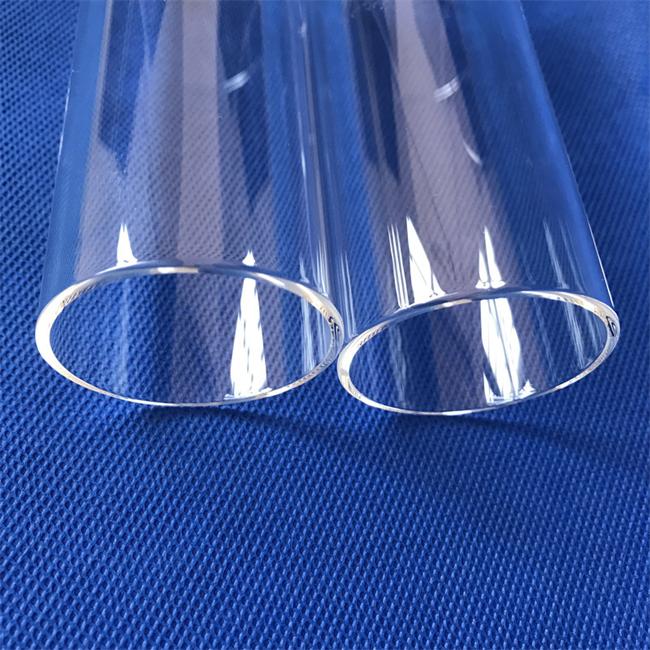
For high-temperature applications exceeding 500°C, quartz tubes (fused silica) are significantly better than standard glass tubes. Quartz tubes withstand continuous operating temperatures up to 1100°C and short-term exposure to 1450°C, while borosilicate glass tubes typically soften around 820°C and have a maximum working temperature of approximately 500°C .
If you're a procurement manager, engineer, or OEM manufacturer sourcing tubes for furnaces, semiconductor processing, or laboratory equipment, choosing the wrong material can lead to equipment failure, contamination, and costly downtime. This guide provides a comprehensive comparison to help you make an informed decision.
What Is a Quartz Tube?
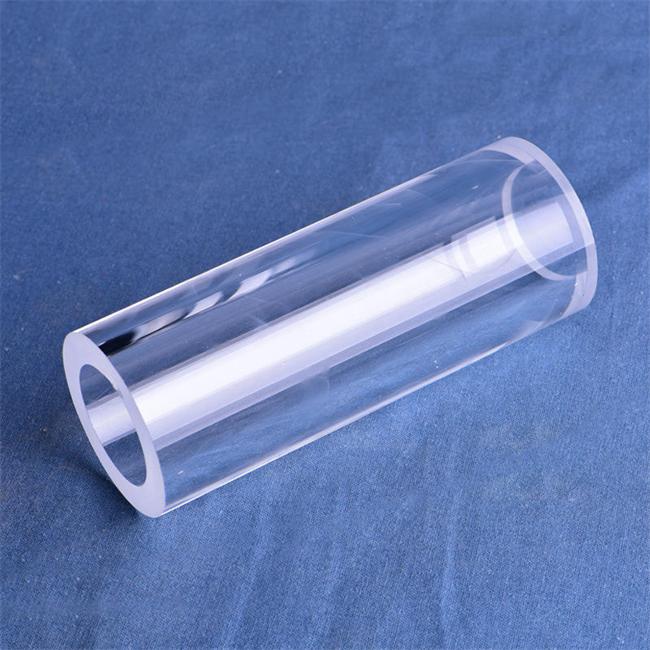
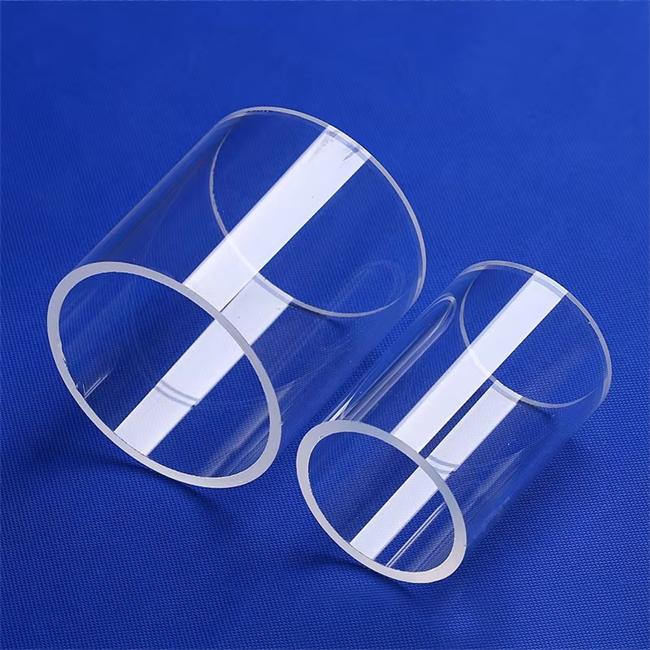
A quartz tube is a high-purity tube made from fused silica (SiO₂ content typically ≥99.9%), manufactured through melting high-purity quartz sand at temperatures exceeding 2000°C. It offers exceptional thermal stability, chemical inertness, and optical clarity.
Quartz tubes are essential components in industries requiring:
- High-temperature processing (up to 1450°C short-term)
- Thermal shock resistance
- Chemical purity (no contamination)
- UV and IR transmission
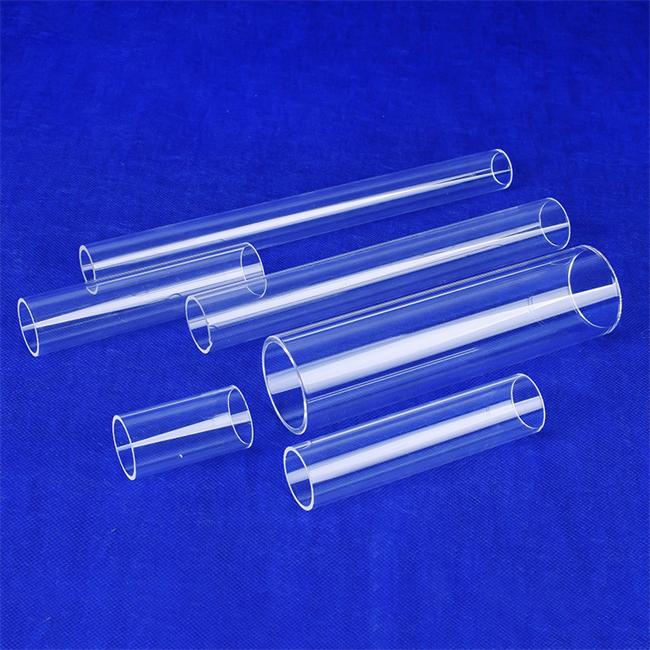
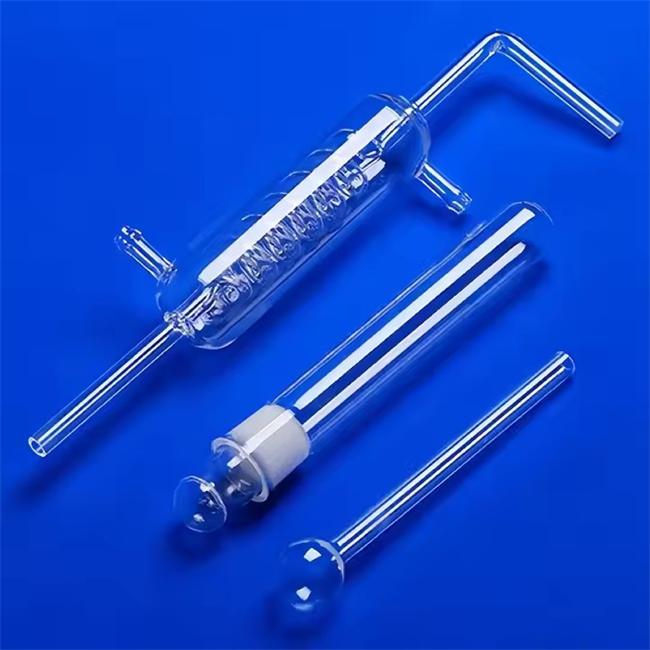
Our quartz tubes are available in various configurations including straight tubes, U-shaped tubes, spiral tubes, and custom geometries to meet specific application requirements.
What Is a Glass Tube?
A glass tube typically refers to borosilicate glass (such as Pyrex or DURAN®), which contains silica (SiO₂) at approximately 80% along with boron oxide and other additives. While borosilicate glass offers good thermal shock resistance for general laboratory use, its maximum working temperature is limited to approximately 500°C.
Borosilicate glass tubes are widely used in:
- General laboratory glassware
- Chemical processing at moderate temperatures
- Pharmaceutical manufacturing
- Food and beverage equipment
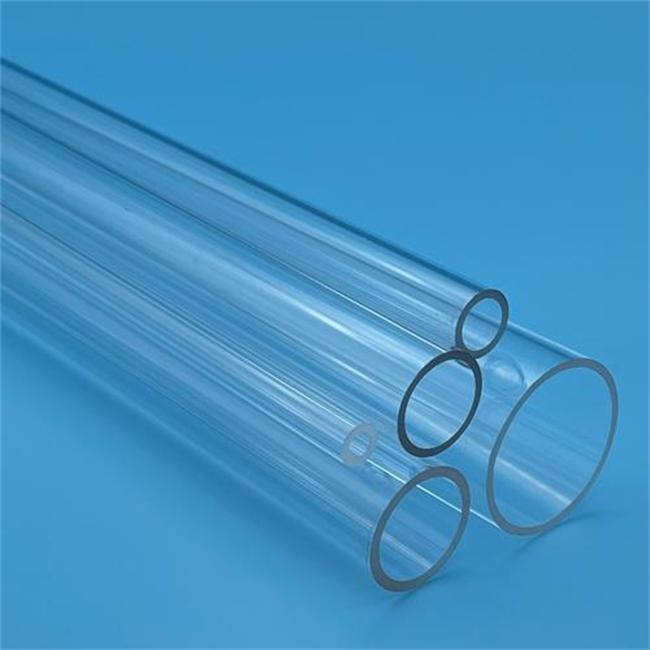
Quartz Tube vs Glass Tube: Key Differences
The fundamental difference lies in purity and thermal performance. Quartz tubes contain ≥99.9% SiO₂ with a softening point of 1710°C, while borosilicate glass tubes contain approximately 80% SiO₂ with a softening point of 820°C . This translates to significantly different performance in high-temperature applications.
Thermal Properties Comparison
Maximum Working Temperature:
Quartz tubes operate continuously at 1100°C and can withstand short-term exposure up to 1450°C. Borosilicate glass tubes are limited to approximately 500°C for continuous operation .
Softening Point:
Quartz glass softens at 1710°C, while borosilicate glass softens at 820°C—less than half the temperature resistance .
Thermal Shock Resistance:
Quartz tubes can withstand rapid temperature changes from -20°C to 1200°C without cracking due to their extremely low coefficient of thermal expansion. Borosilicate glass offers good thermal shock resistance but cannot match quartz performance in extreme conditions .
Purity and Contamination
Quartz tubes offer superior purity (≥99.99% SiO₂) compared to borosilicate glass, making them essential for semiconductor, pharmaceutical, and analytical applications where contamination must be avoided.
Our high-purity quartz tubes contain less than 5 ppm iron and other trace elements, ensuring no contamination in sensitive processes . Borosilicate glass contains sodium, boron, and other additives that can leach into processes at elevated temperatures.
Optical Transmission
Quartz tubes transmit UV light starting from 185-250nm, while borosilicate glass blocks UV below 300nm. For UV applications, quartz is the only viable choice.
Quartz glass achieves >85% transmission at 254nm (germicidal wavelength), making it essential for UV sterilization, excimer lasers, and spectrophotometry. Borosilicate glass has nearly zero transmission below 300nm .
Chemical Resistance
Both materials resist most acids, but quartz tubes offer superior chemical inertness at high temperatures. Quartz is resistant to virtually all acids (except hydrofluoric acid) regardless of concentration .
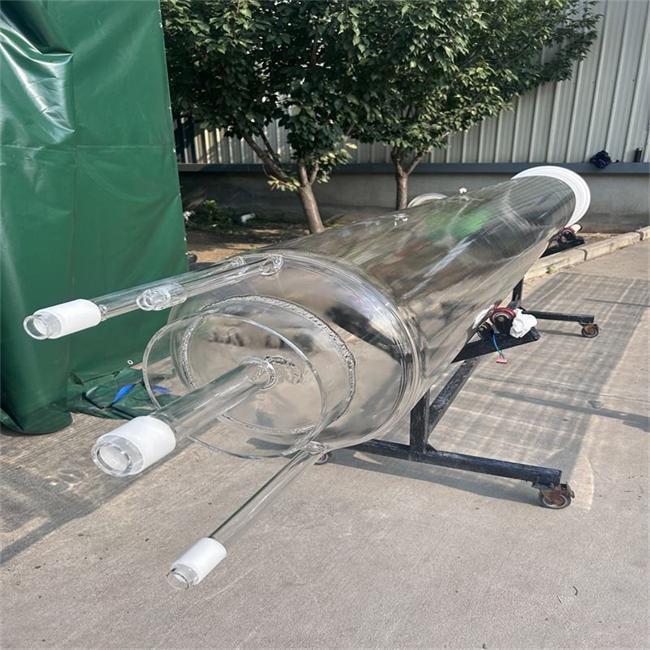
When Should You Choose Quartz Tubes?
Choose quartz tubes when your application requires temperatures above 500°C, UV transmission, ultra-high purity, or exposure to aggressive chemicals at elevated temperatures.
Select quartz tubes for:
Semiconductor Manufacturing
Diffusion furnaces, oxidation furnaces, and ion implantation equipment require the purity and thermal stability that only quartz can provide. Contamination at the ppb level can ruin entire wafer batches.
High-Temperature Furnaces
Tube furnaces operating above 1000°C require quartz tubes. Borosilicate glass would deform or fail at these temperatures.
UV Applications
UV sterilization, excimer laser systems, and deep UV lithography demand quartz tubes for their UV transparency.
Optical Fiber Production
Quartz tubes serve as protective sleeves and drawing molds in optical fiber manufacturing, where purity directly impacts signal transmission quality.
Laboratory Research
CVD systems, high-temperature chemical reactors, and vacuum tubes benefit from quartz's chemical inertness and thermal stability.
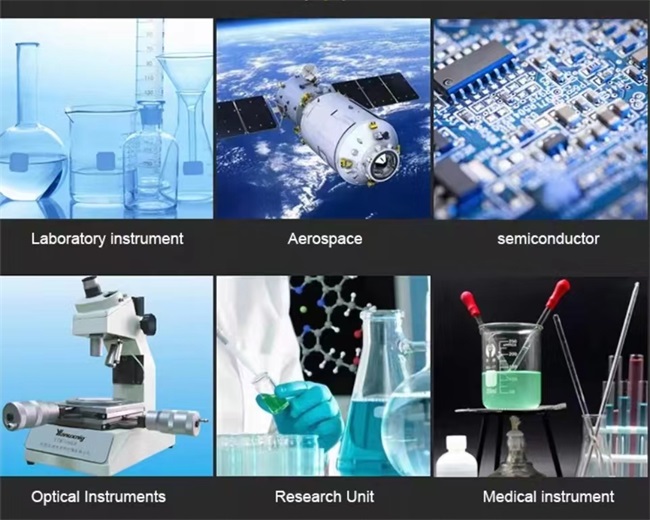
When Should You Choose Glass Tubes?
Choose borosilicate glass tubes when working at temperatures below 500°C and when cost efficiency is a primary concern.
Select glass tubes for:
General Laboratory Work
Standard beakers, flasks, and test tubes where temperatures remain below 500°C.
Chemical Processing
Moderate-temperature chemical reactions where contamination is not critical.
Pharmaceutical Manufacturing
Drug production and storage where borosilicate's chemical resistance suffices.
Educational Settings
Cost-effective for teaching laboratories and demonstrations.
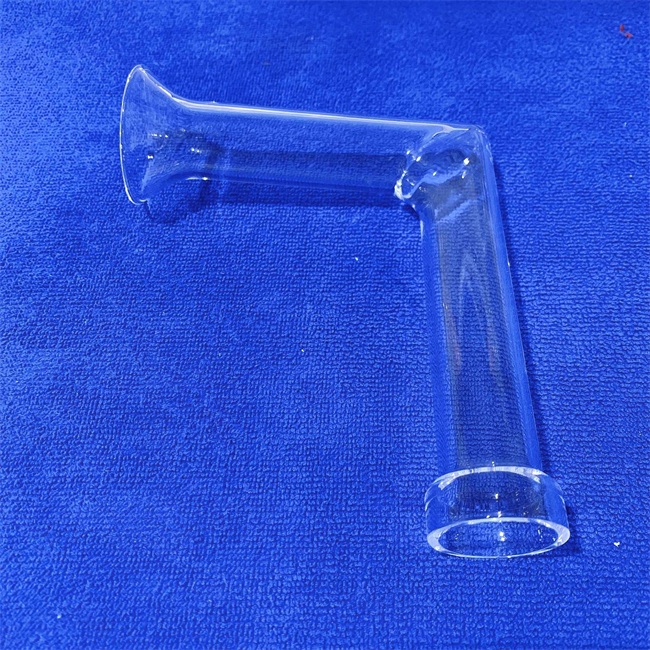
How to Choose the Right Tube for Your Application
Evaluate your maximum operating temperature, required purity level, optical transmission needs, and budget constraints. If any requirement exceeds borosilicate glass capabilities, choose quartz.
Decision Framework:
Step 1: Determine Maximum Temperature
If operating temperature exceeds 500°C continuously or 600°C intermittently, select quartz.
Step 2: Assess Contamination Sensitivity
For semiconductor, pharmaceutical, or analytical applications requiring ppb-level purity, quartz is mandatory.
Step 3: Evaluate Optical Requirements
For UV transmission below 300nm, only quartz is suitable.
Step 4: Consider Thermal Cycling
For rapid heating/cooling cycles with large temperature differentials, quartz's superior thermal shock resistance is essential.
Step 5: Balance Budget
While quartz costs more upfront, its longer service life and reduced failure rates often provide better total cost of ownership in demanding applications.
Custom Quartz Tube Specifications
We manufacture custom quartz tubes to your exact specifications, supporting OEM/ODM orders with no minimum order quantity.
Our custom quartz tube capabilities include:
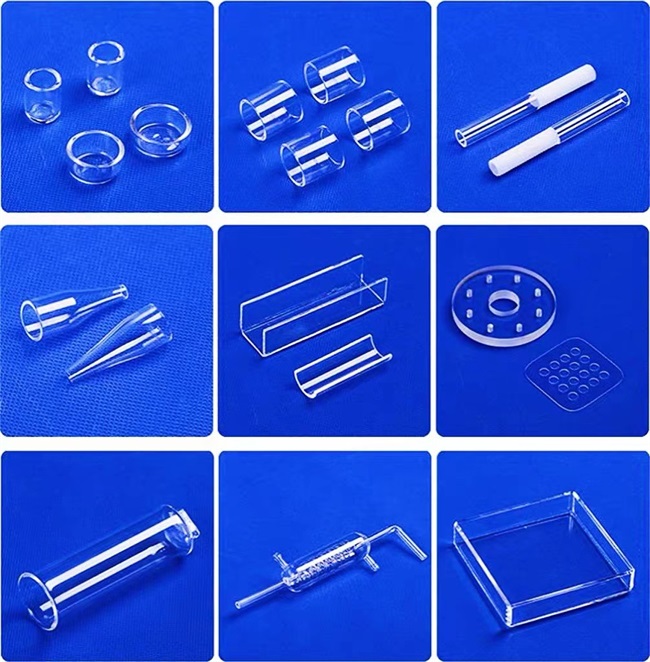
Dimensions: Outer diameters from 10mm to 500mm, wall thickness from 1mm to 20mm, and lengths from 100mm to 6000mm. All dimensions can be customized per your drawings.
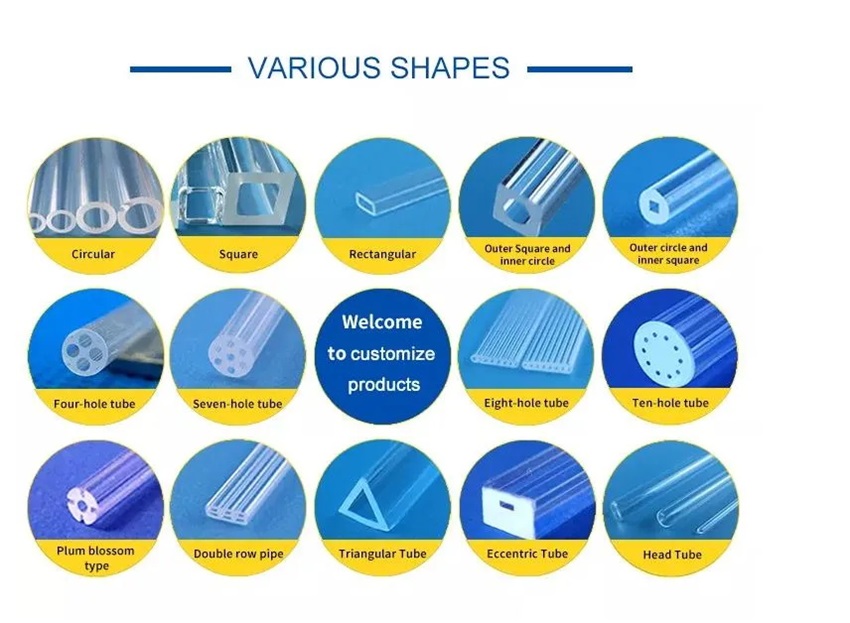
Shapes: Straight tubes, U-shaped tubes, spiral tubes, flanged tubes, closed-end tubes, and custom geometries.
Surface Treatments: Polished (inner/outer), frosted, or acid-etched surfaces to meet specific optical or chemical requirements.
End Configurations: Open ends, closed ends, flange connections, and vacuum-sealed designs.
Purity Grades: Standard (99.9% SiO₂), high purity (99.99% SiO₂), and ultra-high purity for semiconductor applications.
Tolerances: Precision machining to meet tight dimensional tolerances for critical applications.
Why Choose Us for Your Quartz Tube Requirements
As a direct manufacturer with over 20 years of experience, we solve the sourcing challenges that procurement managers and engineers face daily.
We help you solve:
Finding the Right Size
Standard catalog products rarely match specific equipment requirements. We manufacture to your exact dimensions, eliminating adapter costs and fitment issues.
Non-Standard Product Procurement
Custom geometries, unusual dimensions, and special configurations that other suppliers refuse—we welcome these challenges.
High-Temperature Requirements
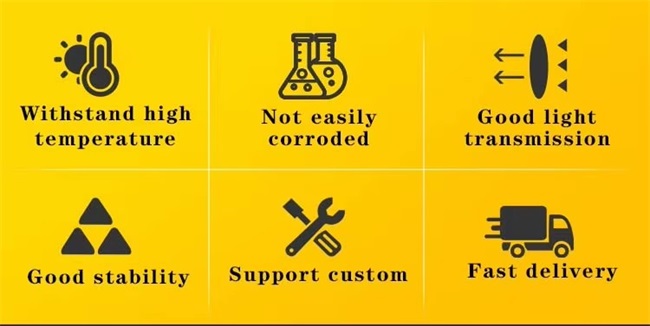
Our quartz tubes are rated for continuous operation at 1100°C and short-term exposure to 1450°C, meeting the demands of the most extreme applications.
Precision Requirements
Our CNC machining and precision forming capabilities ensure dimensional accuracy for critical applications.
Tight Lead Times
We understand production schedules. Our streamlined manufacturing processes enable fast turnaround without compromising quality.
Small Batch Customization
No MOQ requirements for custom orders. Whether you need one prototype or thousands of production units, we accommodate your needs.
Consistent Quality
Our ISO-certified quality management system ensures batch-to-batch consistency. Every order includes material certification and dimensional inspection reports.
Global Export Experience
We ship worldwide with expertise in international logistics, customs documentation, and packaging for safe transit.
Frequently Asked Questions (FAQ)
What is the maximum temperature for quartz tubes?
Quartz tubes can operate continuously at 1100°C and withstand short-term exposure up to 1450°C. For extended service life, we recommend operating below 1000°C .
Can quartz tubes replace glass tubes in my existing equipment?
In most cases, yes. Quartz tubes offer superior performance but may require different handling due to their different thermal expansion characteristics. Our engineers can advise on compatibility.
What is the difference between quartz glass and fused silica?
The terms are often used interchangeably. Both refer to high-purity SiO₂ material. Fused silica typically refers to synthetic grades with extremely high purity, while fused quartz is made from natural quartz crystal.
Do you offer custom sizes for quartz tubes?
Yes. We manufacture quartz tubes from 10mm to 500mm outer diameter, with custom wall thickness, length, and end configurations per your drawings or samples.
What is your minimum order quantity?
We have no MOQ for custom orders. We support both small batch production for prototyping and high-volume manufacturing.
How does quartz compare to borosilicate glass for thermal shock?
Quartz offers superior thermal shock resistance due to its extremely low coefficient of thermal expansion. It can withstand rapid temperature changes that would crack borosilicate glass .
Can quartz tubes be used in vacuum applications?
Yes. We manufacture vacuum-sealed quartz tubes and can provide flanged connections for vacuum system integration.
What surface finishes are available for quartz tubes?
We offer polished (inner and outer), frosted, and acid-etched surfaces depending on your optical, chemical, or mechanical requirements.
How do I specify a custom quartz tube?
Provide technical drawings with dimensions, tolerances, surface finish requirements, and quantity. Our engineering team will review and provide a quotation.
What industries use quartz tubes?
Semiconductor, solar energy, optical fiber, laboratory research, chemical processing, metallurgy, and environmental protection industries all rely on quartz tubes.
Are quartz tubes resistant to hydrofluoric acid?
No. Hydrofluoric acid (HF) attacks quartz and glass. For HF applications, alternative materials such as PTFE should be considered.
How should quartz tubes be cleaned?
Quartz tubes can be cleaned with standard acid solutions (except HF) and deionized water. For high-purity applications, we recommend acid etching followed by DI water rinsing.
What is the lead time for custom quartz tubes?
Lead times vary by complexity and quantity. Standard custom orders typically ship within 2-4 weeks. Rush orders can be accommodated.
Do you provide material certification?
Yes. All orders include material certification documenting purity, dimensions, and relevant test results.
Can you match quartz tubes to my existing equipment?
Absolutely. Provide samples or drawings of your current tubes, and we will manufacture exact replacements or improved versions.
Quartz Tube vs Glass Tube for High Temperature Applications:
For high-temperature applications exceeding 500°C, quartz tubes are the superior choice. Quartz tubes (fused silica) offer:
- Maximum working temperature of 1100°C continuous, 1450°C short-term
- Softening point of 1710°C versus 820°C for borosilicate glass
- Purity ≥99.9% SiO₂ versus ~80% for borosilicate glass
- UV transmission from 185-250nm versus UV blocking below 300nm
- Superior thermal shock resistance
Choose quartz tubes for semiconductor processing, high-temperature furnaces, UV applications, and any process requiring ultra-high purity or temperatures above 500°C.
Choose borosilicate glass tubes for general laboratory work, moderate-temperature chemical processing, and cost-sensitive applications below 500°C.
For custom quartz tube requirements including non-standard sizes, OEM/ODM orders, and small batch production, partner with a direct manufacturer offering no MOQ, precision machining, and fast global delivery.
Contact Us
Ready to discuss your quartz tube requirements? Our engineering team provides technical consultation and competitive quotations for custom and standard quartz products. Contact us with your specifications, drawings, or samples for a prompt response.
Luverre Quartz manufactures and sells a wide range of high quality quartz glass, including quartz tubes, quartz plates, quartz rods, quartz windows, quartz crucibles, quartz boats, quartz flanges, quartz beakers, quartz glass instruments, and more. We can meet all kinds of customized requirements for quartz glass products.
