T: +86-518-85528012
E: nick@luverrequartz.com
E: nick@luverrequartz.com
1st floor Runlian industrial center No. 116 QuFeng Rd., Haizhou Economic and technological development zone Lianyungang City, Jiangsu Province, China 222062
Views: 0 Author: Site Editor Publish Time: 2026-10-21 Origin: Site


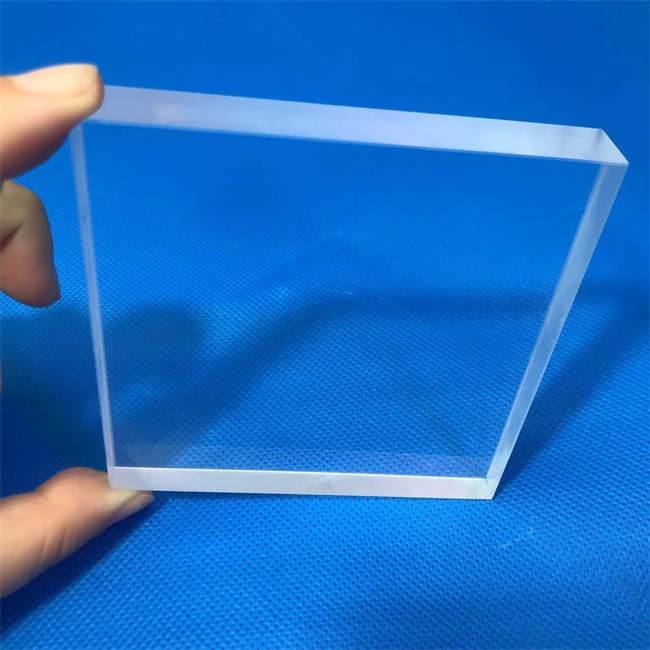
Selecting the right quartz window requires balancing optical transmission requirements with mechanical stability under thermal stress. For most industrial applications, the choice depends on whether you need deep UV transmission (requiring high-purity fused silica) or infrared heat resistance, alongside precise dimensional tolerances for your specific equipment.
As a specialized manufacturer with over two decades of experience, we understand that off-the-shelf solutions rarely fit complex engineering needs. This guide will help engineers and procurement managers navigate the technical specifications of quartz glass to make informed decisions.

Understanding Quartz Glass Types: JGS1 vs. JGS2
Which type of quartz do I need?
If your application involves ultraviolet (UV) light, you must use JGS1 (Fused Silica). For high-temperature infrared (IR) applications where UV is not a factor, JGS2 is a cost-effective alternative.
Quartz is not a "one-size-fits-all" material. The purity determines its optical properties:
JGS1 (High Purity Fused Silica):
Transmission: Excellent in the UV, Visible, and IR spectrums (185nm – 2500nm).
Best For: Semiconductor lithography, UV lamps, optical instruments, and laser windows.
Key Feature: Extremely low bubble content and high chemical purity.
JGS2 (Standard Optical Quartz):
Transmission: Good in Visible and IR spectrums (220nm – 2500nm), but absorbs UV below 220nm.
Best For: Furnace viewports, heat lamps, and high-temperature observation windows.
Key Feature: Cost-effective for high-heat environments where deep UV transmission is unnecessary.

Critical Selection Factors
Temperature Resistance and Thermal Shock
Can quartz windows withstand rapid temperature changes?
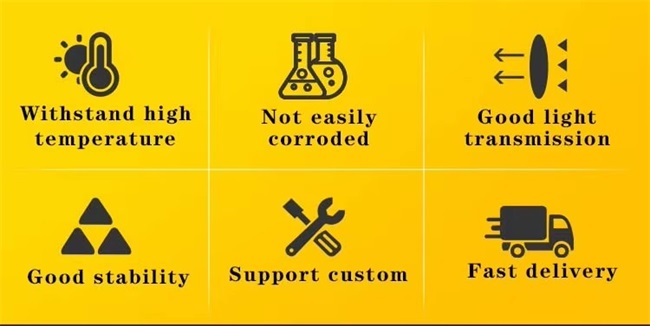
Yes. Quartz has an extremely low coefficient of thermal expansion (5.5 times 10^{-7} / ^circ C), allowing it to withstand temperatures up to 1100°C - 1200°C continuously, and short-term spikes up to 1450°C.
Unlike ordinary glass, which shatters under thermal shock, our high-purity quartz windows can be heated to 1000°C and plunged into cold water without breaking. This makes them ideal for:
Vacuum furnace viewports.
Semiconductor processing chambers.
Chemical reactor sight glasses.
Optical Transmission Requirements
How does thickness affect light transmission?
While quartz is highly transparent, increased thickness can slightly reduce transmission efficiency, particularly in the UV range.
For UV Applications: We recommend high-purity JGS1 with polished surfaces to ensure >90% transmission at 254nm.
For IR Applications: Quartz transmits up to roughly 3.5µm effectively. Beyond this, materials like Germanium or Sapphire might be considered, but quartz remains superior for combined heat/optical needs.
Dimensions: Size and Thickness
What are the standard sizes?
We support custom sizes with no strict MOQ limitations. However, standard processing capabilities generally cover:
Diameter/Width: From 5mm up to 400mm (depending on raw boule size).
Thickness: Ranging from ultra-thin 0.5mm wafers to thick blocks of 50mm+.
Tolerance: We achieve precision machining tolerances of +/- 0.05mm for critical optical parts.
Engineer’s Tip: For large windows (over 200mm), increasing the thickness is often necessary to prevent bowing or flexing under vacuum pressure.

Customization and Manufacturing Capabilities
We are not just a supplier; we are your manufacturing partner. We specialize in solving the "hard-to-find" problems.
Why Standard Parts Fail
Many engineers struggle with:
Non-standard Flanges: Existing windows don't fit the vacuum chamber.
Complex Geometries: Need for steps, grooves, or specific edge chamfers.
Urgent Lead Times: Large distributors often have 8-12 week lead times for custom parts.
Our Solution: Flexible OEM/ODM Services
Drawings & Samples: Send us your CAD drawings (PDF, DWG, STEP) or physical samples. We can reverse-engineer and manufacture to your exact specs.
Precision Machining: Our facility utilizes CNC grinding, lapping, and polishing to ensure flatness and parallelism.
Low MOQ: Whether you need a single prototype for R&D or a batch of 10,000 for production, we accommodate your volume.
Fast Turnaround: We understand that a broken viewport stops your production line. We prioritize urgent replacement orders.

Applications Across Industries
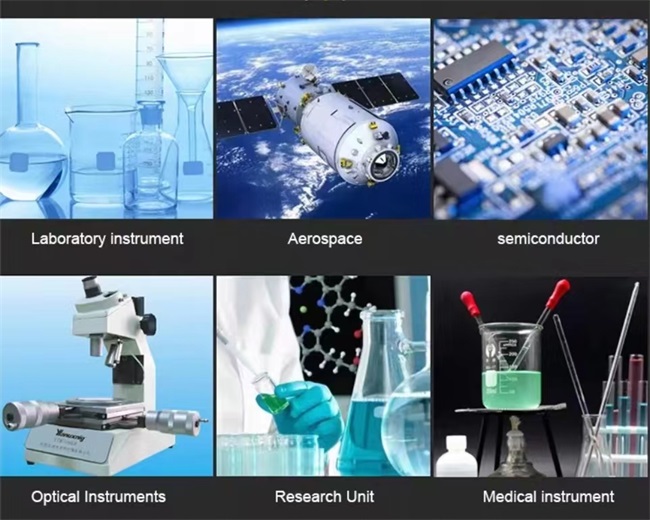
Semiconductor: Wafer processing windows, lithography optics.
Optical & Laser: Lens substrates, laser mirrors, UV filters.
Industrial Furnaces: Kiln viewports, pyrometer windows, sight glasses.
Chemical Industry: Corrosion-resistant sight glasses for reactors (resistant to almost all acids except HF).
Lighting: High-intensity discharge (HID) lamp envelopes.
Frequently Asked Questions (FAQ)
What is the maximum operating temperature for a quartz window?
Continuous use is safe up to 1100°C. Short-term exposure can reach 1450°C.
Can you manufacture quartz windows with holes or notches?
Yes, we can drill holes, cut notches, and create complex shapes using CNC and laser machining, provided the design is structurally sound.
What is the difference between Fused Silica and Quartz Glass?
In industry terms, they are often used interchangeably. However, "Fused Silica" usually implies synthetic, high-purity material (JGS1) with better UV transmission, while "Quartz Glass" can refer to natural crystal-derived material (JGS2).
Do you offer polished edges?
Yes. We offer fire-polished edges for strength or ground edges for precise dimensional fitting.
What is your typical lead time?
For standard sizes, we can ship within 3-7 days. Custom OEM parts typically take 10-15 days depending on complexity.
Can quartz withstand high pressure?
Quartz has high compressive strength but is brittle under tension. For high-pressure differentials, we can calculate the required thickness to ensure safety.
How do I clean my quartz window?
Use acetone or ethanol and lint-free wipes. Avoid touching the optical surface with bare hands. If contaminated with metals, an acid wash (excluding Hydrofluoric acid) may be required.
Do you export globally?
Yes, we have extensive experience exporting to the USA, Europe, Japan, and Southeast Asia. We ensure secure, shock-proof packaging for international transit.
Can I order just one piece?
Yes, we support prototyping and small-batch orders with no strict MOQ.
What surface finishes do you offer?
We offer double-side polished (DSP), single-side polished (SSP), and ground finishes depending on your optical needs.

Why Choose Us?
Source Manufacturer: Direct factory pricing without middleman markups.
Quality Control: Every window undergoes strict inspection for bubbles, scratches, and dimensional accuracy before shipping.
Technical Support: Our team includes engineers who can advise on material selection (JGS1 vs JGS2) and design optimization.
Global Logistics: We handle the complexities of exporting fragile glass products, ensuring they arrive safely at your facility.
Ready to Customize Your Quartz Solution?
Don't let standard limitations hinder your project. Whether you need a replacement for a broken furnace viewport or a custom optical component for a new device, we are here to help.
Contact Us for a free quote and technical consultation. Send us your drawing, and let's engineer the perfect solution together.
To select the correct quartz window, first determine the optical requirement: choose JGS1 Fused Silica for UV applications (185nm+) and JGS2 for high-temperature IR applications. Quartz glass withstands continuous temperatures of 1100°C and offers excellent thermal shock resistance. Key specifications to define include thickness (typically 1mm-50mm), diameter, and surface finish (polished vs. ground). For non-standard applications, OEM manufacturers can provide custom machining (drilling, chamfering) with tight tolerances (+/- 0.05mm). Sourcing from a direct manufacturer allows for low MOQs and faster lead times for both prototypes and bulk production.
Luverre Quartz manufactures and sells a wide range of high quality quartz glass, including quartz tubes, quartz plates, quartz rods, quartz windows, quartz crucibles, quartz boats, quartz flanges, quartz beakers, quartz glass instruments, and more. We can meet all kinds of customized requirements for quartz glass products.
