T: +86-518-85528012
E: nick@luverrequartz.com
E: nick@luverrequartz.com
1st floor Runlian industrial center No. 116 QuFeng Rd., Haizhou Economic and technological development zone Lianyungang City, Jiangsu Province, China 222062
Views: 0 Author: Site Editor Publish Time: 2026-08-12 Origin: Site


What is the definitive checklist of quartz glassware every high-performance laboratory needs?
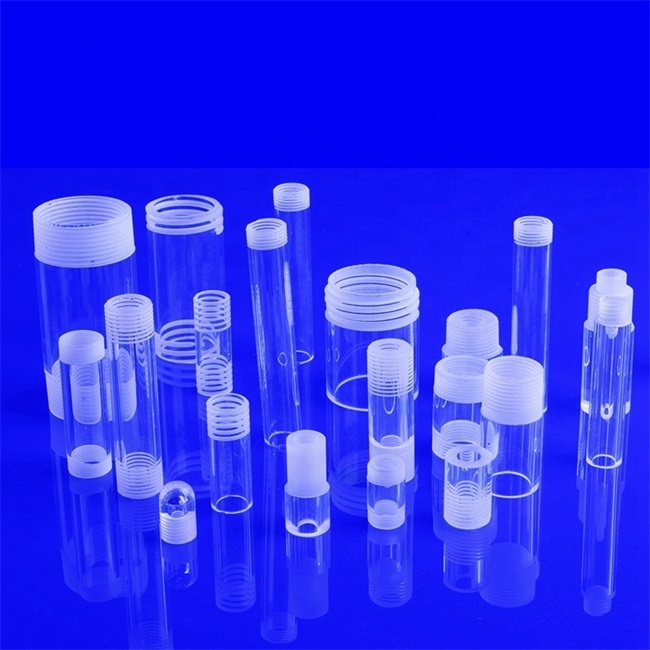
For any serious laboratory—whether in semiconductor fabrication, chemical analysis, or optical research—the essential quartz glassware inventory includes Quartz Crucibles, Quartz Tubes, Quartz Rods, Quartz Beakers and Flasks, Quartz Dishes and Plates, and Quartz Windows. In specialized applications, you may also require Quartz Boats, Flanges, and custom-fabricated parts .
These items are not just glassware; they are critical process tools. Standard borosilicate glass often fails under the extreme thermal and chemical stresses found in modern R&D and production environments. A single failure can ruin an expensive batch of material, contaminate a sample, or halt production .
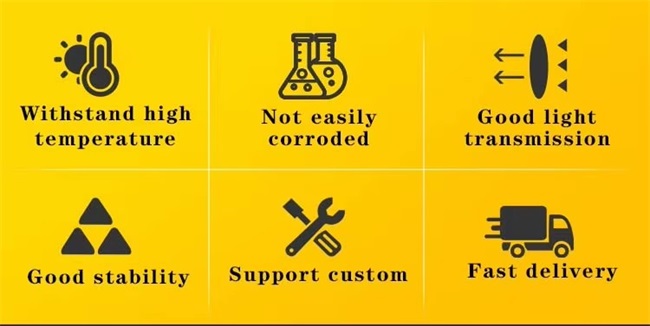
Quartz glassware solves these specific pain points. It offers exceptional resistance to thermal shock, can operate continuously at temperatures up to 1200°C (and briefly up to 1500°C), and is chemically inert to all acids except hydrofluoric acid (HF) . For procurement managers and engineers tired of sourcing non-standard sizes or dealing with quality inconsistencies, understanding the full spectrum of available quartzware is the first step to a more reliable operation.
The Essential Quartz Glassware List: A Breakdown
1. Quartz Crucibles
What are they for?
Crucibles are the workhorses of high-temperature chemistry. They are used for ashing, fusing samples, drying, and storage of materials up to 1000°C . Their high purity ensures they won't contaminate the sample, which is critical for analytical chemistry and materials science.
Why Quartz?
They are chemically inert to acids and offer excellent thermal shock resistance. This means you can heat them and cool them quickly without cracking, which is impossible with standard glass .
Key Specifications to Consider:
- Capacity: Available in various volumes (e.g., 15 mL, 50 mL, 130 mL).
- Form: Tall or short form, and transparent or translucent. Translucent crucibles are often used for higher temperature applications where a slight porosity is acceptable, while transparent offers better visibility .
2. Quartz Tubes and Rods
What are they for?
Tubes are fundamental for furnace liners, process tubes in semiconductor manufacturing, and protective sheaths for thermocouples . Rods are used for stirring, as supports, and for electrical insulation due to their excellent dielectric strength.
Why Quartz?
The transparency of quartz tubes allows for visual observation of processes inside a furnace. Their purity ensures they don't outgas contaminants into the process environment, which is vital for semiconductor and optical applications .
Key Specifications to Consider:
- Diameter and Wall Thickness: Standard tubing can range from 2mm to 800mm in outer diameter. Custom sizes are often required for specific furnace retrofits or applications .
- Clarity: Does the application require high UV transmittance (JGS1 grade) or standard visible light transmittance (JGS2 grade)? The choice of grade impacts optical performance .
3. Quartz Beakers, Flasks, and Reagent Bottles
What are they for?
These are the everyday vessels of the lab for mixing, heating, and storing high-purity acids, solvents, and samples .
Why Quartz?
The extreme chemical purity (>99.99% SiO2) and resistance to chemical attack make them indispensable for trace analysis. Using standard glass can leach alkali and alkaline earth metals into the sample, skewing test results . They can withstand temperatures far beyond borosilicate glass, allowing for digestion and heating reactions previously limited by equipment constraints.
Key Specifications to Consider:
- Purity Level: Look for 4N purity (99.99%) or higher. Ensure low levels of contaminants like Al, Fe, and Na .
- Volume: From 30 mL to 10,000 mL.
4. Quartz Dishes, Plates, and Windows
What are they for?
Dishes are used for evaporation, drying, and sample holding. Plates are used as substrates for thin-film deposition or as insulating components. Windows are used in spectrometers, reaction chambers, and optical systems where high light transmittance (UV to IR) is required .
Why Quartz?
For windows, the ability to pass UV light is critical for many spectroscopic techniques. For plates, thermal stability and a low coefficient of thermal expansion ensure the substrate remains stable during deposition at high temperatures.
5. Custom Quartz Parts (Boats, Flanges, Rings)
What are they for?
Quartz Boats (or "canoes") are used to hold wafers in semiconductor furnaces. Flanges and Rings are used to create gas-tight seals in reactors and furnace systems .
Why Custom?
These are often non-stock items. Equipment is rarely standard, and retrofitting an existing furnace often requires a custom part with very specific tolerances. A standard part won't fit, leading to process failures.
Key Specifications to Consider:
- Tolerance: Precision is key. A tolerance of ±0.1mm or tighter may be required for a good seal in a semiconductor furnace .

How to Select the Right Product: A Decision Framework
1. Define the Thermal and Chemical Environment
Question: What is the maximum continuous operating temperature?
Solution: If the temperature exceeds 1000°C, quartz is often the only choice. Check the material's deformation point (typically around 1280°C) .
Question: Which chemicals are involved?
Solution: Quartz is compatible with most acids but is attacked by hydrofluoric acid and strong phosphoric acid at high temperatures.
2. Determine Purity Requirements
Question: Are you performing trace metal analysis?
Solution: You must use high-purity (e.g., >99.99% SiO2) synthetic quartz or fused quartz with a low contamination level (e.g., low Al, Na, K) . Standard fused quartz often has higher residual contamination from the raw material but is more cost-effective for less critical applications.
3. Assess Geometry and Dimensional Tolerances
Question: Does the part need to fit into existing equipment or hold a specific size of work piece?
Solution: This is where standard suppliers fail. You need a partner that offers low MOQ (minimum order quantity) and the ability to fabricate from a drawing or sample.

Customization and OEM/ODM Capabilities
Why Standard Suppliers Fall Short
Most buyers find themselves stuck because they need a quartz tube that is 600mm in diameter, a crucible with a specific rim shape, or a custom boat with a very narrow tolerance. Stock suppliers often do not have these options.
How We Solve This
As a dedicated manufacturer, we address these "customization crises" daily. Our specialization includes:
- OEM/ODM Manufacturing: We build exactly to your specifications.
- No MOQ: Whether you need one prototype or one thousand production units, we accommodate you.
- Material Grades: We support high-purity materials, including JGS1 (UV-grade) and JGS2 (standard optical grade) .
- Precision Machining: We offer tight tolerances, ensuring fit and function for furnace or semiconductor applications.
The Quartz Challenge is Costly
Many lab managers and procurement officers settle for sub-standard glassware because finding a reliable supplier for custom quartzware is seen as too hard. The consequences are expensive:
- Batch Contamination: Leads to scrapped product or failed experiments.
- Furnace Failure: A broken tube or flange can shut down a high-value production line.
- Wasted Time: Searching for a supplier that can make a non-standard size.
Choosing the Right Partner
You need a manufacturing partner that understands that "one size fits all" doesn't work in a modern lab. You need a partner that provides:
1. Technical Expertise: To guide you on material selection (JGS1, JGS2, etc.).
2. Manufacturing Capability: To handle complex geometries and tight tolerances.
3. Logistics: To offer fast delivery for urgent needs.
If you are currently struggling with a broken custom part, a non-standard specification, or simply looking for a more cost-effective and reliable supply chain, we are here to help. Let's solve your quartz challenges together.

Frequently Asked Questions (FAQ)
1. What is the maximum temperature for quartz glass in a laboratory setting?
Quartz glass can be used continuously at temperatures up to 1200°C, with short-term applications up to 1500°C. The melting point is approximately 1715°C .
2. What is the difference between transparent and translucent quartz crucibles?
Transparent crucibles offer high clarity for viewing contents and high purity for semiconductor work. Translucent crucibles, made from fused silica powder, often offer better thermal insulation and are used in high-temperature applications up to 1100°C .
3. Is quartz glass chemically resistant to all acids?
No. While it is resistant to most acids, it is notably attacked by Hydrofluoric Acid (HF) and hot phosphoric acid. Alkalis also attack quartz .
4. Why is quartz glass better than borosilicate glass?
Quartz offers a much higher operating temperature (1200°C vs. 300°C for borosilicate), superior thermal shock resistance, and higher purity (>99.99% SiO2) which prevents sample contamination .
5. What does "JGS1" and "JGS2" quartz grade mean?
JGS1 is a high-purity, synthetic fused silica with excellent UV transmittance suitable for optics and photolithography. JGS2 is a standard fused quartz suitable for general laboratory and thermal applications .
6. Can you produce custom quartz parts based on a drawing?
Yes. We specialize in OEM/ODM services, manufacturing parts based on your specific drawings or samples .
7. What is the typical purity of quartz glass?
The industry standard for high-quality laboratory quartz is 99.99% (4N purity) or higher .
8. How do you ensure quality control for custom orders?
Quality is maintained through strict dimensional measurement and inspection of optical properties, chemical purity, and thermal performance.
9. Do you have a minimum order quantity (MOQ)?
We offer low MOQs and generally do not have a minimum. We support both small R&D batches and large-scale mass production.
10. What is the coefficient of thermal expansion for quartz?
It is exceptionally low, at approximately 5.5 x 10⁻⁷/°C, which gives it its famous resistance to thermal shock .
Luverre Quartz manufactures and sells a wide range of high quality quartz glass, including quartz tubes, quartz plates, quartz rods, quartz windows, quartz crucibles, quartz boats, quartz flanges, quartz beakers, quartz glass instruments, and more. We can meet all kinds of customized requirements for quartz glass products.
