
T: +86-518-85528012
E: nick@luverrequartz.com
1st floor Runlian industrial center No. 116 QuFeng Rd., Haizhou Economic and technological development zone Lianyungang City, Jiangsu Province, China 222062
Views: 0 Author: Site Editor Publish Time: 2026-11-26 Origin: Site


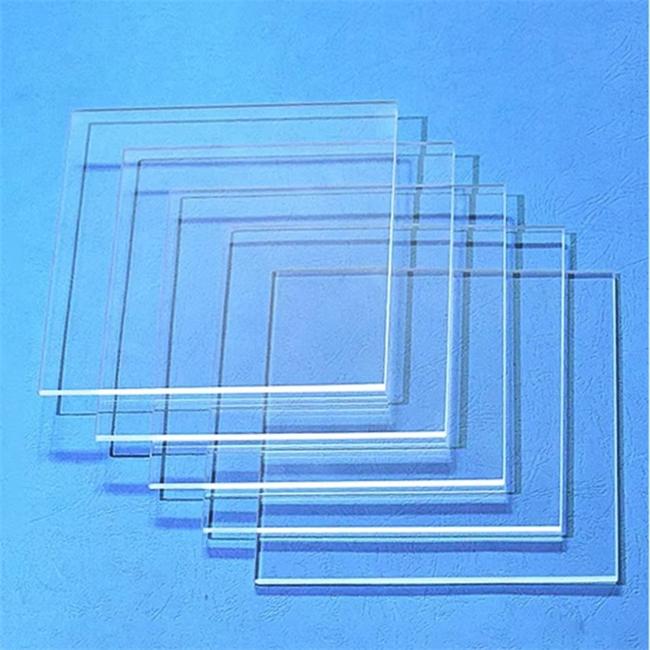
There is no single industry-wide standard thickness or size for quartz plates. The commonly available specifications depend on the material type (such as fused quartz or synthetic quartz), the application, and the manufacturer's capabilities. In the market, typical thicknesses range from 1 mm to 40 mm, while planar dimensions can extend from small laboratory pieces (e.g., 1 in × 1 in) up to 600 mm × 600 mm or larger custom plates. For procurement or engineering purposes, the key is not to look for an "off-the-shelf standard" but to confirm the achievable thickness, length/width, and tolerance range with the manufacturer based on the equipment's installation space, thermal conditions, and optical requirements.
Reference Guide to Common Thickness and Size Ranges
Based on publicly available manufacturer product information, the specification landscape for quartz plates shows the following characteristics:
In terms of thickness, commercially supplied fused quartz plates commonly include 3 mm, 5 mm, 6 mm, 8 mm, and 10 mm, and some suppliers can hold thickness tolerances within ±0.2 mm. A broader industrial supply range covers 1 mm to 40 mm, but not all thicknesses are kept in stock—thin plates (e.g., 1–2 mm) and thick plates (e.g., over 20 mm) usually require custom production or confirmation of minimum order quantities.
In terms of planar dimensions, the reference supply capabilities include:
- Square/rectangular plates: Stock sizes such as 300 mm × 300 mm (thickness 3 mm, 6 mm), and 600 mm × 600 mm (thickness 5 mm, 8 mm, 10 mm). Larger custom capabilities can reach up to 700 mm × 700 mm, or rectangular sizes up to 300 mm × 2000 mm.
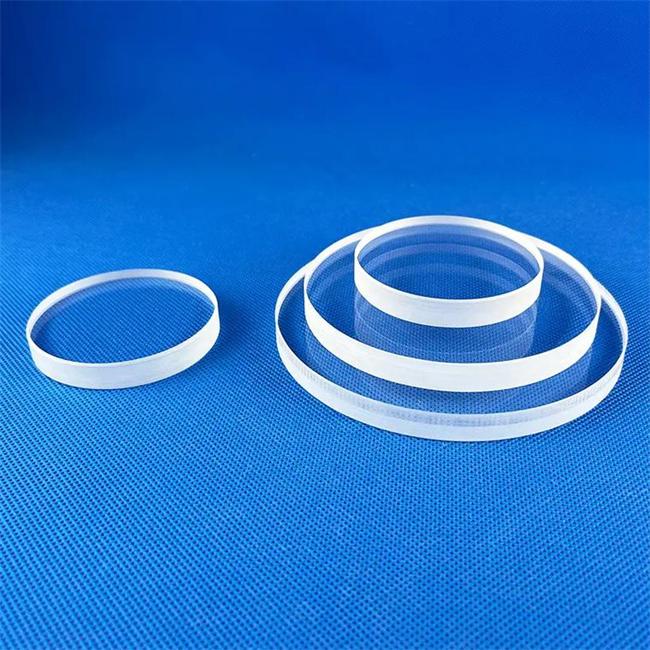
- Circular plates/discs: Maximum diameter of around 500 mm, with thickness typically starting from 4 mm.
It should be made clear that the figures above reflect the stock or processing capabilities of specific suppliers, not mandatory industry-wide standards. Different manufacturers have different strength ranges for sizes, and the actual available specifications must be confirmed through a specific quotation.

Key Factors Affecting Specification Selection and Manufacturability
Comparing thickness and length/width figures alone is not enough to make a reliable decision. The following technical factors directly determine whether a chosen specification is feasible and whether the cost is reasonable:
Dimensional Tolerance and Processing Method
Quartz plates are hard and brittle materials, and their dimensional accuracy depends on the subsequent processing method. Plates that have only been fire-polished or simply ground have looser tolerances; only plates that have undergone precision CNC grinding or polishing can achieve tighter tolerances. For example, some precision machining suppliers can hold thickness tolerances of ±0.005 in (about ±0.13 mm) and length/width tolerances of ±0.010 in (about ±0.25 mm) for flat parts. If the drawing requires tighter tolerances (e.g., within ±0.05 mm), precision machining must be explicitly specified, and the corresponding increase in cost and lead time must be accepted.
Surface Condition and Optical Requirements
A "quartz plate" may be a structural component, a viewing window, or an optical element, and the corresponding surface requirements vary greatly. When used as a mechanical barrier or process baffle, the surface only needs to be clean and free of chipping. When used as a viewing window, transmittance and bubble/inclusion grades must be specified. When used as an optical window, surface flatness (e.g., flatness per inch), parallelism, and surface defect standards must be defined. Simply stating "polished" is not sufficient to define an optical application—specific inspection standards or functional descriptions must be attached.
Material Grade (Purity and Bubbles)
Different applications have different sensitivities to quartz purity. Semiconductor or high-end optical applications typically require high-purity fused quartz (SiO₂ content can reach 99.99% or higher) with strict limits on bubbles and particulate contamination. Industrial heating or general chemical applications may accept commercial-grade material. Material grade directly affects raw material cost and availability, and also determines whether the supplier can issue the corresponding inspection reports.
Edge Treatment and Subsequent Assembly
If the edges of a quartz plate are left untreated, they are highly prone to chipping during handling and installation, which can then become stress concentration points leading to cracking. Standard supply usually provides ground edges, but if the plate is used for a sealing surface (such as a window clamping face), chamfering or edge rounding must be explicitly required, and edge chip size must be controlled. If holes, slots, or stepped features are needed on the plate, these features must be evaluated as part of the drawing in advance, because they significantly change the processing path and the strength of the finished part.
Practical Recommendations for Custom Specifications
When stock sizes cannot match the equipment interface, custom manufacturing to drawing is the standard approach. An effective custom inquiry should include the following information, rather than simply giving "length × width × thickness":
- Define the function: State whether the plate is used for pressure sealing, optical transmission, high-temperature isolation, or structural support. The function determines the material grade and surface acceptance criteria.
- Distinguish critical dimensions from reference dimensions: Not all dimensions require tight tolerances. Marking mating-face dimensions, hole diameters, and position tolerances as critical, and the rest as reference, helps control cost.
- Provide operating conditions: Include the maximum operating temperature, whether rapid heating/cooling is involved, the chemical media in contact, and whether vacuum/pressure requirements apply. This information helps the manufacturer determine whether the selected thickness and material are within the safe range.
- Confirm the inspection method: For plates with transmission or sealing requirements, agree on inspection items (such as dimensional reports, visual inspection of bubbles/inclusions, flatness measurement) and acceptance criteria.

FAQ
Do quartz plates have a standard thickness series like metal plates?
There is no unified international standard thickness series. Different manufacturers offer different thickness options based on their stock inventory and processing practices. 3 mm, 5 mm, 6 mm, and 10 mm are relatively common, but any specific thickness must be confirmed at the time of inquiry as to whether it is in stock or requires custom production.
What is the maximum thickness of quartz plate that can be supplied?
The upper thickness limit depends on the size of the quartz ingot/block the manufacturer has and its cutting and grinding capabilities. Publicly available information shows supply thicknesses up to 40 mm, but thick plates usually require longer processing cycles, and internal bubble and stress control becomes more difficult, so not all suppliers are willing to undertake them. The specific limit must be confirmed directly with the factory.
For quartz plates cut to a specific shape, what tolerance is reasonable to specify?
For general mounting purposes, length/width tolerances of ±0.25 mm to ±0.5 mm are usually achievable. If precision fitting with other parts is involved (such as fitting into a recess), tolerances within ±0.1 mm may be required; in this case, the mating relationship must be clearly communicated to the manufacturer so that precision finishing operations and inspection can be arranged.
How can I judge whether the specifications in a quotation for quartz plates meet my operating temperature?
The softening point of quartz glass is very high (on the order of about 1700°C), but the actual safe operating temperature is limited by thermal shock conditions and the support structure. If the application involves rapid heating/cooling or localized heating, looking only at the "maximum operating temperature" parameter is not enough. The thermal cycling conditions should be explained to the manufacturer, and confirmation should be obtained as to whether the selected thickness and edge treatment can withstand the corresponding thermal stress.
Conclusion and Call to Action
Quartz plates are not defined by a fixed catalog of standard thicknesses and sizes—they are specified around the actual demands of your equipment, process temperature, optical requirements, and assembly interface. The most reliable path to a correct specification is to share your drawing, sample, or functional requirements with a manufacturer who can confirm achievable tolerances, material grade, and lead time before production begins.
If you are sourcing quartz plates for a new project or replacing a standard part that no longer fits your equipment, send us your drawing or sample details—including dimensions, tolerances, surface requirements, and operating conditions. Our engineering team will review your requirements and respond with a feasible specification, a clear quotation, and a realistic delivery schedule. Whether you need a small batch for prototyping or volume production for OEM programs, we are ready to support your next quartz plate project.

Luverre Quartz manufactures and sells a wide range of high quality quartz glass, including quartz tubes, quartz plates, quartz rods, quartz windows, quartz crucibles, quartz boats, quartz flanges, quartz beakers, quartz glass instruments, and more. We can meet all kinds of customized requirements for quartz glass products.
