T: +86-518-85528012
E: nick@luverrequartz.com
E: nick@luverrequartz.com
1st floor Runlian industrial center No. 116 QuFeng Rd., Haizhou Economic and technological development zone Lianyungang City, Jiangsu Province, China 222062
Views: 0 Author: Site Editor Publish Time: 2026-07-13 Origin: Site


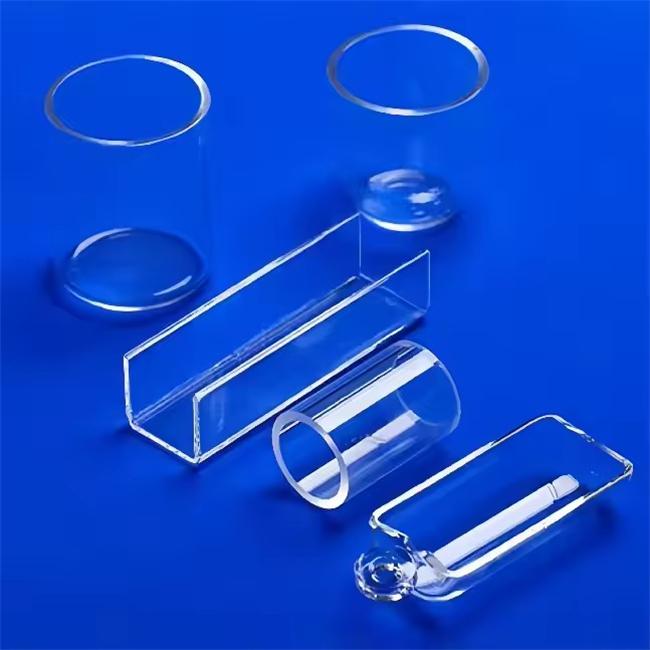
The high-temperature resistance of quartz products is their core value. High-purity quartz glass has a softening point of approximately 1,730°C; it can operate stably for extended periods at 1,100°C, and its maximum short-term operating temperature can reach 1,450°C. This characteristic stems from the strong Si-O chemical bond structure within quartz, which allows it to maintain structural stability and chemical inertness even in extreme high-temperature environments. Whether in semiconductor diffusion processes, high-temperature furnace viewing windows, or optical and electric light source equipment, quartz products effectively address challenges such as material deformation, contamination, and failure caused by high temperatures, providing reliable assurance for precision manufacturing.
Solving Key Challenges for Users
In demanding industries such as semiconductors, photovoltaics, chemicals, and optics, ordinary materials often face severe challenges at high temperatures, including softening and deformation, accelerated chemical corrosion, or thermal shock cracking. Our custom quartz products, with their high-temperature resistance, excellent thermal stability, corrosion resistance, and high light transmittance, effectively address the following issues:
1. Preventing material deformation and failure: In continuous operating environments exceeding 1000°C, ordinary glass or metal components are prone to softening or oxidation. With a softening point as high as 1730°C, quartz products ensure dimensional accuracy and stable performance under long-term high-temperature conditions.
2. Withstanding Severe Thermal Shock: During equipment startup, shutdown, or process transitions, sudden temperature changes often cause brittle materials to shatter. Quartz’s extremely low coefficient of thermal expansion (1/10 to 1/20 that of ordinary glass) allows it to withstand direct quenching in water after being heated to 1,100°C without fracturing, ensuring process safety.
3. Resisting High-Temperature Chemical Erosion: Reactions between materials and impurities at high temperatures are a common challenge in the industry. With the exception of hydrofluoric acid, quartz reacts with almost no other acids or alkalis; its acid resistance is 30 times that of ceramics and 150 times that of stainless steel, ensuring the cleanliness of high-purity process environments.
Why Choose Custom Quartz Products
The advantages of our products lie not only in the exceptional properties of the material itself but also in our ability to provide in-depth customization tailored to users’ specific application scenarios.
1. Precise Temperature Zone Customization and Specification Selection
Different processes have varying requirements for temperature endurance duration and peak temperatures. We offer comprehensive customization ranging from clear quartz tubes, quartz boats, and quartz crucibles to complex, irregularly shaped components. Whether you need long-term resistance to 1100°C for diffusion processes or short-term resistance to 1450°C for encapsulation and brazing, we can recommend the optimal material grade and wall thickness design based on actual operating conditions to ensure a safety margin.
2. Flexible Dimensions and Complex Shape Machining
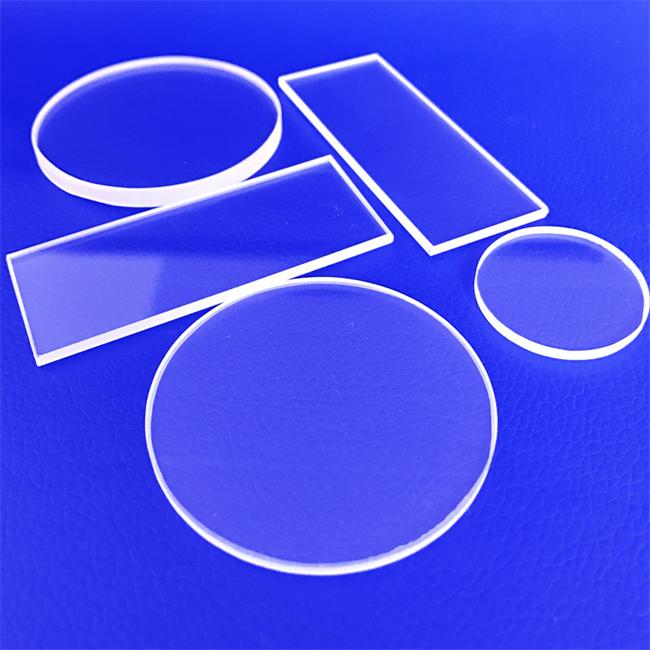
Standard parts often fail to fit special equipment interfaces or meet spatial constraints. We support quartz tubes with outer diameters ranging from 1.5 mm to over 300 mm, as well as custom machining of various non-standard plates, rings, discs, and flanges based on customer drawings. Through precision cold working and thermal processing techniques, we can achieve high-precision bending, diameter changes, drilling, and sealing to meet the unique demands of experimental setups or mass production lines.
3. Comprehensive Performance Guarantees to Improve Yield Rates
In addition to temperature resistance, we also optimize the optical and electrical properties of our quartz products. In applications requiring spectral transmittance or high-voltage insulation, our products offer visible light transmittance exceeding 93%, UV transmittance of over 80%, and electrical resistance equivalent to 10,000 times that of ordinary glass. This comprehensive balance of performance effectively reduces yield losses caused by material-related issues in high-temperature environments.

Focus on Application Scenarios: Solving Practical Problems
Semiconductor and Photovoltaic Manufacturing: In processes such as diffusion, oxidation, and annealing, we provide high-purity, heat-resistant quartz tubes and quartz boats to prevent impurity contamination of wafers at high temperatures while withstanding thermal shock from repeated temperature cycles.
Optoelectronics and Lighting Industries: Used in high-temperature lamp tubes and infrared heater housings, leveraging its light transmittance and high-temperature resistance to ensure light output efficiency and extend the operational lifespan of lighting fixtures in high-temperature zones.
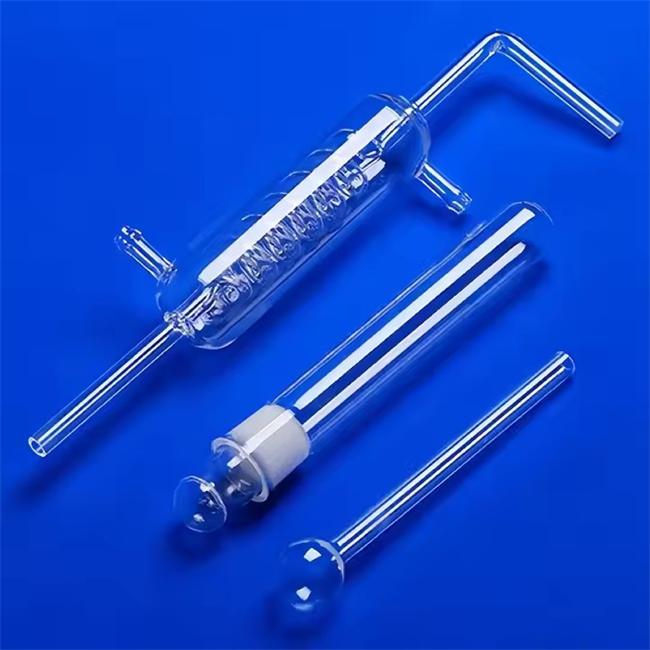
Chemical and Laboratory Equipment: Used in the manufacture of high-temperature reactors and heat exchanger components; its chemical inertness prevents corrosion by high-temperature acidic and alkaline media, ensuring the accuracy of experimental data and extending equipment service life.
Precision Optics and Aerospace: Used as high-temperature window materials or thermal protection components to meet requirements for dimensional stability and optical uniformity under extreme temperature fluctuations.
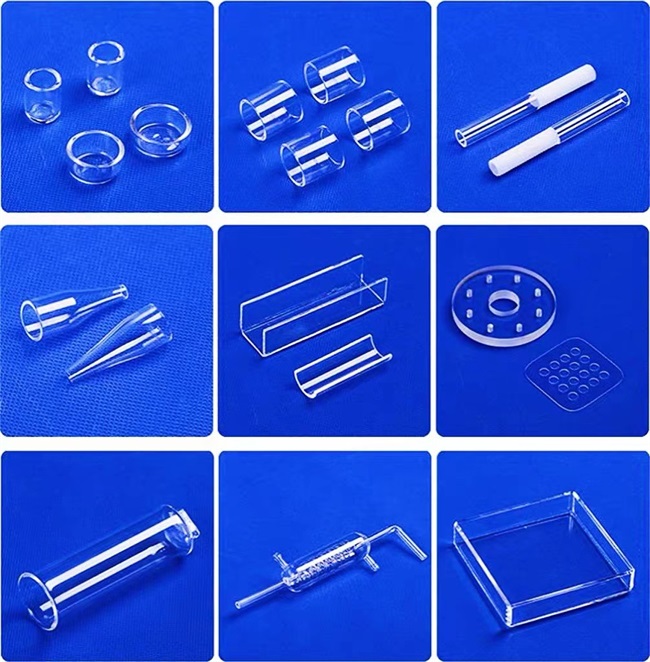
Contact us today to customize high-temperature-resistant, high-precision quartz solutions for your specific operating conditions, ensuring a perfect match between material performance and production processes.
Luverre Quartz manufactures and sells a wide range of high quality quartz glass, including quartz tubes, quartz plates, quartz rods, quartz windows, quartz crucibles, quartz boats, quartz flanges, quartz beakers, quartz glass instruments, and more. We can meet all kinds of customized requirements for quartz glass products.
