T: +86-518-85528012
E: nick@luverrequartz.com
E: nick@luverrequartz.com
1st floor Runlian industrial center No. 116 QuFeng Rd., Haizhou Economic and technological development zone Lianyungang City, Jiangsu Province, China 222062
Views: 0 Author: Site Editor Publish Time: 2026-11-18 Origin: Site


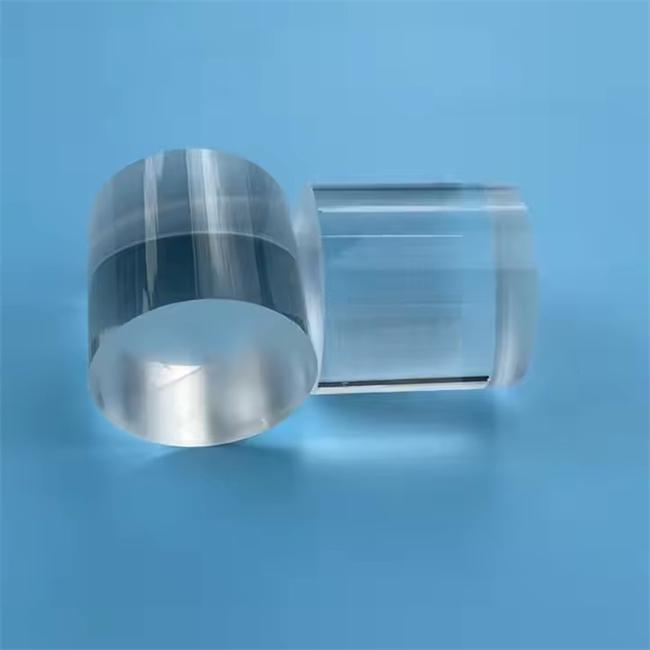
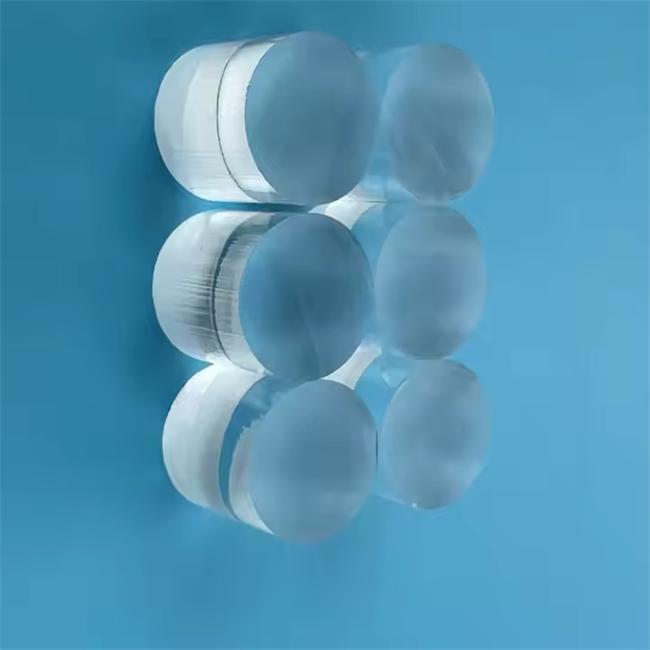
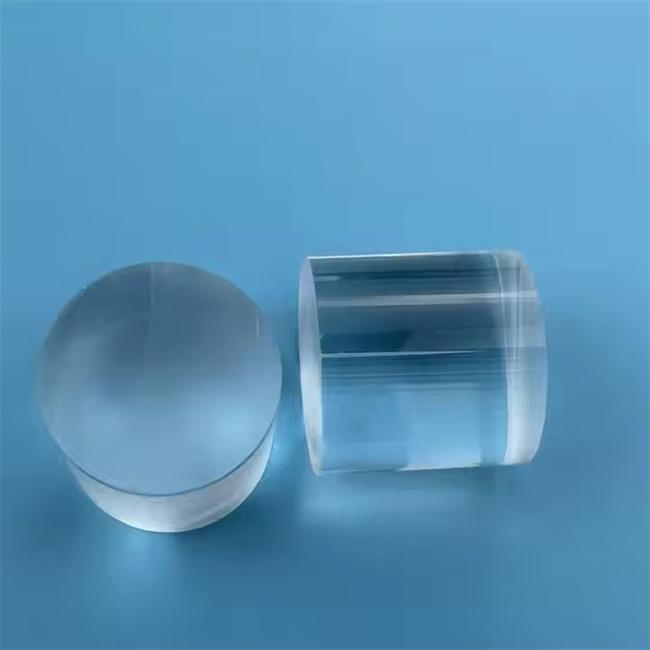
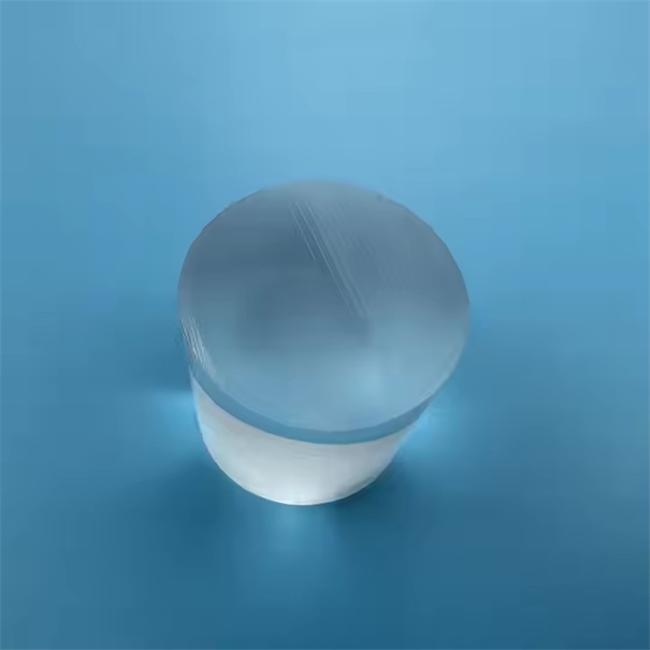
Quartz rods play an often-overlooked yet crucial role in fiber-optic couplers. They serve as both the support and positioning reference in the fused-taper process and as the “skeleton” of the coupling region’s physical structure. With a coefficient of thermal expansion that closely matches that of optical fiber, they maintain optical alignment accuracy during high-temperature taper drawing and long-term operation. For coupler manufacturers seeking low added loss and high environmental stability, the purity, geometric accuracy, and consistency of the quartz rod directly determine the yield rate and long-term reliability of the coupler assembly.
1. Quartz rod
As a core passive component in optical communication networks, the performance of fiber couplers directly affects the transmission quality of the entire system. Among various types of coupler structures, the design using quartz rods as the base element is highly favored due to its excellent performance. The unique physical and chemical properties of quartz material make it an ideal choice for achieving efficient and stable optical coupling.
2. Basic characteristics of quartz rods
2.1 Material Characteristics
Quartz (SiO ₂) is an amorphous solid composed of silicon oxygen tetrahedra, with the following basic characteristics:
-Extremely high purity: The purity of communication grade quartz can reach 99.9999%, with impurity content below 1ppm
-Density: 2.2 g/cm ³
-Mohs hardness: Grade 7
-Softening point: approximately 1650 ℃
2.2 Optical Characteristics
The optical performance of quartz rods is the core foundation for their application in couplers:
-Refractive index: approximately 1.444 at a wavelength of 1550nm
-Transmittance range: from deep ultraviolet (180nm) to near-infrared (2.5 μ m)
-Scattering loss:<0.1dB/km @ 1550nm
-Birefringence: can be controlled in the order of 10 ⁻⁶ through special processes
2.3 Thermophysical Properties
-Thermal expansion coefficient: 5.5 × 10 ⁻⁷/℃ (20-300 ℃)
-Thermal conductivity: 1.38 W/(m · K)
-Specific heat capacity: 0.17 cal/(g ·℃)
3. The specific role of quartz rods in fiber couplers
3.1 Light Field Mode Conversion
The quartz rod mainly achieves the following optical field conversion functions in the coupler:
1. Pattern matching: By precisely designing a conical structure, the LP ₀₁ mode field diameter of the input fiber is gradually converted from 9.2 μ m (single-mode fiber) to the size required for coupling
2. Mode field adaptation: Establish a gradient refractive index transition between optical fibers and waveguide devices to reduce mode mismatch losses (controllable below 0.1dB)
3. High order mode filtering: using specific geometric dimensions of quartz rods to suppress the transmission of high-order modes (LP ₁₁, etc.) and improve coupling purity
3.2 Beam shaping and control
-Divergence angle control: Adjust the output beam divergence angle (typical value 4-8 °) by adjusting the curvature of the quartz rod end face
-Spot shape optimization: Convert elliptical Gaussian distribution to circularly symmetric distribution (ellipticity<1.05)
-Polarization management: Specially designed stress zones can maintain polarization state (PMD<0.02ps/√ km)
3.3 Implementation of Multi Port Coupling
In the N × N coupler, the quartz rod achieves:
1. Power distribution: Accurate spectral ratio (adjustable from 1:1 to 1:99) is achieved through the melting cone process
2. Wavelength independent coupling: Maintain spectral ratio fluctuation<± 0.5dB within the bandwidth of 1260-1625nm
3. Low loss interconnect: typical insertion loss of 0.2dB (fusion type) to 0.5dB (alignment type)
3.4 Mechanical Support and Protection
-Stress buffering: Young's modulus of 72GPa, which can effectively alleviate mechanical stress in optical fibers
-Environmental isolation: prevent pollutants from directly contacting the coupling zone
-Thermal deformation compensation: thermal expansion characteristics matched with optical fibers

4. Analysis of Technical Advantages of Quartz Rod
4.1 Optical Performance Advantages
1. Ultra low loss characteristics
-Intrinsic absorption loss:<0.03dB/km @ 1550nm
-Rayleigh scattering: 0.12-0.16dB/km ·μ m ⁴
-Surface roughness:<1nm RMS (after polishing)
2. Wide spectral compatibility
-O-band (1260-1360nm)
-E-band (1360-1460nm)
-S/C/L band (1460-1625nm)
3. Nonlinear effect suppression
-Nonlinear refractive index n ₂: 2.5 × 10 ⁻² ⁰ m ²/W
-Stimulated Brillouin threshold:>10dBm
4.2 Advantages of Thermal Stability
-Temperature characteristics:
-Refractive index temperature coefficient: 1.28 × 10 ⁻⁵/℃
-Working temperature range: -40 ℃ to+85 ℃ (performance variation<0.02dB)
-High temperature stability: can withstand 300 ℃ in the short term (hydrogen oxygen flame processing)
-Thermal loss mechanism:
-Phase change caused by thermal optical effect: 1.5 × 10 ⁻⁵ rad/℃· cm
-Thermal stress birefringence:<0.01nm/cm ·℃
4.3 Advantages of Mechanical Reliability
1. Strength characteristics:
-Tensile strength: 0.5-1.0GPa (actual application design value 0.7GPa)
-Bending resistance: minimum bending radius of 2mm (short-term), 5mm (long-term)
2. Fatigue characteristics:
-Dynamic fatigue coefficient: 20-25 (inert environment)
-Static fatigue coefficient: 15-20 (50% RH environment)
3. Packaging adaptability:
-Thermal compatibility with ceramic inserts (CTE difference<0.5 × 10 ⁻⁶/℃)
-Metallic bonding strength:>20MPa (AuSn solder)
4.4 Manufacturing process advantages
-Processing accuracy:
-Geometric dimension tolerance: ± 0.5 μ m (diameter), ± 1 μ m (length)
-End face angle:<0.1 ° (PC type), 8 ° (APC type)
-Modifierability:
-Controllability of ion exchange depth: 0.1-10 μ m
-Doping uniformity: Δ n<5 × 10 ⁻⁴
-Batch consistency:
-Refractive index distribution fluctuation:<± 0.0002
-Diameter fluctuation:<± 0.2 μ m (with a diameter of 125 μ m rod)
5. Analysis of typical application cases
5.1 Fused taper coupler
-Function of quartz rod:
1. As a molten support, maintain fiber spacing (typically 2-5 μ m)
2. Control the length of the melt zone (1-3mm) and the cone angle (0.5-2 °)
3. Provide mechanical protection to improve the yield rate (>95%)
-Performance indicators:
-Additional loss:<0.05dB
-Directionality:>55dB
-Polarization related loss:<0.05dB
5.2 Micro optical coupler
-Application of quartz rod lens:
1. GRIN lens: refractive index distribution n (r)=n ₀√ (1- (√ A · r) ²), A=0.01-0.05 μ m ⁻¹
2. Spherical lens: curvature radius R=0.5-2mm, NA=0.1-0.3
3. Non spherical correction: wavefront distortion<λ/10 @ 633nm
5.3 Planar waveguide coupler
-Quartz rod function:
1. As an input/output cap for PLC chips
2. Implement fiber array spacing conversion (250 μ m → 127 μ m)
3. Provide V-shaped groove positioning reference (angle accuracy ± 0.5 °)
Frequently Asked Questions (FAQ)
Why must high-purity quartz rods be used for fiber couplers?
Fiber optic couplers are extremely sensitive to optical loss. High-purity quartz rods (typically with a SiO₂ purity of ≥99.99%) offer extremely high light transmittance across the ultraviolet to infrared spectrum and contain very few internal bubbles or impurities. This minimizes scattering and absorption of the optical signal during transmission, ensuring high coupler efficiency.
How do quartz rods withstand the high-temperature operating environment of fiber optic couplers?
Fiber optic splicing or taper-drawing processes involve exposure to high temperatures. Quartz rods have an extremely low coefficient of thermal expansion (approximately 5.5×10⁻⁷/°C) and a softening point as high as 1,730°C. This means they are resistant to deformation or cracking under drastic temperature changes, ensuring the long-term geometric stability of the coupler’s structure.
What specifications can you offer for customization?
We support comprehensive customization services. Whether it involves diameter (ranging from the common 63 micrometers to several millimeters), length, tolerances (controllable within ±0.005 mm), end-face finishing (polishing, grinding, chamfering), or special shapes (such as semicircular rods or porous structures), we can perform precision machining according to customer drawings.
How does the chemical stability of quartz rods affect optical communication equipment?
Quartz rods are highly chemically inert and react with almost no acids or alkalis, with the exception of hydrofluoric acid. This ensures that the coupler will not undergo material degradation or release impurities during long-term use in humid or corrosive environments, thereby extending the service life of optical communication equipment.
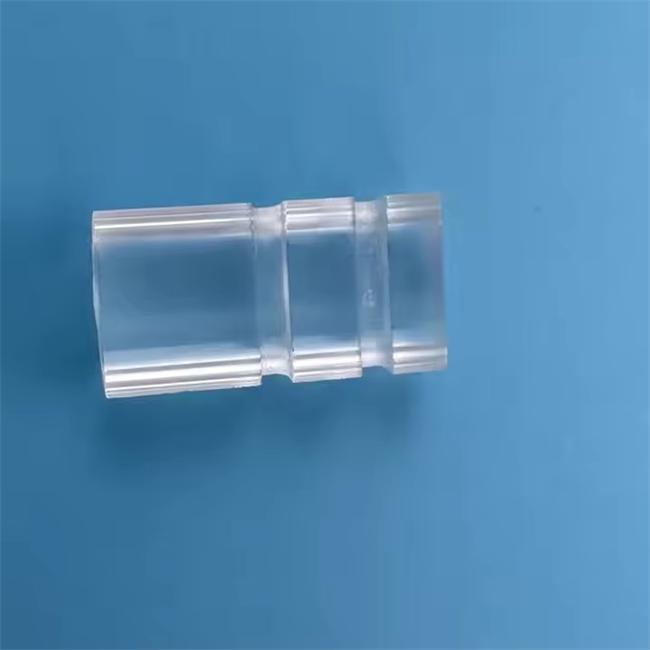
Quartz rods play multiple key roles in fiber couplers, from material foundation to structural design, from optical performance to mechanical stability. Their unique properties bring significant technological advantages to fiber couplers. The high purity, high transparency, high temperature resistance, corrosion resistance and other characteristics of quartz rods make them an ideal material for the manufacturing of fiber couplers, especially playing an irreplaceable role in melting cone process, optical interface treatment, mechanical support and thermal management. These effects directly translate into the advantages of high coupling efficiency, strong anti-interference ability, wide operating temperature range, high mechanical stability, and long service life of fiber couplers, significantly improving the quality and reliability of optical signal transmission.
Luverre Quartz manufactures and sells a wide range of high quality quartz glass, including quartz tubes, quartz plates, quartz rods, quartz windows, quartz crucibles, quartz boats, quartz flanges, quartz beakers, quartz glass instruments, and more. We can meet all kinds of customized requirements for quartz glass products.
