T: +86-518-85528012
E: nick@luverrequartz.com
E: nick@luverrequartz.com
1st floor Runlian industrial center No. 116 QuFeng Rd., Haizhou Economic and technological development zone Lianyungang City, Jiangsu Province, China 222062
Views: 0 Author: Site Editor Publish Time: 2026-09-11 Origin: Site


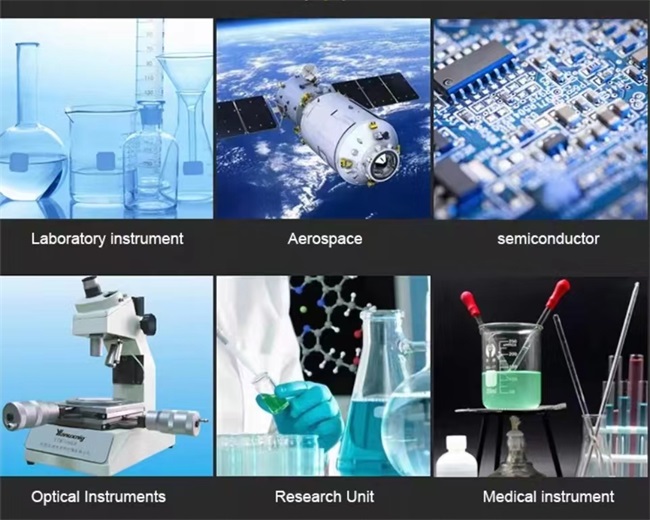
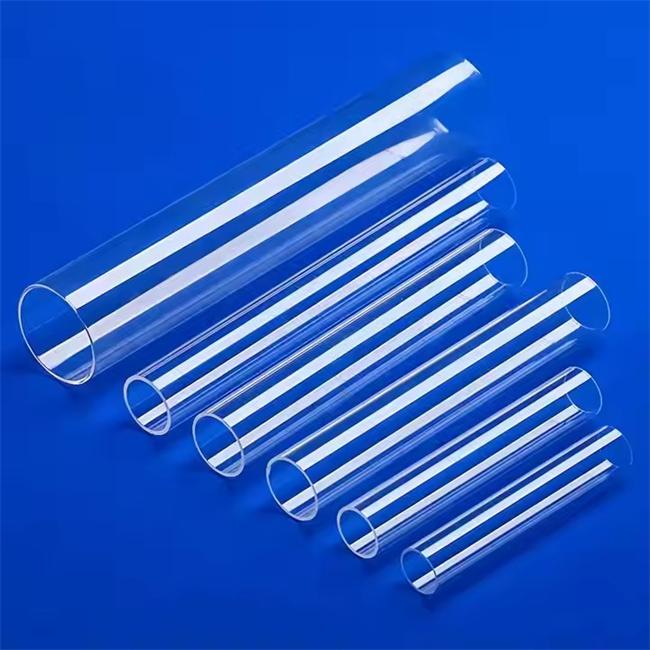
Quartz tubes are used wherever extreme heat, chemical exposure, UV transmission, or dimensional precision makes ordinary materials unsuitable. The five industries that rely on quartz tubes most heavily are semiconductor manufacturing, high-temperature furnace engineering, optical and UV equipment, chemical processing, and scientific research laboratories.
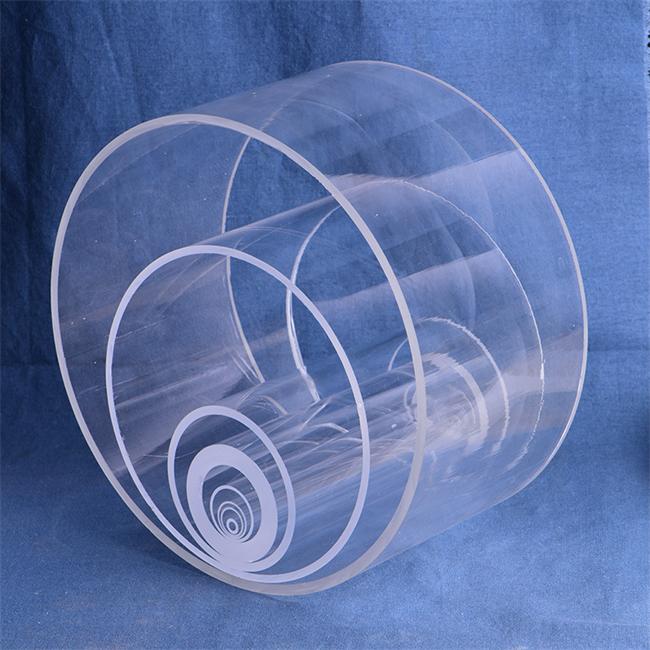
What Is Quartz Tube?
Quartz tube is a cylindrical component manufactured from high-purity fused silica (SiO₂). Unlike borosilicate glass or ceramic alternatives, quartz offers a unique combination of properties that make it irreplaceable in demanding industrial environments:
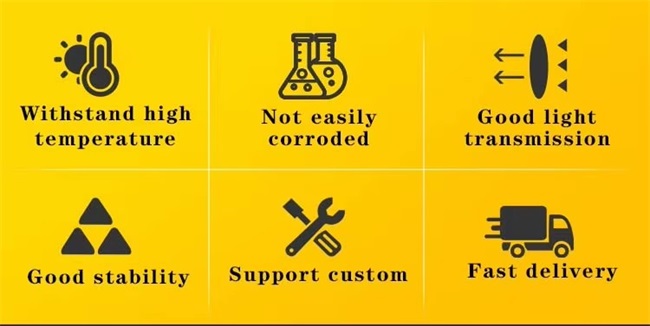
Thermal shock resistance — quartz can withstand rapid temperature changes without cracking, with continuous use temperatures reaching 1,100°C and short-term peaks approaching 1,200°C.
Chemical inertness — quartz is virtually unaffected by acids, water, and most corrosive chemicals, making it safe for aggressive reaction environments.
Optical transparency — fused quartz transmits light across a broad spectrum, from deep ultraviolet (below 200 nm) through visible light and into the infrared range.
Electrical insulation — quartz maintains excellent dielectric properties even at elevated temperatures.
Dimensional stability — the extremely low coefficient of thermal expansion (approximately 5.5 × 10⁻⁷/°C) means quartz tubes retain their shape and size under thermal cycling.
These properties are not merely "nice to have." In semiconductor fabrication, furnace design, and UV lamp engineering, they are absolute requirements. A material failure in any of these applications can result in contaminated wafers, ruined batches, equipment downtime, or safety hazards.
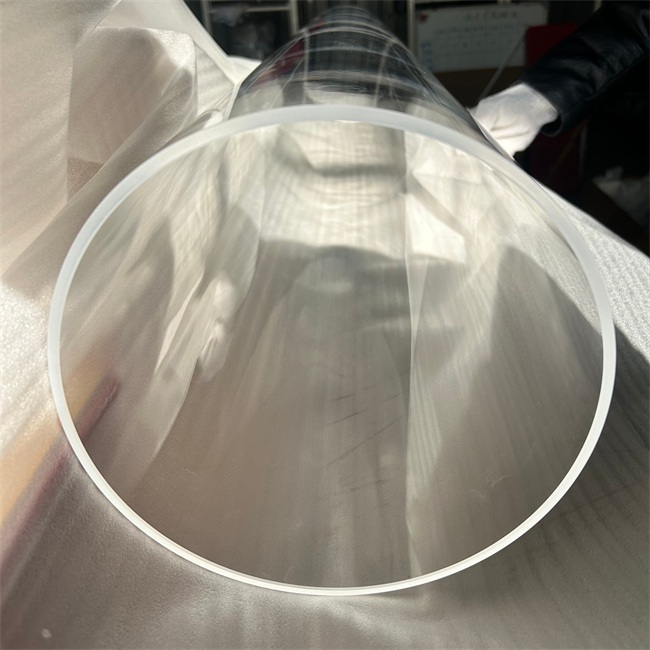
Where Can Quartz Tubes Be Used? Key Industry Applications
Semiconductor Manufacturing
This is arguably the most demanding application for quartz tubes. In semiconductor fabrication, quartz tubes serve as:
Diffusion furnace tubes — wafers are processed inside quartz tubes at temperatures exceeding 1,000°C during doping and oxidation steps. The tube must not introduce metallic contaminants into the process chamber.
CVD (Chemical Vapor Deposition) reactor tubes — quartz provides the chemical inertness needed to prevent unwanted reactions between the tube wall and process gases.
Epitaxy chambers — precise thermal uniformity and purity are critical, and quartz tubes meet both requirements.
Wafer carriers and boats — quartz boats hold silicon wafers during high-temperature processing, requiring tight dimensional tolerances and high mechanical strength.
Why quartz is essential here: Even trace metallic impurities can destroy semiconductor yield. This is why semiconductor-grade quartz tubes require purity levels of 99.99% SiO₂ or higher, with严格控制 of alkali metal content (Na, K, Li typically below 0.1 ppm each).
High-Temperature Furnace Engineering
Furnace manufacturers across metallurgy, ceramics, glass processing, and advanced materials research depend on quartz tubes as:
Furnace liner tubes — protecting heating elements and maintaining a clean process atmosphere.
Retort tubes — containing samples or materials during heat treatment in controlled atmospheres (inert gas, vacuum, or reducing environments).
Viewing ports and observation tubes — allowing visual monitoring of the process without compromising furnace integrity.
Thermal processing chambers — for annealing, sintering, calcination, and other high-temperature operations.
The procurement challenge: Furnace engineers often need tubes with non-standard diameters, wall thicknesses, or lengths. Off-the-shelf products rarely fit. Custom manufacturing — based on precise drawings or existing samples — is frequently the only viable sourcing path.
Optical and UV Equipment
Quartz tubes transmit UV radiation far more effectively than any other glass type. This makes them critical in:
UV sterilization and disinfection lamps — mercury vapor lamps used in water treatment, air purification, and surface sterilization require quartz envelopes that transmit 254 nm UV-C radiation efficiently.
Excimer lamps and UV curing systems — used in printing, coating, and photopolymerization processes.
Spectroscopy cells and cuvettes — analytical instruments require UV-transparent sample holders.
Laser cavities and optical resonators — where thermal stability and optical homogeneity are paramount.
Purity matters enormously here: Iron, titanium, and hydroxyl (OH) content directly affect UV transmission. For UV lamp applications, specifying the correct grade of quartz — and verifying transmission curves — is not optional.
Chemical Processing Equipment
In chemical engineering, quartz tubes serve as:
Reaction vessels — for processes involving hydrofluoric acid, high-purity reagents, or corrosive gases where no other material is suitable.
Distillation columns and condensers — where transparency allows visual monitoring of the distillation process.
Gas chromatography columns — fused silica capillary columns are the industry standard.
Corrosion-resistant piping and connectors — in small-diameter, high-purity chemical delivery systems.
The key advantage: Quartz does not leach ions into the process stream, preserving product purity in pharmaceutical, food-grade, and electronic-grade chemical applications.
Scientific Research and Laboratory Use
Research laboratories use quartz tubes in:
Tube furnaces — for materials synthesis, nanoparticle production, and thermal analysis.
Vacuum systems — quartz viewports and feedthrough tubes in experimental setups.
Crystal growth apparatus — Czochralski and Bridgman crystal growth systems rely on high-purity quartz crucibles and containment tubes.
Plasma physics experiments — quartz tubes serve as discharge vessels in plasma generation setups.
Small-batch sourcing is common: Researchers and university labs often need just one or two tubes with unusual specifications. Many standard suppliers impose high minimum order quantities, making custom sourcing difficult. A manufacturer willing to accommodate low-MOQ or no-MOQ orders becomes an invaluable partner.
Lighting and Illumination
Beyond UV lamps, quartz tubes are used in:
Halogen lamps — the quartz envelope withstands the extreme filament temperatures.
Metal halide lamps — used in industrial lighting and projection systems.
Infrared heating elements — quartz tube heaters provide rapid, controllable radiant heat in industrial drying, curing, and forming processes.
How to Choose the Right Quartz Tube for Your Application
Selecting the correct quartz tube requires matching material properties to your operating conditions. Here are the critical factors to evaluate:
Purity Grade
Not all quartz is created equal. The required purity depends entirely on your application:
Semiconductor-grade (99.99%+ SiO₂) — for wafer processing, where metallic contamination must be measured in parts per billion.
Optical-grade — optimized for UV/IR transmission, with tight controls on iron, titanium, and OH content.
Standard industrial-grade (99.9%+ SiO₂) — suitable for furnace liners, general-purpose reaction vessels, and lighting applications where ultra-high purity is not critical.
Choosing a higher grade than necessary wastes budget. Choosing a lower grade than required risks contamination, premature failure, or process inconsistency.
Dimensions and Tolerances
Quartz tubes are specified by outer diameter (OD), inner diameter (ID), wall thickness, and length. Tolerances on these dimensions vary by manufacturing method:
Drawn tubes offer tighter tolerances and smoother surfaces, ideal for precision applications.
Fused tubes are cost-effective for larger diameters and less critical tolerance requirements.
If your application involves sealing, flange bonding, or insertion into precision assemblies, dimensional accuracy becomes non-negotiable. Always communicate your tolerance requirements explicitly — and verify that your supplier can hold them consistently across production runs.
Thermal Requirements
Consider both the maximum operating temperature and the thermal cycling profile:
Continuous use at 1,100°C is standard for high-quality fused quartz.
Rapid heating or cooling rates require careful attention to wall thickness — thinner walls handle thermal shock better but sacrifice mechanical strength.
If your process involves temperature gradients along the tube length, specify this to your manufacturer, as it may affect material selection and annealing procedures.
Surface Finish
Surface quality affects performance in several ways:
Fire-polished surfaces are smooth and suitable for most applications.
Ground and polished surfaces are required for optical applications or where precise sealing is needed.
Etched surfaces may be specified to reduce light reflection or improve bonding characteristics.
End Configuration
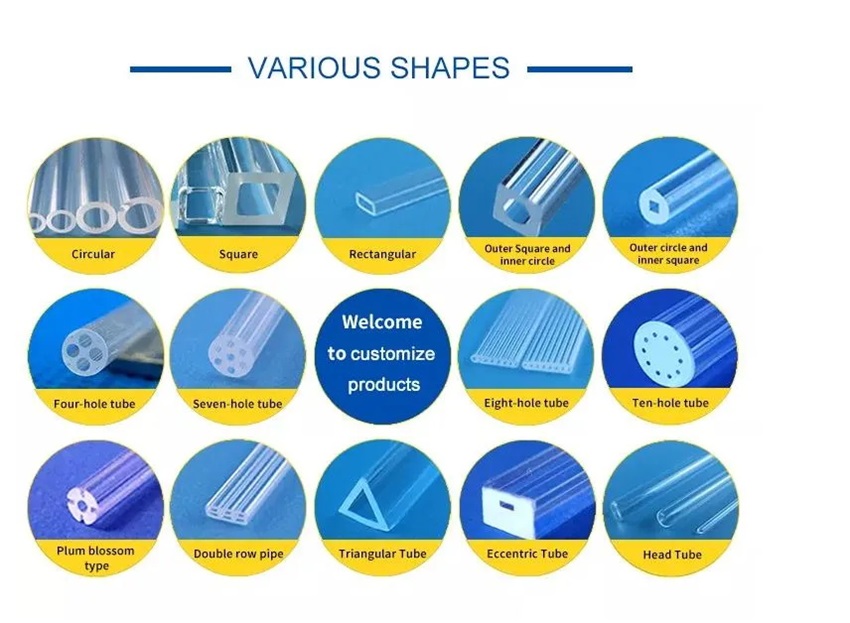
Quartz tubes can be supplied as straight-cut tubes, or with various end configurations including flared ends, closed ends, flanged ends, or custom-machined ends. If your design requires any end modification, provide detailed drawings — even small features like chamfers, grooves, or notches require precision machining.

Custom Quartz Tube Specifications: What You Need to Provide
When ordering custom quartz tubes — especially for non-standard or one-off applications — providing complete specifications upfront dramatically reduces lead time and eliminates costly misunderstandings. Here is what a reliable manufacturer will need from you:
Material specification: State the required SiO₂ purity grade and any restrictions on metallic impurities (Fe, Al, Na, K, Li, etc.) or OH content. If you are unsure, describe your operating environment and maximum temperature, and a qualified supplier should recommend the appropriate grade.
Dimensional requirements: Provide outer diameter, inner diameter (or wall thickness), overall length, and dimensional tolerances for each. Include units (millimeters or inches) explicitly.
End configuration: Specify whether you need open ends, closed ends, flared ends, flanged ends, or machined features. Provide a drawing if any end modification is required.
Surface finish: Indicate whether fire-polished, ground, or optically polished surfaces are needed.
Quantity: State your required quantity. A manufacturer experienced in both prototype and production runs should be able to accommodate anything from a single piece to thousands of units.
Application context: Briefly describing how the tube will be used — temperature range, atmosphere, pressure, chemical exposure — allows the manufacturer to flag potential issues before production begins.
If you have an existing sample rather than a drawing, a capable manufacturer can reverse-engineer the specifications through precise measurement and material analysis.
Common Challenges in Quartz Tube Procurement — and How to Solve Them
Based on decades of industry experience, these are the problems that quartz tube buyers encounter most frequently:
"I can't find the size I need." Standard catalog sizes cover common diameters and lengths, but many industrial applications require non-standard dimensions. The solution is to work with a manufacturer that offers full custom machining capability — not just a distributor limited to stock items.
"The quality is inconsistent between orders." This typically indicates that the supplier is sourcing from multiple factories with different process controls. Working with a single-source manufacturer that controls the entire production chain — from raw material selection through final inspection — provides the consistency that multi-vendor sourcing cannot.
"My order is too small." Many large manufacturers impose minimum order quantities that make prototype development or small-batch production prohibitively expensive. A manufacturer offering low-MOQ or no-MOQ custom production removes this barrier entirely.
"The delivery time is too long." Lead times vary enormously depending on the manufacturer's capacity, raw material inventory, and production scheduling. Manufacturers that maintain stock of common raw material forms (quartz rods, blocks, and standard tubes) can machine custom orders significantly faster than those that produce everything from scratch.
"The tubes crack during thermal cycling." This usually points to one of three issues: incorrect material grade for the application, inadequate annealing during manufacturing, or wall thickness that is too great for the thermal shock profile. A knowledgeable manufacturer will review your thermal cycling parameters and recommend the optimal combination of grade, geometry, and annealing protocol.
Frequently Asked Questions (FAQ)
What is the maximum temperature a quartz tube can withstand?
High-quality fused quartz tubes can operate continuously at 1,100°C and withstand short-term exposure up to approximately 1,200°C. The exact limit depends on the specific grade, wall thickness, and thermal cycling conditions.
Can quartz tubes be used in vacuum environments?
Yes. Quartz tubes are widely used in vacuum furnace applications, vacuum deposition systems, and vacuum-sealed lamp envelopes. Their low outgassing characteristics make them well-suited for high-vacuum service.
What is the difference between fused quartz and fused silica?
In industrial practice, the terms are often used interchangeably. Technically, "fused silica" refers to material made from high-purity synthetic precursors, while "fused quartz" is made from naturally occurring quartz crystal. Both offer similar thermal and optical properties, but synthetic fused silica typically achieves higher purity levels.
Can quartz tubes transmit UV light?
Yes — this is one of quartz's most valuable properties. Standard fused quartz transmits UV radiation down to approximately 180–200 nm, making it the standard envelope material for UV sterilization lamps and excimer light sources.
Are quartz tubes resistant to hydrofluoric acid?
No. Hydrofluoric acid (HF) is one of the few chemicals that attacks quartz. If your process involves HF, quartz is not a suitable material choice. Quartz is resistant to most other acids, including hydrochloric, sulfuric, and nitric acids.
What tolerances can be achieved on custom quartz tubes?
Tolerances depend on the manufacturing method and tube dimensions. Drawn tubes typically hold ±0.1 mm on diameter for smaller sizes, while machined tubes can achieve ±0.05 mm or tighter on critical dimensions. Always discuss your specific tolerance requirements with the manufacturer.
Can I order just one or two custom quartz tubes?
Yes. Manufacturers that specialize in custom quartz products typically accommodate single-piece prototype orders. There is no need to commit to large production runs during the development phase.
How long does it take to manufacture a custom quartz tube?
Lead times vary based on complexity, dimensions, and quantity. Simple cut-to-length tubes may ship within days, while complex machined components with tight tolerances may require two to four weeks. Always confirm lead times before placing an order.
What is the typical purity of industrial quartz tubes?
Standard industrial-grade quartz tubes are manufactured from material with 99.9%+ SiO₂ purity. Semiconductor and optical applications typically require 99.99%+ purity with controlled impurity levels.
Can quartz tubes be sealed or welded to other quartz components?
Yes. Quartz can be torch-sealed, flange-sealed, or bonded to other quartz components using high-temperature glassworking techniques. This is commonly done to create closed-end tubes, custom vessels, or integrated assemblies.
Do quartz tubes need to be annealed?
Yes, if they have been subjected to significant thermal or mechanical stress during manufacturing or machining. Proper annealing relieves internal stresses and prevents spontaneous cracking during service. Reputable manufacturers include annealing as a standard production step.
Can quartz tubes be metalized or coated?
Yes. Quartz surfaces can be metalized for electrical applications or coated with anti-reflective layers for optical use. These processes require specialized surface preparation and should be specified at the ordering stage.
What causes quartz tubes to devitrify (turn cloudy)?
Devitrification occurs when quartz is held at high temperatures (typically above 1,200°C) for extended periods, causing the amorphous structure to partially crystallize. This reduces transparency and thermal shock resistance. Operating within recommended temperature limits prevents this issue.
How should quartz tubes be handled and cleaned?
Quartz should be handled with clean gloves to avoid contaminating the surface with skin oils. Cleaning is typically done with high-purity solvents (acetone, methanol, or isopropanol) followed by deionized water rinsing. Avoid abrasive cleaning methods that could scratch the surface.
Can you manufacture quartz tubes to replace parts from a different supplier?
Yes. If you provide a sample of the existing part or a detailed drawing with all critical dimensions and material specifications, a custom quartz manufacturer can produce a direct replacement. Material analysis of the original sample can also be performed to match the exact grade.
Why Choose Us as Your Quartz Tube Manufacturer
If you are reading this, you likely have a specific quartz tube requirement that standard suppliers have not been able to fulfill. Here is why manufacturers, engineers, and procurement teams across the semiconductor, optical, furnace, chemical, and laboratory sectors choose to work with us:
Full custom manufacturing capability. We produce quartz tubes to your exact specifications — any diameter, any length, any wall thickness, any end configuration. Send us a drawing, send us a sample, or describe your application, and we will engineer a solution.
OEM and ODM support. Whether you need tubes branded for your company, integrated into a larger assembly, or manufactured to your proprietary design, our OEM/ODM services cover the entire process from material selection through final delivery.
No minimum order quantity barrier. We understand that development projects, research applications, and small production runs require flexibility. We accept orders from a single piece upward, with the same quality standards applied regardless of quantity.
High-purity material sourcing. We maintain strict control over our raw material supply chain, offering semiconductor-grade, optical-grade, and industrial-grade quartz to match your application's purity requirements.
Precision machining and quality control. Every tube undergoes dimensional inspection, visual inspection, and — where applicable — material certification before shipment. Our machining capabilities include cutting, drilling, grinding, polishing, flanging, sealing, and fire-polishing.
Fast turnaround on custom orders. By maintaining inventory of common raw material forms and operating streamlined production scheduling, we deliver custom quartz tubes faster than manufacturers who start from raw crystal every time.
Global export experience. We ship to customers worldwide, with full export documentation, appropriate packaging for fragile glass products, and logistics coordination to ensure safe delivery regardless of destination.
Ready to Source Your Quartz Tubes?
If you need quartz tubes in standard or custom dimensions — whether for a single prototype or a production run of thousands — contact us with your specifications. We will provide a technical review, material recommendation, competitive quotation, and confirmed lead time.
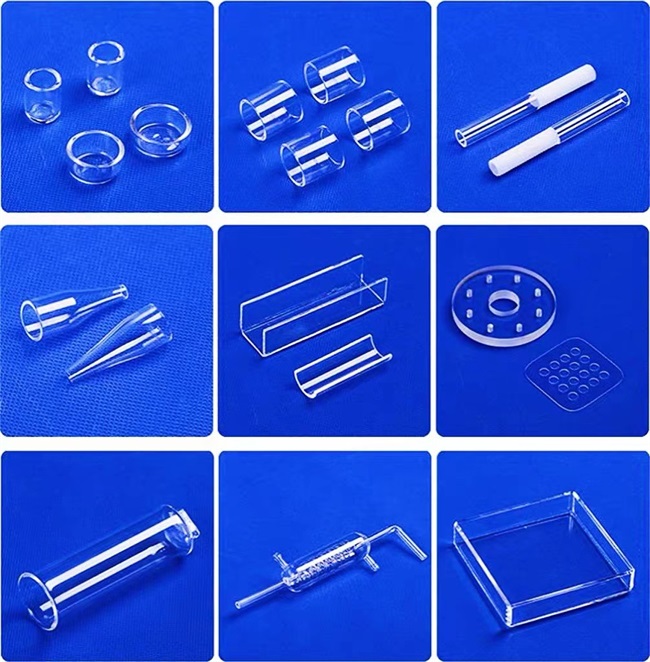
Our product range extends well beyond tubes. We also manufacture quartz plates, rods, crucibles, flanges, rings, windows, discs, boats, and fully custom quartz components — all from high-purity fused quartz, all with the same commitment to precision and reliability.
Luverre Quartz manufactures and sells a wide range of high quality quartz glass, including quartz tubes, quartz plates, quartz rods, quartz windows, quartz crucibles, quartz boats, quartz flanges, quartz beakers, quartz glass instruments, and more. We can meet all kinds of customized requirements for quartz glass products.
