T: +86-518-85528012
E: nick@luverrequartz.com
E: nick@luverrequartz.com
1st floor Runlian industrial center No. 116 QuFeng Rd., Haizhou Economic and technological development zone Lianyungang City, Jiangsu Province, China 222062
Views: 0 Author: Site Editor Publish Time: 2026-11-02 Origin: Site


Quartz glass withstands continuous operating temperatures of 1100°C to 1200°C, with short-term exposure possible up to 1400°C depending on grade and geometry. The absolute softening point is far higher—typically quoted between 1500°C and 1670°C—but no responsible supplier recommends operating near that threshold for production processes. For semiconductor diffusion furnaces running at 1200°C or above, the limiting factor is not melting but devitrification (crystallization) and sag deformation, both of which accelerate with time, temperature, and surface contamination.
If you are sourcing quartz components for a high-temperature process and the datasheet only says “high temperature resistant,” you do not have enough information to qualify that supplier. This guide gives you the engineering numbers and procurement questions you actually need.
What Does “High Temperature” Actually Mean for Quartz Glass?
Quartz glass does not have a sharp melting point like a metal. It softens gradually over a temperature range, which means the practical limit depends entirely on how long you expose it, what load it carries, and how pure the material is.
The three thresholds that matter in procurement discussions are:
Continuous working temperature: 1100–1200°C. This is the range where fused quartz can operate for extended periods without unacceptable deformation. For long-term stability—think furnace tubes running weeks at a time—many engineers cap the setpoint at 1100°C to preserve tube life.
Short-term maximum: 1400–1450°C. Brief excursions (minutes to a few hours) are tolerable in many applications, but the margin narrows quickly if the part is under mechanical load or has thin walls.
Softening point: ~1500–1670°C. At this range, quartz deforms under its own weight. This is a material property reference, not a design target.
For borosilicate glass (Pyrex, Duran) used in lower-temperature labware, the continuous limit is roughly 230°C, with short-term use to 400°C. Quartz is not a marginal upgrade—it operates in a different temperature class entirely.
Why the “Melting Point” Question Misleads Buyers
When a purchasing manager asks “what temperature does quartz melt at,” the honest answer is 1660°C to 1710°C, but that number has almost no practical value. Quartz tubes in a diffusion furnace at 1300°C will not melt, but they may sag, warp, or devitrify to the point of failure long before reaching the melt point.
Two failure modes dominate real-world high-temperature quartz performance:
Devitrification is the conversion of amorphous fused quartz into crystalline cristobalite. It begins at free surfaces, often triggered by alkali contamination (sodium from fingerprints, potassium from handling, or impurities in the furnace environment). Once cristobalite forms, it can spall and shed particles—catastrophic in semiconductor or optical applications. The rate increases with temperature, OH content, and surface contamination.
Sag is viscous deformation under gravity. A horizontal quartz tube in a furnace will gradually bow. Sag rate depends on wall thickness, diameter, temperature, and hydroxyl (OH) content. Doubling wall thickness reduces sag rate by roughly a factor of three, which is why custom heavy-wall tubing is often specified for critical furnace applications.
This is why a custom quartz fabricator who understands your furnace geometry and support spacing is more valuable than one who simply quotes a temperature rating.
How Purity and OH Content Change the Temperature Equation
Not all quartz is equal at high temperature. The two material variables that most directly affect thermal performance are metallic impurity levels and hydroxyl (OH) content.
High-purity fused quartz for semiconductor and lab applications typically targets 99.99%+ SiO₂, with trace metals in the low ppm range. Alkali elements (Na, K, Li) are particularly damaging because they lower the devitrification onset temperature and promote surface crystallization. If your application involves repeated thermal cycling or direct wafer contact, specifying low-alkali quartz is not optional.
OH content affects viscosity and sag resistance. Lower OH quartz has higher viscosity at a given temperature, meaning it resists deformation better. Synthetic fused silica can achieve OH levels below 10 ppm, while some natural quartz grades run 100–350 ppm or higher. For horizontal tubes, large flanges, or any part carrying load at temperature, low-OH material is the safer specification—but it costs more and may extend lead time. A supplier who can explain the trade-off and offer both options is a supplier worth keeping.
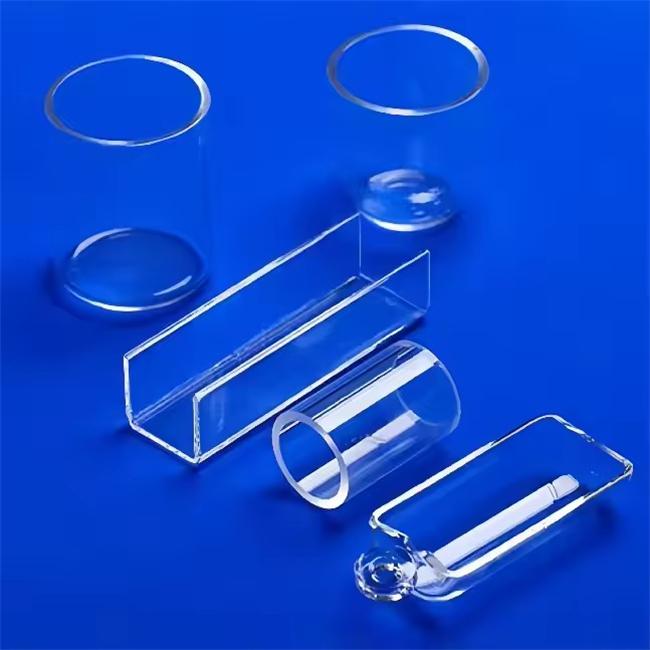
Which Quartz Product Handles Which Temperature?
The same base material behaves differently depending on geometry and application. Here is how the major product categories map to real operating conditions:
Quartz tubes for diffusion furnaces and CVD systems typically run at 1100–1200°C continuous. Above 1200°C, tube life shortens dramatically, and wall thickness becomes critical. Semiconductor diffusion processes often operate in the 800–1200°C range depending on the step.
Quartz crucibles for silicon crystal pulling see some of the most demanding conditions in the industry. Inner surfaces contact molten silicon at 1400°C+, while the crucible must maintain structural integrity under vacuum or inert atmosphere. High-purity, low-OH synthetic crucibles are preferred for dislocation-free crystal growth.
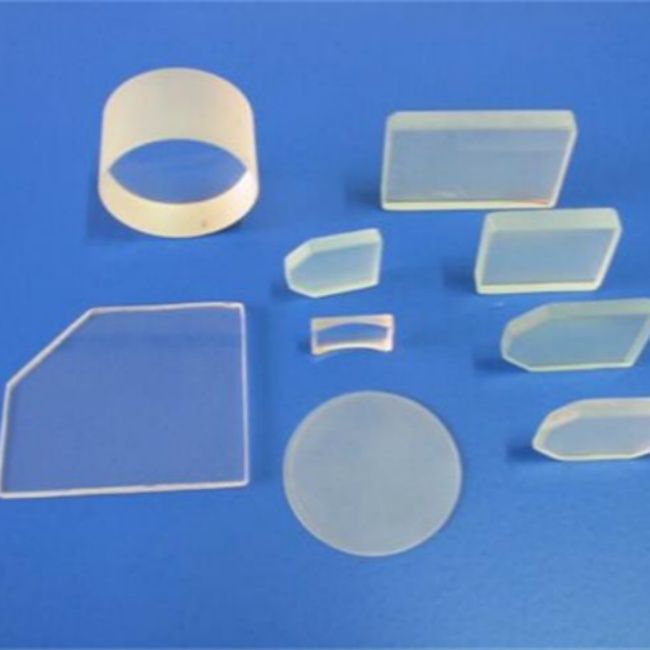
Quartz plates and discs used as furnace liners or thermal shields typically operate at 1000–1200°C. Because they are often stacked or supported at edges, sag resistance matters as much as absolute temperature rating.
Quartz windows for optical or laser applications may see lower bulk temperatures but must maintain optical clarity. Thermal expansion matching and OH content affect refractive index homogeneity, particularly in deep-UV lithography optics.
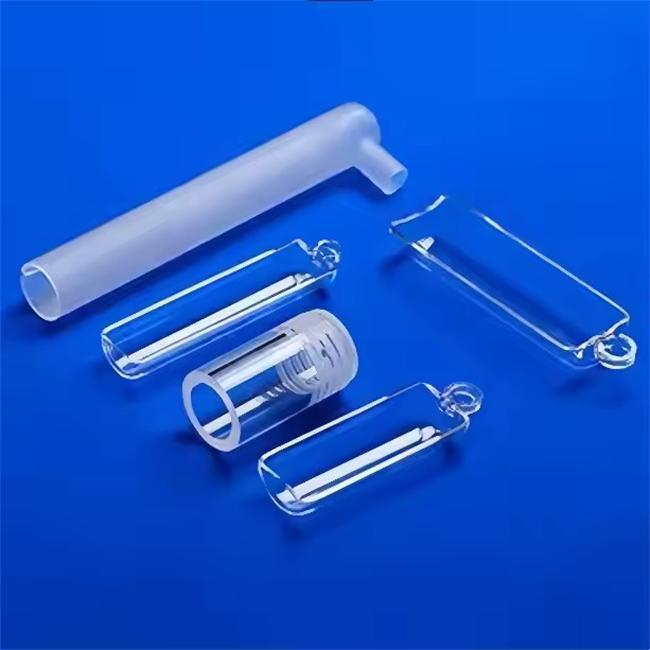
Quartz flanges and rings are often the weak point in a high-temperature assembly. The joint between a flange and tube, or the sealing surface itself, can become a stress concentrator during thermal cycling. Custom machining to match your mating hardware—rather than forcing a standard flange onto a non-standard tube—prevents leaks and premature failures.
Quartz boats for wafer handling must resist sag at process temperature while maintaining precise slot dimensions. A boat that sags 0.5 mm can cause wafer handling errors in an automated fab.
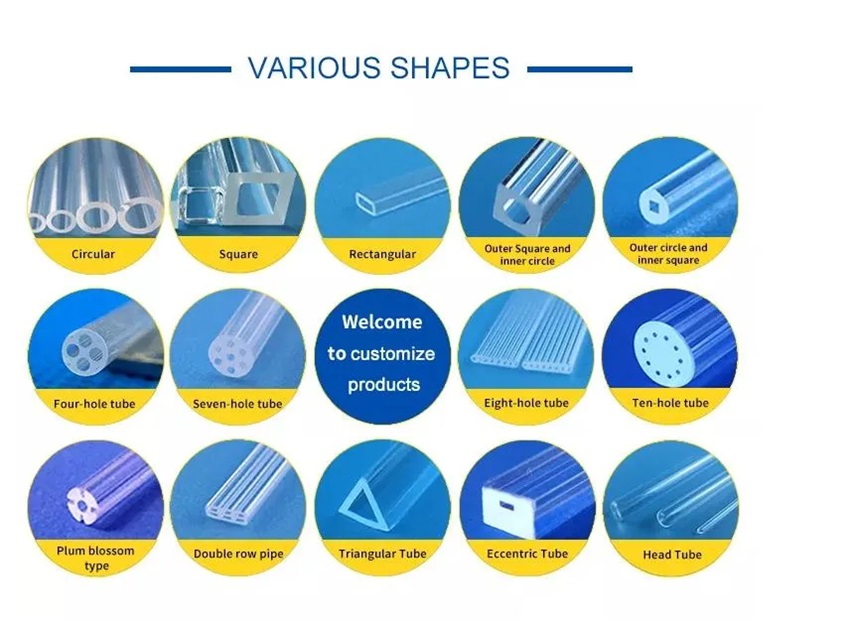
How to Specify Quartz for High-Temperature Service: A Procurement Checklist
When you request a quote for high-temperature quartz, the supplier cannot give you an accurate recommendation—or a competitive price—without the following information. Providing it upfront shortens the quote cycle and reduces the risk of a part that fails in service.
Operating temperature profile. State the continuous temperature, the maximum short-term excursion, and the duration of that excursion. “Up to 1200°C” means something different for a 30-minute cycle versus a 500-hour furnace run.
Atmosphere. Vacuum, inert gas, oxidizing, or reducing? Quartz behaves differently in each. Hydrogen atmospheres, for example, can affect devitrification kinetics. Alkali vapors from adjacent materials are a hidden risk.
Mechanical loading. Is the part self-supporting? What is the span between supports? Will it carry wafer boats or other fixtures? A horizontal tube with a 1-meter unsupported span needs a very different wall thickness than a vertical tube.
Thermal cycling frequency. Repeated heating and cooling through the cristobalite inversion range (~270°C) can cause spalling if devitrification has already occurred. If your process cycles daily, specify low-alkali, low-OH material and plan for periodic inspection.
Purity requirements. What contamination level is acceptable for your process? Semiconductor front-end processes typically require ppb-level metallic contamination control, which demands certified low-extractable quartz. General industrial furnace use may tolerate higher impurity levels at lower cost.
Interface dimensions. Flange bolt patterns, O-ring grooves, tube end finishes, and wafer slot tolerances all matter. A supplier who offers machining to your drawing rather than forcing a catalog part into your design solves the most common cause of installation delays.
Quantity and lead time. This is where small-batch flexibility separates good suppliers from order-takers. If you need five custom flanges for a pilot line, a factory that requires a 500-piece MOQ is not solving your problem. Low-MOQ or no-MOQ custom fabrication is a legitimate selection criterion for R&D and specialty equipment builders.
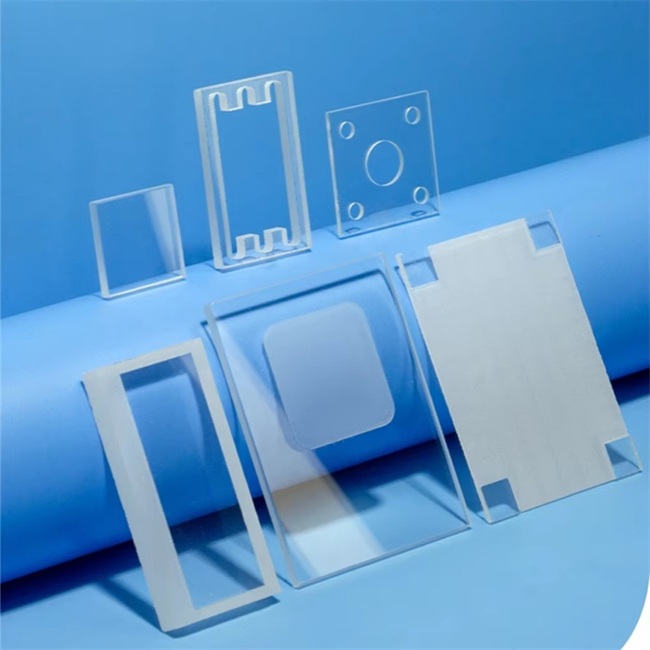
Common Procurement Problems and How Custom Quartz Manufacturing Solves Them
“We can‘t find the size we need.” Standard quartz tube inventories cover common OD/ID combinations, but furnace retrofits and legacy equipment often require non-standard dimensions. A fabricator with in-house drawing and machining capability can produce tubes, flanges, and rings to your exact print rather than asking you to redesign around a catalog.
“The last supplier’s quality was inconsistent.” Quartz failures often trace to invisible variables: OH content variation, surface contamination, or inadequate annealing after machining. A supplier with documented material certification and stable process control is worth a premium over the lowest quote. Ask for batch-specific COAs (certificates of analysis) for critical parts.
“Our lead time is six weeks and we need it in two.” Custom quartz is not a commodity off the shelf. But a vertically integrated manufacturer that controls cutting, grinding, polishing, and inspection in-house can compress schedules that would otherwise queue behind larger orders at a trading company.
“We need 20 pieces, not 2,000.” Many overseas buyers in R&D, pilot production, or specialty equipment face this exact problem. Low-MOQ custom manufacturing bridges the gap between prototype shops that cannot scale and mass producers that will not interrupt a production line for a small order.
“The part failed at temperature and the supplier blamed our process.” This is where application engineering matters. A quartz supplier who asks about your furnace atmosphere, support geometry, and thermal cycle before quoting is more likely to deliver a part that survives. If the conversation starts and ends with “what OD and wall thickness,” keep looking.
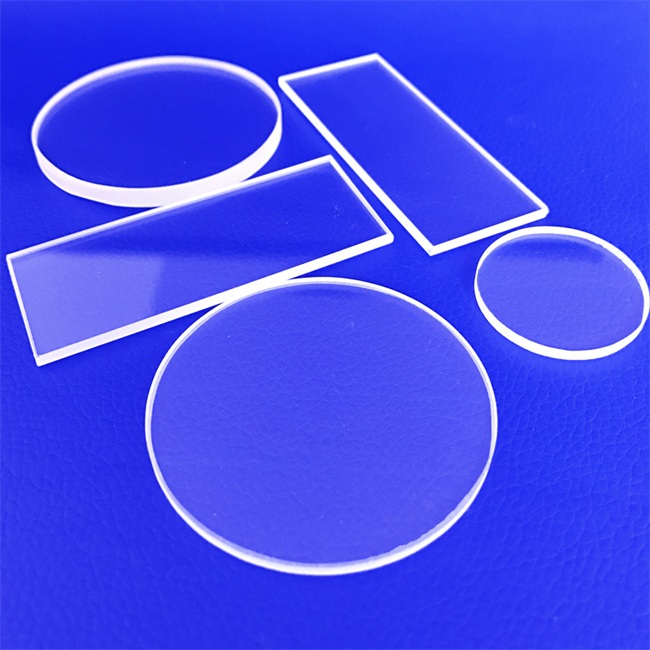
FAQ: High-Temperature Quartz Procurement Questions
What is the maximum continuous temperature for quartz glass?
1100–1200°C for most fused quartz grades. For long-term service (weeks of continuous operation), 1100°C is the safer ceiling. Short-term excursions to 1400°C are possible in many geometries.
At what temperature does quartz soften?
The softening point is typically reported between 1500°C and 1670°C, depending on measurement method and material grade. This is not a working limit—deformation can occur at lower temperatures under load.
Does quartz melt at 1700°C?
The melting range is approximately 1660–1710°C, but quartz will sag and devitrify well before reaching this temperature. No production process should approach the melt point.
What is the difference between quartz and borosilicate glass for high temperature?
Borosilicate glass (Pyrex/Duran) is limited to roughly 230°C continuous and 400°C short-term. Quartz operates at 1100–1200°C continuous. They are not interchangeable in high-temperature applications.
What causes quartz to devitrify?
Surface contamination (especially alkali metals like sodium and potassium), high OH content, and prolonged exposure above 1000–1100°C. Devitrification leads to particle shedding and mechanical weakening.
Can quartz tubes be used in a vacuum furnace?
Yes, but the temperature limit may be lower than in inert gas because vacuum reduces heat transfer and can increase thermal gradients. Consult your supplier with the specific vacuum level and temperature profile.
How does OH content affect high-temperature performance?
Lower OH content increases viscosity and reduces sag rate. For horizontal tubes and load-bearing parts at high temperature, specify low-OH quartz. Synthetic grades can achieve <10 ppm OH.
Can you machine custom quartz flanges to match my existing hardware?
Yes. A custom fabricator can produce flanges, rings, and adapters to your drawing or sample, including bolt patterns, O-ring grooves, and sealing surfaces.
What is the minimum order quantity for custom quartz parts?
This varies by supplier. Some factories require large MOQs; others support low-MOQ or prototype quantities. If you are sourcing for R&D or a pilot line, confirm MOQ before requesting a quote.
How do I clean quartz before high-temperature use?
Handle with clean gloves to avoid alkali contamination. For critical applications, clean with high-purity alcohol or a dilute HF etch followed by DI water rinse and drying. Fingerprints are a real source of devitrification nucleation.
Does quartz sag at 1200°C?
Yes, over time. Sag rate depends on temperature, wall thickness, support span, and OH content. A horizontal tube at 1200°C with insufficient wall thickness or support spacing will deform. Specify heavy-wall tubing and intermediate supports for critical applications.
What is the thermal shock resistance of quartz?
Excellent. Thin sections can be heated above 1500°C and quenched in water without cracking. However, actual thermal shock performance depends on geometry, wall thickness, and residual stress from machining.
Can you produce quartz parts from my sample?
Yes. Reverse-engineering from a physical sample is a standard service for custom quartz fabricators. Provide the sample with critical dimensions marked, and the fabricator can produce a drawing for your approval before machining.
What certifications should I request for semiconductor-grade quartz?
Request a certificate of analysis for metallic impurities (Na, K, Fe, Al, etc.), OH content, and dimensional inspection. For fab use, ask whether the material meets your specific SEMI or internal cleanliness specifications.
How do I get a quote for custom high-temperature quartz parts?
Send a drawing (PDF, STEP, or DWG) with operating temperature, atmosphere, quantity, and any purity requirements. A responsive supplier will confirm feasibility and lead time within 24–48 hours for standard geometries.

Why Choose Us for High-Temperature Quartz Components
We are not a trading company forwarding your inquiry to an unknown factory. We are a source manufacturer with in-house capabilities for cutting, grinding, polishing, drilling, and thermal forming of fused quartz.
What that means for your procurement:
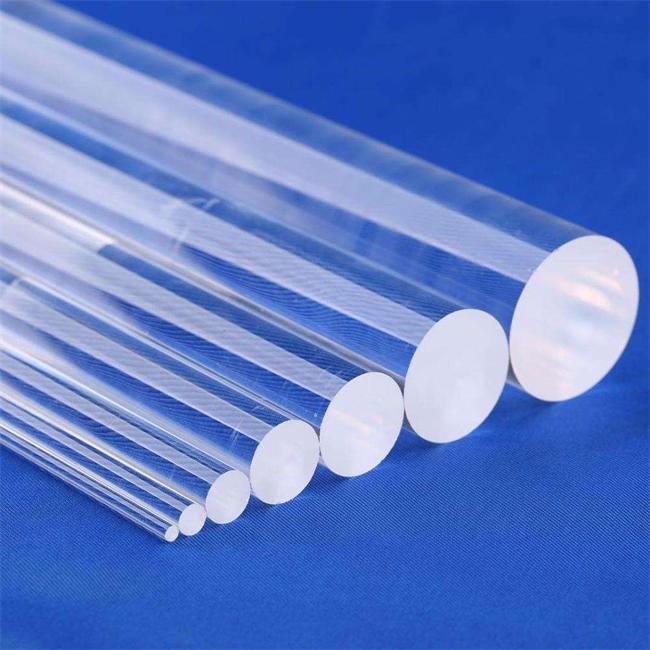
Custom dimensions without the catalog constraint. Send a drawing or a sample. We machine quartz tubes, plates, rods, flanges, rings, discs, windows, boats, and crucibles to your print—including non-standard OD/ID combinations, flange patterns, and slot geometries that catalog suppliers cannot support.
Low-MOQ production for R&D and specialty equipment. We understand that a pilot line does not need 1,000 pieces. We support small-batch and prototype orders alongside production volumes, so you can qualify a design before committing to tooling.
High-purity material options with documentation. We source and machine fused quartz grades appropriate for semiconductor, optical, and laboratory use. Batch-specific material certificates are available for critical applications.
Application-aware quoting. When you send an RFQ, we ask about temperature, atmosphere, and loading conditions. If your design has a feature that will fail at operating temperature—insufficient wall thickness, unsupported span, or a sharp corner that concentrates thermal stress—we tell you before we cut material.
Export experience that shortens the learning curve. We ship globally and understand the documentation, packaging, and logistics requirements for quartz components that cannot tolerate contamination or rough handling. International buyers do not need to explain what a proforma invoice or a packing list should contain.
Fast turnaround on the parts that hold up your project. Standard fabrication of custom quartz parts can move from approved drawing to shipment in a timeframe measured in days to a few weeks, not months, depending on complexity and material availability.
If you are currently sourcing a quartz component for a high-temperature process and the only specification you have is “quartz, high temp,” send us the drawing and tell us what the part actually needs to do. We will quote the part and flag any design or material risks before you order.

Quartz glass withstands continuous temperatures of 1100–1200°C, with short-term excursions possible to ~1400°C. The absolute softening point is 1500–1670°C, but practical limits are determined by devitrification and sag rather than melting. Low-OH, high-purity quartz resists deformation better at temperature. Custom quartz fabricators solve procurement problems by machining non-standard dimensions, accepting low MOQs, and advising on application-specific risks such as support spacing, atmosphere compatibility, and surface contamination control.
Luverre Quartz manufactures and sells a wide range of high quality quartz glass, including quartz tubes, quartz plates, quartz rods, quartz windows, quartz crucibles, quartz boats, quartz flanges, quartz beakers, quartz glass instruments, and more. We can meet all kinds of customized requirements for quartz glass products.
