T: +86-518-85528012
E: nick@luverrequartz.com
E: nick@luverrequartz.com
1st floor Runlian industrial center No. 116 QuFeng Rd., Haizhou Economic and technological development zone Lianyungang City, Jiangsu Province, China 222062
Views: 0 Author: Site Editor Publish Time: 2026-04-10 Origin: Site


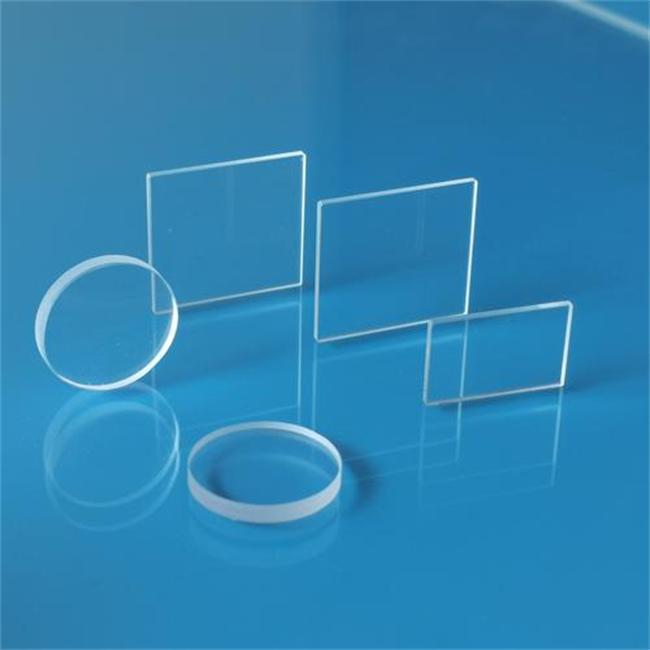
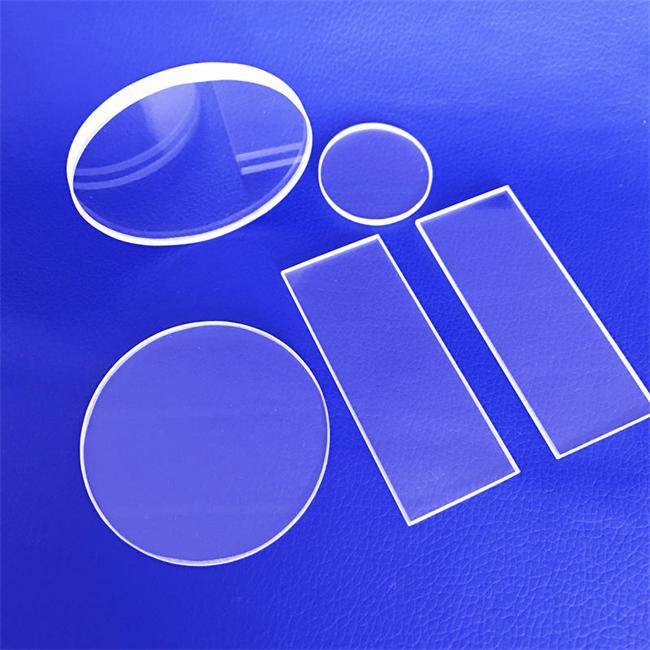
JGS quartz glass for medical imaging equipment (i.e. UV grade fused silica glass) is a special optical material with very high transmittance in the ultraviolet to near-infrared bands, excellent radiation resistance and very low spontaneous fluorescence. It is widely used in high-end medical diagnostic instruments, such as CT detectors, fluorescence microscopes, confocal endoscopes, flow cytometers, and optical path windows, lenses, and fiber coupling components of laser therapy equipment. Compared to ordinary optical glass or K9 glass, JGS quartz glass has no absorption peak in the deep ultraviolet (185nm) to near-infrared (2500nm) range, and is not easily discolored after exposure to high-energy radiation, ensuring the accuracy and stability of long-term output of medical imaging systems.
Frequently Asked Questions (FAQ)
Q1: What is the difference between JGS quartz glass and ordinary quartz glass (such as JGS1, JGS2, JGS3)? Which is more suitable for medical imaging?
A: JGS series is classified according to UV transmittance: JGS1 (far UV grade) penetrates 185-2500nm without bubbles or stripes, making it the most suitable for deep UV fluorescence detection; JGS2 (UV grade) transmits through 220-2500nm, allowing for small bubbles, suitable for general optical systems; JGS3 (infrared grade) transmits through 260-3500nm, with a focus on infrared applications. For medical imaging, especially for devices that require detecting weak fluorescence signals or using ultraviolet excitation light sources, JGS1 is the best choice because its background fluorescence is extremely low (<0.1%) and does not interfere with signal acquisition.
Q2: Can your company provide the irregular quartz glass parts required by medical equipment manufacturers?
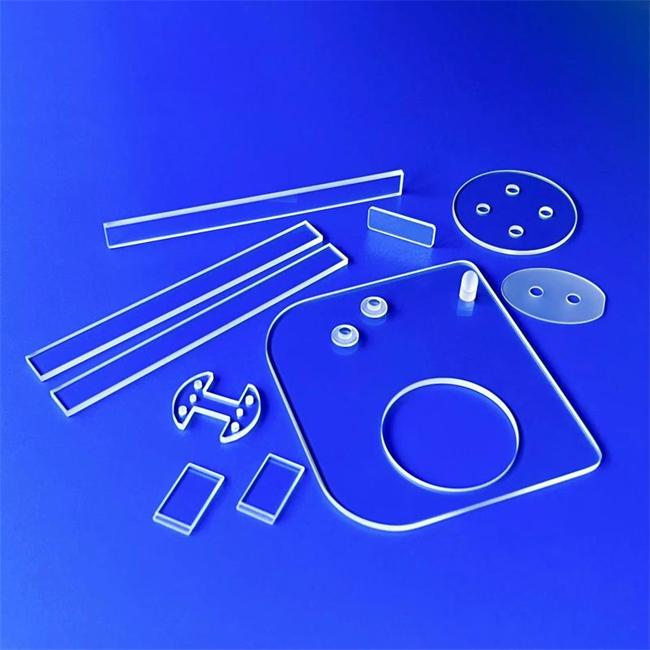
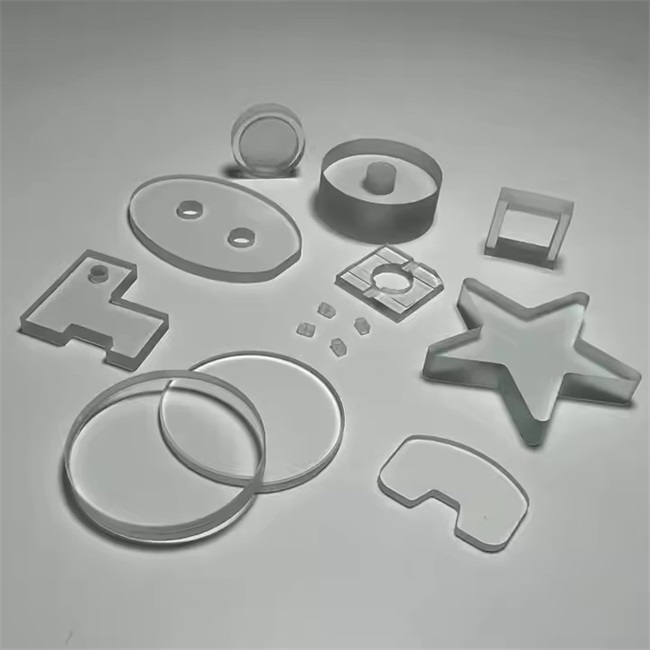
A: Absolutely possible. We provide complex shaped components ranging from flat windows, spherical/non spherical lenses, prisms, microfluidic chips to those with steps, through holes, and sealing grooves. Size range: thickness 0.3mm-50mm, diameter or side length 3mm-300mm. Support customized drawings, with a tolerance of up to ± 0.01mm.
Q3: Medical imaging equipment often involves X-ray, gamma ray, or electron beam irradiation. Will JGS quartz glass turn black or have a decrease in transmittance?
A: Ordinary glass or low purity quartz will produce color centers (color center absorption bands) under irradiation, resulting in a decrease in transmittance. JGS quartz glass uses high-purity synthetic raw materials (SiCl ₄ hydrolysis or plasma melting), with a total metal impurity content of<5ppm, controllable hydroxyl content, and excellent radiation resistance. After irradiation with a dose of 10 ⁵ Gy of gamma rays, the transmittance decreased by less than 2% in the range of 400-2000nm, fully meeting the long-term stability requirements of medical CT and radiotherapy verification systems.
Q4: What is the biocompatibility of JGS quartz glass? Will it react with bodily fluids or disinfectants?
A: JGS quartz glass has extremely high chemical inertness and is insoluble in any body fluids, alcohol, hydrogen peroxide, ethylene oxide, and plasma disinfection environments. Its surface has no pores, does not adsorb proteins and cells, and can be repeatedly sterilized under high temperature and high pressure (121 ℃, 30 minutes) without deformation or hydrolysis.
What core needs can the product meet for medical imaging customers?
-Weak signal and high noise: JGS quartz has extremely low spontaneous fluorescence and high ultraviolet transmittance, which improves the signal-to-noise ratio and allows for clear visualization of weak lesion signals.
-Darkening after irradiation: The anti irradiation formula ensures that the CT tube or radiation environment maintains long-term light path transparency.
-Complex optical path integration is difficult: providing one-stop customization for drilling, steps, threads, coating, etc., simplifying assembly.
-After sterilization, it becomes ineffective: it can withstand repeated high temperature, high pressure, and chemical disinfection, extending the service life of the equipment.
Material definition and grade selection
JGS1: 185-2500nm, No absorption peak, deep ultraviolet fluorescence, photolithography, high-energy laser - fluorescence microscope, flow cytometer, confocal endoscope
JGS2: 220-2500nm, Allow for trace bubbles, UV visible optical window - ordinary optical coherence tomography (OCT), skin imaging
JGS3: 260-3500nm, Near infrared imaging, thermal imaging - infrared thermal imaging diagnostic equipment
Recommendation: JGS1 is the preferred choice for medical imaging, as it has a transmittance of ≥ 90% in the deep ultraviolet region (250-400nm) and no interference from bubble fringes on imaging resolution.
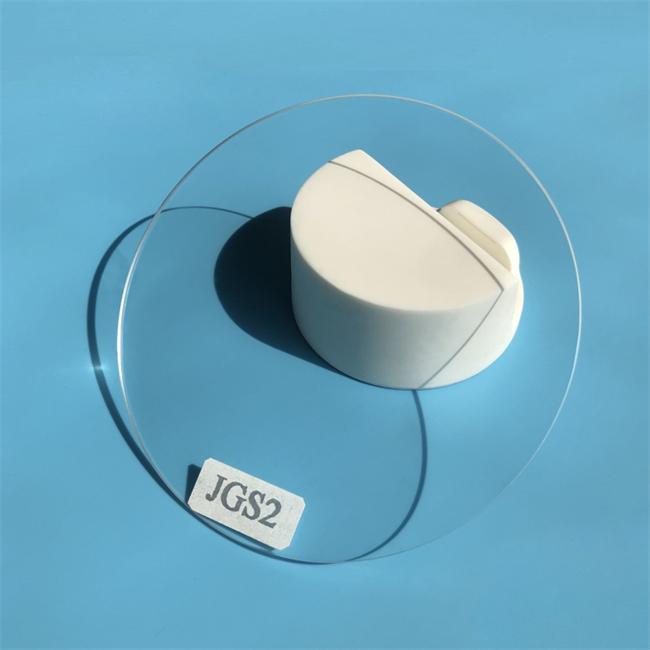
Key performance parameters
-Transmittance: JGS1 is>85% at 200nm and>92% in the range of 350-2000nm.
-Refractive index: n_d=1.4585 (Abbe number 67.8), low dispersion, and small chromatic aberration.
-Thermal expansion coefficient: 0.55 × 10 ⁻⁶/K (20-300 ℃), strong thermal shock resistance, able to withstand rapid temperature rise and fall.
-Internal quality: Stress birefringence ≤ 5nm/cm, A-level stripe degree, Class 0 bubble degree (no visible bubbles to the naked eye).
-Surface smoothness: Grinding can reach 20/10 (US military standard), polishing roughness Ra<0.5nm.
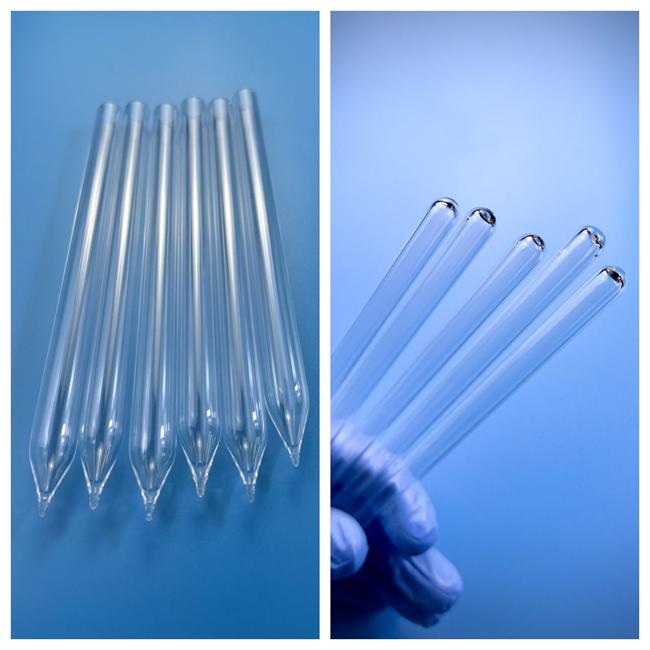
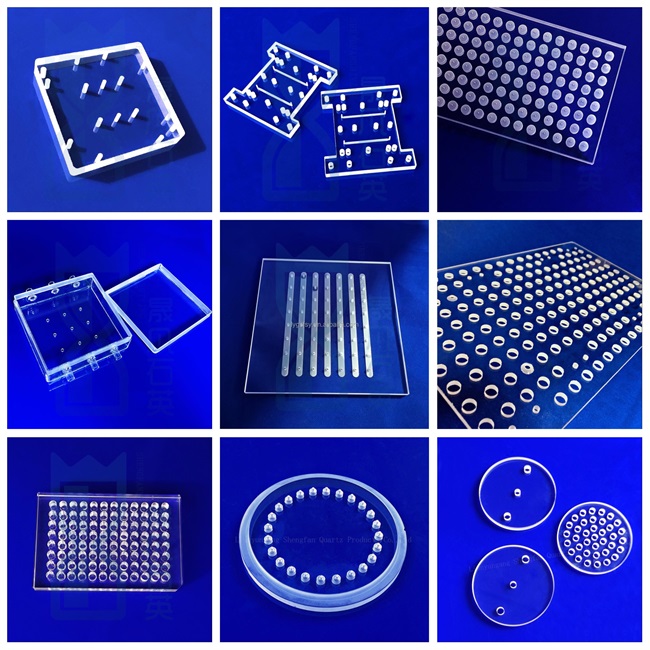
Customization capability (almost unlimited specifications and sizes)
Shape: circular, square, rectangular, trapezoidal, wedge-shaped, spherical crown, free-form surface
Dimensional accuracy: outer diameter ± 0.01mm, thickness ± 0.005mm, parallelism<10 "
Edge processing: chamfer, C-angle, rounded edge, frosted edge, step positioning
Drilling/slotting: through holes, blind holes, countersunk holes, V-grooves, microchannels (width ≥ 50 μ m)
Coating options: anti reflective film (AR, single point/broadband), spectral film, metal reflective film, hydrophobic film
What practical problems can the product solve in medical imaging equipment?
1. High background fluorescence detection: Ordinary optical glass will emit strong spontaneous fluorescence (>5%) under UV excitation, drowning out the target signal. JGS1 quartz spontaneous fluorescence is less than 0.1%, which increases the signal-to-noise ratio by an order of magnitude.
2. Long term drift of CT detector: The detector window is exposed to X-rays for a long time, and the low purity glass turns yellow, resulting in calibration failure. JGS quartz glass is resistant to radiation aging, ensuring stability for more than 5 years.
3. Fogging and scratching of endoscope window: Our JGS window can be coated with a hydrophobic anti fog layer and reinforced, with a hardness of 7 on the Mohs scale, and is wear-resistant and scrub resistant.
4. Severe chromatic aberration in multi wavelength simultaneous imaging: JGS quartz has low dispersion characteristics (Abbe number 67.8), which can simultaneously focus on the ultraviolet, visible, and near-infrared bands without the need for complex chromatic aberration correction lens groups.
Customer Application Case (Anonymous)
Case 1: A CT manufacturer - detector window upgrade
-Background: The customer's original CT detector used a certain brand of borosilicate glass window, which showed significant X-ray irradiation discoloration during the 3-year service life, resulting in image artifacts. Calibration is required at least 3 times a year.
-Requirement: We are looking for a window material that is radiation resistant, has high transmittance, and is compatible with existing packaging processes. The size is 87.3 × 12.5 × 1.0mm, with R-corners on all four corners, and requires sputtering of ITO conductive film (anti-static) on one side.
-Our solution: using JGS1 quartz with a thickness of 1.00 ± 0.01mm, double-sided polishing to a roughness of<0.5nm, coating with broadband AR film (400-1100nm, reflectivity<0.5%), and locally sputtering ITO film layer.
-Result: After 10 scans and 6 months of accelerated aging testing, the transmittance decreased by only 1.2% and the image signal-to-noise ratio increased by 18%.
Case 2: European high-end fluorescent endoscope enterprise - ultra-thin ultraviolet light guide rod
-BACKGROUND: Fluorescent endoscopy for early diagnosis of bladder cancer needs to introduce 280 nm ultraviolet light into the body and collect 370 nm autofluorescence signals. The original fused silica rod is 60mm long and 1.2mm in diameter. Its end face is required to be polished at 0 ° angle, and its side face needs to be sanded to prevent stray light.
-Difficulty: Multiple suppliers are unable to achieve both end face 0 ° optical polishing and side precision sanding processes simultaneously on such a slender quartz rod, and the yield rate is extremely low.
-Our solution: Customize JGS1 quartz rods, laser cut to precise lengths, use specialized fixtures to achieve end face perpendicularity<1 ', and use 4000 diamond grinding wheels for precision grinding and chemical polishing on the side to form a uniform scattering surface.
-Result: The transmission efficiency reached 82% (the original product was 67%), and the stray light was reduced to one-third of the original.
Case 3: A Flow Cytometer Startup Company - Microfluidic Quartz Chip Integrated Excitation Window
-Background: The company has developed a miniaturized flow cytometer that requires the integration of an excitation light path window (size 3 × 3mm, thickness 0.5mm) and a microfluidic channel (width 100 μ m, depth 50 μ m) on the same JGS quartz substrate, with no scratches or contamination in the excitation window area.
-Challenge: Ordinary processing methods are difficult to preserve a completely undamaged optical window area on microchannel chips, and the window is still prone to particle contamination after cleaning.
-Our solution is to use photolithography+wet etching process to fabricate microchannels, then perform local magnetorheological polishing (MRF) on the window area, and finally perform megasonic cleaning+vacuum sealed packaging in a Class 100 clean room.
-Result: The surface roughness of the window reached Ra<0.2nm, the excitation efficiency increased by 30%, and there was no pore blockage phenomenon.
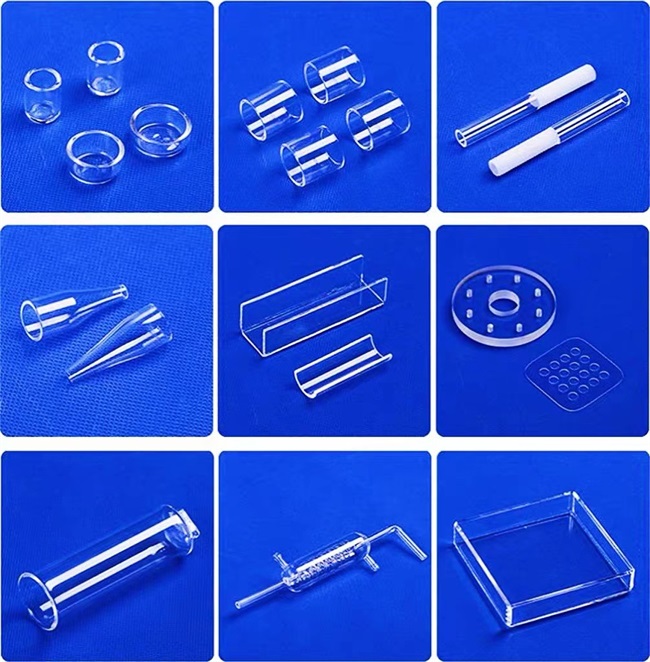
From single piece sampling to mass production of tens of thousands of units, from flat windows to irregular lenses - we provide the most reliable JGS quartz glass customization solutions for global medical equipment manufacturers.
Send your drawings or technical requirements immediately, and our optical engineers will provide material selection recommendations and detailed quotations within 12 hours.

Luverre Quartz manufactures and sells a wide range of high quality quartz glass, including quartz tubes, quartz plates, quartz rods, quartz windows, quartz crucibles, quartz boats, quartz flanges, quartz beakers, quartz glass instruments, and more. We can meet all kinds of customized requirements for quartz glass products.
