
T: +86-518-85528012
E: nick@luverrequartz.com
E: nick@luverrequartz.com
1st floor Runlian industrial center No. 116 QuFeng Rd., Haizhou Economic and technological development zone Lianyungang City, Jiangsu Province, China 222062
Views: 0 Author: Site Editor Publish Time: 2026-08-03 Origin: Site


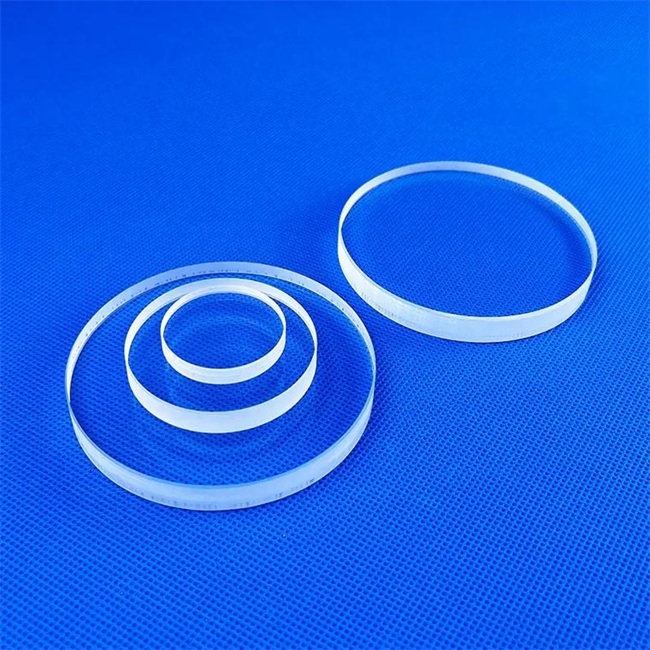
Optical instrument quartz plates are high-precision fused silica components engineered for demanding optical systems requiring exceptional UV-to-IR transmission, thermal stability, and chemical resistance. Sourced from a professional quartz plate supplier with over 20 years of manufacturing expertise, these precision optical quartz plates solve critical procurement challenges including non-standard sizing, high-temperature durability, tight tolerances, and small-batch requirements. This guide provides comprehensive insights for engineers, procurement managers, and OEM manufacturers seeking reliable custom quartz plate fabrication.
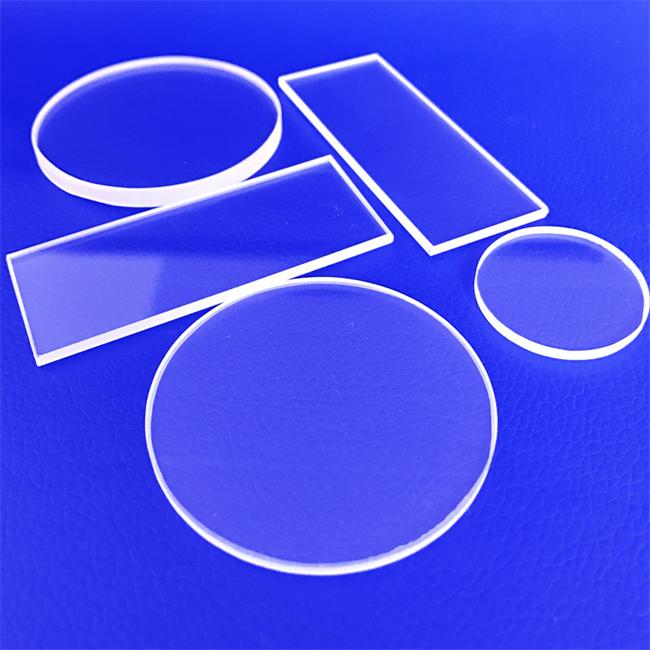
What Are Optical Instrument Quartz Plates and Why Do They Matter?
Answer: Optical instrument quartz plates are precision flat sheets made from high-purity fused silica (SiO₂ ≥ 99.99%), specifically manufactured for use in optical systems where superior light transmission, thermal stability, and chemical resistance are required. These specialized quartz glass plates differ fundamentally from standard optical glass due to their exceptional purity and unique material properties.
Understanding the Material Advantage
Unlike conventional glass that contains additives like soda-lime or borosilicate, fused quartz consists of virtually pure silica in amorphous form. This purity translates into:
- Wide spectral transmission: From deep UV (185 nm) to mid-IR (up to 3.5 μm)
- Ultra-low thermal expansion: 5.5 × 10⁻⁷/K, enabling extreme thermal shock resistance
- Superior chemical durability: Resistant to most acids and corrosive environments
Standard Optical Quartz Plate Grades by Application
When selecting an optical quartz plate, the grade directly determines its performance window. For deep-ultraviolet applications such as excimer lasers, precision spectroscopy, and photolithography systems, JGS1 grade delivers outstanding performance with 90% average transmission at 185 nm, making it the premier choice for the most demanding UV optics. For general ultraviolet and visible light applications, JGS2 grade offers excellent cost-performance balance, maintaining 85% average transmission across the 200–2500 nm spectral range—ideal for most industrial optical instruments and high-temperature viewports. When your application extends into the infrared region, particularly beyond 2500 nm, JGS3 grade provides optimized IR transmission up to 3500 nm with minimal hydroxyl absorption, serving thermal imaging systems and broadband optical equipment.
Common Applications Across Industries
Optical quartz plates serve critical roles across multiple industries. In semiconductor manufacturing, they function as photolithography windows and wafer handling components where purity and precision are paramount. Laser systems rely on them as beam windows and cavity optics to maintain beam quality and system integrity. Scientific instrumentation—including spectroscopy, microscopy, and astronomical observation equipment—demands the optical clarity and stability that only high-purity quartz can provide. Industrial process control systems utilize these plates as high-temperature viewports and level gauges, benefiting from their thermal resilience and chemical inertness.
What Critical Problems Do Optical Quartz Plates Solve?
Answer: Optical quartz plates solve five critical challenges: non-standard sizing requirements, high-temperature operational demands, precision tolerance needs, small-batch sourcing difficulties, and quality consistency issues.
The "Wrong Size" Dilemma
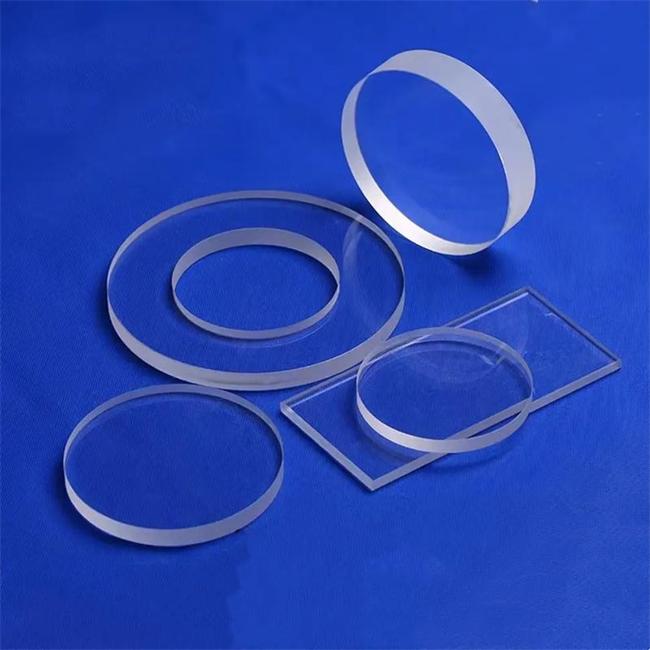
Standard catalog sizes rarely fit specialized optical instruments. Engineers and procurement managers frequently struggle to find off-the-shelf quartz plates that match their exact dimensional requirements. This forces costly redesigns, compromises system performance, or delays projects. Our solution addresses this directly: custom quartz plate fabrication supports virtually any dimension requirement. Our precision optical quartz plate manufacturing accommodates diameters from 5mm to 1500mm and thicknesses from 0.8mm to 100mm. We process custom quartz plates according to drawings or samples, ensuring a perfect fit for any optical assembly without forcing your design to conform to limited standard sizes.
Thermal Stress and Performance Degradation
Conventional glass cracks, devitrifies, or suffers optical degradation under high heat or rapid temperature changes. This is particularly problematic in furnace viewports, high-intensity lighting systems, and thermal processing equipment where temperature fluctuations are routine. Quartz glass plates maintain structural integrity up to 1200°C continuous operation, with short-term capability reaching 1300°C. The minimal thermal expansion coefficient—5.5 × 10⁻⁷/K—prevents thermal shock damage that would destroy ordinary glass. This thermal resilience ensures consistent optical performance and eliminates the costly downtime associated with component failure.
Precision and Optical Clarity Demands
Applications requiring exact optical performance suffer from impurities or surface imperfections in substandard materials. Even microscopic inclusions or surface irregularities can scatter light, reduce transmission, and compromise measurement accuracy. High-purity quartz plate products with SiO₂ ≥ 99.99% minimize fluorescence and absorption artifacts that would otherwise corrupt optical data. Our precision polished quartz plates achieve flatness tolerances as tight as ±0.02mm and surface finishes suitable for the most demanding optical applications, ensuring that the component enhances rather than degrades system performance.
Small-Batch and Customization Barriers
Many suppliers impose high minimum order quantities, making prototype development or specialty production economically unfeasible. This barrier particularly affects research institutions, equipment developers, and OEMs requiring custom components for new product lines. As a manufacturer dedicated to customer flexibility, we support no minimum order quantity (NO MOQ) or low MOQ for custom quartz plate orders. Whether you need a single prototype for validation testing, a small batch for a specialized instrument, or full production quantities, we accommodate your requirements without minimum purchase barriers that would otherwise inflate costs or delay development.
Supplier Quality Variability
Inconsistent quality from suppliers leads to assembly failures, performance issues, and production delays. When each batch varies in purity, dimensional accuracy, or surface quality, manufacturers cannot reliably plan production or guarantee final product performance. Our ISO 9001-certified production system ensures consistent quality across all batches through rigorous material inspection, dimensional verification, and optical performance testing. This commitment to quality stability means you receive the same high standard whether ordering a single piece or a thousand.

How to Select the Right Quartz Plate for Your Optical Instrument
Answer: Selecting the optimal optical quartz plate requires evaluating four key factors: spectral transmission requirements, thermal operating conditions, dimensional precision needs, and chemical exposure environment.
Step 1: Determine Your Spectral Transmission Requirements
The spectral range your application demands is the primary selection criterion. For applications operating in the deep ultraviolet region—below 250 nm—JGS1 grade is essential. This synthetic fused silica delivers 90% transmission at 185 nm, making it the only choice for excimer lasers, deep-UV spectroscopic windows, and photolithography components where every photon counts.
For visible and near-ultraviolet applications in the 200–2500 nm range, JGS2 grade provides excellent cost-performance balance. With 85% average transmission, this grade serves most general optical instruments, industrial viewports, and laboratory equipment effectively.
When your application extends into the infrared beyond 2500 nm, JGS3 grade becomes the optimal choice. This electrically fused quartz is specifically formulated for infrared transmission up to 3500 nm, serving thermal imaging systems, IR spectroscopy, and broadband optical applications.
Step 2: Evaluate Thermal Operating Conditions
The thermal environment in which the quartz plate will operate is equally critical. For continuous operation up to 1100°C, both JGS2 and JGS3 grades perform reliably for standard high-temperature applications. When short-term exposure reaches 1100–1300°C, JGS1 and JGS2 grades maintain integrity, though material purity becomes increasingly important. In applications involving thermal cycling—where the component experiences repeated heating and cooling—any grade of fused silica performs exceptionally well due to its low thermal expansion coefficient, which prevents thermal shock damage that would destroy conventional glass.
Step 3: Define Dimensional and Surface Specifications
Surface finish directly impacts optical performance and application suitability. Polished surfaces deliver optical clarity and minimal scattering, essential for transmission optics and precision instrumentation. Ground surfaces provide mechanical mounting interfaces where optical finish is unnecessary but dimensional accuracy matters. Fire-polished surfaces offer smooth edges for high-temperature applications where sharp edges would create stress points.
Precision tolerances vary by application. Optical instruments typically require ±0.02mm for precise mounting and alignment. Industrial viewports and mechanical protection applications accept ±0.1mm or looser tolerances. We work with you to define the appropriate tolerance specification for your specific use case, avoiding unnecessarily tight tolerances that drive cost while ensuring performance requirements are met.
Step 4: Consider Custom Fabrication Needs
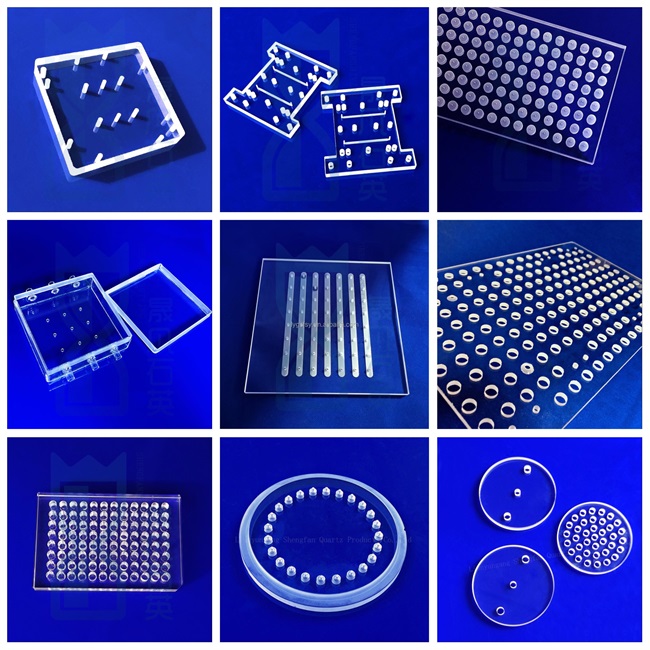
Our custom quartz plate service extends beyond basic dimensioning to include edge polishing and chamfering for safe handling and precise installation, precision drilling of holes or slots for mounting or flow passages, surface grinding for flatness critical to sealing applications, and anti-reflective coating options to maximize transmission at specific wavelengths. Our engineering team collaborates with yours to optimize the design for manufacturability without compromising function.

Custom Optical Quartz Plate Specifications and Capabilities
Answer: As a professional quartz plate supplier, we offer comprehensive custom fabrication capabilities including precision machining, surface finishing, and strict quality control, with rapid prototyping and global export service. This chapter details our full range of capabilities to help you understand what we can deliver.
Material and Grade Options
We source only the highest-purity quartz materials, with SiO₂ content exceeding 99.99% as our standard. This high-purity quartz plate specification ensures minimal fluorescence, low bubble content, and consistent optical properties. Three grades are available to match your spectral requirements. JGS1 grade is synthetic fused silica optimized for deep-ultraviolet transmission from 180 to 2500 nm, with a minimum average transmission of 90% at 185 nm, making it the premier choice for critical UV optics. JGS2 grade is natural quartz providing 85% average transmission across the 200–2500 nm range, offering excellent cost-performance for general UV and visible light applications. JGS3 grade is electrically fused quartz designed for infrared transmission from 260 to 3500 nm, serving IR imaging and sensing applications.
Dimensional Capabilities
Our manufacturing capabilities accommodate a wide range of sizes. Diameters from 5mm to 1500mm are within our standard production scope, with thicknesses ranging from 0.8mm to 100mm. For optical-grade components, we achieve precision tolerances as tight as ±0.02mm, ensuring accurate mounting and alignment in precision optical systems. For applications where tolerances are less critical, we provide appropriate specifications to balance cost and function.
Surface Finishing Options
Surface finish significantly influences optical performance and mechanical fit. Polished surfaces deliver optical clarity and minimal scattering, suitable for transmission optics requiring low scatter and high clarity. Ground surfaces provide mechanical mounting interfaces where optical finish is unnecessary. Fire-polished surfaces offer smooth, rounded edges for high-temperature applications where sharp edges would create stress points or failure initiation sites. Surface roughness can be specified down to sub-nanometer Ra for the most demanding optical applications.
Custom Features and Coatings
Beyond basic dimensioning and finishing, we provide value-added services. Precision drilling and notching accommodate mounting or flow requirements. Chamfering and edge rounding improve handling safety and reduce breakage. Anti-reflective coating is available to maximize transmission at specific wavelengths of interest, improving system efficiency and signal strength.
Production and Delivery Capabilities
Understanding time-to-market pressures, we offer rapid prototyping in 5 to 7 working days for initial samples, allowing you to validate performance before committing to full production. Standard custom orders are delivered within 10 to 15 working days, with expedited service available for urgent requirements. With no minimum order quantity, we support single-piece prototyping and large production runs equally. Our global export experience ensures smooth delivery to over 40 countries worldwide.
Material Properties Reference
For engineering reference, quartz glass plates exhibit a density of 2.2 g/cm³ and Mohs hardness of 5.5 to 6.5. The softening point occurs at approximately 1665°C, with annealing at 1140–1250°C. The thermal expansion coefficient of 5.5 × 10⁻⁷/K (measured from 20 to 320°C) provides exceptional thermal shock resistance. The refractive index at the sodium D line is 1.4585.
Why Choose Us for Your Optical Quartz Plate Requirements
Answer: Our 20+ years of quartz glass manufacturing expertise, combined with ISO 9001-certified quality systems, comprehensive custom capabilities, no MOQ policy, global export experience, and responsive technical support, make us the preferred optical quartz plate manufacturer.
Our Commitment to Solving Your Problems
Problem: Can't find the right size
We fabricate any custom quartz plate size according to your drawings or samples with no dimensional restrictions. Whether your application requires a tiny 5mm window or a 1500mm industrial viewport, we have the capability to deliver.
Problem: Difficult non-standard requirements
Our engineering team works directly with your technical staff to interpret drawings, address manufacturability concerns, and optimize designs for production. We don't just take orders—we collaborate on solutions.
Problem: High-temperature application needs
Our precision optical quartz plates with pure fused silica composition withstand 1200°C continuous operation with exceptional thermal shock resistance, eliminating the failure modes that plague conventional glass in thermal environments.
Problem: Tight precision tolerances
We achieve ±0.02mm precision tolerances through advanced machining capabilities and rigorous quality control, ensuring your component fits and functions exactly as specified.
Problem: Urgent delivery requirements
Rapid prototyping in 5 to 7 working days and standard production in 10 to 15 working days keep your project on schedule. Expedited service is available for critical needs.
Problem: Small-batch procurement challenges
With NO MOQ, we accept orders for one piece or thousands. Research projects, equipment development, and low-volume production are all economically viable with our flexible approach.
Problem: Supplier quality inconsistency
Our ISO 9001-certified production system includes incoming material inspection, dimensional verification, surface quality control, and optical performance testing for every order. Consistent quality is not an aspiration—it's our standard.
Our Track Record
With over 20 years of quartz glass manufacturing experience, we bring deep technical expertise to every project. Our ISO 9001 certified production system ensures documented, repeatable quality processes. We have exported to over 40 countries, understanding international shipping requirements, customs documentation, and global customer expectations. Our professional technical support team is fluent in English, ensuring clear communication throughout your project. As a factory-direct supplier, we offer competitive pricing with no middleman markups—you pay for the product, not the overhead.
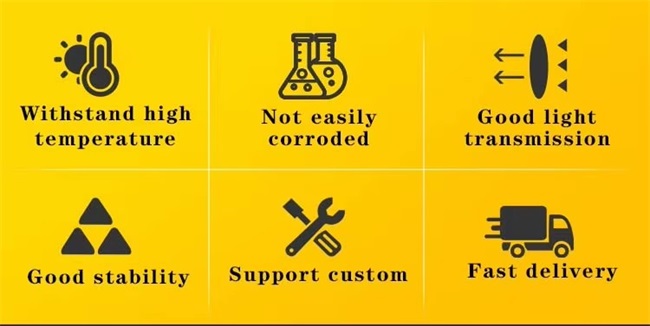
Frequently Asked Questions (FAQ)
1. What is the difference between quartz plates and regular glass plates?
Quartz plates are manufactured from high-purity fused silica (SiO₂ ≥ 99.99%), offering superior thermal resistance up to 1200°C, excellent UV transmission down to 185 nm, a thermal expansion coefficient 5.5 × 10⁻⁷/K that prevents thermal shock, and exceptional resistance to most chemicals. Conventional glass contains additives that limit its temperature range, reduce UV transmission, and increase thermal expansion susceptibility. These differences make quartz plates essential for high-temperature, precision optical, and corrosive laboratory applications where standard glass would fail.
2. What grade of quartz plate should I choose for UV applications?
For deep-ultraviolet applications operating at 185–250 nm, JGS1 grade is required, delivering 90% transmission at 185 nm. This synthetic fused silica grade is the standard for excimer lasers, spectroscopic windows, and photolithography components. For general ultraviolet and visible applications in the 200–2500 nm range, JGS2 grade provides 85% average transmission with excellent cost-performance balance, suitable for most industrial and laboratory UV-visible optical systems.
3. What is the minimum order quantity (MOQ) for custom quartz plates?
We maintain no minimum order quantity requirement. Whether you need a single prototype for testing, a small batch for a specialized instrument, or full production quantities, we accept orders of any size. This flexibility supports research, development, and production equally.
4. Can you manufacture quartz plates from my drawings or samples?
Yes. We fully support OEM and ODM customization based on your technical drawings or physical samples. Our engineering team works with you to interpret specifications and optimize designs for manufacturability, ensuring the finished component meets your exact requirements.
5. What are JGS1, JGS2, and JGS3 quartz grades used for?
JGS1 is synthetic fused silica optimized for deep-ultraviolet transmission from 180 to 2500 nm, essential for UV optics and laser applications. JGS2 is natural quartz for ultraviolet and visible applications from 200 to 2500 nm, providing the best cost-performance ratio for general optical work. JGS3 is electrically fused quartz for infrared applications from 260 to 3500 nm, serving thermal imaging and IR sensing systems.
6. What temperature can quartz plates withstand?
Quartz plates handle continuous operation up to 1200°C, with short-term exposure up to 1300°C possible. The exceptionally low thermal expansion coefficient of 5.5 × 10⁻⁷/K provides outstanding thermal shock resistance—quartz can be heated to 1100°C and plunged into cold water without cracking, a capability that distinguishes it from all conventional glasses.
7. Can quartz plates be anti-reflective coated?
Yes. Anti-reflective (AR) coating is available for quartz plates where transmission must be maximized at specific wavelengths. Coating options are tailored to your application's spectral requirements, improving system efficiency and signal strength.
8. What precision tolerances can you achieve?
We achieve precision tolerances as tight as ±0.02mm for optical-grade precision optical quartz plate components. For applications with less demanding requirements, we offer appropriate tolerances to balance cost and function. We work with you to specify tolerances that meet your needs without unnecessarily increasing cost.
9. What is the typical lead time for custom quartz plate orders?
Standard custom orders are delivered in 10 to 15 working days. Prototypes for design validation are available in 5 to 7 working days. Expedited service is available for urgent requirements—please contact us with your timing needs.
10. Are quartz plates suitable for use in corrosive environments?
Yes. High-purity quartz plates demonstrate excellent chemical resistance to most acids, with the exception of hydrofluoric acid and hot phosphoric acid. They are also resistant to most corrosive gases and environments, making them suitable for harsh industrial and laboratory conditions where chemical attack would degrade other materials.
11. How do I select the correct thickness for my optical window?
Thickness selection involves balancing mechanical strength requirements against desired transmission. Thinner plates allow higher transmission but are more fragile and may deflect under pressure differentials. Thicker plates provide greater mechanical strength and resistance to deflection but absorb slightly more light. Our engineering team provides guidance based on your specific application parameters including window dimensions, pressure loading, and optical transmission requirements.
12. Do you provide surface polishing services?
Yes. We offer polished, ground, and fire-polished surface finishes to match your application requirements. Polished surfaces provide optical clarity and minimal scattering for transmission optics. Ground surfaces serve mechanical mounting interfaces. Fire-polished surfaces offer smooth rounded edges for high-temperature applications.
13. Can I order a single piece for prototyping?
Absolutely. With no minimum order quantity, we support single-piece prototyping as well as large production runs. This allows you to validate material properties, dimensional accuracy, and optical performance before scaling to production quantities.
14. Are your quartz plates suitable for semiconductor manufacturing?
Yes. Our high-purity quartz plates (SiO₂ ≥ 99.99%) with precision tolerances are widely used in semiconductor applications including photolithography, wafer handling systems, thermal processing equipment, and cleanroom manufacturing. The material purity and dimensional precision meet the demanding requirements of the semiconductor industry.
15. What quality control measures do you implement?
Our certified quality system implements comprehensive controls: incoming raw material inspection verifies material purity and grade; dimensional measurement confirms compliance with specification; surface quality inspection detects scratches, inclusions, or imperfections; and optical performance testing validates transmission and clarity specifications. Every order receives systematic quality verification before shipment.
16. Do you offer international shipping and export services?
Yes. With over 20 years of global export experience, we handle international shipping to over 40 countries. We manage export documentation, customs clearance, and shipping logistics, ensuring your order arrives safely and on schedule regardless of your location.
17. What payment terms do you offer?
We offer flexible payment terms including bank transfer, letter of credit, and other standard international trade payment methods. Specific terms are arranged according to order value, customer relationship, and standard trade practices.
18. How do I request a quote for custom quartz plates?
Please contact us with your technical specifications including grade, dimensions, tolerance requirements, surface finish, quantity, and any special features. You can submit drawings or sample specifications. Our technical team will respond with a detailed quotation and engineering guidance.
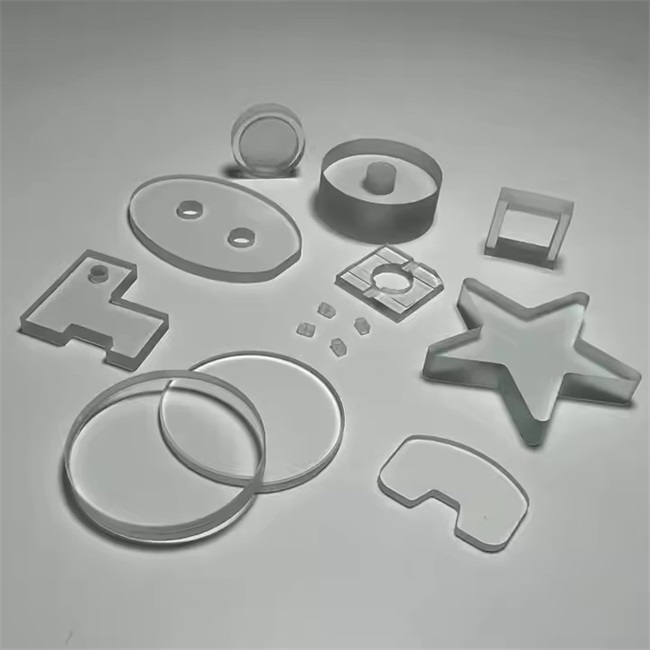
Optical instrument quartz plates are high-purity fused silica components essential for precision optical systems requiring UV-to-IR transmission, thermal stability, and chemical resistance. Available in JGS1 (deep-UV, 180–2500nm, 90% transmission at 185nm), JGS2 (UV-visible, 200–2500nm, 85% transmission), and JGS3 (IR, 260–3500nm) grades, these plates serve semiconductor, laser, scientific, and industrial applications requiring optical precision and thermal durability up to 1200°C. Custom fabrication services support any dimension with precision tolerances down to ±0.02mm, surface finishing options including polished, ground, and fire-polished surfaces, and optional anti-reflective coating. As a manufacturer with over 20 years of expertise, we offer no minimum order quantity, rapid prototyping in 5–7 days, standard production in 10–15 days, and global export with ISO 9001-certified quality control. Selecting the right quartz plate involves assessing spectral transmission needs, thermal operating conditions, dimensional precision requirements, and chemical exposure environment. The low thermal expansion coefficient (5.5 × 10⁻⁷/K) provides exceptional thermal shock resistance that distinguishes quartz from all conventional glasses.

Luverre Quartz manufactures and sells a wide range of high quality quartz glass, including quartz tubes, quartz plates, quartz rods, quartz windows, quartz crucibles, quartz boats, quartz flanges, quartz beakers, quartz glass instruments, and more. We can meet all kinds of customized requirements for quartz glass products.
