T: +86-518-85528012
E: nick@luverrequartz.com
E: nick@luverrequartz.com
1st floor Runlian industrial center No. 116 QuFeng Rd., Haizhou Economic and technological development zone Lianyungang City, Jiangsu Province, China 222062
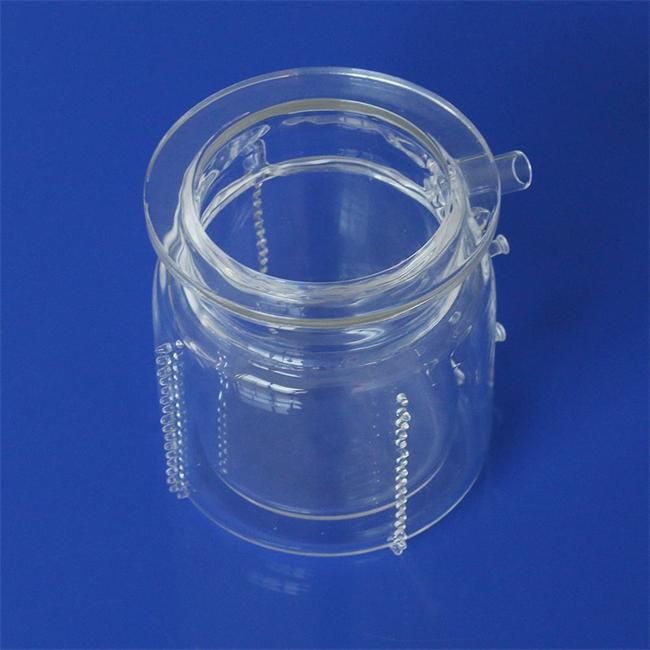 |


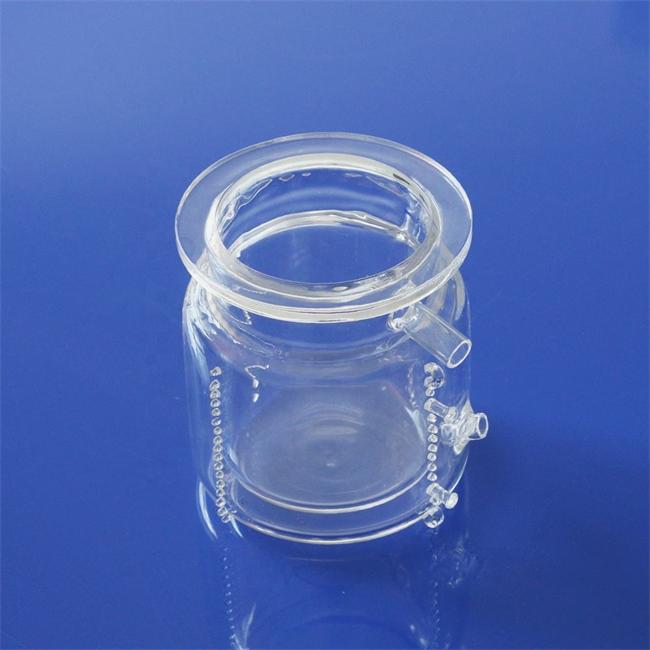
Transparent double-layer photocatalytic quartz reactor
Transparent double-walled photocatalytic quartz reactor is a high-end reaction apparatus specifically designed for
LUVERRE quartz
99.99%
Inner with Vacuum PVC bag and then wrapped with air bubble film, outer with wooden box.
as per customer's requirement
Accurate, efficient, and safe experimental equipment is the key to success in product development and scientific research. Traditional photocatalytic reaction devices often face many challenges such as uneven illumination, inaccurate temperature control, and safety hazards. To this end, we are pleased to introduce a transparent double-layer photocatalytic quartz reactor, designed specifically to overcome these challenges.
Transparent double-walled photocatalytic quartz reactor is a high-end reaction apparatus specifically designed for photocatalysis, photochemical synthesis, and precision temperature-controlled experiments. Its core advantage lies in the use of high-purity transparent quartz (SiO₂ ≥ 99.99%) for both the reaction vessel and the optical window, with a light transmittance exceeding 93% in the ultraviolet and visible light spectra, ensuring that light energy is efficiently transferred to the reaction system. The unique double-walled jacket structure enables precise temperature control via circulating fluid, covering a wide range from low to high temperatures. It simultaneously meets the requirements for sealed reactions under both atmospheric pressure and slight negative pressure conditions, making it an ideal choice for both research experiments and pilot-scale upscaling.
Material characteristics: The main body is made of high-purity quartz glass (with a light transmittance of ≥ 99.99%), which is resistant to high temperatures (up to 200 ℃), chemical corrosion, and can withstand strong acid and alkali environments, ensuring that light energy penetrates the reaction system without loss.
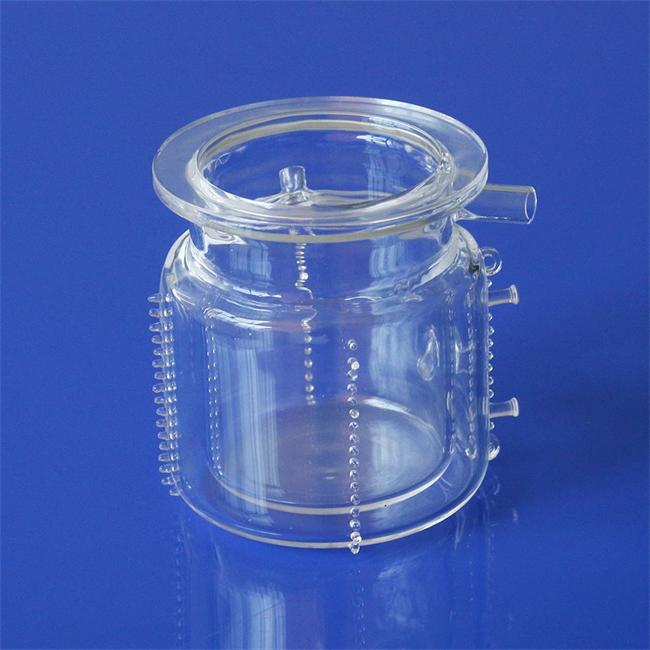
Structural design: The double-layer jacket can accommodate circulating media (such as refrigerant, hot oil, or tap water) to achieve precise temperature control from -5 ℃ to 100 ℃, avoiding the risk of rupture caused by thermal expansion and contraction in traditional single-layer reactors.
Light source system: Built in adjustable power light sources (xenon lamp 100-1000W, mercury lamp 200-1000W, metal halide lamp 200-400W), supporting full band simulation from ultraviolet to visible light, meeting experimental needs such as photocatalytic degradation and photo induced synthesis.
Intelligent control: equipped with a microcomputer controller, real-time display of temperature, stirring speed, light source power and other parameters, supporting electric stirring (high torque, capable of processing high viscosity samples) and vacuum reaction (vacuum degree up to 0.096MPa).
Addressing pain points: Traditional reaction vessels suffer from low light energy utilization, inaccurate temperature control, and uneven stirring due to opaque materials. This product utilizes high transparency quartz and double-layer temperature control design to significantly improve reaction efficiency and data repeatability.
Application scenarios
Photocatalytic degradation and pollutant treatment
Application examples: TiO ₂ photocatalytic degradation of organic pollutants (such as dyes and pesticides), simulated decomposition of water to produce hydrogen under sunlight.
Advantages: Quartz material avoids interference from metal ions, and the double-layer jacket can quickly cool the light source, preventing catalyst deactivation caused by high temperatures.
Light induced organic synthesis
Application examples: Photocatalytic C-H bond activation, olefin cycloaddition, asymmetric synthesis, and other reactions.
Advantages: The internal illumination light source design ensures uniform illumination of the reaction system, and the stirring system promotes thorough mixing of catalyst and reactants, thereby improving yield.
Materials Science Experiment
Application examples: synthesis and performance testing of photosensitive materials (such as quantum dots, MOFs), research on photochromic materials.
Advantages: The transparent kettle body supports in-situ observation of the reaction process, and the double-layer structure can simulate extreme temperature conditions (such as low-temperature polymerization and high-temperature decomposition).
Environmental and Life Science Research
Application examples: photocatalytic disinfection, drug photostability testing, photobioreactor (such as algae cultivation).
Advantages: The vacuum interface and feeding port design support aseptic operation, avoiding external contamination.
Customized service: meet personalized experimental needs
Customization of specifications
Capacity selection: Standard specifications such as 250ml, 500ml, 1000ml, 5000ml are available, and non-standard size customization is supported.
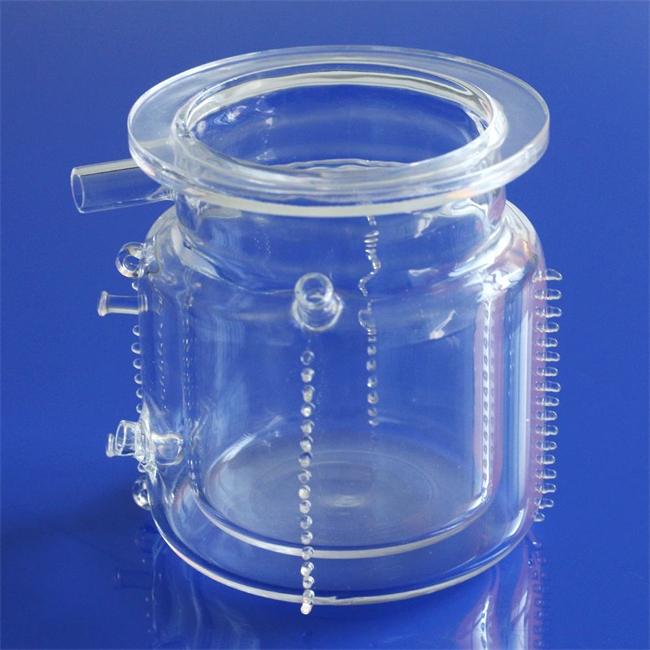
Interface extension: Add reflux devices, distillation heads, sampling valves, or online monitoring probes (such as pH and dissolved oxygen sensors) according to experimental requirements.
Upgrading of light source and optical system
Wavelength customization: Single color LED light source or narrowband filter can be selected to achieve specific wavelength photocatalytic experiments.
Optimization of Light Uniformity: By designing a reflector array or diffuser, dead corners of light inside the reaction vessel can be eliminated.
Adaptation to special environments
High pressure version: using Hastelloy flange sealing, with a pressure resistance of up to 30MPa, suitable for supercritical CO ₂ extraction or high-pressure photocatalytic reactions.
Low temperature strengthening: Equipped with BILON-T series low-temperature coolant circulation device, the lowest temperature can reach -78 ℃ (dry ice/acetone bath).
Frequently Asked Questions (FAQ)
What materials are used in the reactor construction?
The reactor is made from high-purity fused quartz (SiO₂ > 99.9%), ensuring maximum UV transparency and resistance to corrosive chemicals.
Can the reactor be customized for specific experimental setups?
Yes. We offer full customization including volume (50 mL to 20 L), jacket configuration, port arrangements, and integration with light sources or sensors.
What temperature range can the reactor withstand?
It operates safely from -20°C to 1100°C, with the double-layer jacket supporting precise thermal regulation via water or oil circulation.
Is the reactor compatible with standard photocatalytic light sources?
Absolutely. The design accommodates mercury lamps, xenon lamps, and LED arrays, with optional light-guiding sleeves for uniform irradiation.
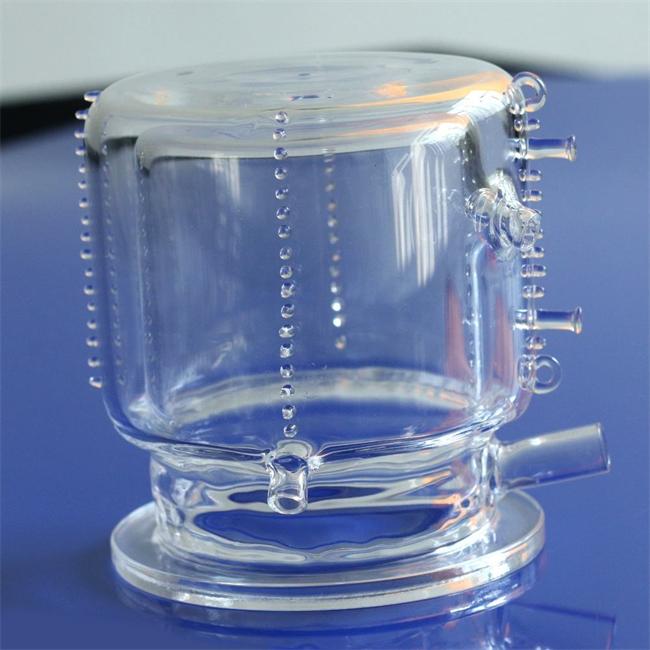
The transparent double-layer photocatalytic quartz reactor, with its three core advantages of high transparency, precise temperature control, and intelligent control, has become an indispensable experimental tool in fields such as chemical synthesis, environmental governance, and materials science. Whether it is basic research or industrial application, this product can flexibly adapt to different scenarios through customized services, helping researchers break through experimental bottlenecks and accelerate the transformation of innovative achievements.
Luverre Quartz manufactures and sells a wide range of high quality quartz glass, including quartz tubes, quartz plates, quartz rods, quartz windows, quartz crucibles, quartz boats, quartz flanges, quartz beakers, quartz glass instruments, and more. We can meet all kinds of customized requirements for quartz glass products.


