
T: +86-518-85528012
E: nick@luverrequartz.com
1st floor Runlian industrial center No. 116 QuFeng Rd., Haizhou Economic and technological development zone Lianyungang City, Jiangsu Province, China 222062
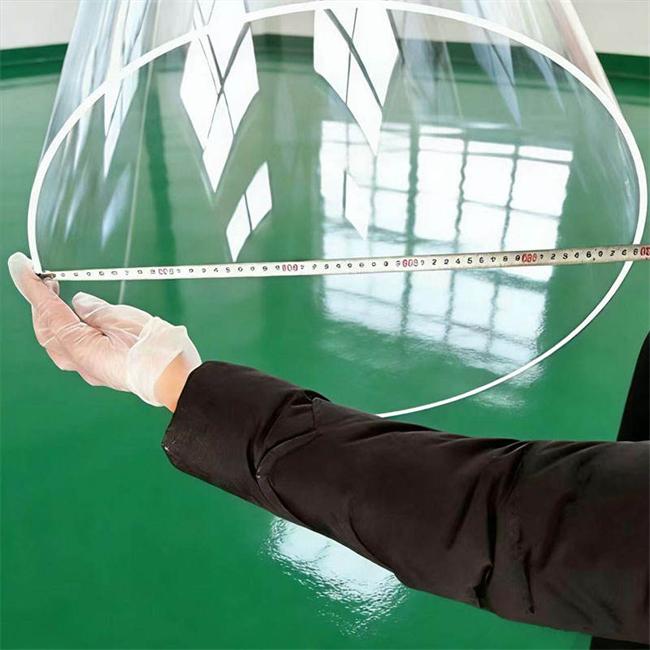 |


300–1500mm Quartz Tube
300–1500mm quartz tube refers to clear fused quartz tubing with an outer diamete
LUVERRE quartz
99.99%
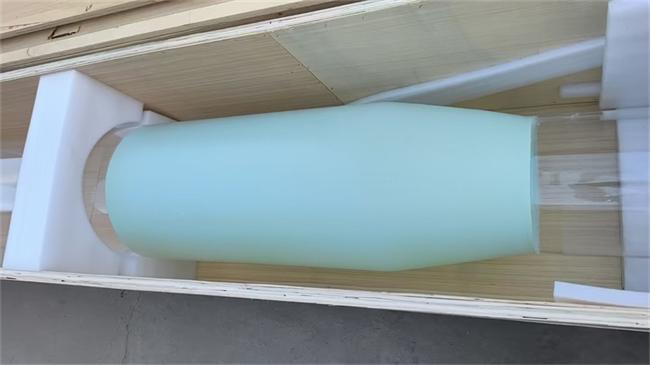
Inner with Vacuum PVC bag and then wrapped with air bubble film, outer with wooden box.
as per customer's requirement
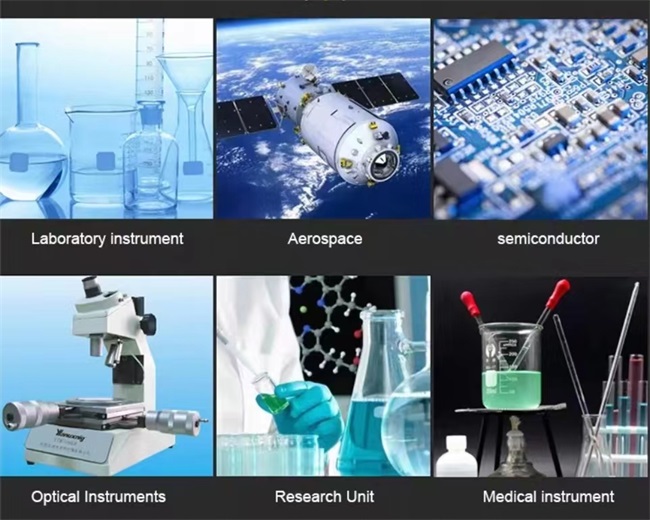
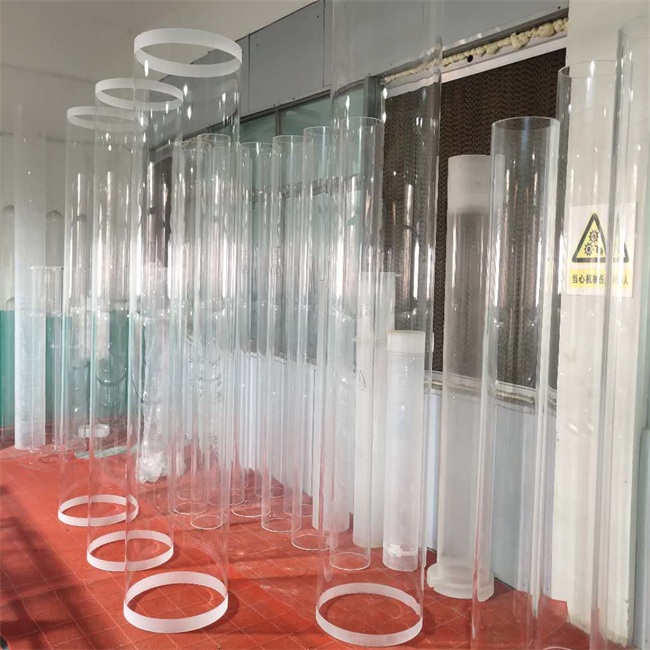
300-1500mm quartz tube refers to high-purity fused silica tubing custom-manufactured for medium- to large-scale industrial equipment and advanced experimental systems. This size range covers semiconductor diffusion furnace tubes, photovoltaic high-temperature sintering furnace tubes, large-diameter high-temperature reaction chambers, and optical coating equipment—applications that demand large process cavities while requiring uniform wall thickness, resistance to thermal shock, and tight control of metallic impurities. We offer custom transparent or opaque quartz tubes from 300mm to 1500mm outer diameter, with support for wall thickness, length, end flanges, and drilled holes—delivered to your drawing or sample.
What Makes 300–1500mm Quartz Tubes Different from Standard Tubing?
The primary difference is manufacturing method and tolerance control. Tubes below roughly 200mm OD are commonly drawn continuously from molten quartz, yielding excellent dimensional consistency. Tubes in the 300–1500mm range often require secondary melting, expansion, or rotary fusion techniques, which introduce greater variability in wall thickness, roundness, and straightness.
For a 300mm tube, many suppliers can hold OD tolerances of ±0.5mm or better. At 800mm, tolerance bands widen—some suppliers quote ±1.5% on wall thickness uniformity and ≤0.8% ovality. At 1500mm, the tube is approaching the upper limit of what most Chinese quartz manufacturers produce as a single-piece cylinder, and buyers should expect to discuss tolerances case by case.
The practical implication: do not assume standard catalog tolerances apply across the full 300–1500mm range. Specify your requirements at the inquiry stage, and request a pre-production sample or dimensional inspection report for large-format tubes.
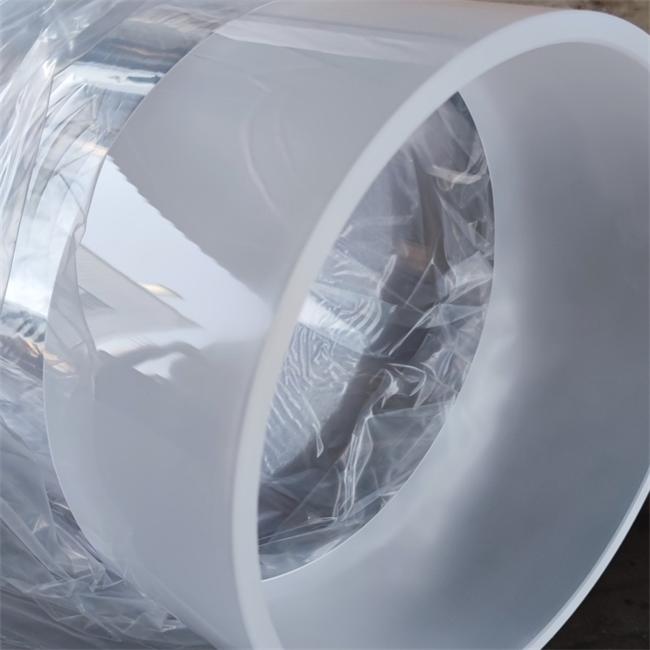
Key Specifications to Define Before Requesting a Quote
When sourcing a 300–1500mm quartz tube, the following parameters should be clearly stated. Vague inquiries like “1500mm quartz tube” almost always result in back-and-forth clarification and delayed quotations.
Outer Diameter (OD) and Inner Diameter (ID)
Specify both, not just OD. For reactor tubes and furnace tubes, the ID often determines process gas flow and wafer loading capacity. For flanged connections, the OD and wall thickness together determine the sealing surface geometry. A 300mm OD tube with 5mm wall has a 290mm ID; the same OD with 8mm wall has a 284mm ID. Both are “300mm quartz tubes,” but they are not interchangeable.
Wall Thickness and Uniformity
Wall thickness for large-diameter quartz tubes typically ranges from 4mm to 10mm depending on the application. For vacuum or pressure-bearing service, thicker walls are used, but thermal shock resistance decreases with thickness. Wall thickness uniformity is often more critical than the nominal thickness itself. A tube specified as “6mm wall” with ±1.5mm variation around the circumference will create hot spots in furnace applications and sealing difficulties at flanged ends.
Length and End Finish
Lengths up to 3000mm are commonly available; longer tubes may require special discussion. More important than the length number is the end finish: cut-and-fired, ground flat, flanged, or with a reduced-diameter sealing lip. A 1500mm tube with a poor end cut will leak regardless of how good the tube body is.
Purity and OH Content
Standard clear fused quartz for industrial use is typically ≥99.99% SiO₂. For semiconductor and high-temperature processes, hydroxyl (OH) content matters: low-OH grades (below 5–15 ppm) are preferred for applications where bubble formation or infrared absorption is a concern. Do not assume your supplier’s “high purity” statement addresses OH content—ask explicitly.
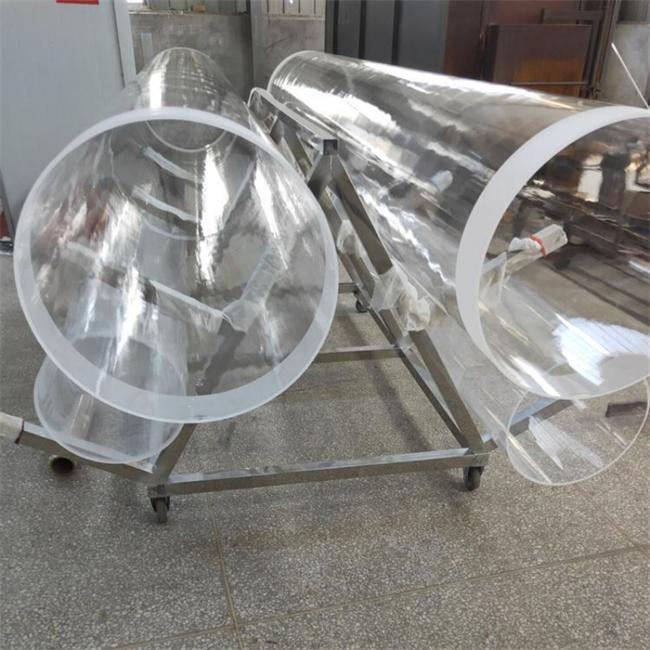
Which Applications Drive Demand for This Size Range?
Semiconductor and Photovoltaic Equipment
Diffusion furnace tubes and CVD reaction chambers frequently fall in the 300–800mm OD range, with lengths of 1500–2500mm. These tubes must withstand repeated thermal cycling between ambient and 1200°C+ while maintaining a clean, contamination-free inner surface. Large-diameter quartz tubes for this sector often require low-OH material and tight control of metallic impurities.
High-Temperature Chemical Processing
Quartz tubes serve as reaction vessels, distillation columns, and observation windows in corrosive chemical environments. The 300–500mm range is common for pilot-scale and small production reactors. Key requirements here are chemical resistance (quartz is excellent against most acids except HF) and the ability to seal against PTFE or metal flanges without cracking.
Industrial Heating and Furnace Systems
Large quartz tubes are used as furnace muffle tubes, infrared heating enclosures, and thermal processing chambers. In these applications, thermal shock resistance and uniform wall thickness are more important than optical properties. A tube with a thin spot will crack during heat-up; a tube with a thick spot will create a cold zone in the process profile.
Tolerances and Inspection: What to Verify
Tolerance expectations should be documented in the purchase order, not left to “industry standard.” Different suppliers interpret “standard tolerance” differently, especially at the upper end of the 300–1500mm range.
For tubes in the 300–500mm range, reasonable commercial tolerances are roughly ±0.5mm on OD and ±0.2mm on wall thickness for good-quality suppliers. For 800–1500mm tubes, OD tolerance may be expressed as a percentage (±1% to ±1.5%) rather than a fixed millimeter value, and wall uniformity may be specified as a maximum variation around the circumference.
When inspecting incoming large-diameter tubes, check:
- Wall thickness at four or more points around the circumference at both ends and the middle
- Straightness by rolling on a flat surface or measuring deviation per meter
- End squareness if the tube will be flanged or sealed
- Visible bubbles and stones, especially in the sealing zone
- OH content if the application is IR-sensitive or requires low outgassing
For critical applications, request a dimensional inspection report with the shipment. Suppliers accustomed to serving semiconductor or optical customers will have this capability; suppliers serving only heating-element markets may not.
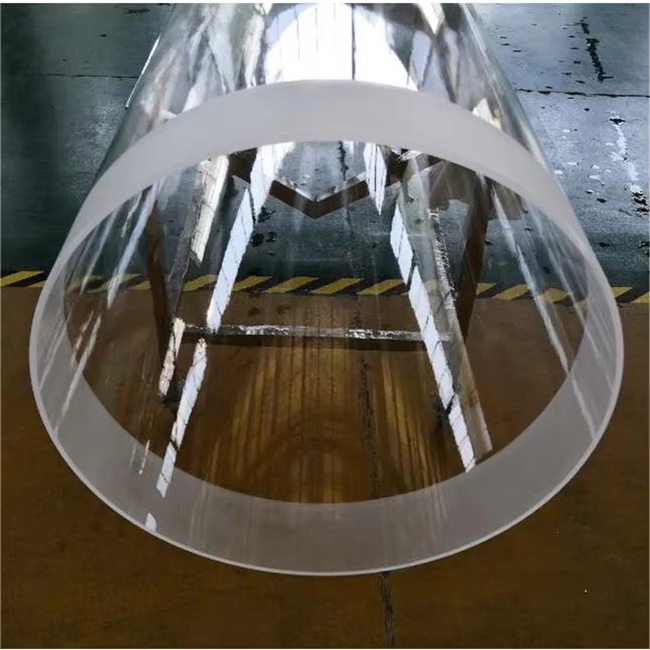
Custom Manufacturing: From Drawing to Finished Tube
A 300–1500mm quartz tube is rarely a pure commodity. Most purchases involve at least one customization: a specific length, a flanged end, a graded seal, or a surface finish requirement.
Drawing-based production is the most reliable route for large tubes. A drawing should specify: OD, ID, wall thickness with tolerance, length with tolerance, end geometry (including flange dimensions if applicable), surface finish (fire-polished, ground, or acid-etched), and any marking or packaging requirements. Suppliers who routinely serve OEM equipment manufacturers can work directly from a PDF or DWG drawing without requiring a physical sample.
Sample-based production is practical for replacement parts where no drawing exists, but it introduces risk: the sample’s dimensions may have drifted from the original specification, and copying a worn or distorted sample perpetuates the problem. For a 1500mm tube, shipping a sample internationally is also expensive and fragile. Whenever possible, reverse-engineer the sample into a drawing and confirm the critical dimensions with the customer before production.
Secondary operations commonly required for large tubes include: cutting to length, fire-polishing cut ends, grinding sealing surfaces flat, drilling ports for gas inlet/outlet, and attaching flanges or graded seals. Not every quartz tube manufacturer offers all of these in-house. If your application requires a flanged 600mm tube with multiple side ports, confirm the supplier’s glassblowing and machining capabilities before assuming they can deliver a finished assembly.
FAQ
Can I order a single 1500mm quartz tube for a prototype, or is there a minimum order?
Many Chinese quartz manufacturers accept prototype orders of 1–5 pieces for large tubes, though the per-unit price will be higher than volume pricing and the supplier may charge a setup fee for custom end finishes. Expect to pay for samples and freight; free samples for large tubes are uncommon because of material and shipping cost.
What is the maximum operating temperature for a 300–1500mm quartz tube?
The tube’s maximum service temperature depends on the quartz grade, wall thickness, support conditions, and whether the application involves thermal cycling. General-purpose clear fused quartz is often rated for continuous use around 1100–1250°C and short-term exposure up to 1500°C, but these are material-level guidelines, not guarantees for a specific tube geometry. A large-diameter tube with thin walls and long unsupported spans will fail at lower temperatures than a short, thick-walled tube of the same material.
How do I specify a flange on a large quartz tube?
Provide a drawing showing the flange OD, bolt circle, bolt hole size and count, flange thickness, and the transition geometry between the tube body and the flange. Quartz flanges are typically formed by glassblowing rather than machining from solid, so the flange thickness and corner radii must be compatible with the supplier’s forming capability. If the flange must mate with a standard metal flange (ISO-K, CF, etc.), state the standard explicitly.
Is there a difference between “quartz tube” and “fused silica tube” in this size range?
In commercial practice, the terms are often used interchangeably for clear fused quartz products. Technically, “fused quartz” usually refers to material made from natural quartz crystal, while “fused silica” can refer to synthetic material. For most industrial 300–1500mm tube applications, natural fused quartz is standard; synthetic fused silica is reserved for demanding optical or semiconductor applications where metallic impurity levels must be extremely low.
Sourcing a 300–1500mm quartz tube is a specification-driven exercise, not a catalog lookup. The size range spans from routinely available stock tubing to large-format custom parts that require explicit discussion of tolerances, manufacturing method, and inspection criteria. Buyers who define OD, ID, wall uniformity, end finish, OH content, and packaging requirements upfront will receive more accurate quotations and fewer surprises at incoming inspection.
If you are working on a furnace, reactor, or process system that requires large-diameter quartz tubing, send us your drawing or specification—including the critical tolerances and any flange or end-finish details—and we will confirm feasibility, propose a dimensional inspection plan, and quote with a realistic lead time.

Luverre Quartz manufactures and sells a wide range of high quality quartz glass, including quartz tubes, quartz plates, quartz rods, quartz windows, quartz crucibles, quartz boats, quartz flanges, quartz beakers, quartz glass instruments, and more. We can meet all kinds of customized requirements for quartz glass products.


