T: +86-518-85528012
E: nick@luverrequartz.com
E: nick@luverrequartz.com
1st floor Runlian industrial center No. 116 QuFeng Rd., Haizhou Economic and technological development zone Lianyungang City, Jiangsu Province, China 222062
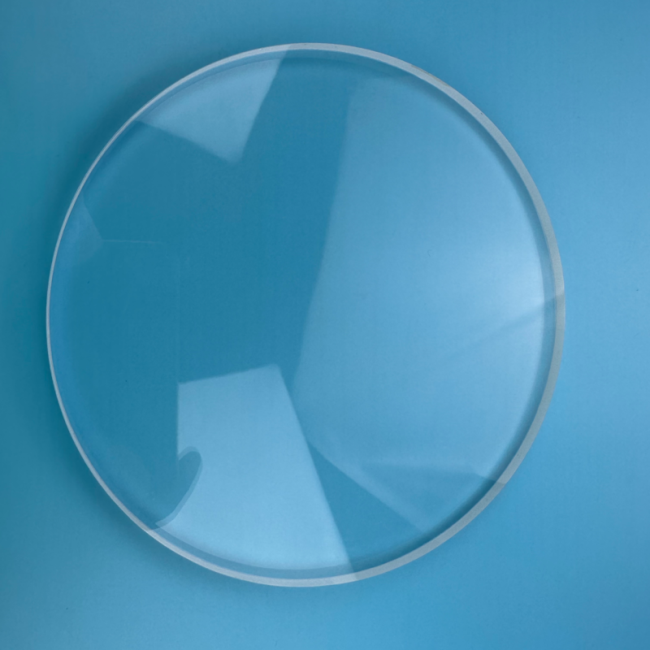 |


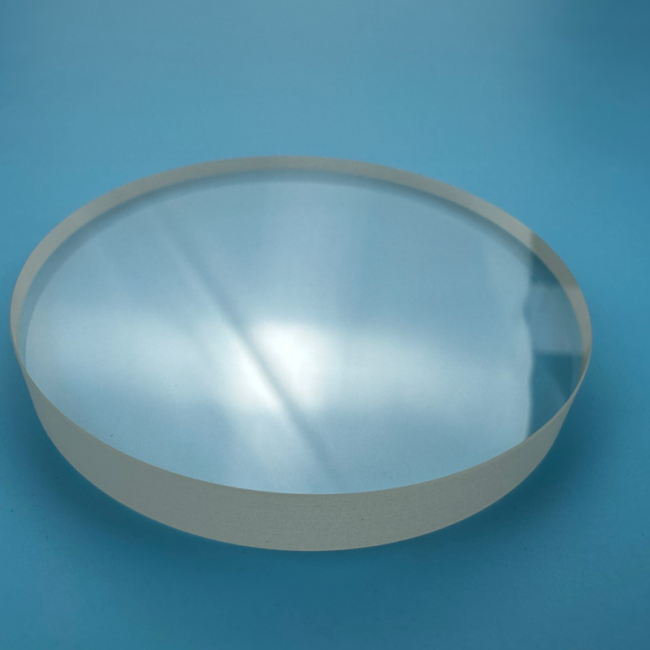
Thick JGS1 Quartz Glass Viewport Windows
LUVERRE quartz
99.99%
as per customer's requirement
Thick JGS1 quartz glass viewport windows are precision optical components engineered for extreme environments where standard glass fails. They solve critical challenges including UV absorption below 220nm, thermal fracture under rapid temperature changes, chemical corrosion in aggressive processes, and insufficient mechanical strength for vacuum or high-pressure applications. JGS1 is a synthetic, ultra-high-purity fused silica with >90% transmittance from 185–2500nm, capable of continuous operation at 1100°C and withstanding thermal shock up to 1100°C . These windows are essential for semiconductor lithography, high-power laser systems, aerospace observation ports, and UV sterilization equipment.
What Is Thick JGS1 Quartz Glass Viewport Window?
Thick JGS1 quartz glass viewport window is a precision-machined optical component fabricated from synthetic fused silica (SiO₂ >99.99%) using a high-purity hydrogen-oxygen flame melting process . Unlike standard soda-lime or borosilicate glass, JGS1 offers exceptional deep-ultraviolet (DUV) transmission starting at 185nm, making it the material of choice for applications requiring optical clarity in the UV spectrum.
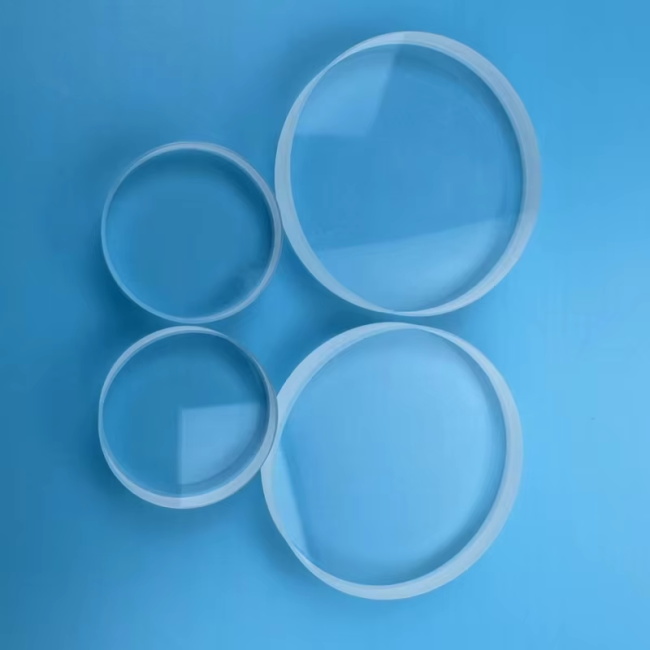
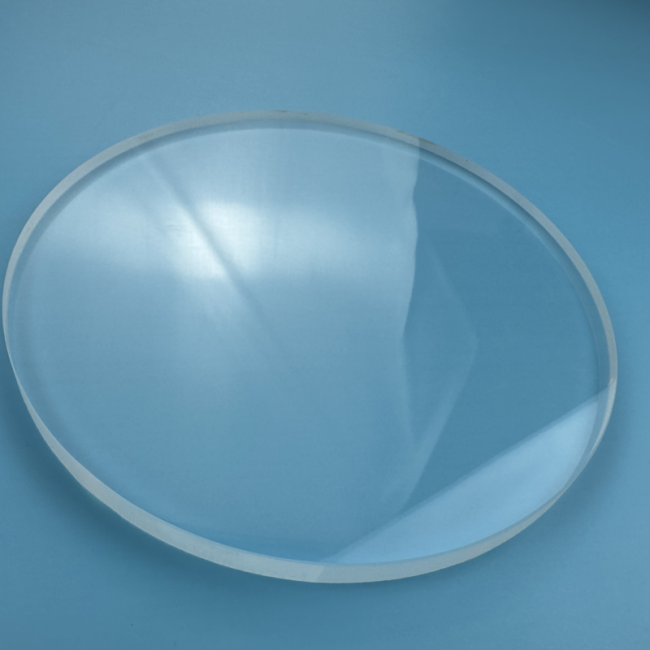
The "thick" designation typically refers to windows with thicknesses ranging from 5mm to over 25mm, providing mechanical robustness for high-pressure vacuum chambers, high-power laser systems, and demanding industrial environments . These windows serve as protective barriers that allow optical access—viewing, measurement, or laser transmission—while maintaining system integrity under extreme conditions.
Why Choose JGS1 Over Other Quartz Grades or Glass Materials?
This is the most critical question for any procurement decision. JGS1 is fundamentally different from JGS2, JGS3, or borosilicate glass in several key aspects .
Optical Performance
JGS1 delivers superior UV transmittance down to 185nm, with average transmission exceeding 90% across the 185-2500nm spectral range . This makes it indispensable for deep-UV lithography, excimer laser systems, and precision spectroscopy.
Comparison: JGS2 only transmits from 220nm, while JGS3 is optimized for infrared applications (260-3500nm) with poor UV response . Borosilicate glass such as BF33 has a softening point around 820°C and cannot transmit below 300nm .
Thermal Stability
With a softening point of approximately 1700°C and a thermal expansion coefficient of just 0.55 × 10⁻⁶/K, JGS1 quartz windows maintain structural integrity under extreme thermal stress . They can withstand rapid temperature changes (thermal shock) up to 1100°C without cracking—a property critical for applications like furnace observation ports and high-energy laser windows.
Chemical Resistance
JGS1 is chemically inert and resistant to most acids and alkalis, with corrosion resistance approximately 150 times that of stainless steel . Only hydrofluoric acid and high-temperature phosphoric acid will attack it. This makes thick JGS1 viewports ideal for semiconductor etching chambers and chemical processing equipment.
What Thickness Options Are Available for JGS1 Viewport Windows?
Thickness selection is a critical engineering decision that balances optical transmission, mechanical strength, and application requirements.
Common thickness ranges include:
- 5-10mm: Standard precision optical windows and laser protection, maintaining >93% visible transmittance with excellent flatness
- 8.2-8.3mm: Specific thickness for optical systems requiring stringent control; thickness tolerance can be held to ±0.05mm
- 15-25mm: Heavy-duty applications including high-pressure vacuum chambers, aerospace viewports, and high-power laser output couplers
- Custom thickness: Available from 0.5mm to 50mm+ depending on dimensional requirements
The key consideration is that increased thickness provides greater mechanical strength but slightly reduces transmission in the UV range due to material absorption. For most deep-UV applications, 5-10mm represents the optimal balance.

What Are the Critical Quality Specifications for Thick JGS1 Windows?
When evaluating suppliers, procurement managers and engineers must verify the following specifications :
- Surface flatness: Typically λ/10 @ 632.8nm for precision optics (customizable)
- Surface quality: 60/40 scratch-dig standard, upgradeable to 20/10 for high-performance applications
- Parallelism: <3 arcmin for optical alignment accuracy
- Size tolerance: ±0.05mm or better
- Surface roughness: <10 Å RMS
- Birefringence: 1-2 nm/cm class
- Homogeneity: Class 1-2
- Bubble class: Minimal inclusions (specified by grade)
These parameters directly impact optical system performance. For example, poor flatness causes wavefront distortion, while excessive parallelism deviation creates optical path differences that degrade imaging quality.

Who Needs Thick JGS1 Quartz Glass Viewports?
The applications span multiple industries where performance under extreme conditions is non-negotiable.
Semiconductor Industry
- Deep-UV lithography equipment: JGS1 windows transmit 193nm DUV light without significant absorption, enabling precise wafer patterning
- Plasma etching chambers: Chemical resistance prevents degradation in aggressive fluorine-based plasmas
- CVD deposition systems: Thermal stability maintains window clarity at elevated temperatures
Laser Systems
- Excimer lasers: High damage threshold and UV transmission at 193nm (ArF) and 248nm (KrF)
- High-power industrial lasers: Thermal stability prevents fracture under high-intensity beams
- Medical laser devices: Reliable transmission for therapeutic and surgical applications
Aerospace & Scientific Research
- Space environment simulators: Large-format JGS1 windows (1200mm x 800mm) provide observation ports for vacuum chambers while withstanding extreme thermal cycling
- Telescope and satellite optical systems: Radiation resistance and dimensional stability in space environments
- Synchrotron beamlines: High-energy radiation compatibility
Chemical & Pharmaceutical Processing
- Corrosive reaction vessels: JGS1 windows enable visual inspection while resisting chemical attack
- UV sterilization systems: Transmits UV-C (254nm) for effective disinfection without degradation
How Do You Choose the Right Thick JGS1 Viewport Supplier?
Selection criteria should extend beyond price to ensure long-term performance and supply reliability.
Customization Capabilities
The ideal supplier should support :
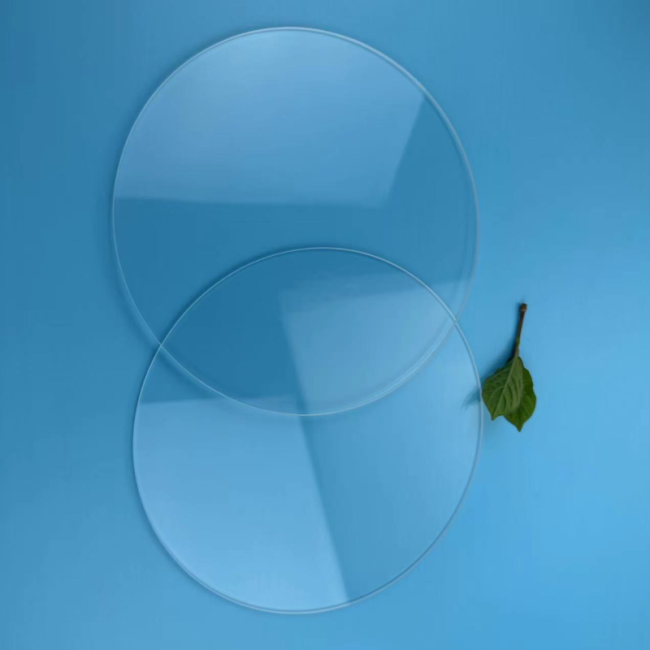
- Any shape: From circular to elliptical, polygonal, stepped, arc-edged, or notched configurations
- Any size: From miniature (4×4mm) to large-format (over 600mm diameter)
- Any thickness: Precision-controlled from 0.5mm to 50mm+
- Additional services: Surface coatings (AR, HR, dielectric), edge polishing, and chamfering
Manufacturing Precision
Look for suppliers with proven capability to achieve:
- Thickness tolerance: ±0.05mm
- Surface flatness: λ/10 or better
- Surface quality: 20/10 scratch-dig
- CNC cutting, waterjet shaping, and precision polishing in cleanroom environments
Quality Assurance
Reliable supplier provides:
- Material purity certification (SiO₂ >99.99%)
- Spectrophotometric transmission data from 185-2500nm
- Dimensional inspection reports
- Surface quality documentation

What Are the Key Customization Options?
Thick JGS1 windows can be fully customized to meet specific application requirements.
Shape Options
- Circular (standard)
- Square or rectangular
- Elliptical
- Polygonal (with specified angles)
- Arc-edged, stepped, or notched configurations
Dimensional Options
- Diameter/Size: From 1mm to 2500mm+
- Thickness: 0.5mm to 50mm+
- Tolerance: ±0.05mm or tighter
Value-Added Services
- Anti-reflective (AR) coatings: Single or double-sided to maximize transmission at specific wavelengths
- High-reflective (HR) coatings: For mirror applications
- Dielectric coatings: For wavelength-selective reflection
- Protective chamfering: Edge rounding for safety and handling
- Precision edge polishing: For optical performance and mechanical fit

How Do You Overcome Common Procurement Challenges?
Challenge: Can't Find the Right Size
Many standard catalog products are limited to 50.8mm, 100mm, or 200mm diameters. However, specialized applications often require custom sizes such as 1200mm × 800mm rectangular windows .
Solution: Partner with a supplier that offers true custom manufacturing with no minimum order quantity (MOQ). This flexibility enables small-batch production for R&D and prototype testing.
Challenge: Non-Standard Product Sourcing Difficulties
Standard optical suppliers often reject irregular shapes, unusual thicknesses, or tight tolerances.
Solution: Select a manufacturer with expertise in CNC machining, waterjet cutting, and precision polishing of complex geometries. Ask for CAD-based customization support for DXF, STEP, or SolidWorks files .
Challenge: High Temperature Operation
Many viewports fail under thermal cycling or continuous high-temperature exposure.
Solution: JGS1's 0.55 × 10⁻⁶/K thermal expansion coefficient and 1700°C softening point provide exceptional thermal shock resistance—up to 1100°C rapid temperature changes without failure .
Challenge: Tight Delivery Deadlines
Standard lead times may exceed project schedules.
Solution: Choose a supplier with rapid prototyping capabilities and documented fast-turnaround experience. Many reputable manufacturers offer 2-3 week delivery for custom orders .
Challenge: Small Batch Customization
Traditional manufacturers require large minimum quantities that exceed R&D or specialty application needs.
Solution: Identify suppliers with flexible MOQ policies (as low as 1-2 pieces) and comprehensive customization support .
Challenge: Unstable Supplier Quality
Inconsistent material purity, dimensional variations, and surface defects cause system failures.
Solution: Insist on ISO-certified quality management systems, documented material certifications, and full inspection reports with each shipment. Look for suppliers with established track records in semiconductor, aerospace, or laser industries.

Frequently Asked Questions (FAQ)
What is the primary difference between JGS1, JGS2, and JGS3 quartz glass?
JGS1 is synthetic UV-grade quartz transmitting from 185-2500nm, suitable for deep-UV applications. JGS2 transmits from 220-2500nm for general optics. JGS3 is infrared-grade for 260-3500nm applications with limited UV response .
Can JGS1 windows be used in vacuum environments?
Yes. JGS1 has extremely low outgassing and maintains structural integrity under vacuum and thermal cycling, making it ideal for ultra-high vacuum (UHV) viewports .
What is the maximum operating temperature for JGS1 viewports?
Continuous service temperature is up to 1100°C, with short-term exposure up to 1300-1400°C. The softening point is approximately 1700°C .
How does thickness affect UV transmission?
Thicker windows reduce transmission slightly due to material absorption, but even 5-10mm thickness maintains excellent UV performance with >90% average transmission from 185-2500nm .
Are custom shapes available for JGS1 viewports?
Yes. Capabilities include elliptical, polygonal, arc-edged, stepped, and notched configurations, produced via CNC cutting or waterjet shaping .
What surface coatings are available?
Anti-reflective (AR) coatings for enhanced transmission, high-reflective (HR) coatings, dielectric coatings, and protective coatings can be applied to custom geometries .
What dimensional tolerances can be achieved?
Standard tolerance is ±0.05mm, with tighter tolerances available for precision applications .
Does JGS1 resist chemical corrosion?
Yes. JGS1 resists most acids and alkalis, with corrosion resistance approximately 150 times that of stainless steel. Only hydrofluoric acid and hot phosphoric acid cause damage .
What is the minimum order quantity (MOQ)?
Many manufacturers offer flexible MOQ policies, with some as low as 1-2 pieces for custom orders .
Can I provide my own design files?
Yes. Reputable suppliers accept DXF, STEP, and SolidWorks files for precision custom manufacturing .
How are JGS1 windows inspected for quality?
Inspection includes interferometers for flatness, spectrophotometers for transmission, optical microscopes for surface quality, and dimensional measurement tools for size tolerance verification .
What's the typical lead time for custom JGS1 viewports?
Standard custom orders typically ship in 2-3 weeks, with expedited options available for urgent requirements .
Can JGS1 windows handle high-power lasers?
Yes. JGS1 offers high laser damage threshold with minimal absorption, making it suitable for high-power UV and visible laser applications .
Is JGS1 equivalent to other international grades?
Yes. JGS1 is equivalent to Heraeus Suprasil 1 and 2, Saint-Gobain Spectrosil A and B, Corning 7980, and Dynasil 1100/4100 .
What industries commonly use thick JGS1 viewports?
Semiconductor manufacturing, aerospace, laser systems, scientific research, pharmaceutical sterilization, chemical processing, and optical instrumentation.
Why Choose Us as Your JGS1 Viewport Manufacturer?
Customization Without Compromise
We support any specification—dimensions from 1mm to 2500mm, thickness from 0.5mm to 50mm+, any shape configuration, and any tolerance requirement. Our CNC cutting, waterjet shaping, and precision polishing capabilities ensure your exact specifications are met .
Expert Engineering Support
With over 20 years of quartz glass experience, our technical team provides material selection guidance, optical design optimization, and application engineering support. We don't just sell products—we solve problems.
Precision Manufacturing
Our capabilities include:
- Thickness tolerance: ±0.05mm
- Surface flatness: λ/10 @ 632.8nm
- Surface quality: 20/10 scratch-dig
- Surface roughness: <10 Å RMS
- Cleanroom processing and inspection
Flexible Quantities
No minimum order quantity (MOQ) restrictions. We support R&D prototypes (1-2 pieces), pilot production, and large-scale manufacturing with consistent quality.
Quality Assurance
- JGS1 material purity: >99.99% SiO₂
- Full spectrophotometric certification: 185-2500nm
- Dimensional inspection reports
- Surface quality documentation
Fast Delivery
Standard custom orders ship in 2-3 weeks, with expedited service available for urgent requirements.
Global Export Experience
We serve semiconductor manufacturers, aerospace contractors, research institutions, optical equipment makers, and industrial facilities worldwide. Our international logistics expertise ensures safe delivery of fragile quartz components.
Competitive Advantage
We solve the problems other suppliers can't handle: non-standard sizes, challenging specifications, small quantities, and tight deadlines. Our commitment to quality and customer service has made us the preferred partner for OEMs, engineers, and procurement professionals globally.
> Thick JGS1 quartz glass viewport windows are precision optical components made from high-purity synthetic fused silica (SiO₂>99.99%) with >90% transmission from 185-2500nm. They operate continuously at 1100°C and withstand thermal shock up to 1100°C. JGS1 windows are essential for semiconductor DUV lithography, high-power laser systems, aerospace viewports, and chemical processing equipment. Key advantages over JGS2/JGS3 and borosilicate glass include superior UV transmission starting at 185nm, lower thermal expansion (0.55×10⁻⁶/K), and exceptional chemical resistance. Full customization is available for shape, size, thickness, tolerance, and optical coatings, with flexible MOQ and 2-3 week delivery.

Contact our engineering team today to discuss your specific JGS1 viewport requirements. We deliver precision quartz solutions that perform reliably in the world's most demanding environments.
Luverre Quartz manufactures and sells a wide range of high quality quartz glass, including quartz tubes, quartz plates, quartz rods, quartz windows, quartz crucibles, quartz boats, quartz flanges, quartz beakers, quartz glass instruments, and more. We can meet all kinds of customized requirements for quartz glass products.


